Day 2 at #psynom24 is in full swing! 🚀
Our team are here answering all your questions on taking research online with Gorilla and how it can elevate your studies.
Plus, we’ve got plenty of freebies to give away—come say hi! 👋
The UKRN Equality, Diversity, and Inclusion Advisory Committee (EDIAC) are recruiting a new chair and members to the committee.
Do you know anyone who would should apply?
@ukrepro@AcademicChatter
https://t.co/YhElRhRsi2
Exciting news! 🚀 We're heading to NYC for the @Psychonomic_Soc’s 65th Annual Meeting, Nov 21-24, 2024!
We can’t wait to connect with cognitive psychologists + share how 🦍's can power your online research. Stop by our booth to meet the team, explore what’s new + say hello! 👋
I fundamentally disagree with just about every part of this thread. There is more than one way to do good science. There is more to doing good science than replicability. And (more importantly) calling to the community to "drive out" researchers is, in my opinion, abhorrent.
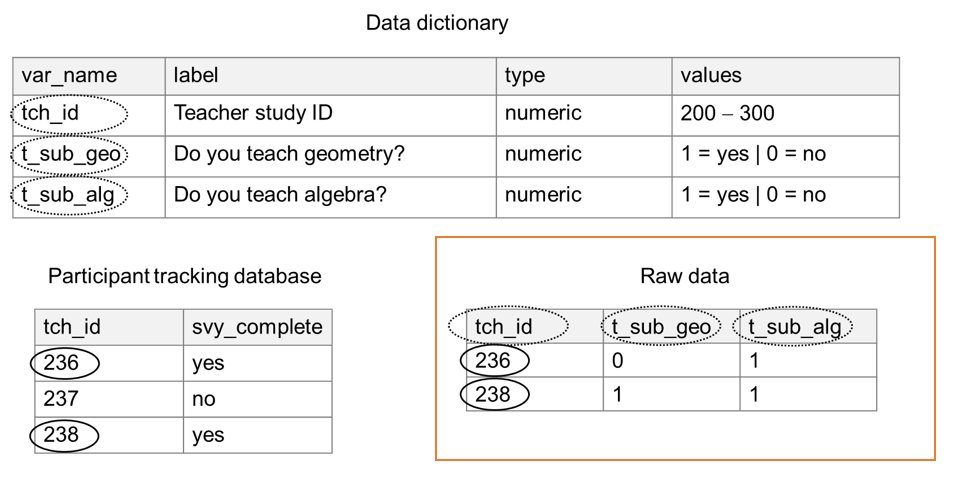
Before beginning a data cleaning process you should always review your raw data, and the first step of that review process should be to check that you have all of your data.
- Any cases missing?
- Any duplicate cases?
- Any variables missing?
Learn more: https://t.co/Y0hvH6QlpY
You’re on a game show with 100 doors. Behind 1 door is a car, and behind the other 99, goats.
You pick a door (Door 1). The host, who knows what’s behind each door, opens another 98 doors to reveal goats.
Your choice: Stick with Door 1, or switch to the other remaining door?
You’re on a game show with 3 doors. Behind one is a car, and behind the other two, goats.
You pick a door (Door 1). The host, who knows what’s behind each door, opens another door (Door 3) to reveal a goat.
Now you have a choice: Stick with Door 1, or switch to Door 2?
"Black woman in higher education, I know only too well how often we are asked to prove ourselves — we must work twice as hard to get half as much, yet our imperfections are seldom overlooked."
A grant writing guide that provides helpful tips and information for #Nursing and #AlliedHealth professionals?!
Yes please ✔️ What an excellent resource
@DrNicolasHart@AcademicChatter
https://t.co/2hcp3JQnzd
Super excited about this Winter School - some of the best meta-scientists, methodologists, and generally some of my favorite people together for a week. Sign up! It will be a blast!
I’ve been thinking a lot lately about the ‘hidden curriculum’ of #academia. The jargon, expectations, and insider info that can put students (esp #FirstGen) at a disadvantage. So #AcademicTwitter what did it seem like others knew and you didn’t when you came to University?
Whenever I have a strong burst of intense productivity, I think to myself, "Imagine if I worked like this all of the time. It would be amazing!".
I then remind myself that I'd burn out, my mental health would be terrible, and I'd have no life.
I've recently discovered a really useful R package by Jan Broder Engler called tidyheatmaps. It's designed to make creating heatmaps from tidy data easy, especially for publication-quality visuals. The package uses pheatmap for detailed heatmaps with less coding.
If you work with data like gene expression, you can get a heatmap set up quickly. The usage is straightforward, allowing for quick customization of your heatmaps.
Check out the full guide for all options: https://t.co/imJP1uO2hA
Give it a try for your next data visualization task. It could be a game changer for presenting your data.
If you're interested in statistics, data science, and programming, you might also enjoy my free newsletter where such topics are covered regularly.
More information: https://t.co/X93SeCe0rb
#programmer #Rpackage #coding
Have you ever cleaned a data file, then used it in an analysis, only to later find that the file had an error? If you re-clean that file, how do you track data lineage as different versions of those files are created?
A changelog! 😃
Learn more: https://t.co/onAwrs0lx6