@wongmjane@juanbuis Amtrak and others already offers this. Its not like the US doesn't have (good) trains. Moreover, the federal government owns it. And the train that he rode is owned by a private company, btw.
@nicotina_m @SBlamart @enamoradodelfcb@nocontextfooty Argentina should only play with Indians (native Americans), since the rest are either of Italian/German/Spanish descent.
3️⃣ Google won’t follow and index URLs with fragments (containing #, e.g. https://t.co/jpqC3cAJwR) as they are not created to lead to a new document/page. So if you want a fragmented URL to be indexed as a separate page, don’t use fragments, e.g. https://t.co/ThlHio37Z7
4/5
Hi @JohnMu@methode, quick question: does using Local Business Schema on a page impacts its ability to rank for "national" searches? (e.g. a company that is based in Austin, sells software, but uses Local Business Schema - would it impact searches from users in Boston?)
@GeneRigoroso@manjos@carlos_jb_paz@ruitavares Muito bom. A Mafaldinha queria dar um own ("ai que sou tão lida"), fazer um bocadinho de virtue signaling, e acaba com um já clássico self-own.
@JohnMu@ingobousa What @JohnMu said (obviously). Google doesn’t even consider the hreflang in that case.
To reinforce geolocalization:
1) geolocalize on Search Console (and Bing)
2) set up the html lang to “en-GB”
3) localize content to British English
4) earn links from GB targeting sites
Hey @JohnMu, one question regarding how G interprets schema. If I use FAQ schema on a Product/Category page, do I increase the risk of it being interpreted as informational rather than transactional? Many thanks in advance!!
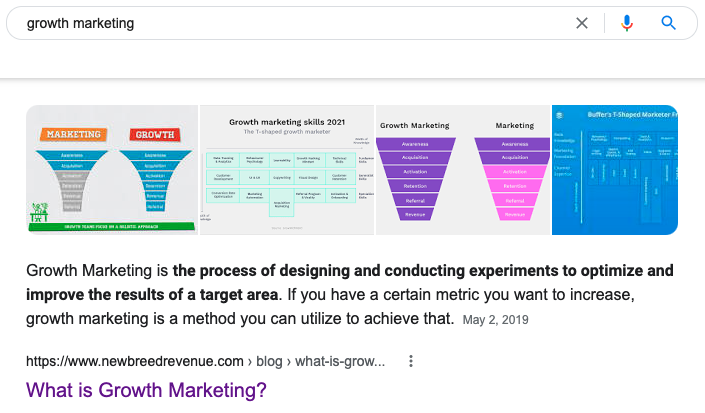
Not sure how to use BOLD text in your content? Just follow Google's lead. The bold text in this image wasn't bold on the webpage. Google chose to do it in the SERP.
That's how you should use bold text. Emphasize what's most important. Don't just bold your keywords.