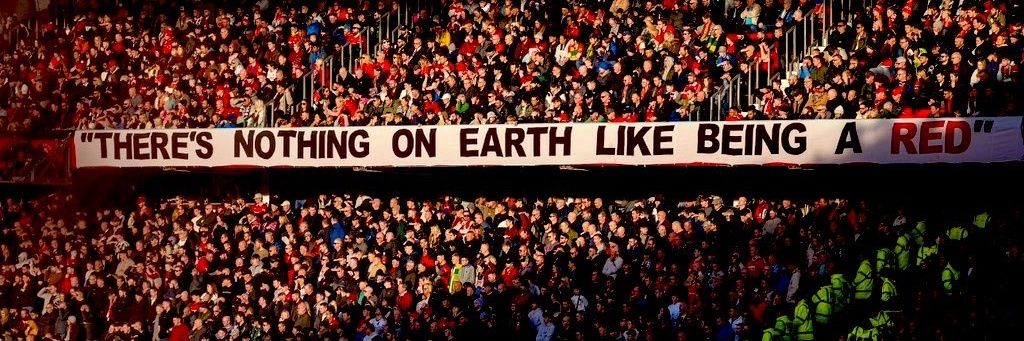
A small re-edit of the season preview from last year. Updated with Carrick and the boys..
This song was made for Manchester United..
UP THE MANCHESTER REDS 😍
🚨 EXCLUSIVE: Manchester United closing in on deal to sign Carlos Baleba from Brighton & Hove Albion. #MUFC offer for 22yo Cameroon midfielder ~£60+5m; below #BHAFC valuation but amicable talks continue as all parties work to reach agreement @TheAthleticFC https://t.co/WmP1bD2JuT
A video has been circulating on SM showing a family preparing sandwiches inside a train...orderly, hygienically, and with complete care (with gloves and mob caps on). Predictably, the comment section broke out into snobbery, judgment, and classist eyerolls.
Looking at those comments, I could not help but feel a wave of profound nostalgia.
Until I finished my engineering, train travel for us had only 1 definition: Sleeper Class.
This was long before the era of ubiquitous Rail Neer bottles / food delivery apps. Back then, water was not bought at every halt; it was earned. We carried our own heavy water bottles / steel thermoses, and the moment the train ground to a halt at a major station, we sprinted to the platform tap to fill them up before the green flag waved.
And then came the ultimate travel essential: the old newspaper.
Younger folks today might think newspapers are only meant for reading. For us, a newspaper was multi purpose engineering.
We carried a bundle of old newspapers for 1 primary reason... it was our dining table, our table cloth, and our plate.
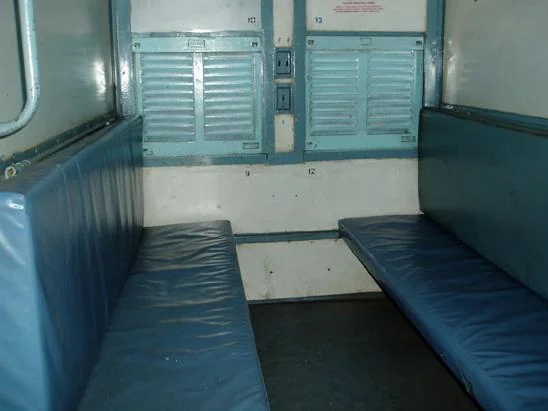
The moment the train settled into its steady dhug-dhug rhythm, out came the newspapers. One sheet was spread neatly across the blue leather Berth No. 23. Then, from a cloth bag, Maiyya would pull out smaller newspaper bundles, carefully unwrapping the food packed.
Inside was the undisputed king of Indian rail travel: Sookhi Aloo ki Sabji, thick ghee-laden Pooris or Parathas, and a generous dollop of home-made Mango/Mirch Achaar.
If a bit of oil soaked into the newspaper headline underneath, nobody cared. The headline was secondary; the meal was sacred.
Back then, 90% of the coach carried their own food. Nobody relied on pantry cars unless it was a 2 day journey across the country, and even then, pantry food was the absolute last resort.
A train journey was an extended, 24 hour family picnic.
We did not just eat our own food; we shared it. The uncle on the lower berth would offer his litti, the aunty across the aisle would pass her nimki, and by the time the sun went down, strangers who had boarded as anonymous co-passengers had become extended family, discussing everything from Indian politics to local recipes.
Today, we travel in sanitized, curtained AC coaches, ordering app-based food deliveries straight to our seat number. We plug in our noise-canceling headphones, stare into our individual screens, and avoid eye contact with the person sitting 2 feet away.
We have gained speed, convenience, and status. But somewhere along the track, we lost the soul of the journey.
So when I see a family sitting together in a train, spreading out their home cooked food with love and care, I do not see anything to judge.
I see a rare, beautiful remnant of an India that knew how to turn a metal coach on iron wheels into a home. 🙏🙏
What kind of era was pre-2014 India? Nearly 70 years, and only 17% of homes had tap water. In the Modi era (post-2014), that figure has reportedly climbed to nearly 80%. That's not incremental governance. That's a transformation.
Had this happened under almost any other political leadership, it would have dominated textbooks, documentaries and global case studies. I only hope history gives it the credit it deserves provided it isn't written through new age Romila's, Habib's and Kosambis.
… WHAT HAVE WE JUST WITNISSED?!?!?!?
I’ll get to Argentina later, but this is ALL about Cape Verde - despite the elimination.
One of the best, most bizarre, utterly jaw-dropping World Cup campaigns I’ve ever seen. And it came from the smallest nation to ever play the competition.
Football, eh?