So happy my main PhD work is now out @Cancer_Cell. We found biomarkers (TMB+TMC) that identify which patients with inoperable esophageal cancer (and some forms of gastric cancer) are likely to benefit most from immunotherapy. Tweetorial below, pls share! https://t.co/F9f9QvMkBN
🚨🚨🚨
RASOLUTE-302 Ph3 is POSITIVE
"Daraxonrasib demonstrated a median OS of 13.2 months versus 6.7 months for chemotherapy, with a hazard ratio of 0.40 (p < 0.0001)".... WOW!
AMAZING news for patients with #PancreaticCancer
The RAS Revolution is ON!!
https://t.co/I59NNWRB1O
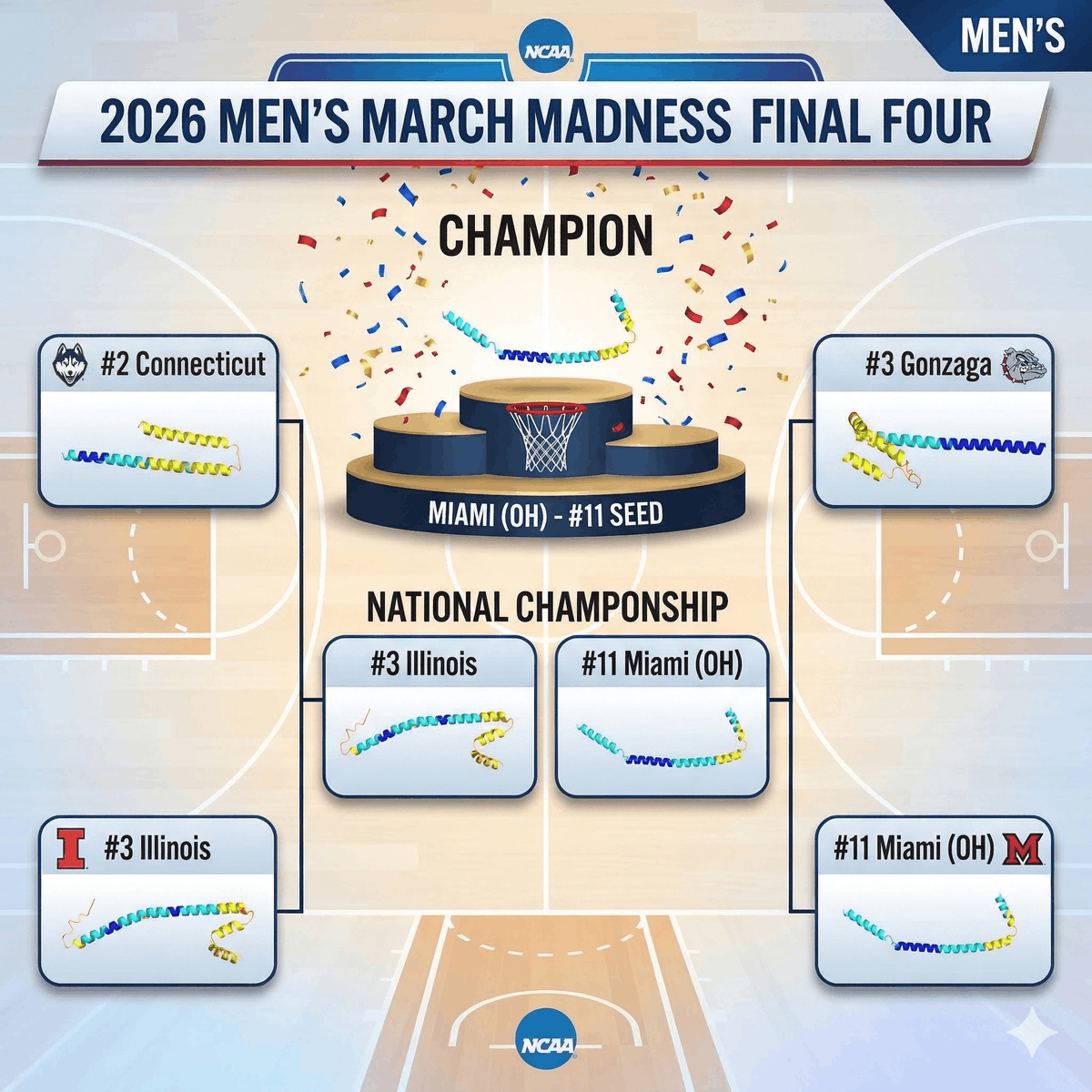
🏀 VIBE-FOLDING MY MARCH MADNESS BRACKET 🏀
Protein structure prediction tools like AlphaFold, Boltz, and ESMFold are taking on the hardest problems in biology, so I decided to give them their toughest challenge yet… helping me win my company’s March Madness bracket challenge.
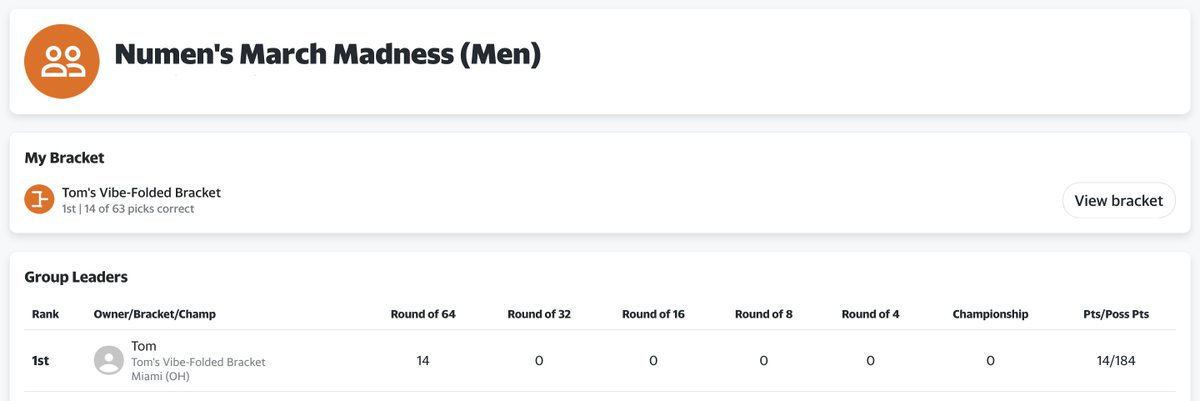
So how good are these predictions? Mercifully, this strat only picked 3/8 possible 16 seed upsets. Through Day 1 of the men’s bracket, we're not too shabby! Picked some key upsets from #12 High Point, #11 Texas, and #11 VCU. Must be some bball training data somewhere in UniRef.
Delighted to share the final version of Richard Zhou's study on how the CD163 scavenger receptor cleans up after toxic haemoglobin spills out from our blood cells. An amazing grabber mechanism!
https://t.co/T4hjaHnedb
Reminds me of one of the worst cases of scientific fraud ever:
>cardiologist fakes data showing better outcomes for patients who were given beta blockers before surgery
>Europe changes its medical guidelines based on this research
>turns out beta blockers increase risk of death by 27%
>might have killed up to 800,000 people
Check out what we're working on at Olio Labs!
70% of patients taking GLP-1's (like Ozempic) are women, but they experience >2x side effect rates than men.
What is driving this difference?
We combine human EMR data, mouse & rat behavior, and scRNAseq to figure it out:
Today we report in @NatureMedicine the development of a base editing strategy for prion disease, currently a fatal and rapidly progressing neurogenerative condition with no effective treatment. @PrionAlliance@DevermanLab (1/13)
https://t.co/jYVDj7JPBZ
I’m excited to introduce Collate and announce our $30M seed round.
We’re using AI to help solve one of the biggest problems for life sciences companies — the never-ending cycle of document creation and maintenance you need to do to stay compliant.
While running my first company, I experienced the burden of documentation that life science companies face – from R&D to commercial readiness. Then at YC, I was lucky enough to witness the transformative, inevitable nature of software and AI. There's a unique opportunity here to bridge my two worlds.
I'm thrilled to be building this alongside @nateps and @jigishjpatel. Thank you to our investors who have backed us with a $30M seed round: Satish Dharmaraj at Redpoint, @joshk at First Round and @saranormous at Conviction. And of course, YC.
To YC and @garrytan - thank you for the invaluable gifts: a family of GPs I'll always count on, a deeper appreciation for software's potential, and most preciously, the privilege of supporting so many remarkable founders on their journeys.
https://t.co/su1uxlVITn
Really fascinating read here- three of the same CD163 monomers working asymmetrically to allow the uptake of diverse ligands. Don't think I've seen this kind of binding before, nature cooks up some interesting mechanisms sometimes!
New science from Richard Zhou... When our blood cells lyse, they release haemoglobin, which is dangerous to our body. We detoxify this by binding it to a serum protein, haptoglobin and taking it up into macrophages, using the receptor CD163. Richard showed how CD163 works!