Sorting data is expensive. Binning data is free.
The bottleneck in traditional Decision Trees is finding the best split. To find a split on a continuous variable, you typically have to sort the entire column (O(NlogN)). Do that for every feature, at every node, and your CPU screams.
In Mastering CatBoost, I break down how we solve this using Quantization.
CatBoost doesn't see "3.14159". It sees "Bin #4". By converting continuous floats into integer bins (quantization) before training starts, we transform the split-finding process from a sorting problem into a histogram aggregation problem.
This is why CatBoost scales to millions of rows effortlessly. We aren't calculating splits on raw data; we are calculating them on highly optimized, pre-computed integers.
Hardware-aware ML is the future.
https://t.co/CkduTSNbm0
https://t.co/O2PSO8S8G9
#BigData #Algorithms #ComputerScience #CatBoost #Performance
‼️🇷🇺 L'arrivée des premiers "Su-34M/R" en version de reconnaissance avec nacelles "Sytch" va rapidement accroître l'efficacité du circuit de reconnaissance-frappe 🇷🇺, malgré un groupement satellitaire encore limité ("Lotus-S1", "Obzor-R", "Pion-NKS")💤
Contrairement au "Tu-214R", les "Su-34R" sont plus rapides de 1,5 fois pour arriver sur zone, et leur production en série est massive, ce qui rend l'adaptation des nacelles "Sytch" bien plus facile et moins coûteuse que la construction de nouveaux "Tu-214R"
Mais le plus important réside dans les paramètres tactiques et techniques de ces systèmes de conteneurs.
▫️ UKR-OE (optronique) : équipé de capteurs multispectraux longue focale, il assure la détection et l'identification de cibles jour et nuit, même en environnement brouillé. À plus de 10 km d'altitude et par beau temps, la portée de détection dépasse 100 km.
▫️ UKR-RL (radar) : doté du radar latéral à synthèse d'ouverture "Pika-M", il détecte des chars jusqu'à 150 km (identification à 100–120 km) et des colonnes de chars au-delà de 200 km. Il fonctionne également en mode détection de cibles mobiles (GMTI). Les coordonnées sont transmises aux systèmes "Tornado-S" et aux drones kamikazes.
▫️ UKR-RT (radiotechnique) : équipé de réseaux interférométriques passifs à balayage électronique, il peut détecter et identifier les radars adverses en émission ("Patriot" AN/MPQ-65A, "TRML-4D", radars 🇮🇱 "RADA") jusqu'à 460–500 km. Il transmet ensuite la désignation d'objectif aux systèmes "Iskander-M" ou aux missiles "Zirkon".
@Warhronika
Is the Su-57's Radar Already One Generation Behind? 🤯
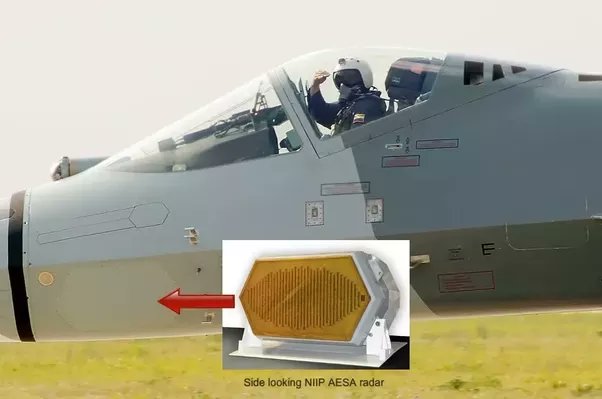
Many analysts argue that the N036 Belka's architecture is older than the latest AESA designs emerging in the West and Asia 🤯
-N036 Belka AESA is powerful, but not necessarily cutting-edge.
-It uses a planar array antenna architecture, an older approach compared to newer wideband AESA designs
-Modern AESAs such as Uttam/virupaksha use more advanced antenna technologies offering wider frequency coverage
-wider bandwidth generally improves EW performance, SAR imaging quality, and resistance to jamming
-contrary to popular myths, the Su-57 is NOT blind to EW-threats. russian engineers compensate through multiple radar arrays, sensor fusion, and L-band side arrays.
Look, my real question isn't whether Belka works, we know, it clearly does. my questions is, whether its architecture can match the latest Western and emerging Asian AESA designs (PLAAF/Western/USAF ones)
What do you think? 👀🤔
[Soyouz-5] Etude d'impact écologique.
Un plan d'un étage
Une description de celui-ci
Nombre minimum de fragments: 3.
Longueur : 38,303 m.
2 types de coiffes avec les données techniques
Un diamètre de 4,11 m (374OD61)
Un diamètre de 5,2 m (374OD62)
🇫🇷Carte du jour
Voici une carte des sites envisagés pour l’implantation de centrales nucléaires en France en novembre 1974, réalisée par Teva Meyer et publiée dans notre article de la RGN sur le choix des sites nucléaires :
https://t.co/A9eNTSjLZa
The shortest mathematical paper ever published is just two words long.
Written by John Conway and Alexander Soifer of Princeton University, it appeared in "The American Mathematical Monthly" in 2005.
The entire paper simply read: “n² + 2.”
Initially submitted in 2004, it was rejected for being “too short,” but the authors refused to add anything more. Their goal? To publish the shortest paper ever—and they succeeded.
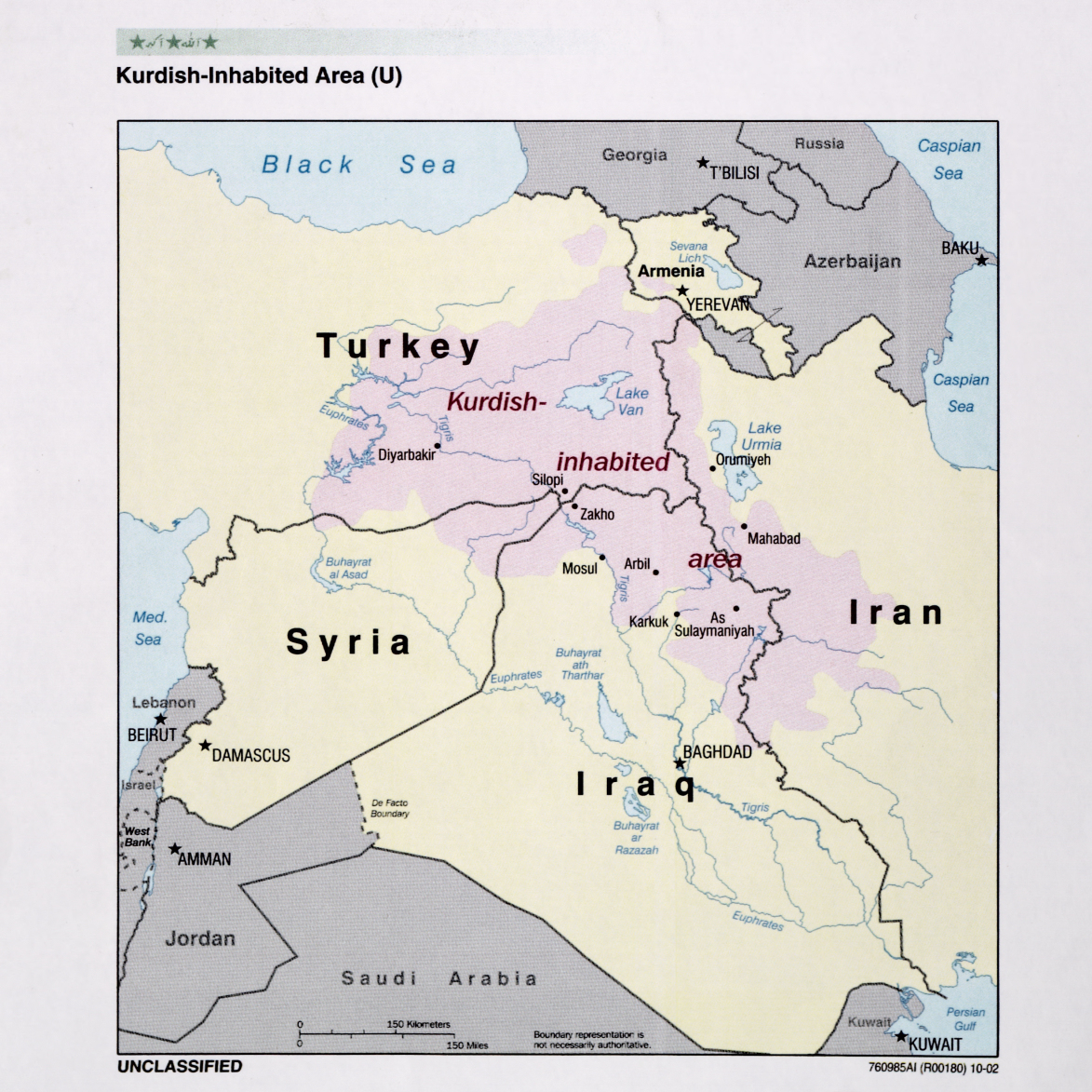
Declassified 2002 Kurdish Areas Map Created By The CIA
This 2002 “Kurdish-Inhabited Area” map is a classic example of early post-Iraq War CIA and military-intelligence cartography focused on ethnicity, insurgency, and regional geopolitics.
A few notable things about it:
It depicts the Kurdish population as a cross-border ethnic region spanning southeastern Turkey, northern Iraq, northwestern Iran, and northeastern Syria emphasizing that the Kurdish issue is inherently transnational rather than confined to one state.
The shaded area is intentionally fuzzy rather than sharply bounded, reflecting the mixed and dispersed nature of Kurdish settlement patterns.
Major Kurdish cities and political centers are highlighted, including Diyarbakir in Turkey, Arbil/Erbil and Sulaymaniyah in Iraq, and Mahabad in Iran, all historically important to Kurdish nationalism.
The map predates many later developments:
- the 2003 Iraq War,
- the consolidation of the Kurdistan Regional Government (KRG),
- the Syrian Civil War and Rojava,
- and ISIS-era Kurdish territorial expansion.
I
raq’s Kurdish region is shown before the later de facto autonomy became firmly institutionalized under the Iraqi constitution.
Syria’s Kurdish regions appear comparatively small and fragmented on this map, which contrasts with how strategically important they became after 2011.
The map also reflects the geopolitical sensitivities of the time:
Turkey is shown containing the largest Kurdish population, but the map avoids implying an independent Kurdistan by using the softer phrase “Kurdish-inhabited area” instead of drawing political borders.
More Declassified 2000s CIA Maps: https://t.co/crnztsV79g
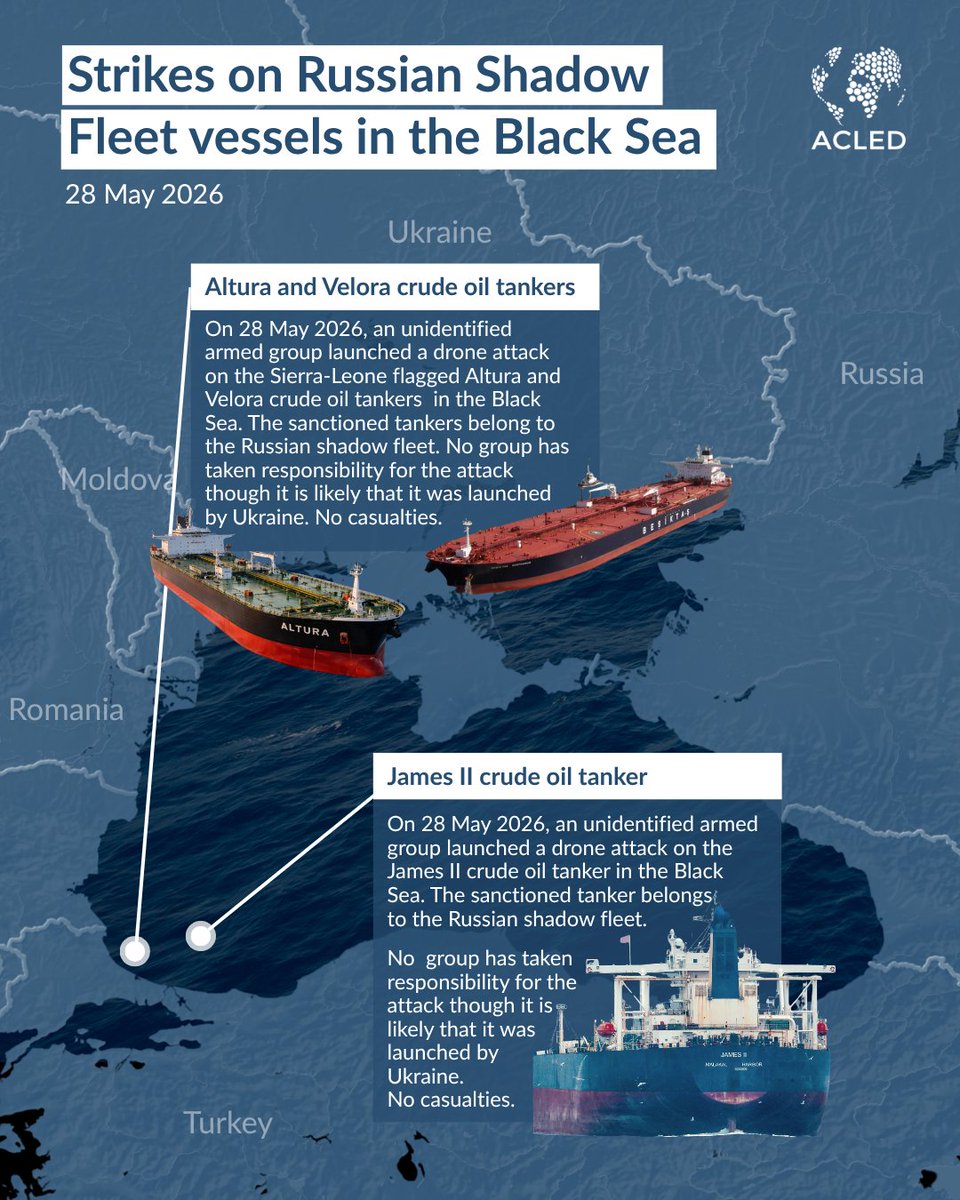
#Ukraine struck three Russian shadow fleet vessels in Turkey’s exclusive economic zone this week. All three ships belong to the Russian #shadowfleet, which transports Russian oil under the flags of third states to evade sanctions. Full monitor update: https://t.co/3VCgY0tS6q
🚨🇷🇺🇺🇦 NATO'S NIGHTMARE: RUSSIA'S NEW BANDEROL MISSILE OVERWHELM UKRAINE'S FRAGILE DEFENSES
Russia has intensified its attacks on Kharkov region, with at least three strikes on June 3 using Banderol “S8000” missiles— a low-cost hybrid system that Western export controls and sanctions were meant to starve but it fueled instead.
🔸 The Banderol delivers up to 500 km range with a ~150 kg warhead powered by a Chinese Swiwin SW800Pro turbojet engine — a sanction-evading standoff weapon built for mass production.
🔸 It launches primarily from the Kronshtadt Orion UAV (with adaptation for Mi-28 helicopters), using pop-out wings and superior agility compared to heavier missiles like the Kh-101 or Kalibr.
🔸 Its cheap, easy-to-manufacture design allows Russia to overwhelm air defenses while conserving expensive munitions, blurring the line between drones and cruise missiles.
🔸 The new threat forces Ukraine to adapt to tighter maneuvers and extended reach, exposing gaps in air defense coverage and the limits of Western sanctions enforcement.
Do you think NATO can catch up to Russia in missile technology?
This is a Mir cutaway, the vehicles are 95% twin designs. The red outlined area is the aft transfer tunnel were they will attempt to seal up micro-fractures.
💰Gasto en defensa de los países de la OTAN frente a Rusia.
📊La Alianza Atlántica mantiene colectivamente una inversión más sostenida que le permite superar a Rusia en capacidades militares avanzadas.
📍Sin embargo, Moscú mantiene una influencia regional significativa.
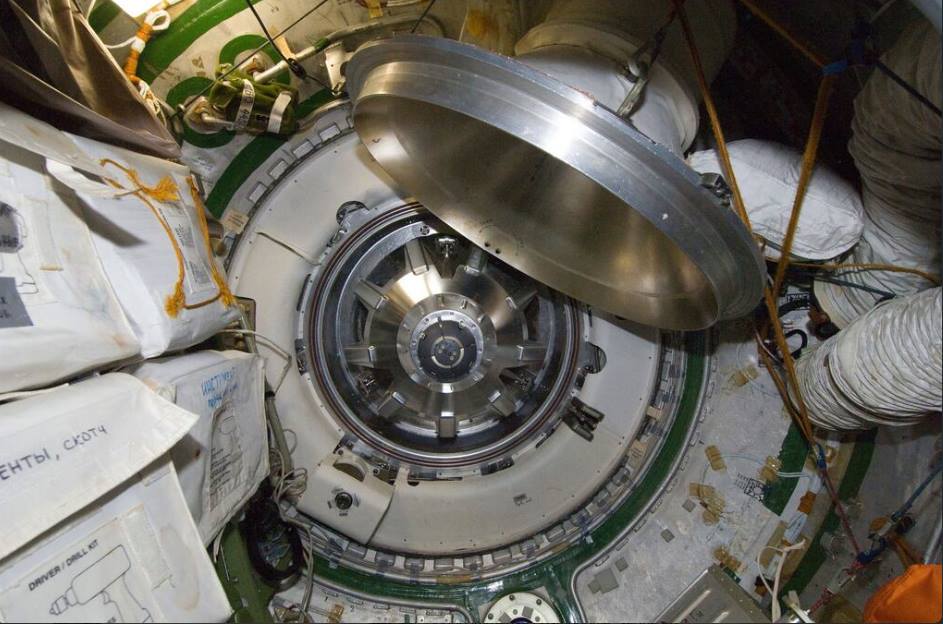
FYI Zvezda crack repair. The location of the aft transfer tunnel is at the back of Zvezda. It is used by Progress cargo craft for docking and transfer of cargo.
https://t.co/aNfjs2Z5es
Together with @RALee85 we wrote and published an unique information — «Rubicon» elite drone unit ORBAT.
I highly recommend to read this article. Open high quality images and learn more about Russian approach in terms of drone warfare.
Link🔽
https://t.co/8ACAxbhe1Q
Zvezda has three pressurised sections, outlined in green (see 1st cutaway). The indications are that the fractures surround the hatch (note red line) between the Main Cabin pressure vessel & the Aft Transfer Tunnel, on the opposite side of this hatch (seen in last image).


![La_souris_DA's tweet photo. [Soyouz-5] Etude d'impact écologique.
Un plan d'un étage
Une description de celui-ci
Nombre minimum de fragments: 3.
Longueur : 38,303 m.
2 types de coiffes avec les données techniques
Un diamètre de 4,11 m (374OD61)
Un diamètre de 5,2 m (374OD62) https://t.co/LjMusbRuMB](https://pbs.twimg.com/media/HKMKRSdW8AAJs2n.png)
![La_souris_DA's tweet photo. [Soyouz-5] Etude d'impact écologique.
Un plan d'un étage
Une description de celui-ci
Nombre minimum de fragments: 3.
Longueur : 38,303 m.
2 types de coiffes avec les données techniques
Un diamètre de 4,11 m (374OD61)
Un diamètre de 5,2 m (374OD62) https://t.co/LjMusbRuMB](https://pbs.twimg.com/media/HKMJ1nVWIAA8W1u.png)
![La_souris_DA's tweet photo. [Soyouz-5] Etude d'impact écologique.
Un plan d'un étage
Une description de celui-ci
Nombre minimum de fragments: 3.
Longueur : 38,303 m.
2 types de coiffes avec les données techniques
Un diamètre de 4,11 m (374OD61)
Un diamètre de 5,2 m (374OD62) https://t.co/LjMusbRuMB](https://pbs.twimg.com/media/HKMJ09RWEAETsSu.png)









![La_souris_DA's tweet photo. [Soyouz-5] Etude d'impact écologique.
Un plan d'un étage
Une description de celui-ci
Nombre minimum de fragments: 3.
Longueur : 38,303 m.
2 types de coiffes avec les données techniques
Un diamètre de 4,11 m (374OD61)
Un diamètre de 5,2 m (374OD62) https://t.co/LjMusbRuMB](https://pbs.twimg.com/media/HKMKs7tXMAA4aLV.png)