Çocukluk döneminde anksiyete yaşayan birçok insanın fark etmediği bir şey vardır. Sessiz olduğun için, sorun çıkarmadığın için, dikkat çekmediğin için ve duygularını belli etmediğin için çevrendekiler seni “yaşına göre çok olgun” biri olarak görür. Sen de zamanla bunun güçlü bir yönün olduğuna inanmaya başlarsın. Oysa çoğu zaman bu bir olgunluk değildir. Bu, anksiyetenin geliştirdiği bir hayatta kalma biçimidir. Kendini ifade etmezsin, duygularını bastırırsın ve hata yapmaktan kaçınırsın. Yıllar sonra ise sosyal ve duygusal gelişiminin bazı alanlarda yaşıtlarının gerisinde kaldığını fark edebilirsin. Çünkü olgun görünmek ile duygusal olarak sağlıklı gelişmek aynı şey değildir. Bazen çocukken “çok uslu” diye övülen çocuklar, aslında sadece çok kaygılı çocuklardır.
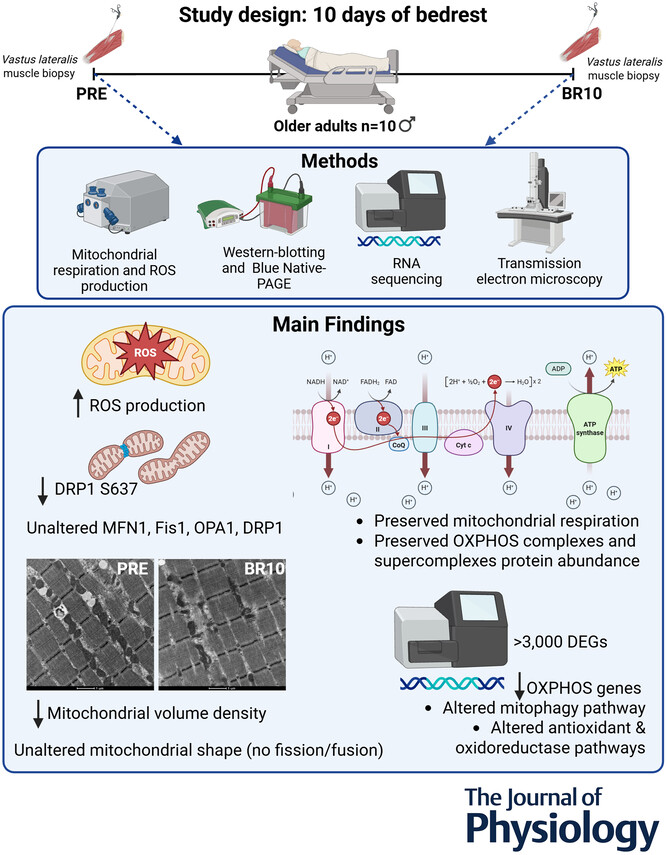
Just 10 days of bed rest reduces mitochondrial content by double digits in older adults while ROS production spikes. Function stays intact only because each mitochondrion works overtime.
A Journal of Physiology study tracked what happens to muscle mitochondria in 10 older men (average age 68) during 10 days of complete bed rest. This simulates what happens during hospitalization, illness recovery, or any period where you stop moving.
The findings show a temporary compensation that masks underlying damage.
Key findings:
• Mitochondrial quantity dropped significantly
• Damaging free radical production increased 62-65%
• Energy production capacity remained normal
• Each remaining mitochondrion worked harder to compensate
• Over 3,000 genes changed, with energy pathways shutting down
• Antioxidant defenses weakened while stress signals activated
After just 10 days of complete inactivity, older adults lost a substantial portion of their mitochondrial mass. Mitochondrial volume density measured by electron microscopy dropped significantly, and citrate synthase activity fell in parallel.
But here's the twist: total energy production stayed normal because the remaining mitochondria cranked up their individual output.
This sounds like good news. It's not.
The compensation comes at a cost. The mitochondria that survived started producing more reactive oxygen species, essentially damaging molecules that your cells normally neutralize with antioxidant systems. Production went up while the cleanup systems got weaker.
When damage production outpaces your ability to clear it, problems accumulate.
The gene expression data revealed what's happening. More than 3,000 genes changed their activity levels. Genes responsible for building new mitochondria and maintaining energy production all got dialed down. Meanwhile, emergency stress response genes activated.
Your muscle is essentially preparing for prolonged shutdown while trying to manage rising damage.
This pattern matters because it defines the sequence. Mitochondrial loss and oxidative damage happen first, within 10 days. Actual energy production failure comes later, after the compensation exhausts itself.
Previous studies in young adults showed they maintained their mitochondrial content after 10 days of bed rest. Older adults in this study lost it. The age-related difference in resilience to inactivity is significant.
Younger muscle can weather short periods of inactivity without shedding mitochondria. Older muscle starts losing them within days.
The practical implication: if you're over 65 and face a period of reduced activity from illness, injury, or hospitalization, mitochondrial decline starts almost immediately. The energy production numbers might look fine initially, but you're operating on fewer, overworked mitochondria producing more cellular damage.
Once you lose mitochondria, rebuilding them takes time and may be incomplete.
This explains why older adults often struggle to return to baseline function after hospitalization or illness. The visible problem is muscle weakness. The underlying driver is mitochondrial loss that happened in the first week or two of inactivity.
The intervention window is narrow. Maintaining some level of activity during periods that would otherwise be sedentary, protecting mitochondrial mass before it drops, matters more than trying to rebuild after the fact.
For healthy aging, the message is clear: consistency matters more as you age. Younger muscle tolerates gaps in activity. Older muscle doesn't have that buffer. A week or two of complete inactivity triggers changes that weeks or months of training built.
The decisions made during short periods of forced inactivity, whether you do simple resistance exercises in bed, walk as soon as possible, or stay completely sedentary, shape the mitochondrial foundation available when you try to resume normal activity.
Older muscle operates with less margin for error. The first 10 days of inactivity look deceptively manageable because energy production stays normal. The damage is happening at a level you can't feel yet.
As embarrassing as it sounds, I didn’t know you had to change your bedding weekly until I moved out. My lifelong rashes on my chest started to go away after discovering that.
I was so, so itchy growing up and sneezing constantly. I don’t think we changed the sheets nearly enough, nor did I find out about things like allergy covers, eucalyptus spray (anti-dust mites) for bedding and air purifiers until I was living on my own.
I knew I always had eczema and histamine intolerance due to a variety of environmental and nutritional factors. I never put together that dust mites could also be making my reactions to dietary intolerances (namely brain fog) more aggressive. The leakier your gut is, the more allergens and irritants can pass into the bloodstream and overwhelm your immune system.
Added to my file of ADHD is also a histamine issue: environmental edition
Aprendes mejor estudiando en intervalos espaciados que atracones de conocimiento.
Estudiar muchas horas seguidas sin parar no sirve tanto para que se te quede la información de verdad. El cerebro necesita un tiempo entre repeticiones para que las conexiones entre neuronas (sinapsis) y ciertas enzimas se “preparen” y consoliden el recuerdo. Por eso funciona mejor repetir lo mismo en intervalos (hoy un poco, mañana otro poco, dentro de unos días otra vez) que empollar todo de golpe: la repetición espaciada deja una marca más fuerte y duradera en la memoria.
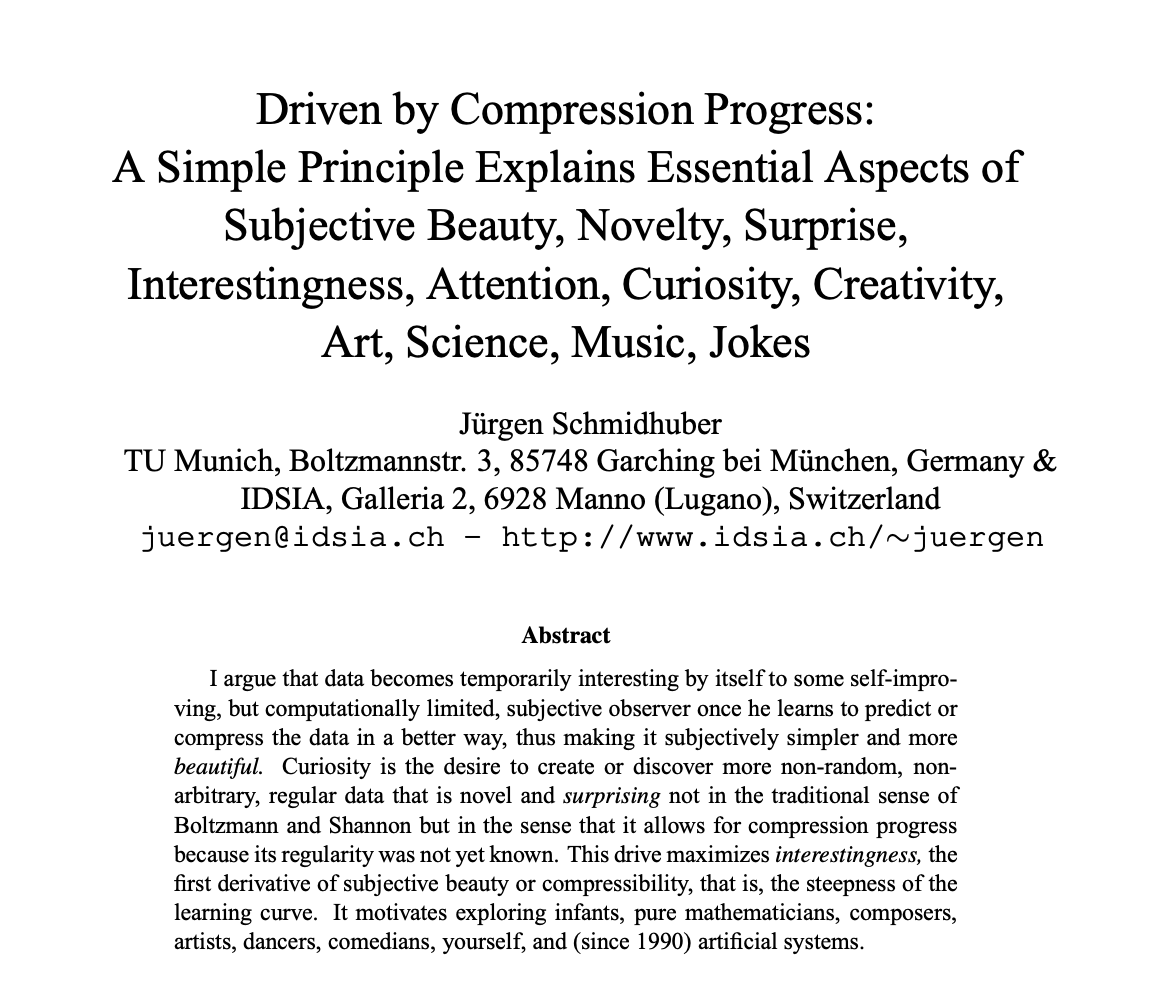
This 2008 paper answers:
why anything is beautiful
why science exists
why jokes land
why you get bored
why art moves you
why babies explore
why music has hooks
It boils down to a single, cold mathematical principle.
Jürgen Schmidhuber is one of the founding fathers of modern AI. But this paper wasn't about building a better machine.
It was about proving that human curiosity is just an algorithm.
It’s called "Compression Progress."
Your brain is a prediction engine. Its only goal is to take the overwhelming chaos of the world and compress it into simple, predictable patterns.
If something is completely predictable, like a ticking clock or a blank wall, your brain compresses it instantly. Zero effort.
You experience this as boredom.
If something is completely random, like TV static or white noise, your brain can’t compress it at all.
You experience this as frustration.
But what happens when you look at something complex, and suddenly discover a hidden rule that makes it make sense?
The exact second you get the punchline of a joke. The moment a chaotic melody resolves into a perfect hook. A baby realizing that dropping a cup always makes a sound.
In that split second, your brain successfully compresses the data.
And to reinforce this behavior, your brain floods your system with an intrinsic reward. A hit of dopamine.
We gave that chemical hit a lot of romantic names.
We call it "beauty." We call it "wonder." We call it "art."
Scientists like Einstein aren't doing magic. They are just hunting for equations that compress the maximum amount of universe into the smallest amount of text.
Composers like Beethoven weren't channeling the divine. They were engineering optimal compression puzzles for the human auditory cortex.
We like to believe our sense of wonder makes us fundamentally different from machines.
But this paper proved that wonder is just a mathematical reward function for efficient data sorting.
New research shows that slow nasal breathing directly reduces anxiety by activating a specific nose-to-brain circuit, while fast breathing worsens it. The findings, published in PNAS, suggest the physical rhythm of airflow acts as an emotional dial. https://t.co/GcLJDXVicj