Migration and displacement, political economy, transnational governance, and EU-MENA relations. @KingsCollegeLon @Kings_EIS.
Also @acburlin.bsky.social
Really enjoyed reading @NKortendiek new paper on migration governance in Greece in @EuroJournIR! Insightful discussions about the tendency to conflate authority and governance as well as the difficulty to distinguish btwn private/professional agency
https://t.co/3TMmI5aKhK
Great article on Syrians in Turkey in new @ISQ_Jrnl by @timorland11. It provides fresh insight into the political economic impact of externalized migration governance in countries of transit/origin by developing David Harvey's concept of "spatial fixes".
https://t.co/QGeTYvO7lQ
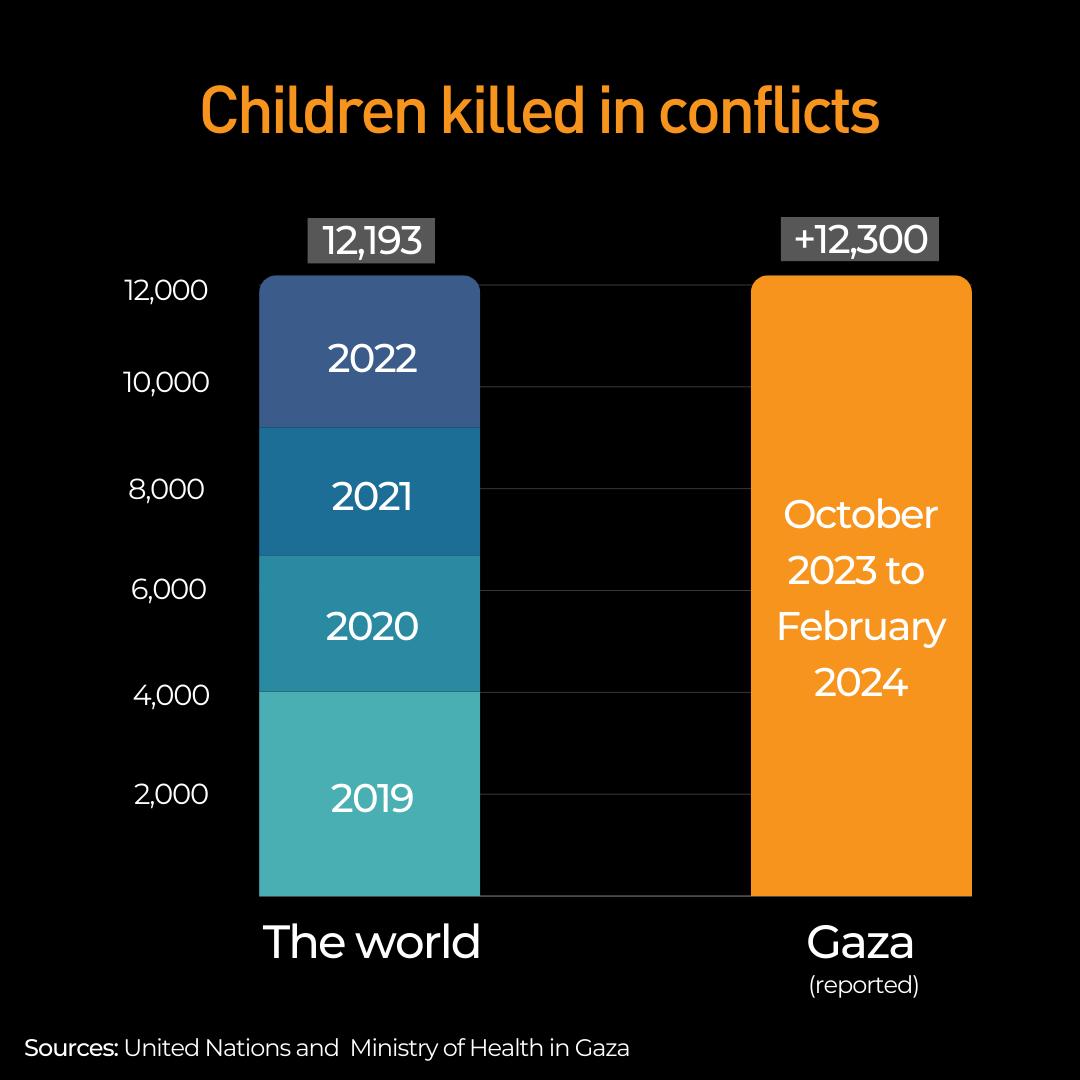
Staggering. The number of children reported killed in just over 4 months in #Gaza is higher than the number of children killed in 4 years of wars around the world combined.
This war is a war on children. It is a war on their childhood and their future.
#ceasefireNow for the sake of children in #Gaza
Very constructive reflections on the potential limitations of “open science” in qualitative research by @shamuskhan, @JenniferSHirsch and Ohad Zeltzer Zubida
Ethnographic methods have become quite popular in some corners of IR yet major methodological issues have yet to be resolved. My @millennjournal article revisits some tensions in IR's treatment of ethnography and identifies some ways forward.
What are the effects of categorising human movement as #migration or #mobility?
These terms have powerful normative underpinnings, but they remain too often implicit.
Hard to put my emotions into words as this 5-year collaborative venture comes alive.
https://t.co/HmPnuUh5fs
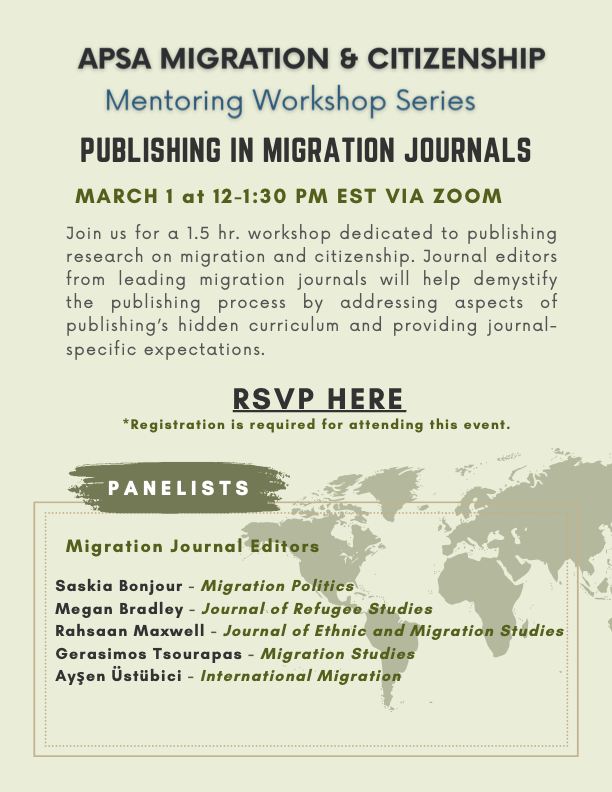
On behalf of the APSA Migration & Citizenship Executive Council, we invite y'all to attend our first Mentoring Workshop Series event of the year!
Publishing in Migration Journals
Friday, March 1
Noon to 1:30PM EST
via Zoom
Registration Link: https://t.co/4UcOUChi55
This new study by @filip_savatic, @helene_thiollet & others is a key contribution to debates on irregular migration to the EU. Using an innovative methodology, it estimates that most irregular crossings recorded by Frontex 2009-2021 were undertaken by ppl who qualify for asylum.
Calling all @europeanisa enthusiasts! @drMelJohnston and I are very pleased to be accepting submissions for the Political Economy Beyond Boundaries section at #PEC2024. You can find our section call here https://t.co/TpQhOPlIyC Deadline 13 March!
Great new work by @FionaAdamson on how to theorize migration governance. Building on a multi-level approach towards an ''entangled'' model better captures how this governance involves cross-cutting scales, policy areas & historical legacies.
https://t.co/wFkeVgaIKx
Over 100,000 Gazans are either dead, injured, or missing and presumed dead.
The risk of famine is high and increasing each day.
We continue to call for safe access for humanitarian personnel and supplies.
We continue to call for the hostages to be released.
We continue to call for health care to be protected and not attacked or militarised.
We continue to call for a ceasefire.
New report by @OECD_Social with useful data on return migration. It shows how exit rates vary considerably across OECD countries (~70% of migrants in 🇩🇪 and 🇳🇱 leave within 5 years of residence, compared to ~30% for countries like 🇸🇪🇬🇧🇫🇷 and ~15% for 🇺🇸).
https://t.co/jZrKrLZtQt
Very excited to see this paper - a real labor of love - out in the wild. @k_natter, Nora and I drew from our own work & that of dozens of other scholars to conceptualize 'strategic non-regulation,' which we argue is not only strategic but also central to #migration governance.
New research by @vale_diiasio and @JackieWahba argues that social networks are the strongest pull factor for determining the destinations of asylum seekers in the EU. Policies for access to welfare services and employment seem to play a limited role.