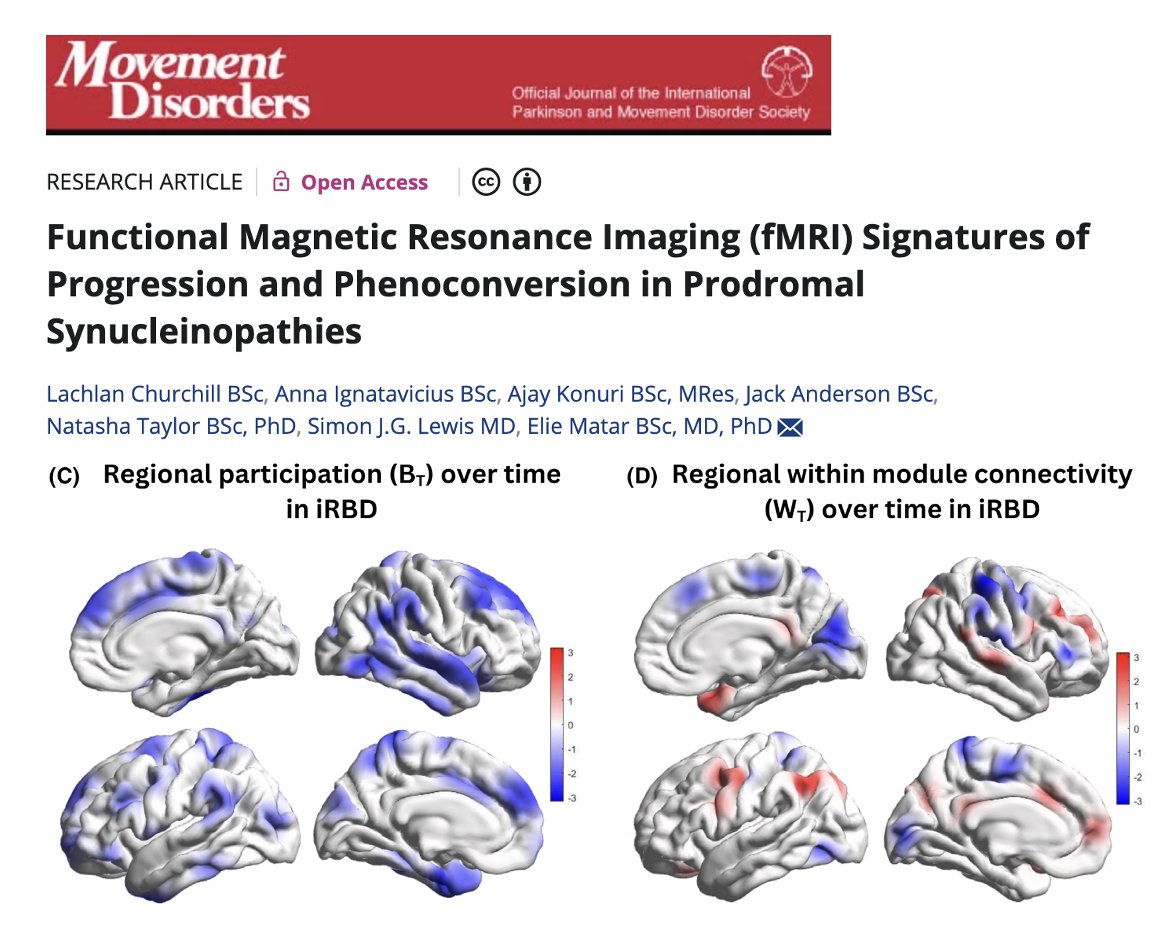
This important new study in Movement Disorders looked at folks w/ REM sleep behavior disorder, a common early sign of Parkinson’s. The results suggest that fMRI may reveal changes in brain networks long before symptoms of Parkinson’s or dementia w/ Lewy bodies fully emerge.
Key Points:
- fMRI showed progressive disruption of functional brain networks in prodromal Parkinson.
- Changes were especially observed in visual, attentional and motor networks, predicting who later developed Parkinson’s or dementia.
- Altered connectivity in regions rich in cholinergic and noradrenergic systems may signal early neurochemical dysfunction.
My take: It is nice to see MRI technologies entering the discussion for potential markers and biomarkers in Parkinson's. 1- Early detection matters for Parkinson’s and related conditions. 2- REM sleep behavior disorder can be an early warning sign. 3- fMRI may provide sensitive brain markers before clinical symptoms appear. 4- Network changes in the brain are definitely linked to memory, movement and attention. 5- These findings raise hope for earlier intervention and better monitoring in the future.
https://t.co/V0WG4QncZq @ParkinsonDotOrg@FixelInstitute@SfNtweets@movedisorder@MDJ_Journal@movedisorder
Disrupted amygdala functional connectivity is mediated by the nucleus basalis of Meynert in Parkinson’s disease patients with hallucinations https://t.co/YiDKERRr4i
New paper in Imaging Neuroscience by Isabella F. Orlando, Claire O’Callaghan, et al:
Dopamine alters functional gradients in Parkinson’s disease
https://t.co/A7eXqhBYRj
Great to see this first publication from Chris Coppin exploring the phenotype of start hesitation in Parkinson's patients with #Freezing of #Gait
Potentially more brainstem correlates... future studies will look at fMRI and neurophysiology. Need to improve treatment options!
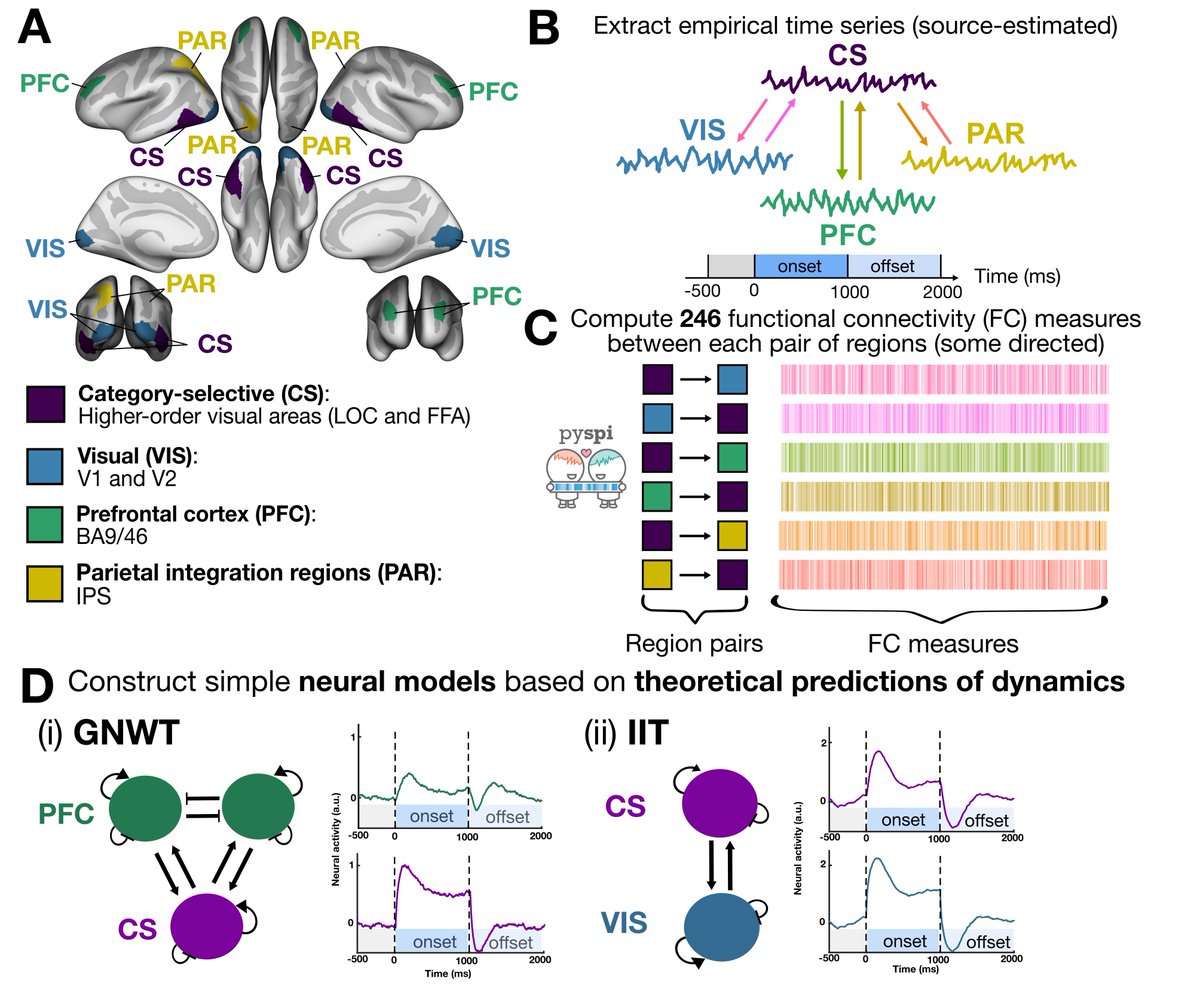
x-less Chris Whyte and I introduce a novel data-driven framework to evaluate >200 connectivity-based neural correlates of consciousness! Results are used to quantitatively compare outputs from neurodynamical models tailored to theoretic predictions.
https://t.co/cwQqXtdbGh
Very proud moment when you see your own paper shown at an international meeting #AOPMC for the first time. Well done @a_ignatavicius
https://t.co/w9YYTxOkWt
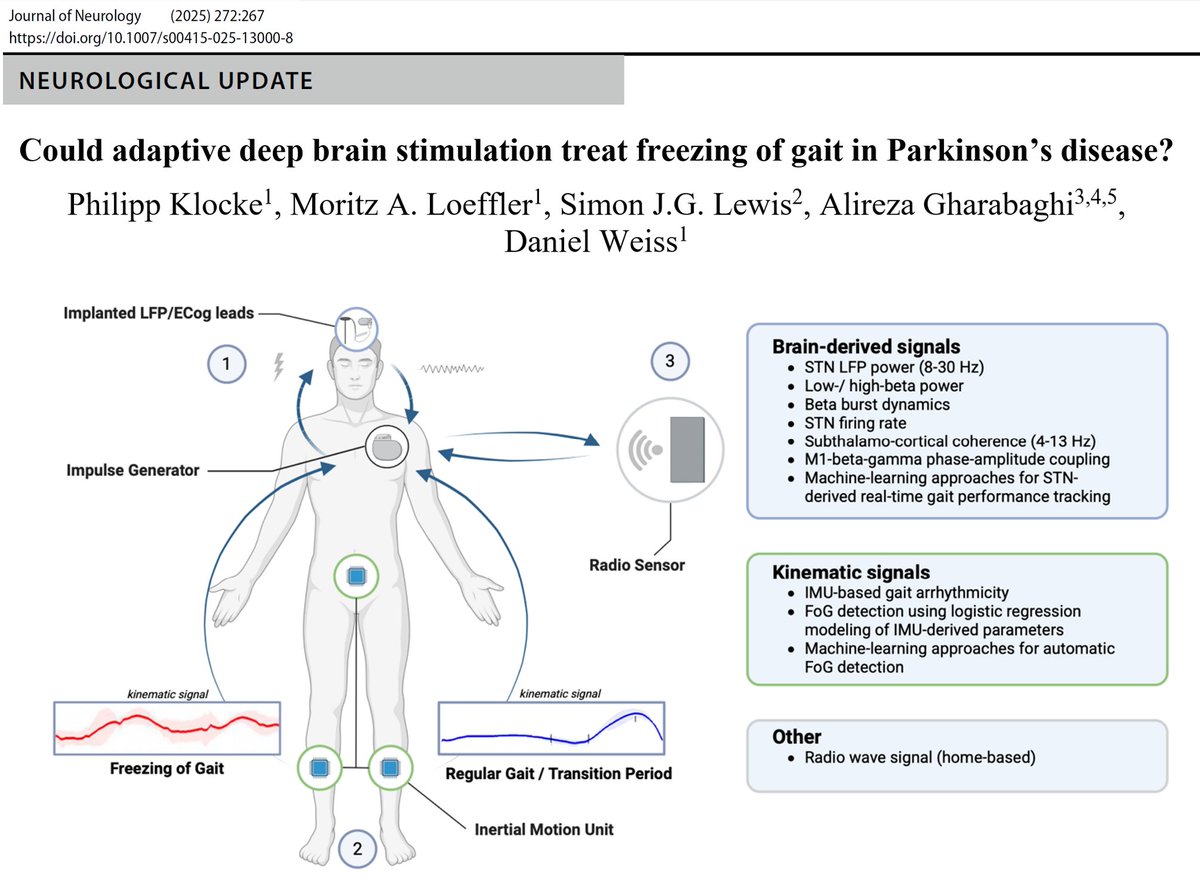
Hope that people enjoy this review about the potential for adaptive DBS to treat #Freezing of Gait (#FOG) in #Parkinson's Disease
https://t.co/LUNfYHVC0F
Happy to share our preprint looking at cerebellar and subcortical contributions to working memory. Thanks to all the co-authors for their help and guidance during this project!
https://t.co/gULCbyjGpD
I am absolutely stoked to share our new study on multiscale neural dynamics across species and behaviour + network simulations exploring their benefits! The best lab going around! Captained by THE @jmacshine 🙌
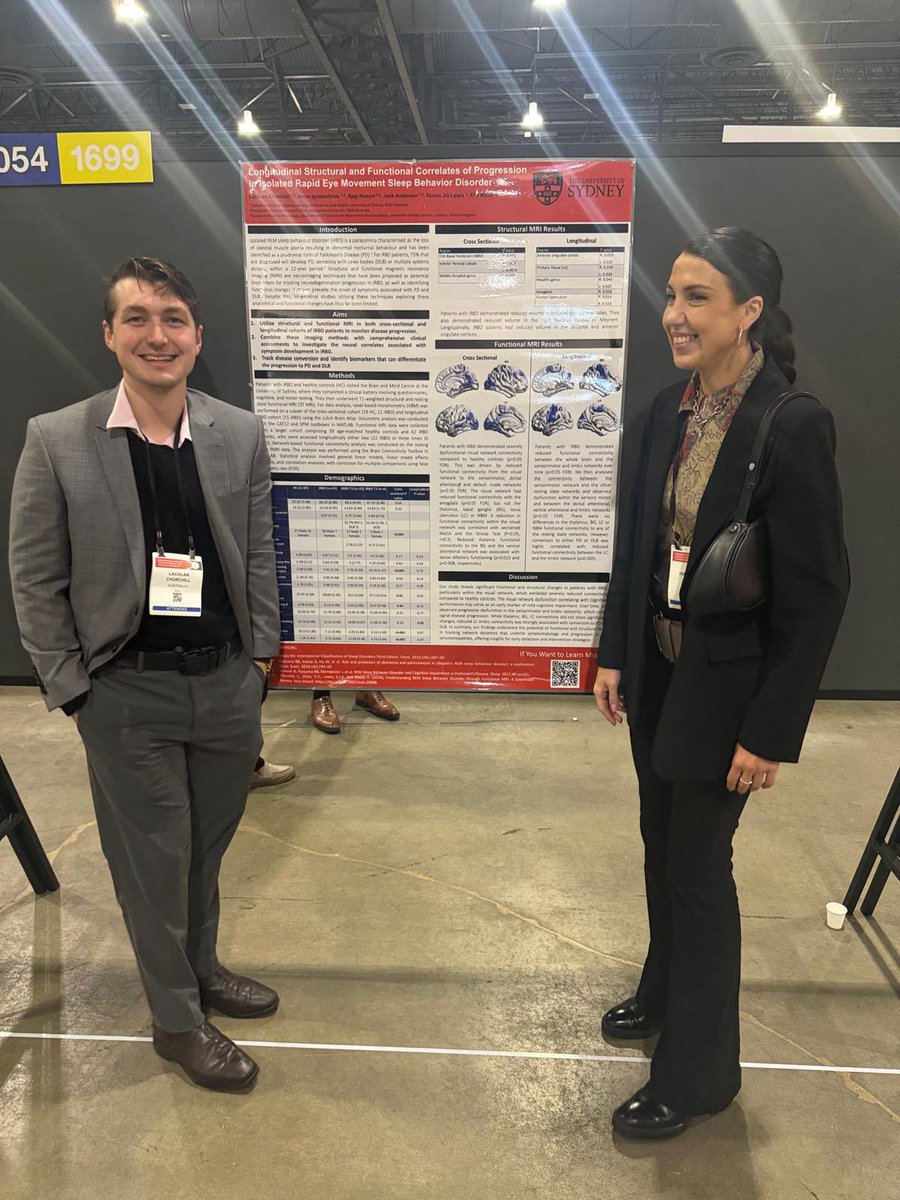
Enjoyed presenting my poster on longitudinal and structural changes in isolated RBD patients longitudinally. Excited to dive deeper into this research to find more biomarkers of synucleinopathy progression 🧠 @a_ignatavicius@jackx_anderson@profsimonlewis@DrElieMatar
During moderate tonic locus coeruleus activation in mice, noradrenaline release engages cortical regions related to associative processing, while burst-like stimulation biases the brain toward sensory processing
https://t.co/UkRCPJsqHv
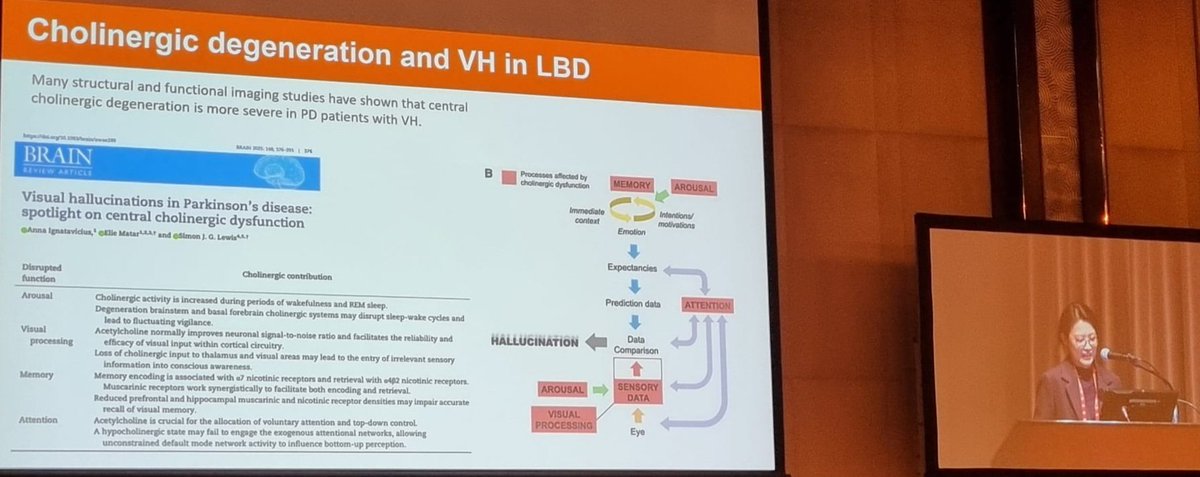
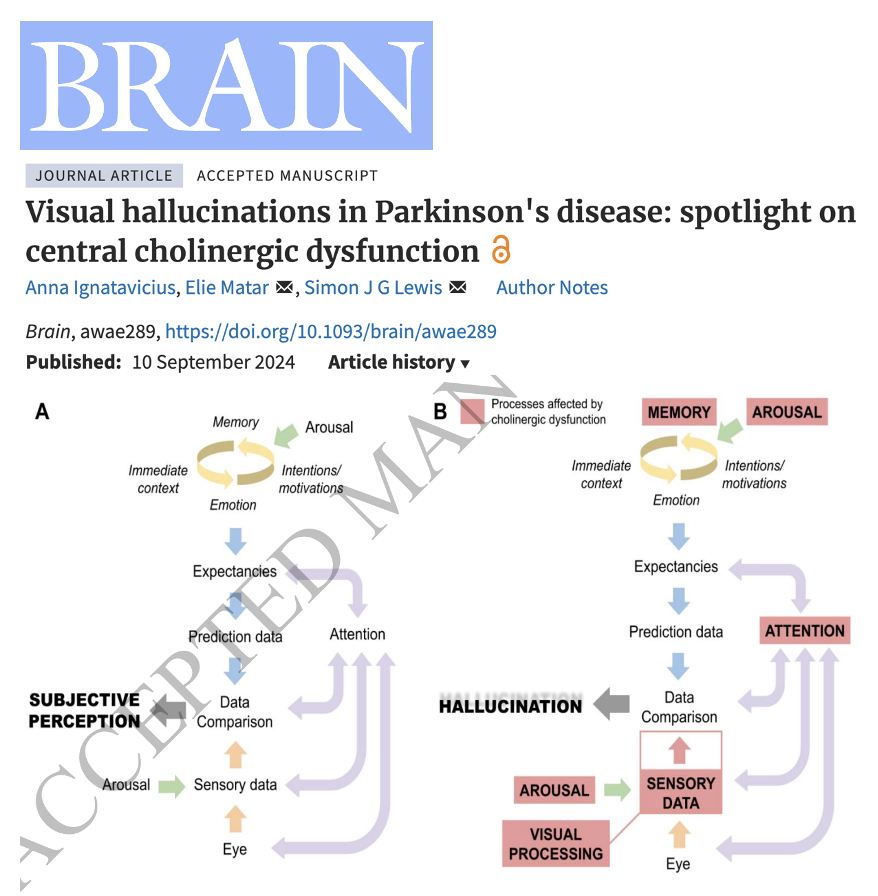
Should we talk more about visual hallucinations in Parkinson's disease and central cholinergic dysfunction? Should we be developing more therapies aimed at cholinergic dysfunction. Ignatavicius, Lewis and colleagues @Brain1878 have a GREAT article on the topic which is a comprehensive review.
Key Points:
- The authors point out that visual hallucinations are common in Parkinson’s disease.
- They are associated w/ cognitive decline, increased mortality and early institutionalization.
- Their main point is that convergent evidence suggests 'degeneration within the central cholinergic system' is important to the development of visual hallucinations.
- Could cholinergic dysfunction serve as a 'unifying neurobiological substrate.'
Key Points: This concept makes sense because cholinergic neurotransmission has such a large effect on cognitive processes it would follow logically that hallucinations would be part of this pathway. Should we be using more cholinesterase inhibitors and developing more and 'better' therapies which operate on this network?
https://t.co/eEt4aeWPJg #parkinson #psychosis #hallucinations