Sometimes the most caring answer is no. Dr. Michelle Kittleson (@MKIttlesonMD) explains why in a new NEJM Voices blog post. Read the post and sign up for email alerts: https://t.co/DpISki5gmS
Clinicians can enhance patient understanding by using numerical data instead of verbal probabilities, consistent denominators, absolute risk comparisons, and clear context for unfamiliar data types.
https://t.co/dcOmkNwtlS
Adrenal insufficiency is a syndrome of cortisol deficiency.
This Review summarizes the pathophysiology of adrenal insufficiency and approaches to diagnosis, treatment, and prevention of adrenal crisis.
https://t.co/68Td08HbKV
In patients with cardiometabolic #HFpEF, #semaglutide and #tirzepatide reduced the risk of hospitalization for heart failure or all-cause mortality vs sitagliptin, but tirzepatide offered no additional benefit over semaglutide.
#ESCCongress#WCCardio
https://t.co/WPJZSeylLz
Here’s a 6-point nuanced update from the 2025 ESC/EAS Dyslipidaemia Guidelines #ESCCongress
1.Risk Refinement with Imaging:
#yesCCT#CVimaging
CAC scoring and subclinical atherosclerosis imaging are upgraded to Class IIa, Level B for refining risk in moderate-risk patients or those near treatment thresholds, strengthening their role beyond SCORE2/OP.
2.Expanded Risk Modifiers:
Clinical and demographic factors (e.g., South Asian ethnicity, premature menopause, HIV, OSA, psychosocial stress) and biomarkers (hs-CRP >2 mg/L, Lp(a) >50 mg/dL) are highlighted as enhancers in risk stratification.
3.Stratified Risk Categories:
Markedly elevated CAC now classifies patients into very high-risk, alongside ASCVD, severe CKD, diabetes with organ damage, or SCORE2 ≥20%.
4.LDL-C Treatment Targets:
Intensified LDL goals include <1.4 mmol/L (<55 mg/dL) for very high risk and <1.0 mmol/L (<40 mg/dL) (Class IIb) for “extreme risk” (e.g., recurrent events despite therapy).
5.Therapeutic Innovations:
•Bempedoic acid (Class I) for statin-intolerant patients.
•Evinacumab (Class IIa) for HoFH uncontrolled on maximal therapy.
•High-dose Icosapent ethyl (2 g BID) (Class IIa) for hypertriglyceridaemia with high/very high risk.
6.Acute & Early Intervention:
For ACS hospitalization, intensification of lipid therapy is recommended (Class I), with early high-intensity statin + ezetimibe (Class IIa) in those unlikely to reach LDL-C goals with statin alone.
CONFIDENCE trial: In persons with chronic kidney disease and type 2 diabetes, combination therapy with finerenone and empagliflozin led to a greater reduction in the urinary albumin-to-creatinine ratio than either drug alone. Full trial results and Research Summary: https://t.co/4Gf0LboOCp
Stopping medication entirely is not the answer
Alternative dosing regimens for #weightloss maintenance might be
Suggested by mathematical modeling but needs real world data 👉 https://t.co/NLKG3YE1Cu
via @NYTimes Our very own Dr. Preeti Kishore provides insights into making healthier choices to start your day ! @MontefioreEndo @JacobiHosp https://t.co/oxkKMF4Joy
Can we rely on negative Thyroseq molecular testing results in indeterminate nodules? What is the false negative rate/prevalence of malignancy if we took the nodules out instead of continued surveillance?
The team @Penn discusses this important issue.
https://t.co/RCvLsNF6gm
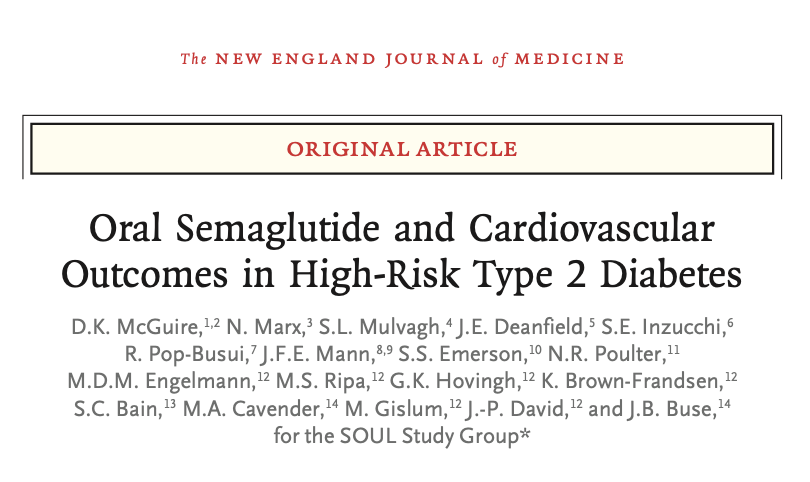
Oral Semaglutide and Cardiovascular Outcomes in High-Risk Type 2 Diabetes: @NEJM
🥸 Among persons with type 2 DM and ASCVD, CKD, or both, the use of oral semaglutide was associated with a significantly lower MACE
😱 Summary
👇👇👇
Presented at #ATTD2025:
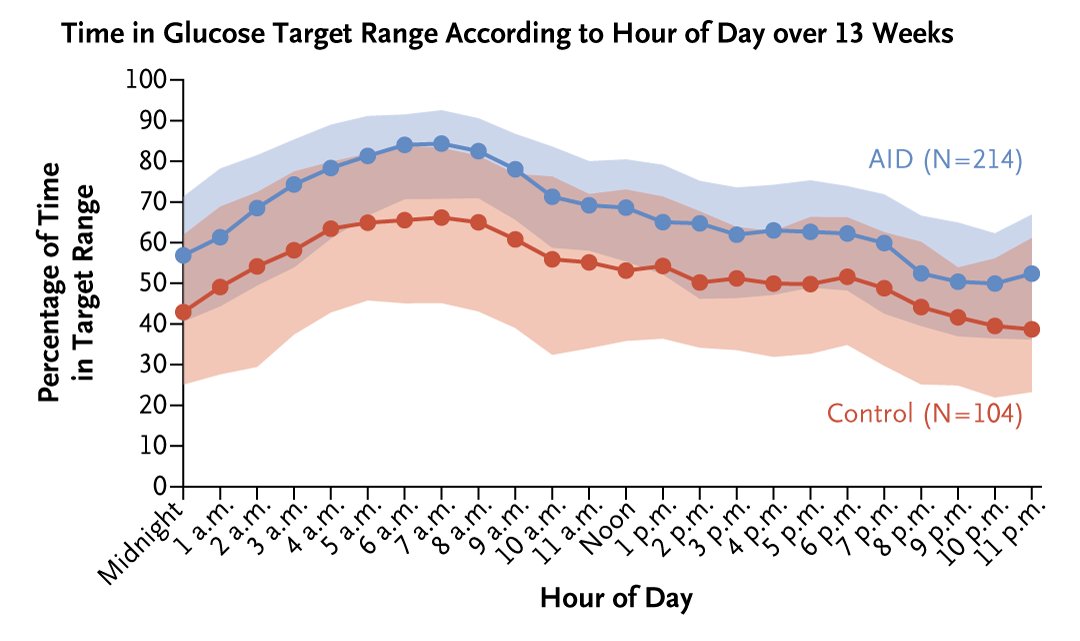
In the 2IQP trial involving adults with insulin-treated type 2 diabetes, automated insulin delivery resulted in lower glycated hemoglobin levels than continuous glucose monitoring alone. Read the full trial results: https://t.co/zQkwnIhV3O
@ATTDconf
What is High-Grade Follicular Cell-Derived Non-Anaplastic Thyroid Carcinoma? What is included in this new pathologic diagnosis and how does its features correlate with oncologic outcome? Check out this new article from @MSKCancerCenter team in Thyroid.
https://t.co/gafYwmyQYv
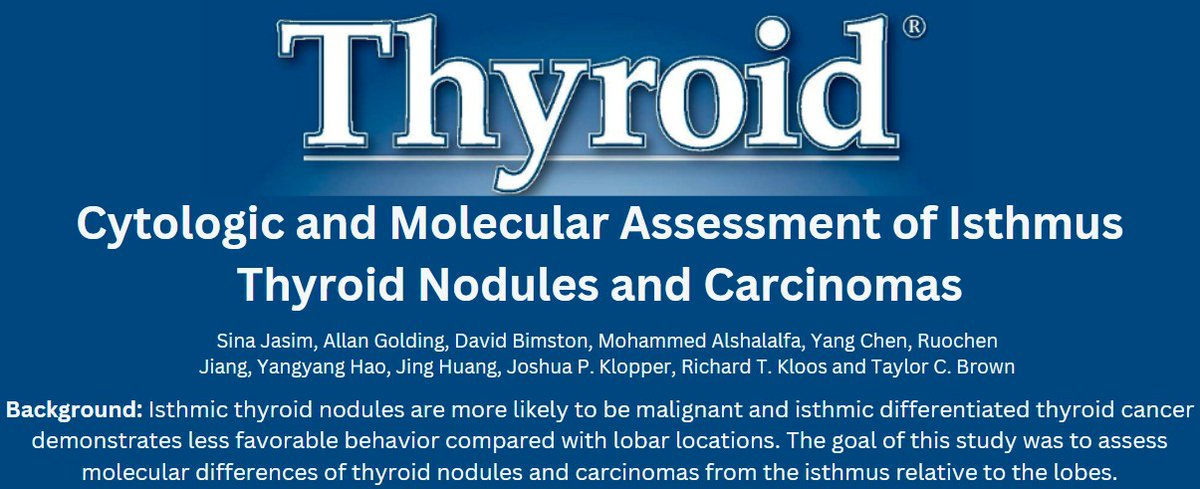
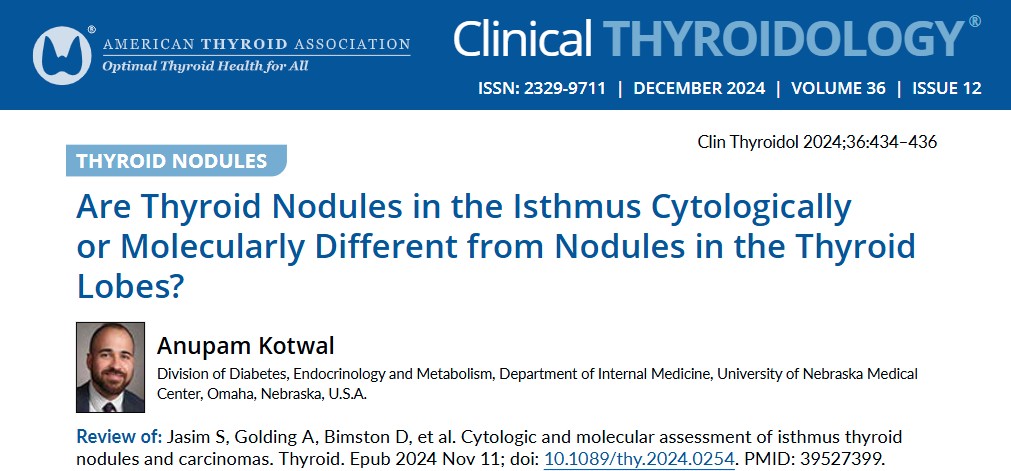
Is there a difference in molecular profiling of #thyroidcancers depending on their location in the thyroid? A collaboration between @Veracyte and @washumedicine in a new article @ThyroidJournal show isthmus tumors may have higher risk genetic profiles.
https://t.co/ldTuLbSIPz
🏆✨One week left to submit nominations! 🏆✨
Do you know an exceptional individual or team transforming the landscape of thyroid research and care? This is your chance to recognize their hard work and dedication!
👉 Award Nominations Deadline 2/2/25: https://t.co/BJrQFCH62J