Should Europe leave frontier AI to the Americans and the Chinese?
The idea has gained ground in Europe. It is a fundamental mistake.
Build or surrender: for now, the choice is still ours.
Full article below. https://t.co/v1biuiXoYe
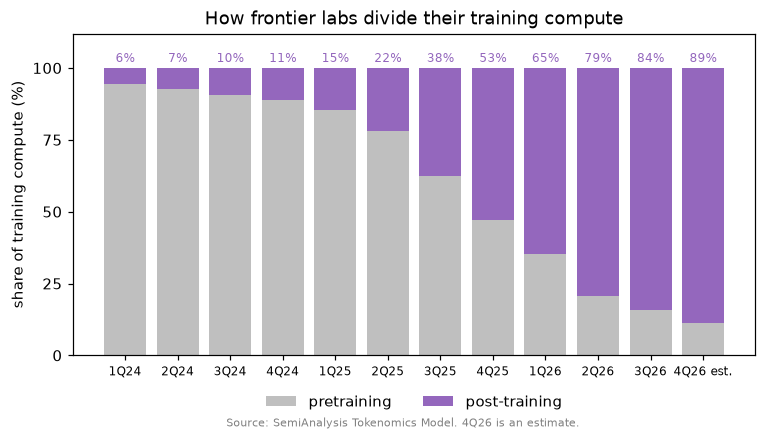
How AI shifted from a transductive paradigm (token-by-token answer completion) to an inductive paradigm (on-the-fly reasoning chain synthesis), in one chart. This is the big story of 2025 and 2026. This is what made coding agents work.
Singapore PM why his government doesn't cap prices to reduce cost of living pressures.
What western leader today could explain the value of price signals in such a way?
Good point on why the layperson doesn't fully grasp or care about alignment yet.
Posttraining/RL has allowed LLMs to deviate from the human-controlled space. Even further, moving from RHLF to verifiable rewards is another jump that the public doesn't grasp yet.
If I could add one thing to what the nontechnical world knows about AI, it would be what RL is and how it differs from pretraining/SFT. The general public has a solid grasp on pretraining (“predict the next token”), which at one point allowed many people to reason accurately about how LLMs work. But common knowledge has stagnated here. I think a similarly high-level understanding of RL makes it easy to see why we should expect both misalignment (RL instills alien traits, while SFT instills human ones) and extreme superhuman capabilities (RL doesn’t limit you to learning from stuff scraped from the internet).
If I were not into AI and just knew the next-token predictor thing, I think I would be really confused as to why people are worried about this stuff, and then if you told me about RL I would become pretty easy to convince. I’m wondering what it would take to propagate an RL analog of “predict the next token” into the common intuition — I feel like this could be pretty big for generating political will, eg by turning people who think AI is a sham into people who are worried about real problems
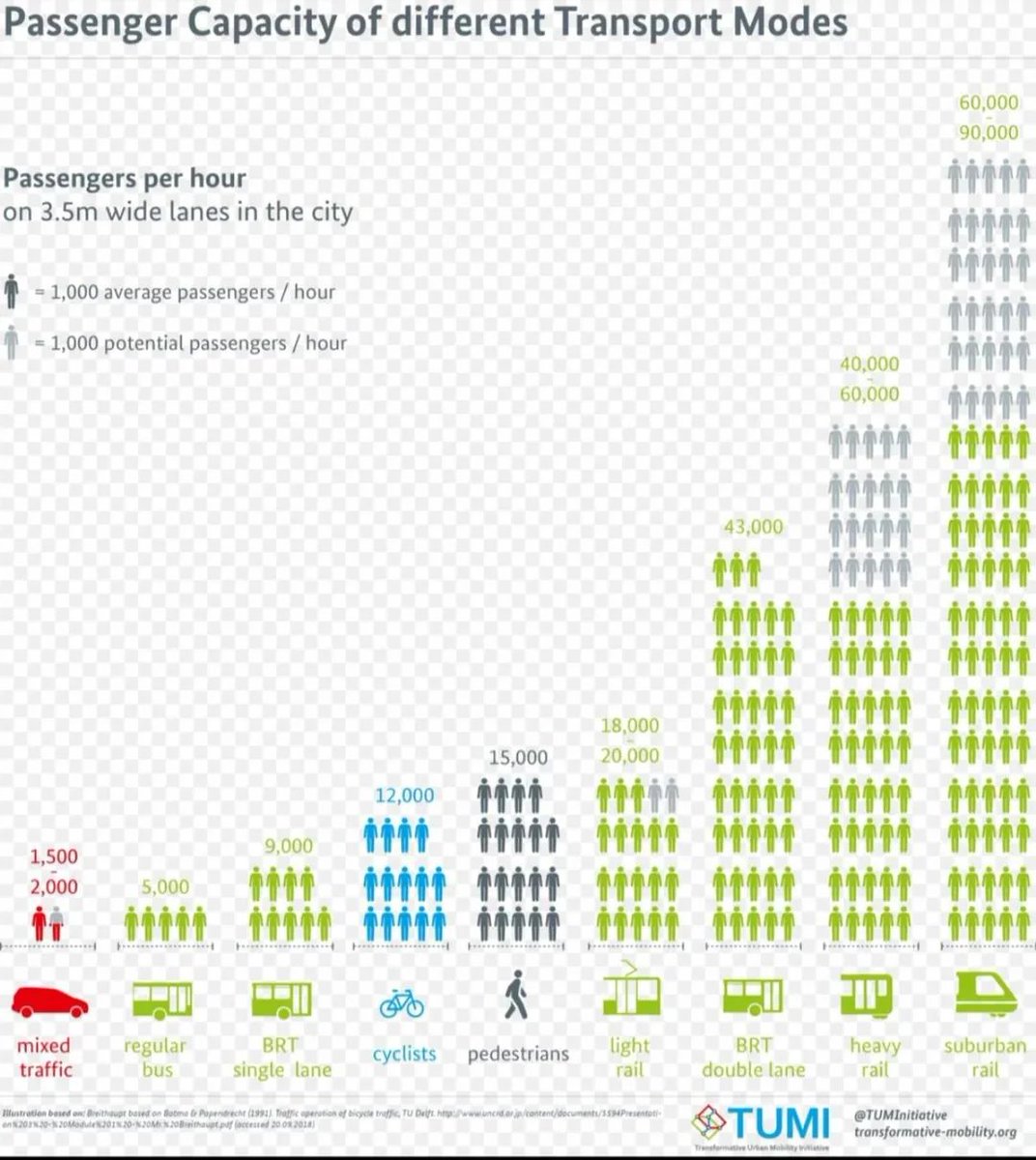
@BhismaK62 Elevated/Underground mixed Karlsruhe model most suitable. A single track of rail allows thousands of people to travel per hour. One lane of road allows only hundreds.
@BhismaK62 Electric buses, cycle lans, etc are just band-aid solutions. Metro is already becoming necessary, will be even more so in 20/30 years time. So need to start building this right away.
@BhismaK62 Road-to-area ratio:
New York City: ~38%
Tokyo: ~23%
London: ~12% to 15%
Kathmandu: ~6% to 7%
Kathmandu doesn't have enough space to build proper road/public transport networks to meet demand. Land aquistion is extremely expensive. Metro + walkability is needed.
रास्वपाका नेता-कार्यकर्ता, समर्थक-शुभेच्छुक प्रधानमन्त्रीको सतप्रतिशत गलत अभिव्यक्तिलाई ठीक साबित गर्न यो हद सम्मको हर्कत नगरिदिनुस्।एकदिन मै यसको असर हाम्रो अखण्डतामा कति परि सक्यो, मनन् गर्नुस्। देश भन्दा ठूलो अर्को चीज हुदैन। गलत भन्न सक्नुहुन्न भने मौन वसिदिनुस् । Please!
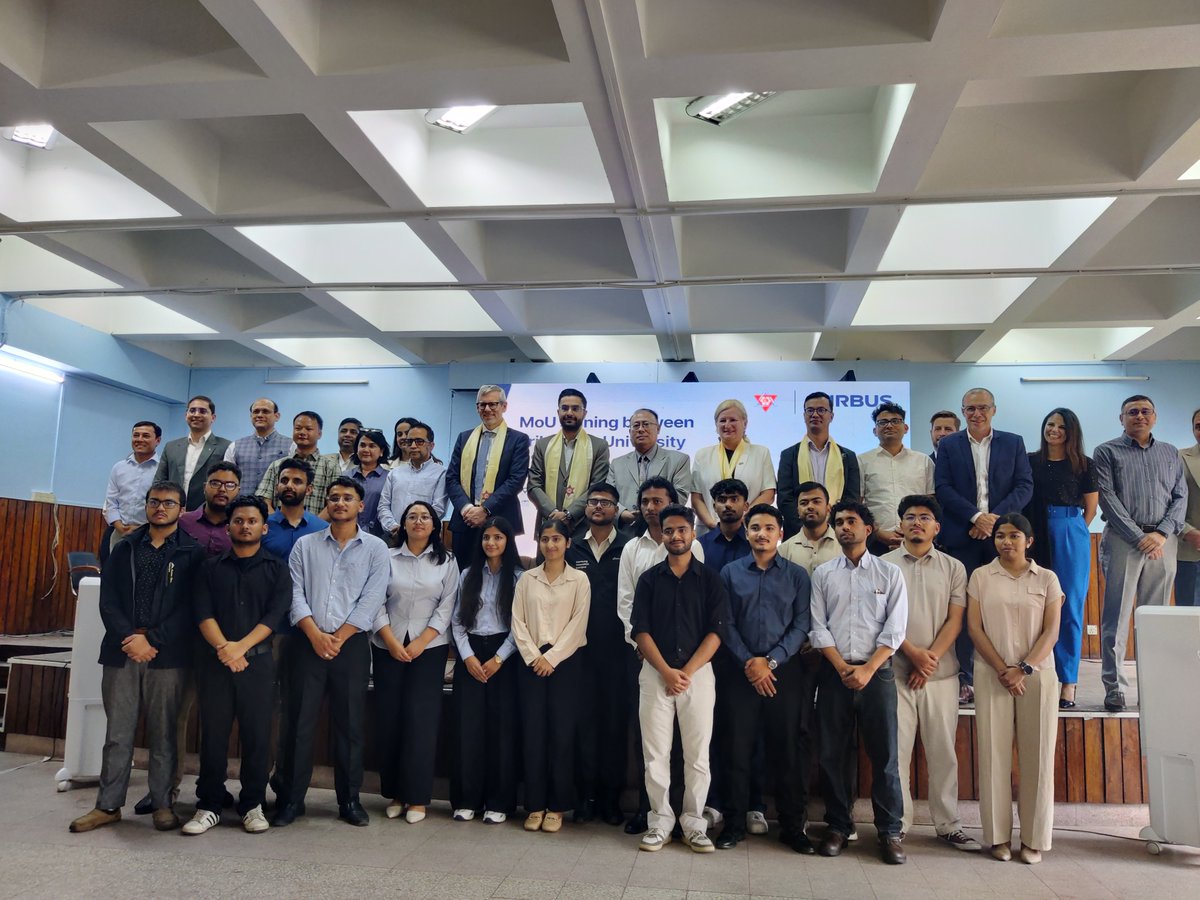
Such a great pleasure to witness the signing of an MoU between #TribhuvanUniversity and @Airbus. Nepal has exceptional young talent and this MoU is a concrete step towards preparing them to shape the future of aerospace in Nepal and beyond. -VC 28.05
PR: https://t.co/Tqa76csqh1
@ubdrain One of the best things Taiwan did was establish trust of foreign investors. IPs were respected, there was no one competing to build copies of products undermining invester confidence. Focused on 1 thing and did it really well with robust supply chains.
The hysteria over data centers is similar to the hysteria over nuclear power in the 70s and 80s. Our idiot politicians listened to morons who didn't understand that nuclear power is safe and clean. Now our power grids are aging and falling apart.
More data centers. Full speed.
@nprkshn Energy and compute, no question. Do 1 thing and do it well.
There are tons of other countries that can do the other stuff better, faster, cheaper. Our competitive advantage lies in the first.
The notion that developing countries can bypass manufacturing — and leap straight to services instead — ignores how every major economy actually developed.
@okaymahesh Would not say it's anything to do with racism. Have often seen families treat those outside of better than family members within.
Need to maintain a pretense maybe? But need better analysis. Racism is a lazy explanation.
@anandanepali99 Supply side कमजोर रहेको हाम्रो जस्तो अर्थतन्त्रमा सस्तो कर्जाले Demand मात्र बढाउँछ। यसले कुनै सकारात्मक नतिजा दिँदैन।
उत्पादनको मूल समस्या समाधान नगरी माग बढाउने पपुलिस्ट नीति ल्याउनुले अर्थतन्त्रमा थप विकृति मात्र ल्याउँछ।
Sure, but as I said, in the worst case, their competitors leapfrog them, in the best case, LLM providers offer personalized privacy needs to these companies much faster than they can pivot to open source models and use them in their businesses processes.
The roadmaps will be torn out not before long. Feel free to remind me in 5 years time.
@ubdrain They are, but not for long. The economic forces will ensure that if a company is to survive, either it adapts and uses the best provider or it is replaced by someone who does. Why do you think companies no longer self host their servers and go to cloud providers? Same principle.
Yes, but not because currently companies will want to. Instead capital and competitive advantages will move to companies that actually use these LLM providers. New AI-native businesses open up that can obliterate current companies and then it's just game theory. If you don't go all in to the best LLM, your competitor will.
Companies that believe that they can self host and run their existing businesses from silos are in for a very rude awakening.