You have tokens. You want to swap. The app says: "Not enough ETH for gas."
BUT YOU DON'T EVEN HAVE ETH. 🤯
Gasless swaps fix this. And they're already everywhere.
Let me break it down 👇
--------------------------------------------------------
TL;DR ✅
🔑 Gasless swaps = trade tokens without holding a native coin (ETH, BNB, SOL...) for fees
⚙️ A helper called a "solver" or "relayer" pays gas for you and gets paid back from your trade
💸 The fee doesn't disappear, it's just folded into the trade instead of your wallet balance
✍️ You only sign a message (free!) and the helper does all the on-chain work
🌉 Especially powerful for cross-chain swaps where you'd need gas coins on EVERY chain
🛡️ Safe by design, but always watch what you sign
--------------------------------------------------------
⛽ What is Gas, in plain terms?
Gas is the fee every blockchain charges to do ANYTHING.
Think of it like postage on a letter.
The brutal part? It ALWAYS has to be paid in the network's native coin.
Trading $USDC for $DAI on Ethereum? You still need $ETH for gas. No ETH? Swap fails. Full stop. 🙅
This is the wall that makes half of new users quit before they even start.
--------------------------------------------------------
🔥 What is a Gasless Swap?
It's a token trade where the gas fee is NOT coming out of your native coin balance.
You only need the token you want to trade. That's it. Nothing else.
A helper covers the gas upfront and gets paid back from the trade itself.
From your side? It feels exactly like a normal swap. Tap, approve, done. ✨
--------------------------------------------------------
⚙️ How does it work?
4 simple steps:
1️⃣ You choose the tokens + amount (just like normal)
2️⃣ You sign a message in your wallet (FREE, no gas needed)
3️⃣ A "solver" or "relayer" submits the trade to the blockchain and pays the gas
4️⃣ Your new tokens arrive, the helper takes a tiny slice as payment
The key insight here: signing ≠ transacting.
Your signature is a PROMISE. The helper is the one who ACTS on it.
This separation is what makes the whole thing work. Cryptographic magic! ✨
--------------------------------------------------------
💸 Is it ACTUALLY free?
No. And this matters.
The network fee still exists. SOMEONE still pays it.
That someone is the solver... who gets paid back from a tiny slice of your trade.
So instead of paying gas in ETH from your wallet, you pay it implicitly in the tokens you're already trading.
You might pay a touch more than raw gas. But you skip the entire "go buy a gas coin first" headache.
For most users? That trade is 100% worth it. ⚡
--------------------------------------------------------
🌐 Where can you use it?
Gasless swaps are everywhere now:
- UniswapX (@Uniswap)
- 1inch Fusion (@1inch)
- CoW Protocol (@CoWSwap)
- @RangoExchange (cross-chain + Solana!)
Rango is especially useful here because it supports gasless swaps across EVM chains AND Solana.
So for cross-chain trades, you don't need to stock up on gas coins for every single network you touch.
That's HUGE for multi-chain users. 🌉
--------------------------------------------------------
🧠 The Smartest Part: Why This Is a Big Deal for Web3
Gas friction is one of crypto's biggest onboarding killers.
Studies show that asking new users to buy a gas coin FIRST can cause ~50% of them to drop off immediately.
Gasless swaps directly attack that problem.
They're part of a bigger trend called Chain Abstraction, where all the messy technical details get hidden from users.
The dream? Crypto feels as easy as a normal app. Gasless swaps are one of the clearest signs we're getting there. 🚀
--------------------------------------------------------
🛡️ Are Gasless Swaps Safe?
Mostly yes. Here's why:
Your funds are protected by your signature. The solver CANNOT change what you agreed to. If they try, the signature is invalid and the trade fails.
The one real risk: signature phishing.
Scammers know signing "feels harmless," so they try to trick you into signing a wallet-draining approval.
Defense is simple: only sign on apps you trust, and read what your wallet shows you. If something looks off, STOP. 🛑
--------------------------------------------------------
Retweet if you learned something 🙏 Tell me: have you ever been blocked from a swap because of no gas coin? 👇
#Ethereum #DeFi #Crypto #Web3 #GaslessSwaps #Crosschain $ETH #ChainAbstraction @ethereum@ethereumfndn
🔐 What if you could prove your trading strategy was profitable — without revealing the strategy itself?
zkBacktest is live on my GitHub. Here's what it does. 🧵
---------------------------------------------------------
TL;DR ✅
📊 Prove correct backtests of trading strategies over committed price data
🔒 Keep your strategy private — nobody sees your Pine Script
⚙️ Two proof backends: Winterfell AIR (custom STARK) + RISC Zero zkVM
✨ Blake3-committed dataset — no cherry-picking bars
🧮 In-circuit financial metrics: total return, Sharpe ratio, max drawdown
🚫 No-look-ahead enforced as a circuit invariant
---------------------------------------------------------
🔍 What is zkBacktest?
You write a trading strategy. You run it against historical price data. You get a ZK proof that says: "This secret strategy, on this exact public dataset, produced these exact results."
No trust needed. No fake backtests. No reveal of your strategy. Just math.
---------------------------------------------------------
⚔️ Why it matters:
Backtesting has a credibility problem. Anyone can show you a pretty equity curve and claim their strategy worked. Without verifiable execution, it's hard to know what's real.
zkBacktest addresses this directly: The proof commits to the dataset via #Blake3. The circuit enforces causal order: bar `t` cannot see bar `t+1`. Cherry-picking is structurally impossible.
---------------------------------------------------------
⚙️ How it works — two backends:
Phase 1,2: #Winterfell AIR (#STARK)
Custom STARK over the Goldilocks field. Strategy parameters are public. The AIR circuit verifies prices, positions, returns, and drawdown peaks across the trace. All constraints are degree ≤ 2.
Phase 3: @RiscZero zkVM
A #PineScript subset interpreter runs inside a zkVM. Strategy is private witness. Only the public journal is revealed: total return, Sharpe, drawdown, dataset, and its commit.
The verifier cannot see your strategy. That's not a feature; it's a cryptographic guarantee. 🔒
---------------------------------------------------------
🧩 The interesting part:
No-look-ahead isn't enforced by convention; it's a circuit invariant.
You cannot encode a look-ahead bug. The circuit won't allow it 🙅♂️
And the dataset commitment? Blake3 hash of every bar, in order. Swap one bar: proof breaks.
---------------------------------------------------------
🚀 Why this matters long-term:
On-chain strategy marketplaces where sellers prove performance without revealing alpha. DeFi vaults that publish verifiable backtests before accepting capital. Quant funds where "here's a ZK proof" replaces "trust me."
ZK applied to finance is still early. But the primitive is here.
---------------------------------------------------------
Would you use something like this to verify a strategy before trusting a vault? Curious what people think. 👇
#ZK #ZKP #Ethereum #Cryptography #DeFi #STARK #RiscZero $ETH #zkBacktest @Starknet@EliBenSasson@SuccinctLabs@pumatheuma
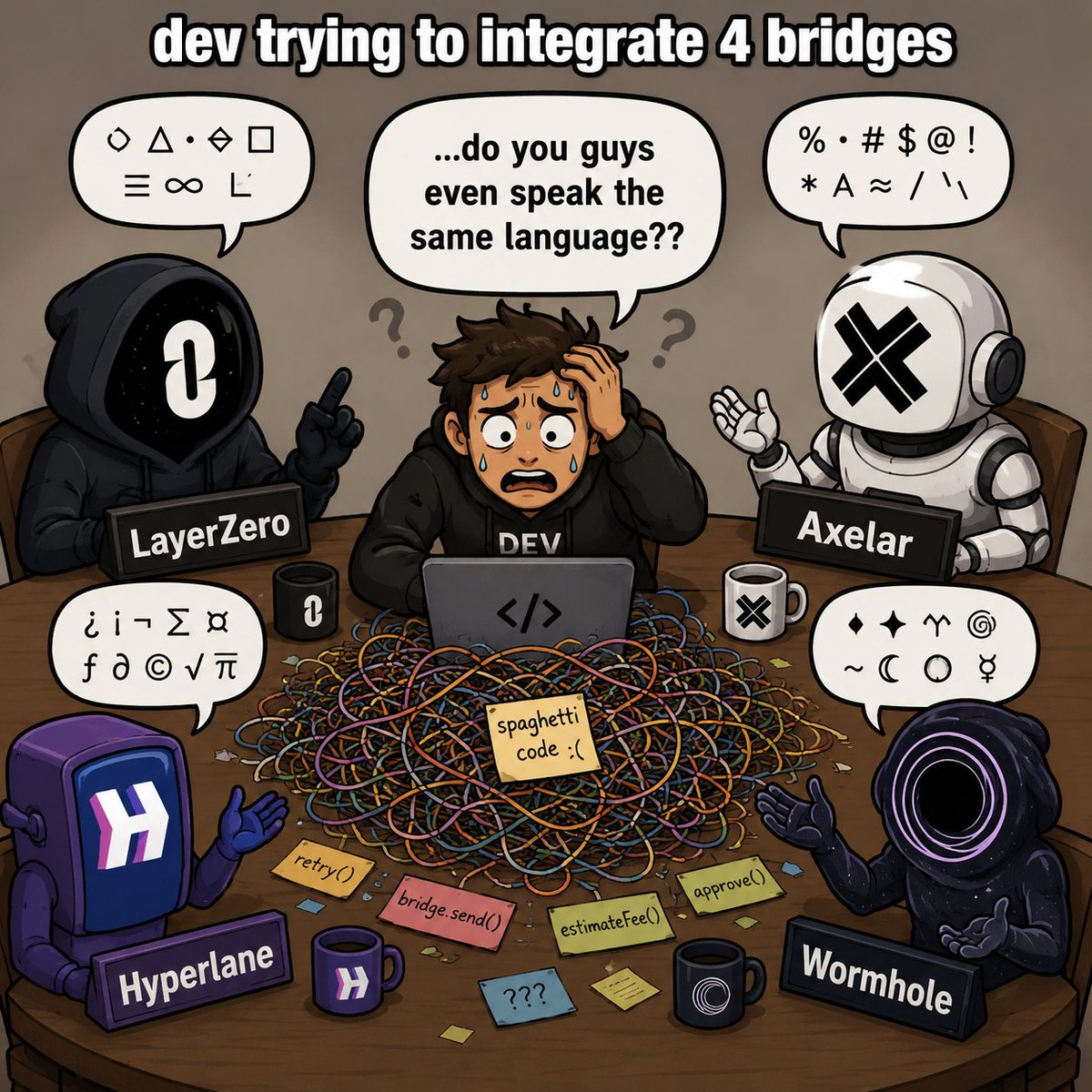
🌉 Every bridge speaks a different language. What if your app didn't have to learn all of them?
ERC-6170 is the universal translator for cross-chain messaging. And it's CLEANER than you think. ✨
---------------------------------------------------------
TL;DR 🧵
🔌 ERC-6170 defines a minimal standard interface for ANY cross-chain messaging bridge (AMB)
⚙️ Just 2 functions + 2 events. That's it. Minimal footprint, massive impact
🔗 Uses bytes for chain IDs and addresses... so it works with EVM AND non-EVM chains
🔁 Bridges become swappable modules -- switch providers without rewriting your whole stack
📡 Standardized events make cross-chain monitoring & tooling way easier to build
✅ Still in Draft status -- but already useful as a design target and abstraction boundary
---------------------------------------------------------
🔥 What is ERC-6170?
Right now, building cross-chain apps is a nightmare of adapters.
@LayerZero_Core has its own interface. @axelar has its own interface. @hyperlane has its own interface. @wormhole... you guessed it. Its own interface.
Every #bridge is a different "dialect." And every dev has to write bespoke integrations, audit them separately, and maintain them forever.
ERC-6170 says: STOP. Let's standardize the boundary between apps and bridges.
Not the bridge itself. Not the relayer. Not the proof system.
Just the contract-level port that your app uses to talk to any bridge. 🔌
---------------------------------------------------------
⚔️ Why it matters:
Fragmented bridge interfaces create integration debt. That debt compounds:
You lock into one provider... and inherit all their risk
Adding a second provider means doubling your integration surface
Bridge outages and security incidents hit EVERYONE who's locked in
ERC-6170 breaks that cycle.
When the interface is standardized, switching providers = changing one address. Not rewriting your cross-chain stack.
That's resilience. That's modularity. That's what multichain apps actually need. ⚡
---------------------------------------------------------
With ERC-6170? One parser. All bridges. Unified indexing. 📊
Dashboards, risk monitors, cross-chain routers... they all get cheaper to build when events are predictable.
And predictable = operable. In production cross-chain systems, that matters enormously.
---------------------------------------------------------
🚀 Why this can be HUGE:
The number of L2s keeps growing. The number of bridges keeps growing.
The integration surface explodes quadratically. Without standards, that's a mess forever.
ERC-6170 turns cross-chain messaging into a modular dependency. Your app declares "I need an AMB." It plugs in any ERC-6170 compliant bridge. Done.
Multi-bridge redundancy becomes realistic. Adding a second bridge for failover doesn't mean a second full integration.
That shifts competition from "who has the stickiest integration" to "who has the best reliability, latency, and cost."
That's a win for developers. And users. And the whole ecosystem. 🌍
Oh... and it composes beautifully with intent standards like ERC-7683. 👀
ERC-7683 describes WHAT the user wants. ERC-6170 moves the intent between chains. Clean separation of layers. This is chain abstraction becoming real.
---------------------------------------------------------
Which of these matters more to you -- the modularity or the multi-bridge redundancy? Tell me below! 👇
Retweet if you learned something 🙏
#Ethereum $ETH #ERC #ERC6170 #Crosschain #Interoperability #ChainAbstraction #L2 #Web3
What if cross-chain apps could switch transports without rewriting their whole stack? 🚨
- Same #intent.
- Same app logic.
- Different #bridge underneath.
---------------------------------------------------------
TL;DR 😍
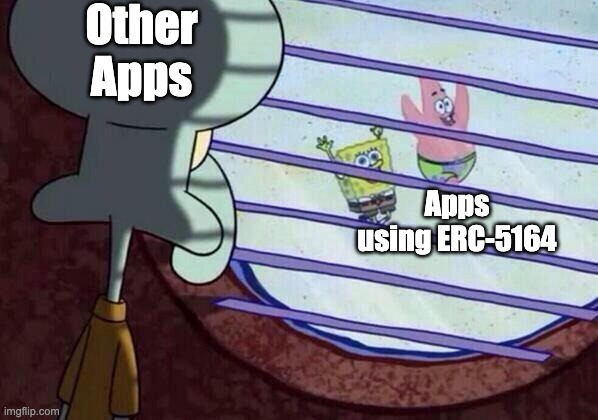
- ERC-5164 standardizes cross-chain contract execution for EVM chains.
- Not a new bridge. A shared interface!
- One contract dispatches on chain A. Another executes on chain B. And the app doesn’t have to rebuild itself for every bridge API.
---------------------------------------------------------
🧩 What is ERC-5164?
A simple promise:
- send a message here,
- execute a call there.
It splits the flow into 2 parts:
• `MessageDispatcher` on the origin chain
• `MessageExecutor` on the destination chain
The transport layer can be a native bridge, third-party bridge, or messaging network.
That’s the elegance. The interface stays stable. The transport can change.
---------------------------------------------------------
⚔️ Why it matters:
One of the biggest cross-chain problems is not “can messages move?”
It’s that every bridge exposes a different app-facing interface. So protocols end up writing custom adapters again... and again... and again.
ERC-5164 attacks that boring but brutal layer directly.
- Less bespoke glue code.
- Less bridge lock-in.
- More portable apps.
---------------------------------------------------------
⚙️ How it works:
A dispatcher sends a message and returns a `messageId`.
An executor receives it on the destination chain and can only execute that `messageId` once. If execution fails, it reverts so the message can be retried.
Much cleaner cross-chain behavior. 🔁🛡️
🔒 The smartest part:
The executor appends (`messageId`, `fromChainId`, `from`) to the `calldata` before calling the destination contract.
That means the receiver can verify the real cross-chain origin directly. Actually verify who initiated the action. 🧠
That is a huge upgrade for safety and fairness.
---------------------------------------------------------
✅ Is it real or just spec-theater?
It already has reference implementations around #Ethereum → #Optimism, #Arbitrum, and #Polygon using native bridge paths, and the #EIP is listed as Last Call on the canonical EIPs site.
---------------------------------------------------------
🚀 Why this can be HUGE:
ERC-5164 turns “bridge + execute” into a cleaner primitive. So cross-chain UX can become:
• bridge + deposit
• bridge + stake
• bridge + govern
• bridge + rebalance
• bridge + settle
That’s a much bigger design space for wallets, protocols, and aggregators.
---------------------------------------------------------
To learn more about this ERC, you can read my article in @RangoExchange's learn center 👇
🚨 What if Bitcoin could run Ethereum-style apps… without changing Bitcoin at all?
That’s the bet behind @citrea_xyz 🟠 — and it’s one of the most interesting @Bitcoin L2 designs in the market right now. 🔬⚙️
----------------------------------------------------------
TL;DR ✅
- 🟠 Citrea is a Type 2 zkEVM rollup on Bitcoin — EVM-friendly for devs, Bitcoin-anchored for settlement.
- 🧾 Bitcoin is used for both data availability + settlement, so Citrea’s state can be reconstructed from Bitcoin blocks.
- 🧠 ZK-STARKs provide validity, while BitVM-style optimistic challenges enforce correctness on Bitcoin.
- 🌉 Clementine is the trust-minimized bridge that brings BTC into Citrea as cBTC (and back).
- 💸 Fees are split between L2 execution and Bitcoin posting costs, with batching used to keep things practical.
----------------------------------------------------------
1) What is Citrea, exactly? 🟠
#Citrea is a #Bitcoin Layer 2 rollup with an EVM-compatible smart contract platform.
It executes off-chain, proves validity, and anchors the result on Bitcoin — no Bitcoin consensus changes needed. ⚙️🧩
Citrea chooses Type 2 zkEVM to keep the EVM developer experience familiar while making proving more practical at real throughput.
That means easier migration for existing Ethereum apps/tools. 🛠️📦
----------------------------------------------------------
2) Architecture 🏗️
Think “classic rollup pipeline,” but with Bitcoin as the base layer: execute on Citrea, generate a proof, then post proof + state data to Bitcoin. 🔁⛓️
Bitcoin as data availability 🧾
Citrea publishes state diffs/proof material to Bitcoin so nodes can reconstruct state directly from Bitcoin blocks.
That’s a major trust-model difference vs. validiums or off-chain DA committees. 🧠📚
Bitcoin as settlement and finality 🛡️
Batch commitments land on Bitcoin, and finality follows Bitcoin confirmations.
Citrea activity also feeds Bitcoin’s fee market by consuming block space. ⛏️💰
----------------------------------------------------------
3) #BitVM and #Clementine 🧠🌉
This is the spicy part: Citrea combines ZK validity with Bitcoin-native dispute enforcement.
That’s how it pushes trust closer to Bitcoin itself. ⚖️🟠
BitVM, as used by Citrea ⚖️
Bitcoin Script can’t directly verify a full STARK proof, so Citrea uses a BitVM-style challenge game.
In practice: invalid claims can be challenged, and Bitcoin acts as the final judge. 🧾🔨
Clementine: the two-way peg 🔁
Clementine bridges BTC into Citrea as cBTC and enables redemptions back to BTC.
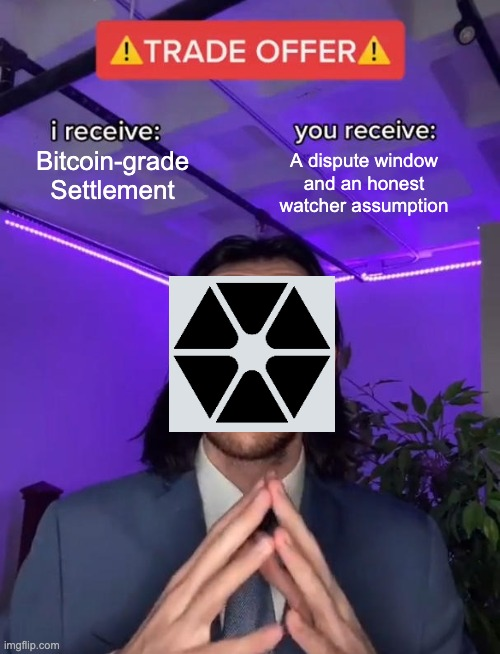
It avoids federated multisig trust and uses an optimistic dispute window instead (so withdrawals may be delayed). ⏳🌉
----------------------------------------------------------
4) Security model 🔐
Citrea aims for Bitcoin-equivalent security posture across validity, DA, and settlement — but with an important assumption:
At least one honest watcher must monitor and challenge invalid state during the dispute window. 👀⚠️
----------------------------------------------------------
5) Funding and team 💼
Citrea is built by @chainway_xyz.
The article notes $16.7M total funding (seed + Series A), with major investors including Founders Fund and Galaxy Digital. 🚀📈
----------------------------------------------------------
6) Token design: cBTC versus a governance token 🪙
Citrea’s core asset is cBTC (BTC on the rollup), and it’s also used for gas.
A separate governance/utility token may come later for decentralization roles like sequencers/provers. ⚙️🗳️
----------------------------------------------------------
7) Ecosystem: ₿apps and early integrations 🌱
The ecosystem is early, but the rails are forming: trading, lending, AMM, and bridge primitives are already part of the story.
The article highlights projects like Crest, Nectra, Satsuma, and Garden Finance. 🧱🌐
----------------------------------------------------------
8) Fees: making Bitcoin-grade settlement affordable 💸
Citrea separates fees into L2 execution + L1 Bitcoin posting costs, then uses batching to amortize the expensive part.
That’s the key trick for making Bitcoin-anchored UX usable. 📉📦
The L1 fee and why diff size matters 📦
On Citrea, bytes matter.
Your transaction’s contribution to the state diff affects how much Bitcoin posting cost you pay. 🧾🧮
High Bitcoin fees and the amortization strategy 📉
When Bitcoin fees spike, batching is the main defense: many L2 txs share one Bitcoin transaction cost.
The article also notes future flexibility paths like volition and deeper Lightning integration. ⚡🛠️
Gas token economics 🟠
Using cBTC for gas makes UX BTC-native, but it also ties fee affordability to BTC price volatility.
Simple for users, tricky for fee tuning over time. 📊⚖️
----------------------------------------------------------
This one is worth the full read if you care about Bitcoin L2 design, BitVM, or BTC-native DeFi rails.
#Layer2 #zkEVM #ZK #BTC $BTC #EVM #DeFi
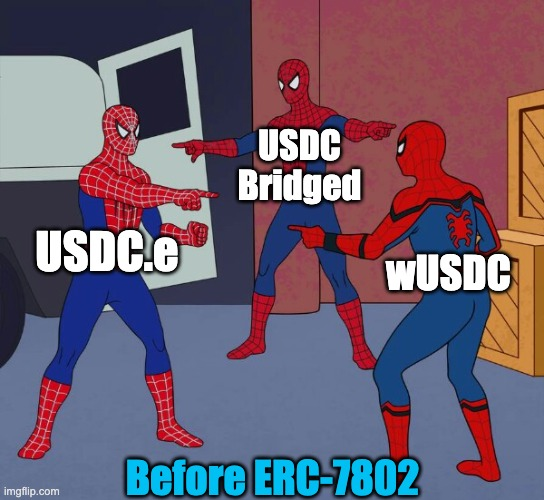
🔥 #Crosschain tokens are stuck in a spaghetti of bespoke bridges, but there’s a cleaner handshake emerging. 🔥
-------------------------------------------------------
TL;DR
- ERC-7802 adds two minimal functions to tokens: `crosschainMint` and `crosschainBurn`, letting bridges talk to tokens via a shared interface.
- It’s bridge-agnostic and small by design, making adoption easier and avoiding “standard bloat.”
- The goal is less liquidity fragmentation and fewer wrapped variants of the same asset across chains.
- Backed by teams around @Uniswap & @Optimism, it aligns with chain abstraction and cross-chain intent layers.
-------------------------------------------------------
Why ERC-7802 Exists
Cross-chain transfers are mainstream, but token contracts still require custom mint/burn grooves for each bridge, creating fragmentation and integration friction. ERC-7802 standardizes that handshake so bridges and tokens speak the same low-level language, reducing duplicated engineering effort across ecosystems.
-------------------------------------------------------
Origins & Authors
Drafted by contributors tied to #Optimism/ $OP Labs and #Uniswap-aligned developer circles, the standard reflects real integration pain in multi-chain ecosystems. It emerged from practical production experience rather than theoretical design alone.
$UNI
-------------------------------------------------------
Core Idea — A Mental Model
See cross-chain transfer as a supply-preserving teleport:
burn on source → mint on destination through a common interface, not a new bridging philosophy, just a shared token “door handle.”
The invariant is simple: total supply remains coherent across chains.
-------------------------------------------------------
Technical Architecture
At its core, IERC7802 defines two functions and matching events, letting bridges mint/burn token representations with strict access controls enforced by the token.
This keeps security logic within the token contract while remaining flexible for different bridge implementations.
-------------------------------------------------------
Why It Matters
In a world pushing chain abstraction and standardized intents, a consistent token execution layer makes higher-level cross-chain tools more deterministic and reliable.
Cleaner primitives at the base layer mean stronger composability at the application layer.
-------------------------------------------------------
Early Adoption Signals
Even in Draft, references to ERC-7802 are appearing in developer docs and multi-chain ecosystem plans, a sign builders see practical value.
Early visibility often shapes de-facto standards long before finalization.
-------------------------------------------------------
Ecosystem Benefits
Standardized mint/burn can reduce the proliferation of wrapped assets, boost liquidity depth, and make routing simpler for users and aggregators alike.
For aggregators and routers like @RangoExchange, fewer token variants means more efficient pathfinding and pricing.
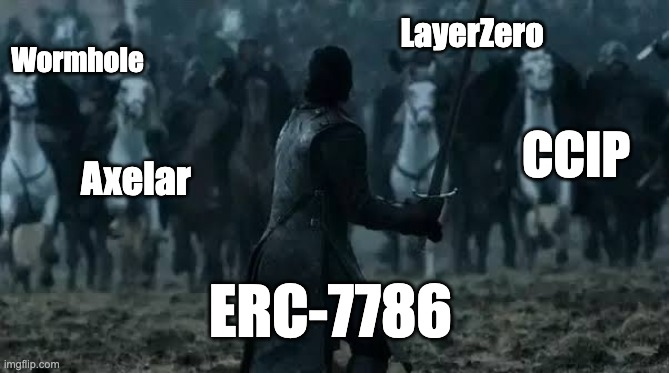
🧩🌉 Imagine writing cross-chain messaging once… and having it work across @LayerZero_Core, @wormhole, @Axelar, @Chainlink CCIP, and whatever comes next.
That “universal translator” idea is exactly what ERC-7786 targets.
------------------------------------------------------
TL;DR ✅
• ERC-7786 standardizes how dApps talk to bridges (it’s not a new bridge).
• One interface: sendMessage + a receiver hook.
• Less lock-in, fewer bespoke adapters, easier future switching.
------------------------------------------------------
The Cross-Chain Problem: A Babel of Bridges 🗣️🌐
Every bridge ships its own API + assumptions → dev overhead, vendor lock-in, more attack surface, and poor composability between apps.
------------------------------------------------------
Origins & Status 🧾
Draft since April 2024, driven by builders who’ve felt the pain firsthand (Connext, @SOCKETProtocol, and others). The goal: shared public infrastructure, not one team’s walled garden.
------------------------------------------------------
ERC-7786: The Universal Messaging Gateway 🔧
Think “ERC-20, but for messages.” Apps target a standard gateway interface; bridge providers implement it (or ship adapters) behind the scenes.
------------------------------------------------------
Technical Deep Dive ⚙️
Gateway: sendMessage(destinationChainId, receiver, message) payable + a MessageSent event for tracking.
Receiver: receiveMessage(sourceChainId, sender, message) + MessageReceived on delivery.
------------------------------------------------------
Implications 🚀
• Bridges compete on security/cost/speed—not proprietary APIs.
• Routers/aggregators can dynamically pick the best bridge per message.
• Users get resiliency (reroute if a bridge degrades) + better pricing pressure.
------------------------------------------------------
Challenges & Considerations 🛡️
ERC-7786 abstracts the interface—not the risk. Different gateways still carry different trust/security models. Adoption also needs real network effects from bridges + dApps.
#Ethereum $ETH #Bridge #ERC #LayerZero #Wormhole #Axelar #CCIP #Socket
Seed phrases, rigid EOAs, and gas confusion are not how #Ethereum UX should feel 🚫🧠 — EIP-4337’s Account Abstraction is quietly rewriting the rules for wallets, gas, and security 🔐⚡
---------------------------------------------------------
TL;DR 👇
🔑 EIP-4337 turns your wallet into a smart account with programmable validation
📦 New UserOperation + Bundlers + EntryPoint = AA without a hard fork
🧑🤝🧑 Social recovery, MFA, batched txs, and gasless UX become first-class
🏗️ Already live, standardized, and supported by major infra & wallets
---------------------------------------------------------
The Problem: Ethereum’s Two-Account World 😵💫
@Ethereum split users between EOAs (keys + seed phrases) and contract accounts (powerful but passive). This duality locks #UX into “don’t lose your seed or lose everything” and forces all transactions + gas handling through brittle EOAs.
---------------------------------------------------------
Origins & Status of EIP-4337 📜✨
Proposed as a way to get Account Abstraction without touching consensus, EIP-4337 is now a Final Ethereum standard, with a real ecosystem of infra providers and wallets already live around it.
---------------------------------------------------------
Architecture in One Glance 🧬
Instead of normal transactions, users send UserOperations to a dedicated mempool. Bundlers scoop them up, simulate, and batch them into a single tx that calls a globally trusted EntryPoint contract.
Your wallet becomes a Smart Account implementing custom validation logic, while optional Paymasters can sponsor or abstract gas (including ERC-20 gas payment).
---------------------------------------------------------
What This Unlocks in Practice 🚀
- Social recovery & multi-factor style flows (guardians, devices, policies)
- Transaction batching (approve + swap + more in one shot)
- Session keys for games & high-frequency apps
- Modular, upgradeable wallet logic instead of “one-shot forever” EOAs
This is the toolbox for building actual mainstream-grade crypto UX.
---------------------------------------------------------
Challenges & Road Ahead 🧩
New actors like Bundlers and Paymasters introduce fresh coordination and decentralization questions, and the extra contract calls add some overhead — but signature aggregation, ecosystem competition, and better tooling are already pushing costs and centralization risks down.
---------------------------------------------------------
Why It Matters 🧭
EIP-4337 is not a niche wallet tweak; it’s a mental model for accounts on Ethereum $ETH. It keeps decentralization, but hands developers and users powerful knobs for security, UX, and monetization design. Smart accounts are on track to become the default, with EOAs fading into legacy status.
---------------------------------------------------------
🔗 Want the full diagrams, examples, and references?
Read the complete Rango Learn deep dive here ⬇️
✨
🚀 High-throughput EVM chains are no longer a promise. Monad is live, and it feels like an HFT engine for Ethereum-style apps.
--------------------------------------------------------
TL;DR 🥱
⚙️ Monad is an EVM-equivalent L1 with sub-second finality and parallel EVM execution.
🧠 Built by ex–Jump Trading engineers, funded by Paradigm, Dragonfly and others (~$244M).
🌍 Mainnet is live, with DeFi, perps, and infra teams already deploying.
🌉 Rango Exchange supports Monad from second zero – you can bridge to and from Monad via Rango.
--------------------------------------------------------
What is Monad in one take? ⚡
@Monad is an EVM-equivalent Layer 1 that keeps Solidity, Ethereum bytecode and standard tooling, but re-architects the engine underneath to remove the sequential bottleneck. From the outside it looks like another EVM chain; under the hood it is built to process transactions in parallel, finalize blocks in around a second, and keep UX smooth even when the network is busy.
For builders and integrators, that means you can treat Monad as “@Ethereum-compatible but much faster,” rather than learning a new VM or mental model.
--------------------------------------------------------
How it works (in short) 🧬
MonadBFT is a HotStuff-style proof of stake consensus tuned for single-slot finality, so confirmations behave like “one block and done,” which is ideal for cross-chain flows and fast DeFi markets.
Parallel EVM execution relies on optimistic concurrency: non-conflicting transactions are executed simultaneously across cores, and only conflicting ones are re-run in a safe order. The final state matches Ethereum semantics, but throughput scales with hardware instead of being locked to a single-threaded pipeline.
MonadDB and RaptorCast handle the I/O and networking side: MonadDB is a custom state engine optimized for SSDs, and RaptorCast pushes blocks around the validator set quickly enough to keep sub-second blocks realistic as the network grows.
The result is an EVM chain that can plausibly support high-frequency DeFi without changing how contracts are written.
--------------------------------------------------------
Team and capital behind the chain 🧑🔬💰
Monad is built by a team with deep low-latency experience from Jump Trading and similar environments, which explains the focus on pipelining, contention, and storage throughput. The protocol R&D lives in @category_xyz, while the Monad Foundation coordinates ecosystem, grants and decentralization.
On the funding side, Monad has raised roughly $244M: a $19M seed led by @dragonfly_xyz and a $225M round led by @paradigm. That capital base is already being used to attract DeFi, infra and tooling projects so that mainnet does not launch empty.
--------------------------------------------------------
Mainnet and ecosystem 🌍
Monad mainnet is now live, following a very active public testnet that already proved the performance profile under real traffic. Early activity is heavily DeFi-focused: AMMs, orderbook-style DEXs, perp platforms, oracles, bridges and wallets are all moving in, treating Monad as a performance-native venue that still speaks “plain EVM”.
This combination of familiar tooling + high performance is exactly the sort of environment where sophisticated strategies, tighter spreads and deeper liquidity tend to emerge.
--------------------------------------------------------
Why this matters for Rango users 🌉
Monad is not another isolated high-TPS chain. It is designed to sit inside the broader EVM universe, and that only works if users can move liquidity in and out efficiently.
That is why @RangoExchange supports Monad from second zero of mainnet.
You can bridge assets to Monad, bridge out of Monad and route swaps across the rest of your portfolio seamlessly.
You let Rango’s routing engine decide when Monad is the best venue for part of your path, instead of manually stitching routes together.
Monad aims to be a high-frequency venue inside the EVM world. Rango turns it into just another powerful leg in your cross-chain routing graph.
🚀 Monad is live. Liquidity is mobile. #Rango is the bridge and DEX aggregator that connects the two.
$MON #Monad #Ethereum #EVM #UX #Solidity
🔥 Ethereum's next major upgrade is about to drop!
The "Fusaka" upgrade is set to launch in early December 2025, following a series of successful testnets. Incorporating 13 critical Ethereum Improvement Proposals (EIPs), this is a significant step forward for the network.
---------------------------------------------------------
🥱 TL;DR
- Launch: Ethereum's "Fusaka" upgrade is scheduled for mainnet launch in early December 2025.
- Scope: It includes 13 key EIPs focused on scaling, performance, and user/developer experience.
- Scaling: Introduces EIP-7594 (PeerDAS) to enable higher data throughput and lower Layer-2 (L2) fees.
- Performance: Doubles the default block gas limit to 60 million, significantly increasing L1 execution throughput.
- User Experience: Adds EIP-7951 to enable efficient on-chain verification for secure hardware devices (like FaceID/WebAuthn wallets).
- Future: The next major upgrade, "Glamsterdam."
---------------------------------------------------------
🚀 Data Scaling for a Cheaper L2 Experience
EIP-7594 (PeerDAS): A new protocol for verifying blob data availability, paving the way for higher blob throughput and lower Layer-2 (L2) fees. Essentially, a huge win for L2 users and rollups.
EIP-7892: Introduces lightweight, "Blob Parameter Only" hardforks, allowing for quick, incremental scaling of blob capacity to meet demand.
EIP-7918: Ensures the blob fee auction market remains fair and stable by setting a reserve price tied to execution cost.
---------------------------------------------------------
⚡️ Boosting Performance on the Execution Layer
EIP-7935: The default block gas limit is being raised to 60 Million, essentially doubling L1 execution throughput for faster/cheaper transactions.
EIP-7825: Sets a per-transaction gas limit cap (≈16.8M gas) to prevent Denial-of-Service risks and enable future parallel execution.
EIP-7934: Imposes a 10 MiB RLP-encoded size cap on execution blocks to maintain network stability and propagation speed.
And three more EIPs. You better go to @RangoExchange's Learn Center to read about them
---------------------------------------------------------
💻 User & Developer Experience gets a facelift
EIP-7951: Adds a new precompile for the secp256r1 elliptic curve, enabling efficient on-chain verification of signatures from hardware devices (like Apple Secure Enclave/WebAuthn). Get ready for more seamless "Sign with FaceID/TouchID" wallet flows.
EIP-7939: Introduces the CLZ opcode, a gas-efficient tool for low-level bit-level math, simplifying complex smart contracts and reducing gas costs for ZK-proofs.
And one more.
---------------------------------------------------------
✅ Consensus Layer Predictability
EIP-7917 (Deterministic Proposer Lookahead): Makes the block proposer schedule fully deterministic one epoch in advance, which enhances predictability, simplifies security analysis, and prevents manipulation.
---------------------------------------------------------
🛠 The Upgrade is Ready
Fusaka has successfully deployed and passed on three public testnets: Holešky, Sepolia, and Hoodi in October 2025. This rigorous testing phase allowed developers to resolve minor issues, like the change from "blob proofs" to "cell proofs", well ahead of the mainnet launch date in early December 2025.
---------------------------------------------------------
🔮 What's next? "Glamsterdam"
The work doesn't stop here. The next major upgrade, "Glamsterdam," is planned for mid-to-late 2026.
If you want to learn more about this, read the full document on #Rango Learn Center 👇
#EIP #Ethereum $ETH #Fusaka #Upgrade #UX @ethereum@ethereumfndn
Ever wondered how we can keep data truly PRIVATE on public blockchains? 🤔 What if you could compute on encrypted data without ever decrypting it? ✨
⚠️ Quick note: I'm passionate about cryptography! 🤓 (NERD 😁)
This post isn't an ad – it's just me exploring a fascinating technical concept (FHE applied to blockchain).
----------------------------------------------------------
TL;DR
- Problem: Blockchains are transparent, making data privacy a huge challenge! 😥
- Solution: @zama_fhe brings confidentiality to smart contracts using Fully Homomorphic Encryption (#FHE). 🔒
- How: Their #fhevm protocol allows computation directly on encrypted data. 🤯
- Result: Truly private, end-to-end encrypted dApps on any chain! 🚀
----------------------------------------------------------
Why Privacy? 🤔
Blockchains are amazing, but their public nature is a double-edged sword ⚔️. Every transaction, every piece of data stored in a smart contract, is visible to everyone. This transparency is great for auditing but terrible for:
- 🤫 Sensitive personal data (health, identity)
- 💰 Confidential financial transactions (sealed bids, private voting)
- 🎮 Web3 gaming secrets
We need a way to process data on-chain while keeping it hidden! 👇
----------------------------------------------------------
What is Fully Homomorphic Encryption (FHE)? 🪄
FHE is cryptographic magic! ✨ It lets you perform calculations directly on encrypted data without needing the secret key.
Wait, what?
Yes, not all types of encryption systems can do this. Most of them cannot do computation on the encrypted data and ensure the same happens on the decrypted data.
Imagine a locked box 🔒:
- Someone puts numbers (data) inside and locks it (encrypts).
- You, without unlocking it, can perform math on the numbers inside (e.g., add them together).
- The result stays locked inside. Only the key holder can open the box to see the final, correct answer! 🔑
Example:
- Encrypt 5 -> [Encrypted 5]
- Encrypt 10 -> [Encrypted 10]
- Compute [Encrypted 5] + [Encrypted 10] -> [Encrypted 15] ✨
- Only someone with the key can decrypt [Encrypted 15] to get 15!
This means data stays confidential even during computation! 🤯
----------------------------------------------------------
What is FHEVM? ⛓️💥
FHEVM (Fully Homomorphic Encryption Virtual Machine) is @zama_fhe's groundbreaking protocol. It integrates FHE into #blockchain environments (L1s & L2s)!
How it works:
- Encrypt: Users encrypt data client-side (in their wallet/app). 🛡️
- Compute: Smart contracts trigger FHE operations executed by off-chain coprocessors (for speed! ⚡️).
- Decrypt Securely: Results are decrypted using Threshold Cryptography (keys split among nodes - no single point of failure!). 🤝
It keeps smart contracts composable, verifiable, and permissionless while adding that crucial privacy layer! 🥳
----------------------------------------------------------
What is #Zama, and how can it help? 💡
Zama is the company building the open-source tools & infrastructure (like fhevm!) to make FHE usable for blockchain developers. 🛠️
They provide:
- Libraries: For writing confidential smart contracts in Solidity. 📝
- SDKs: To easily integrate FHE into frontends/dApps. 💻
- Infrastructure: The network components (coprocessors, threshold decryption) needed to run it all. 🌐
Zama empowers developers to build dApps previously impossible due to privacy constraints - think confidential DeFi, private voting, encrypted identity, and more! 🤯 Imagine the possibilities!
----------------------------------------------------------
Ready to dive deeper into the future of blockchain privacy?
Tell me what other concepts, or projects you want to be studied.
#Blockchain #Privacy $ZAMA #Crypto
Regular reminder:
A key property of a blockchain is that even a 51% attack *cannot make an invalid block valid*. This means even 51% of validators colluding (or hit by a software bug) cannot steal your assets.
However, this property does not carry over if you start trusting your validator set to do other things, that the chain does not have control over - at that point, 51% of validators can collude and give a wrong answer, and you don't have any recourse.
The most interesting thing about @soneium isn’t just that it’s @Sony’s L2, it’s how deliberately it fuses mainstream IP, real users, and @Ethereum-native tech into a single, high-throughput playground.
----------------------------------------------------------
TL;DR
- What it is: An Ethereum Layer-2 on the OP Stack 🧩 (optimistic rollup, EVM-equivalent 💻), gas paid in ETH ⛽.
- Why it matters: Sony’s distribution 🎮 + Startale’s crypto stack 🛠️ = credible path to bringing millions of non-crypto users 👥 on-chain ⛓️.
- Performance: ~2s block times ⏱️; average fees around fractions of a cent 💵; sustained high throughput 🚄 with multi-million daily tx peaks 📈.
- Ecosystem: DeFi (Uniswap 🦄, Velodrome, QuickSwap ⚡, KYO, Untitled Bank 🏦), GameFi (Evermoon 🎮, Yoki 🐉), NFTs (OpenSea 🌊 drops incl. major anime IP 🎌).
- Integrations: Circle USDC 💵 (bridged), Chainlink 🔗 Price Feeds + CCIP, The Graph 📊, Blockscout 🔍, Startale Cloud ☁️ (AA, private RPC).
- Users & activity: Rapid growth 📈 to millions of unique addresses 👥; cumulative transactions in the hundreds of millions 🧾; record day ~13–14M tx 🔥.
- TVL: Stabilized in the $100–150M 💰 range post-incentives 🎁; peaked >$200M during flagship campaigns 🏴.
- Onboarding & growth: No native gas token 🙅♂️; Soneium Score 🏅 tracks meaningful participation; grants/incubation 🌱 funnel new apps.
----------------------------------------------------------
1) What Soneium Is (and why it’s different)
#Soneium is #Sony’s EVM-equivalent 💻, #Ethereum-secured 🔒 Layer-2 built with the OP Stack 🧩. In practice that means:
- Security & settlement on Ethereum ⛓️. Transactions execute on L2, batched to L1 using EIP-4844 blobs 📦 for low data costs 💵.
- Near drop-in developer experience 👩💻. Solidity/Vyper, Hardhat/Foundry 🛠️, common tooling, @graphprotocol 📊, @Chainlink 🔗, everything “just works.”
- No new gas token ⛽. Users pay fees in $ETH, lowering friction ⚡.
What differentiates Soneium is distribution 📡 and content 🎨. Few chains can marshal household-name IP 🏷️, campaigns with major game publishers 🎮, anime drops 🎌 with @OpenSea 🌊, and consumer-friendly rails 🚉 (account abstraction, onramps, mini-apps 📱) at the same time, and still feel like Ethereum 💠.
----------------------------------------------------------
2) Technology at a Glance 👀
- Stack: #OP Stack 🧩 (op-node + op-geth), Optimistic Rollup with interactive fraud proofs ⚔️; data availability via blobs (EIP-4844) 📦.
- EVM equivalence: High compatibility 💻; existing contracts and infra port easily 🔄.
- Block time / fees: ~2s blocks ⏱️; typical user actions cost sub-cent fees 💵 thanks to batching and blobs.
- Account Abstraction (ERC-4337): First-class support 🏆; @StartaleGroup Cloud ☁️ provides AA tooling and private RPC 🔒 for production-scale apps.
- Interop: Canonical L1 bridge 🌉; Chainlink #CCIP 🔗 for generalized cross-chain messaging; alignment with @Optimism's Superchain roadmap 🌐.
----------------------------------------------------------
3) The Ecosystem, in Layers 🏗️
Core rails & infra:
- Stablecoin rails: $USDC (bridged 💵) for payments, DeFi, and consumer experiences 🛍️.
- Oracles & messaging: Chainlink Price Feeds 📡 (market data), CCIP 🔗 (interchain calls), #VRF 🎲 for on-chain randomness in games.
- Indexing & dev UX: The Graph 📊 subgraphs, @Blockscout verification 🔍, widely supported by RPC providers 🌐, with Startale Cloud ☁️ for enterprises.
DeFi:
- DEX liquidity: @Uniswap 🦄, @VelodromeFi , @QuickswapDEX ⚡, familiar AMM venues for swaps 🔄 and LPs 💧.
- Money markets & optimization: Integrations around @Aave 🏦 and @MorphoLabs; yield strategies with @kyofinance 📈; consumer-leaning on-ramps via @BankUntitled 💳.
- Stable & BTC buckets: A meaningful slice of TVL 💰 sits in stablecoins 💵 and $BTC derivatives; users bridge in yield-bearing BTC 🔗 and stables.
- @AstarNetwork synergy: $ASTR ⭐ bridged at scale during campaigns 🚀 seeded liquidity across pairs.
NFTs & culture:
- OpenSea presence 🌊: Official drops, including major anime IP releases 🎌, priced and traded with near-zero friction ⚡.
- Creator rails: Low-cost minting 🖼️ and transfers for editions, music collectibles 🎶, royalties 💿, and fan rewards 🎁; corporate-grade licensing paths for mainstream IP 🏷️.
Gaming & fans:
- Live titles: @EverMoon_nft 🎮, Yoki Legacy 🐉 (collectibles) show real, repeatable on-chain interactions 🔄 at scale.
- IP collaborations: Campaigns with @SquareEnix 🎲, plus @animocabrands 🦄, building Anime ID 🎌🆔, a DID for fandom that can travel across apps.
- Mainstream funnels: Experiments like LINE mini-apps 📱 (e.g., @sleepagotchi Lite 😴) onboard Web2 audiences seamlessly.
Real-world assets (RWA):
- Yield on-chain 📈: Via partners like @plumenetwork 🪶, users access tokenized treasuries/private credit 💼; bridging pipelines 🌉 route traditional yield products into a consumer-friendly L2 surface.
----------------------------------------------------------
4) Integrations That Matter 🔑
- @circle: Bridged USDC 💵 today; path for native issuance later.
- Chainlink: Price Feeds 📡, CCIP 🔗, VRF 🎲, data, interop, and randomness primitives for DeFi 💧 and games 🎮.
- Startale Cloud ☁️: Production services (AA SDKs, private RPC 🔒) that reduce time-to-market ⏳.
- Explorers & indexers: @Blockscout 🔍 (official), The Graph 📊; ecosystem dashboards 📈 on @Dune.
- Wallets & onramps: @MetaMask 🦊 and @WalletConnect 🔗 work out of the box 📦; fiat ramps 💳 plug straight into ETH ⛽ on Soneium to minimize user steps 🪜.
----------------------------------------------------------
5) By the Numbers (indicative, late-2024 → 2025 📊)
- TVL: Stabilized around $100–150M 💰 after incentives 🎁; peaked >$200M 🏦 during flagship campaigns 🚩.
- Transactions: Hundreds of millions cumulative 🧾; typical days in the seven figures 📈, with spikes to ~13–14M tx 🔥 in a single day.
- Users: Millions of unique addresses 👥 within months; active wallets cluster around DeFi 💧, gaming 🎮, and NFT drops 🖼️.
- Fees: Average user operation costs fractions of a cent 💵; L1 data spend is economical thanks to blobs 📦.
Interpretation: Explosive 💥, campaign-driven bootstrapping 🚀, followed by durable baseline activity 🏗️. The shape is classic “growth wave 🌊 → consolidation 📉,” but the floor remains high 📊 because the apps (games 🎮, NFTs 🖼️, DeFi 💧) keep users coming back 🔄.
----------------------------------------------------------
6) Use Cases You Can Ship Today 📦
- Game economies 🎮: On-chain items 🎁 and marketplaces 🛒 with AA gas sponsorship ⛽, VRF randomness 🎲, and sub-cent micro-tx ⚡ for actions, crafting 🛠️, rewards 🎖️.
- Fan engagement 🎤: Badgeable quests 🏅, token-gated perks 🔑, collectible passes 🎟️ for concerts 🎶, premieres 🎬, or esports 🕹️, with OpenSea distribution 🌊 and familiar wallets 👛.
- DeFi for newcomers 💧: Swap 🔄, save 💰, borrow 🏦 with USDC rails 💵; deposit flows that abstract bridging 🌉, and UI that feels like Web2 📱.
- RWA income 📈: L2 user surfaces for fixed-income-like products 💼 (tokenized treasuries/private credit) where compliance 📜 and UX matter 🎯.
- Cross-IP narratives 🔗: Campaigns that tie a game quest 🎮 to an anime NFT 🎌 to a DeFi quest 💧, tracked and recognized by Soneium Score 🏅.
----------------------------------------------------------
How do you see the future of Soneium 💿?
Tell me your opinion below 👇.
1/8
💙🔄The stroy behind Rango and the chaos of cross-chain swaps? Jumping between bridges, DEXs, and wallets just to swap two assets? That can’t be right in the DeFi world; where was built to make financial lives easier in the first place!










![Aryaethn's tweet photo. Ever wondered how we can keep data truly PRIVATE on public blockchains? 🤔 What if you could compute on encrypted data without ever decrypting it? ✨
⚠️ Quick note: I'm passionate about cryptography! 🤓 (NERD 😁)
This post isn't an ad – it's just me exploring a fascinating technical concept (FHE applied to blockchain).
----------------------------------------------------------
TL;DR
- Problem: Blockchains are transparent, making data privacy a huge challenge! 😥
- Solution: @zama_fhe brings confidentiality to smart contracts using Fully Homomorphic Encryption (#FHE). 🔒
- How: Their #fhevm protocol allows computation directly on encrypted data. 🤯
- Result: Truly private, end-to-end encrypted dApps on any chain! 🚀
----------------------------------------------------------
Why Privacy? 🤔
Blockchains are amazing, but their public nature is a double-edged sword ⚔️. Every transaction, every piece of data stored in a smart contract, is visible to everyone. This transparency is great for auditing but terrible for:
- 🤫 Sensitive personal data (health, identity)
- 💰 Confidential financial transactions (sealed bids, private voting)
- 🎮 Web3 gaming secrets
We need a way to process data on-chain while keeping it hidden! 👇
----------------------------------------------------------
What is Fully Homomorphic Encryption (FHE)? 🪄
FHE is cryptographic magic! ✨ It lets you perform calculations directly on encrypted data without needing the secret key.
Wait, what?
Yes, not all types of encryption systems can do this. Most of them cannot do computation on the encrypted data and ensure the same happens on the decrypted data.
Imagine a locked box 🔒:
- Someone puts numbers (data) inside and locks it (encrypts).
- You, without unlocking it, can perform math on the numbers inside (e.g., add them together).
- The result stays locked inside. Only the key holder can open the box to see the final, correct answer! 🔑
Example:
- Encrypt 5 -> [Encrypted 5]
- Encrypt 10 -> [Encrypted 10]
- Compute [Encrypted 5] + [Encrypted 10] -> [Encrypted 15] ✨
- Only someone with the key can decrypt [Encrypted 15] to get 15!
This means data stays confidential even during computation! 🤯
----------------------------------------------------------
What is FHEVM? ⛓️💥
FHEVM (Fully Homomorphic Encryption Virtual Machine) is @zama_fhe's groundbreaking protocol. It integrates FHE into #blockchain environments (L1s & L2s)!
How it works:
- Encrypt: Users encrypt data client-side (in their wallet/app). 🛡️
- Compute: Smart contracts trigger FHE operations executed by off-chain coprocessors (for speed! ⚡️).
- Decrypt Securely: Results are decrypted using Threshold Cryptography (keys split among nodes - no single point of failure!). 🤝
It keeps smart contracts composable, verifiable, and permissionless while adding that crucial privacy layer! 🥳
----------------------------------------------------------
What is #Zama, and how can it help? 💡
Zama is the company building the open-source tools & infrastructure (like fhevm!) to make FHE usable for blockchain developers. 🛠️
They provide:
- Libraries: For writing confidential smart contracts in Solidity. 📝
- SDKs: To easily integrate FHE into frontends/dApps. 💻
- Infrastructure: The network components (coprocessors, threshold decryption) needed to run it all. 🌐
Zama empowers developers to build dApps previously impossible due to privacy constraints - think confidential DeFi, private voting, encrypted identity, and more! 🤯 Imagine the possibilities!
----------------------------------------------------------
Ready to dive deeper into the future of blockchain privacy?
Tell me what other concepts, or projects you want to be studied.
#Blockchain #Privacy $ZAMA #Crypto](https://pbs.twimg.com/media/G4QMlo3WkAAIXN5.png)