Ro Khanna is like if you took every bad idea a Republican ever had and every bad idea a Democrat ever had and made a person out of it and gave it a suit and an appetite for attention rivaled only by the drunkest cast members of Real Housewives.
All three members of this cast of characters sucked, but one of my biggest political pet peeves in the entire world is people’s failure to contextualize things.
Fetterman is a Democrat (the worst Democrat) in a state that just elected a Democratic trifecta. Discard and replace him!
Sinema was a Democrat representing a state Biden won, and now has two imperfect but considerably better Democratic senators. Nice upgrade, and good riddance!
Manchin, on the other hand, was a Democrat representing a state that Trump won by over *40 f-ing points* and where Democrats, much like giant pandas, are classified as an endangered species.
Manchin was obviously a huge problem at times (to put it mildly), but he voted with Biden the vast majority of the time, including 94% of the time in 2022, despite representing a state where the overwhelming majority of voters wanted us to die. He was then replaced by a Republican who now votes with Trump almost all the time. This is what we call a colossal downgrade.
Was Manchin a POS? Yes. But he was also the best we were realistically going to get out of West Fcking Virginia, one of the most Republican states in all of America.
So all of this is to say that we need to open a contextualization school, so people can be slightly less dumb about this stuff.
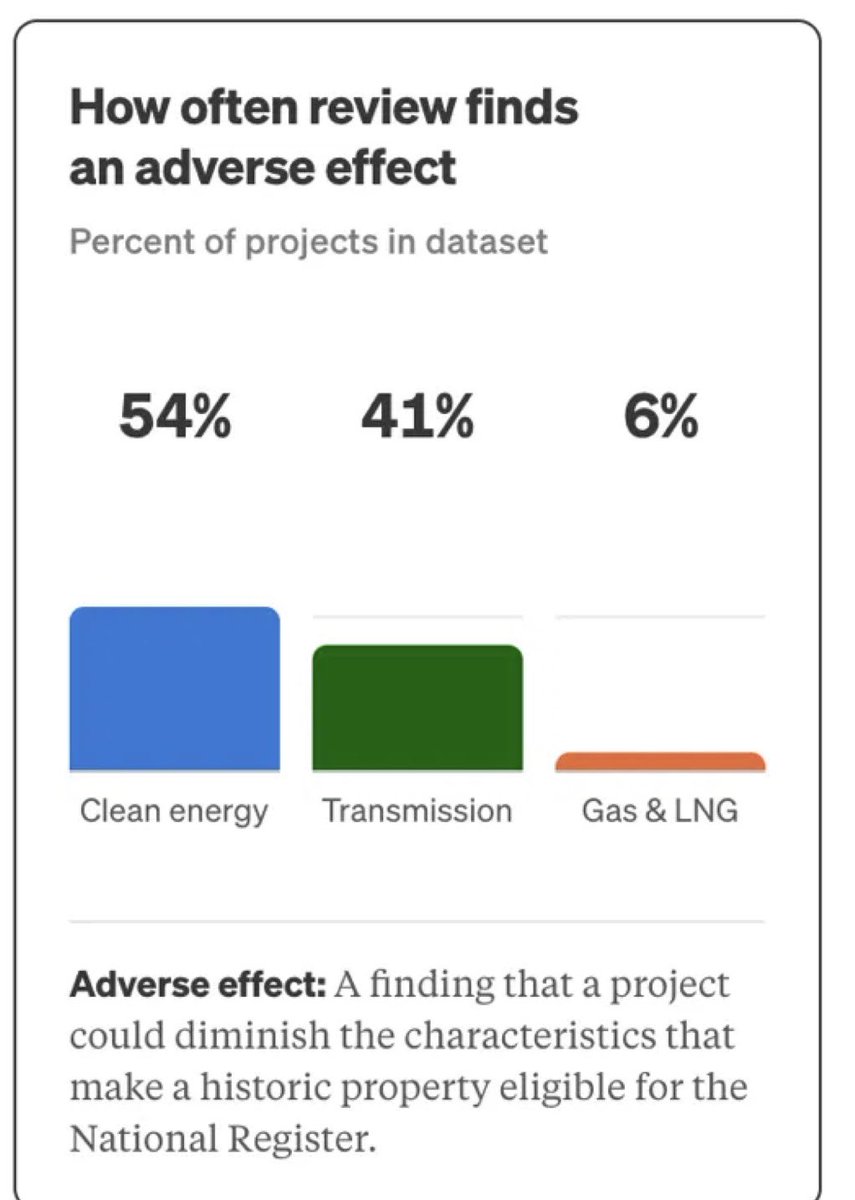
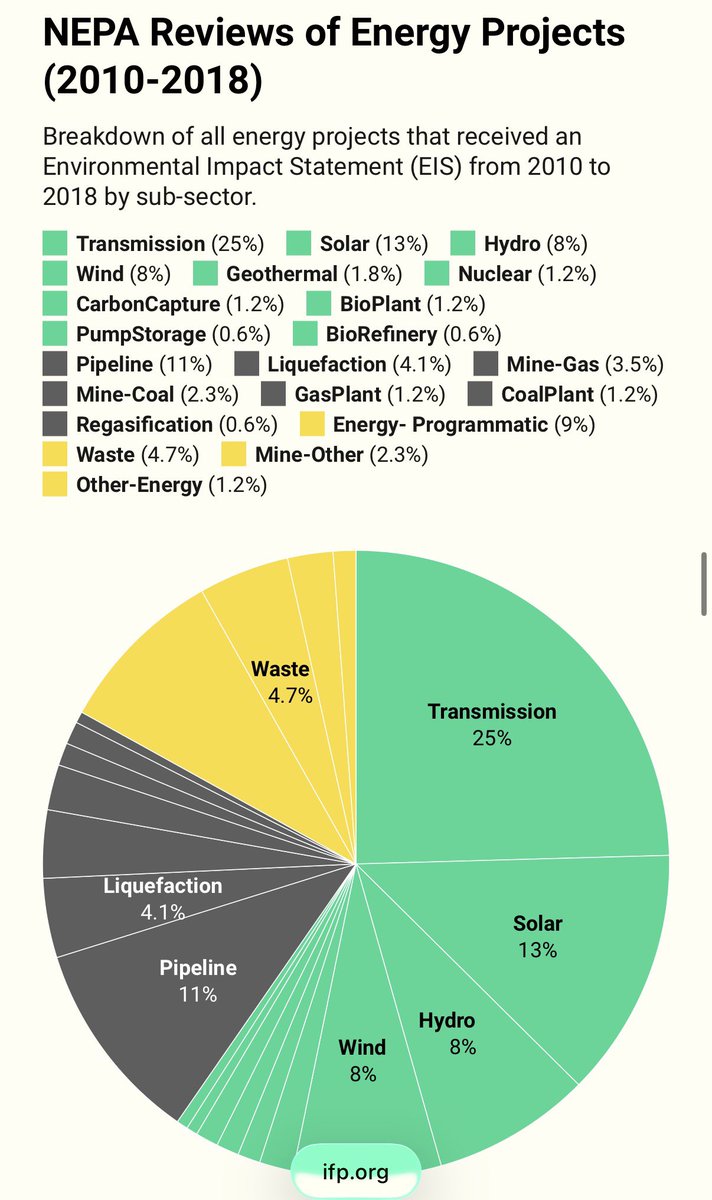
National Historic Preservation Act hurts clean energy WAY more than fossil fuels. primary “impacts” reported are “it was harmful to me to see a windmill in the distance.”
BAAJA does not “gut” NHPA—it simply creates a predictable process with a beginning, middle, and end
@ChristoRixman@Lis_Smith Schumer backed Stevens in primary sure, but he backed AES in general. AES underperformed. Ossoff won by 18, Cooper by 20, and Talarico by 12 in redder states wirh less money from Schumer.
@ChristoRixman@Lis_Smith 1. There aren’t 60 votes which is just objectively true. 2. You’re ignoring that KFF showed support drops to 35% when ppl find out it increases their taxes. This is the exact reason M4A failed to be implemented in Vermont.
@ChristoRixman@Lis_Smith We are not ignoring AES’s victory. But he didn’t flip a seat, he held one and did so while underperforming (all this after Schumer bailed him out with >$60M). Plus there aren’t 60 votes for M4A and polling shows it’s not popular once ppl know it’s cost.
I’m not even a Schumer guy (feel free to do a search on my past tweets about him lol) so I can’t believe I’m the one laying this all out, but everyone seems to have memory holed this period, so here goes nothing.
From 2021-2022, when Democrats held 50 seats in the Senate (with VP Harris as a tiebreaker) — so they had zero votes to spare — Schumer got 97 federal judges confirmed to the bench (including Ketanji Brown Jackson to the Supreme Court) and shepherded the following bills through to passage on their way to becoming law.
You can argue that these didn’t go far enough, he had the wrong priorities, that Build Back Better was a flop, etc. But it is objectively damn impressive that he was able to get all of these through with literally no room for error:
American Rescue Plan ($1.9T)
Huge economic stimulus package in the midst of the pandemic — provided $1,400 stimulus checks to eligible Americans; expanded unemployment & child tax benefits; funded schools, hospitals, small businesses, local governments, and COVID-19 vaccinations and testing.
Infrastructure Investment and Jobs Act ($1.2T)
Repaired roads and bridges, invested in public transportation and passenger rail, expanded broadband internet access, funded improvements to airports and ports, invested in electrical vehicle charging stations & upgraded drinking water systems.
CHIPS and Science Act
Provided over $50B in incentives to build more computer chip factories in the U.S. and research funding for semiconductor manufacturing to reduce our dependence on Chinese chips.
Inflation Reduction Act
Allowed Medicare to negotiate prices for certain prescription drugs, capped Medicare beneficiaries' insulin costs at $35 per month, extended Affordable Care Act health insurance subsidies, offered tax incentives for electric vehiclesand clean energy, created a 15% minimum tax on certain large corporations, increased IRS funding to improve tax enforcementand collections.
PACT Act
Expanded healthcare coverage for veterans exposed to burn pits and toxic chemicals, made it easier for veterans to qualify for disability benefits, and added more VA healthcare facilities and resources.
Bipartisan Safer Communities Act
Expanded background checks for gun buyers under 21, provided federal funding for state crisis intervention programs, invested in school security and mental health services.
Respect for Marriage Act
Protected federal recognition of same-sex and interracial marriages and required states to recognize valid marriages performed in other states.
Hasan Piker says that single-payer healthcare is "the only solution."
Ezra Klein asks Piker what happened when Vermont tried to implement single-payer.
Piker is not familiar with it.
Klein explains that it fell apart because the hidden costs of the system suddenly become taxes.
Vermont abandoned its single-payer plan in 2014 after finding that it required an 11.5% payroll tax and income taxes as high as 9.5%.
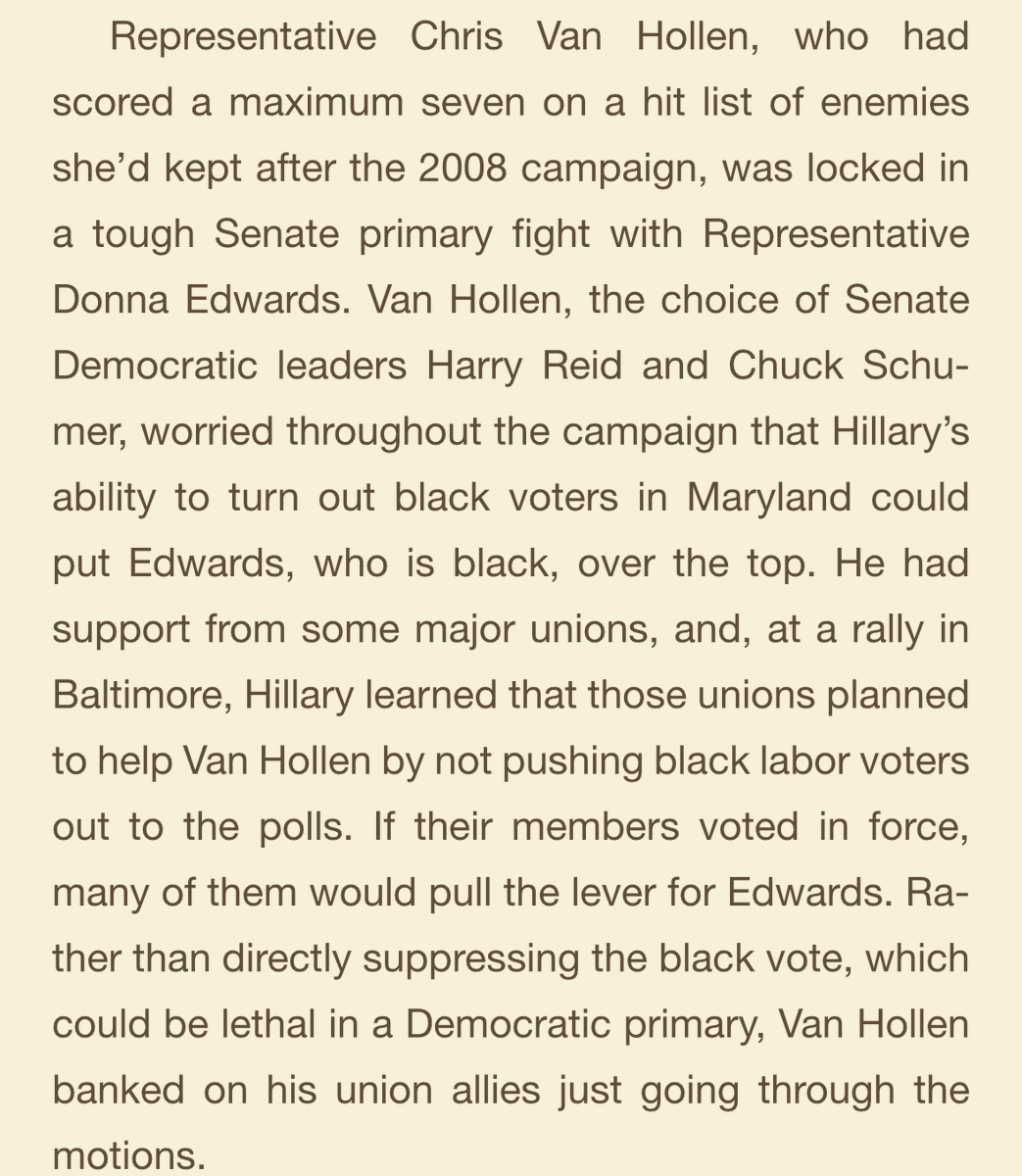
Maryland Democrat Senator Chris Van Hollen claims to be a progressive.
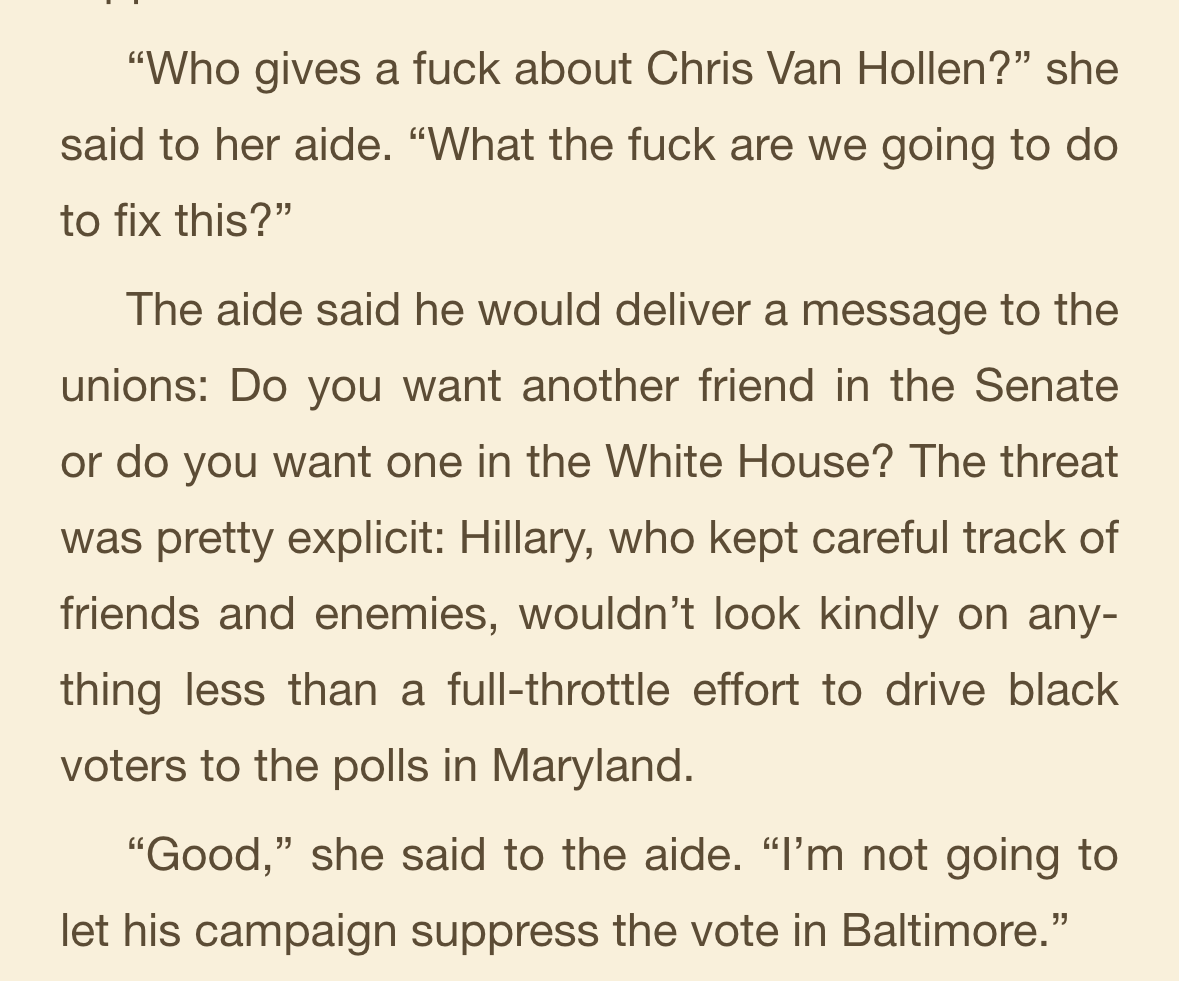
Meet the real Chris Van Hollen: He and his allies hatched a plan to suppress the black vote so he could win a primary election.
In the 2016 primary, Hillary Clinton raged about Van Hollen's plan to "suppress" the black vote in Maryland.
From Shattered by @jonallendc and @amieparnes:
They're back! It is nature's clock: as soon as Republicans lose power the climate protestors return with their signs and placards. No scientist knows where they go to hibernate when the GOP is destroying our environment. But at the first hint of liberal democracy they return. 1/
Against my better judgment, I’m weighing in here, on the dumbest policy discussion platform in the world, to talk about permitting reform. As background, I was Chief of Staff and Deputy Chief of Staff at the Energy Department in the Obama Administration; I worked for seven years in the Senate Democratic Leader’s Office; and I served as Chief of Staff in the House. I co-founded the largest energy transition advisory and advocacy firm in the United States 13 years ago. I have worked directly or indirectly on nearly every major piece of energy and climate legislation in the past two decades, as well as many other pieces of legislation outside of energy. I’ve also worked as a political researcher for multiple campaigns and the DSCC, where I cataloged politicians’ and candidates’ votes and positions. Today, I spend nearly all of my time talking to policymakers, clean energy companies, advocates, and journalists on energy and climate issues.
The idea that there will be anywhere near 60 votes in the Senate for a clean-energy-only bill in January is not based in reality. I have no idea where this idea came from, but it ignores mountains of evidence and seems to underpin the arguments of everyone on here saying we’re somehow going to get a bill that excludes oil and gas if we wait.
First, and very obviously, every candidate in 2026 ran on reducing gasoline and electricity prices for consumers. One post-election analysis found that only six victorious Democrats used the word “climate” in their election night statements, while 166 discussed affordability. I couldn't find a single Senate candidate who flipped a seat who mentioned it. Voters sent a clear mandate to focus on affordability, and they are rightly irate that Washington has pushed ideological issues favored by special interest groups ahead of the issues they care most about. After getting trounced in 2024 for ignoring inflation, Democrats won by promising to focus on those issues.
Second, very few Democrats in the Senate support anything remotely close to a keep-it-in-the-ground agenda. Next Congress, 19 members of the Democratic caucus who voted for cloture on the motion to proceed on this version of the permitting bill will return. They’ll be joined by James Talarico, who has endorsed all-of-the-above and vowed to protect oil and gas jobs. Mary Peltola has explicitly called for more oil and gas development. Scott Colom supports natural gas. Both Adam Hamilton and Annie Andrews endorsed an “all of the above” strategy, which includes oil and gas.
They will join the 14 members of next year’s caucus who declined to strip the natural gas-carrying Mountain Valley Pipeline from the 2023 debt limit bill. Senator Kaine offered an amendment to remove the provision expediting the pipeline’s completion. Senators Bennet, Brown, Coons, Fetterman, Hassan, Hickenlooper, Kelly, King, Murray, Ossoff, Padilla, Reed, Schatz, and Schumer voted against that amendment. The year before, 27 members of next year’s caucus voted to advance Senator Manchin’s permitting amendment, which would have completed MVP.
Both Bennet and Warner voted to approve the Keystone XL pipeline. Senators King, Murphy, and Blumenthal all urged FERC to expedite the Algonquin pipeline expansion. Fetterman, Kaine, and Hickenlooper have all supported LNG exports (as did the Obama Administration). Senator Gallego released an energy plan last December that called for clear timelines for oil and gas pipeline permitting. Roy Cooper’s administration approved the Atlantic Coast Pipeline’s water permit in 2018 when he was North Carolina’s governor. Mary Peltola has introduced legislation to open ANWR and NPR-A to drilling.
Next year, the caucus will contain only 14 senators who co-sponsored the Senate Green New Deal resolution. Three of them voted for cloture this week, including Senator Heinrich, who is leading the charge on permitting. That’s 10 Democrats out of 56 who supported the GND and opposed cloture on permitting.
This does not mean that a majority of the Democratic caucus will push for new oil and gas infrastructure. But much of the commentary here implies that Democrats will only support renewables and Republicans will only support oil and gas infrastructure. The record doesn't support that idea.
This, of course, doesn’t even get to the fact that we will need more than a few Senate Republicans to support a permitting package in the next Congress. Getting those Senators will require compromises that will likely push some Democrats to vote no. So you’ll very likely need more than four. A bill that gets Fetterman, Murkowski, and Curtis could easily lose Sanders, Warren, Markey, and Merkley. So then you’d need more GOP votes. This is how legislation works. The IRA was the exception, not the rule, and it nearly died before it passed. It was that hard to get Manchin and Sanders on the same page, and it didn't need a single GOP vote. Many of the groups opposing permitting didn’t like the IRA. And, of course, a bill that doesn’t get signed by the President is about as useful as any tweet on this hellscape of a website.
There seems to be a very real disagreement about what would make this bill “better.” There is no “clean energy only” version of the bill that can pass the next Congress. NEPA and the NHPA are, at best, fundamentally outdated at a time when we need to build as much clean energy infrastructure as possible, as quickly as possible. Those who argue that these two statutes are the only way to achieve meaningful engagement with the sovereign tribes and frontline communities lack imagination. Remember that under both NEPA and NHPA, Dakota Access got built - adjacent to tribal land and under the Missouri River. Acting as if these laws, written long before climate change was a known crisis, are sacred and should not be touched ignores their reality. Saying that the nation-to-nation relationship between sovereign tribes and the federal government is only a function of “historic preservation” is quite insulting to tribes. Since NEPA and the NHPA were signed into law, more than 250,000 miles of pipelines have been built in the United States. NEPA is actually a pretty poor tool for killing infrastructure. It is, however, great for lawyers.
And finally, the policy window is open now. There is no guarantee it will remain open indefinitely. In 2009, with overwhelming Democratic majorities, we got eight Republicans to vote for cap-and-trade legislation in the House. It passed by seven votes after 44(!) Democrats voted against it, and it died in the Senate without a floor vote. It took us 13 years to get another big climate vote via the IRA (which was, again, not good enough for some of the activists). There is no guarantee oil stays below $100/barrel or that the economy doesn’t slip into a recession or the wars in Iran and Ukraine stay confined to those countries. Macro events could create even more pressure for policies that support oil and gas or crush the appetite for a debate on permitting.
I’ve worked on nuclear, solar, wind, electric vehicles, transmission, energy storage, and just about every other form of clean energy technology. I haven’t lobbied on behalf of any of the oil and gas bills I cited above, nor have I lobbied for oil or gas companies. I’ve worked with many of the NGOs supporting this bill, and many of the NGOs opposed to it. I’ve spent many decades working on policy, building coalitions, and trying to instill a sense of urgency on climate policy. Reasonable people can oppose this bill for many reasons. But don’t delude yourself into thinking there are 56 votes against fossil fuel infrastructure, or that there is a viable path to a permitting deal that will keep oil and gas in the ground in the next few years. Any permitting bill will need to be bipartisan, and once policy windows close, there is no guarantee they will open again soon.
In short, no legislation is perfect. This bill is very clearly a net-positive for the climate. We cannot solve climate change without policy changes that lower emissions. The status quo is not good enough. There is an opportunity to move the needle today, and we should take it.
I look forward to all of the thoughtful, constructive comments on this post, which will once again prove that this is the best place on earth for substantive policy discussion. I will take suggestions to delete my account in good faith, and I recommend that anyone serious about policy do the same.
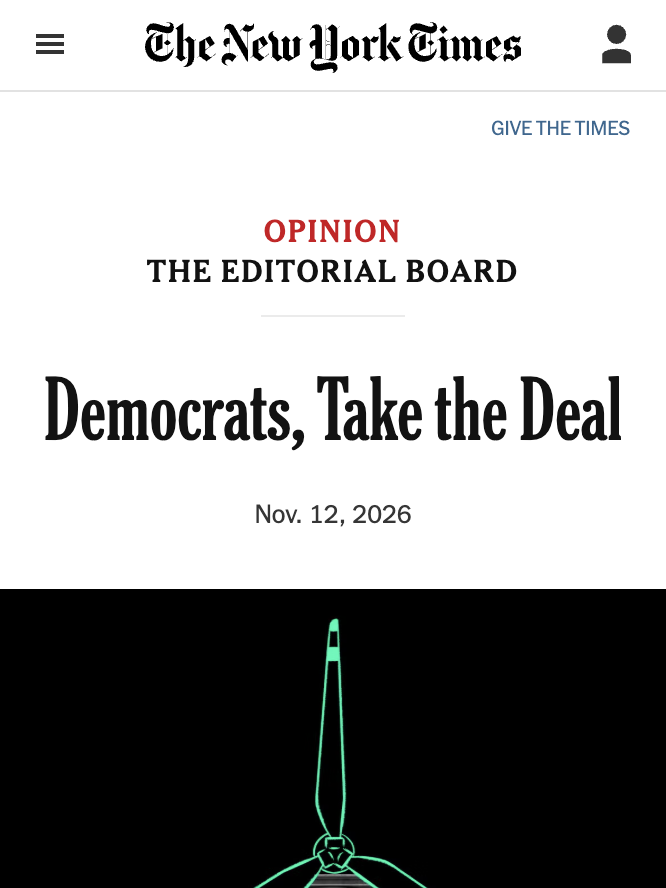
Very glad to see the NYT editorial board endorse BAAJA, the bipartisan permitting reform bill.
Key points from the article:
1. "Democrats who call climate change an emergency should not defend a permitting system too slow to build the clean energy that would address it."
2. "[BAAJA] would make it easier to build solar energy farms, battery storage, power lines and more. As a result, it would reduce energy prices. The status quo is expensive, dirty and unstable. The country needs to build a lot of big, new things to make its future cheaper and cleaner."
3. "The bill’s Democratic skeptics are making a mistake. President Trump would almost certainly veto a follow-up bill next year. And time matters, especially for the climate. Congress should pass this bill now. It can then return next year and pass other bills that would do even more good."
4. "Today, it typically takes between 5 and 13 years to build a long-distance power line, like the one that transports clean hydropower from Quebec to New England. That line took about a decade to finish, and opened in January. It has enough capacity to meet about one-fifth of Massachusetts’s electricity demand, and it’s projected to save consumers $50 million a year."
5. "A more robust, cleaner grid would make American energy more reliable and less dependent on hostile foreign nations. No country can embargo the wind."
6. "[BAAJA] would force data center operators to pay the full costs of the electricity they use, protecting the average electricity consumer."
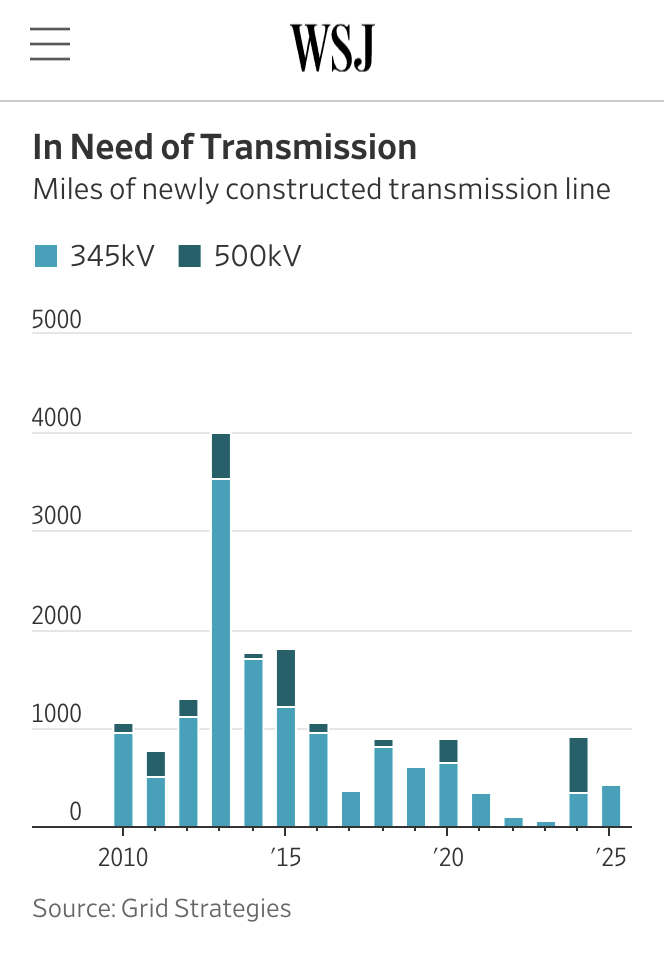
7. "On net, the bill would cut greenhouse gas emissions from power plants by as much as 18 percent by 2040. It would do so in part by nearly tripling the construction of high-voltage transmission lines."
8. "Anyone who cares about climate change should cheer this bill. And a party that just won an election on affordability should not pass up a chance to start delivering immediately."
BAAJA’s opponents are just throwing stuff at the wall now
NEPA affects everything the gov does (~200k actions per year, only 0-5 for detention facilities)
Opposing BAAJA because of this tiny effect is like opposing repealing Trump’s tariffs because that would make metal for detention centers cheaper
The far greater affect of NEPA reform is faster gov action, more vital infrastructure, and disproportionate benefits for clean energy
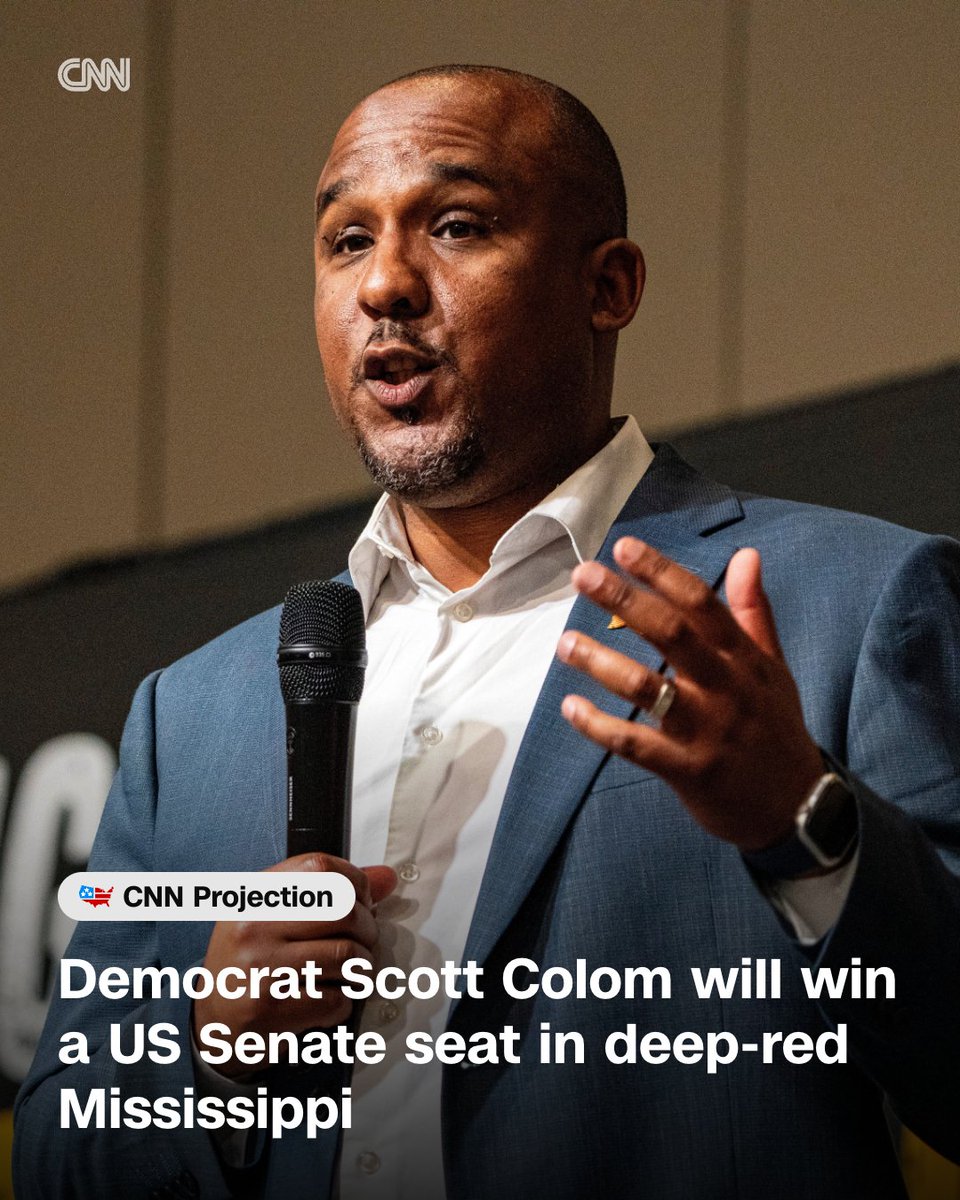
Scott Colom will defeat Sen. Cindy Hyde-Smith in a major upset to become the first Democrat that voters in deep-red Mississippi have elected to the chamber in more than four decades, CNN projects. https://t.co/LIrSavsJ01
Respectfully, Medicare For All proponents aren't being fully transparent about what this poll actually says— not with their supporters, and possibly not with themselves.
Yes, 66% of Americans support Medicare For All according to this KFF poll. But according to that same poll, when people find out that M4A would require raising taxes on the middle class, support drops to 35%. (See the attached charts from the poll.)
And yes, in addition to taxing the wealthy, taxes would have to be raised on the middle class to fund M4A.
And do you know what else the poll showed? 70% of Medicare For All supporters also think they’d have the option to keep their current insurance, which means they actually support a public option. That’s something the newly elected senators in Texas, Iowa, and South Carolina also support — the Democrats who actually delivered this majority.
Here’s the real polling data, instead of just the cherry-picked parts: According to KFF, 79% of Americans want the government to do more to bring down healthcare costs. Which is exactly what Medicare For Americans (or a variation with a public option) would do. It’s a better way to give universal healthcare to Americans who are sick of how insurance companies treat them when they’re sick.
So to recap: 79% is higher than 66%, and it’s way higher than 35%, which is the support M4A has when people find out what it will actually cost them.