Pan Piotr W. przez zawodowego kłamcę Tuska, jak i rządowe media został nazwany "nożownikiem". Prokuratura, żądająca aresztu, poniosła jednak sromotną porażkę w sądzie, gdyż sędzia Anna Kuzaj nie dała im wiary i wniosku nie uwzględniła.
Są jednak poczciwi sędziowie w reżimie tego patałacha...
1. Czy policjantka skłamała, że jest poszkodowana?
Na nic się nie skarżyła, nic na to nie wskazywało, a ona po całej akcji kręciła się i wydawała zszokowanym kolegom polecenia
2. Co szeptała ratownikowi sek. po jego wejściu do budynku?
3. Dlaczego groziła świadkom interwencji?
Była minister zdrowia z PiS Katarzyna Sójka jest lekarzem z prawdziwego powołania. z ogromnym sercem, empatią i nieustanną gotowością, by nieść pomoc chorym. Jej oddanie pacjentom i troska o drugiego człowieka budzą najwyższy szacunek. Dziś ratowała osobę która zasłabła podczas demonstracji! Ostatnio w sejmie ratowała posłankę lewicy Katarzynę Piekarską! Tak trzymać! Pani Minister!
@aK_Sojka@RepublikaTV
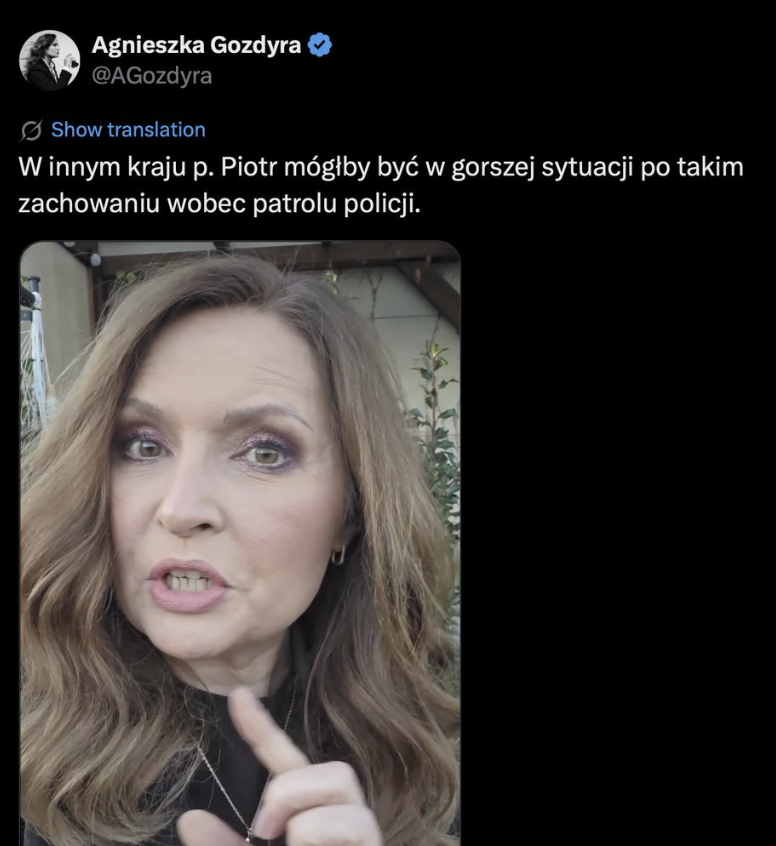
Pani Gozdyra ma rację. Na przykład gdyby zdarzyło się to w Indonezji, a policjantem byłby ktoś z Korowajów, pan Piotr mógłby zostać zjedzony! To jedno z plemion, u którego podejrzewa się praktykowanie rytualnego kanibalizmu. Zjedzenie osoby uznanej za demona ma na celu zemstę i ochronę wioski oraz Koalicji Obywatelskiej (chyba nic nie pomyliłem).
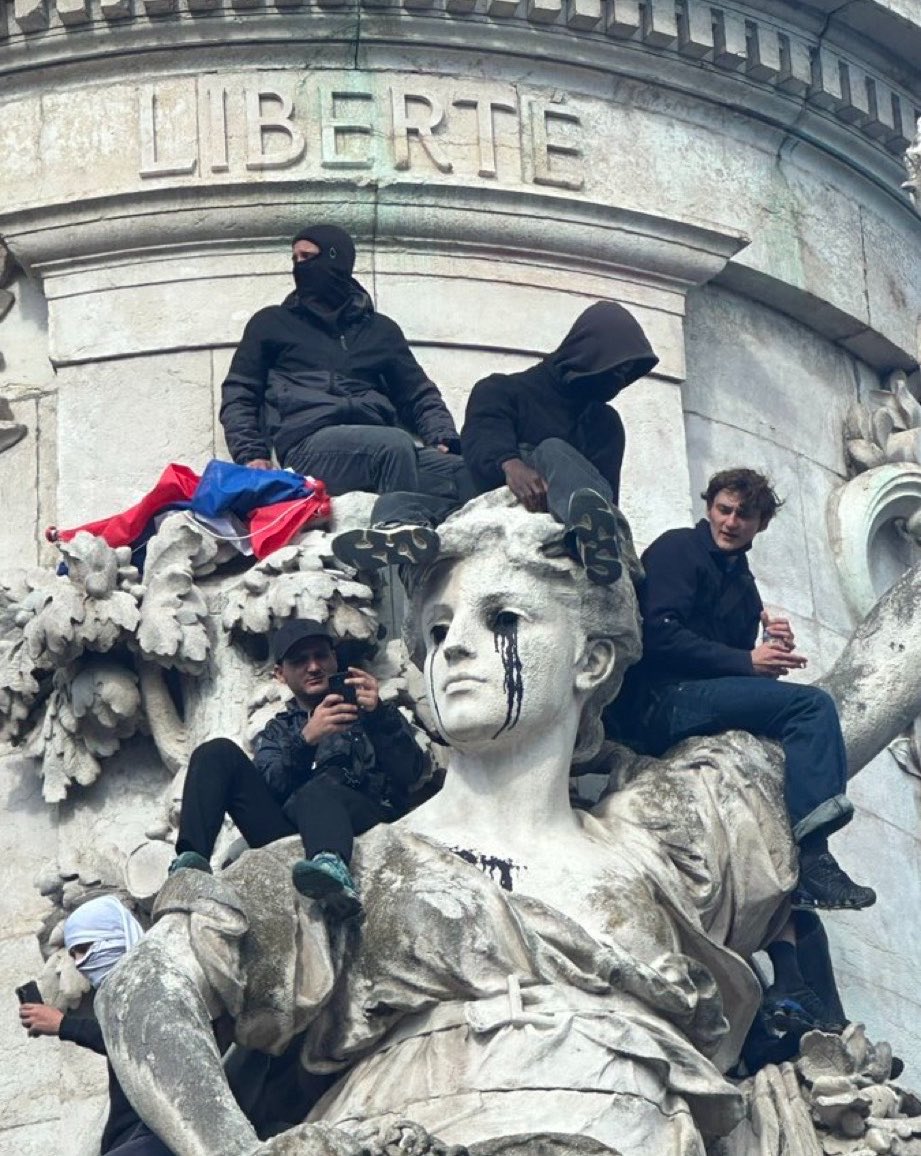
Widzę, że w Paryżu mamy już regularną wojnę na całego.
I jeżeli ktoś dalej będzie myślał nawet o alternatywie dla Amerykańskiego parasola nuklearnego…
To spójrzcie jaką oni właśnie mają anarchie na pełnej. I to już wprawie całym kraju.
Według lewicy to spokojni studenci walczący o wyższy poziom edukacji. Wybory w 2027 roku, które będę w Polsce i we Francji są kluczowe dla przyszłości Europy.
Zjednoczona Prawica musi zwyciężyć, aby takich obrazków nie było w Polsce,
W zasadzie nagranie z kamery nasobnej rodzi jeszcze poważniejsze podejrzenia: ten człowiek mógł być wcześniej obserwowany jako osoba związana z organizacją protestu.
Policjanci od początku zmierzali do ustalenia jego tożsamości. Czy mieli polecenie pozyskania jego danych? Jeśli tak, kto je wydał i na jakiej podstawie prawnej? Bo jeśli Policja systemowo identyfikuje i gromadzi dane osób aktywnych w legalnych protestach, bez konkretnych podstaw do legitymowania, to nie mówimy już o zwykłej interwencji, lecz o praktykach charakterystycznych dla państwa autorytarnego. Udział w proteście nie jest przestępstwem. Policja ma chronić konstytucyjne wolności obywateli, a nie tworzyć kartoteki ludzi niewygodnych dla władzy.
@PolskaPolicja — kto wydał polecenie legitymowania tego konkretnego człowieka i dlaczego funkcjonariusze byli nim zainteresowani jeszcze przed interwencją?
„Twój wszechświat nie ma dla nich żadnego znaczenia. Nie będą próbowali zrozumieć. Rozpalą ogień twoimi pięknymi dębowymi drzwiami...”
Jean Raspail (1925–2020)
🇫🇷 This poor restaurant owner in Paris was BRUTALIZED as her restaurant was ransacked by rioters.
She's now lost everything because cowardly French authorities are more concerned about optics...
Fking shameful!! 😡
Writers: Mhedi, Michael
Sąd nie mógł się zgodzić na tymczasowy areszt dla pana Piotra.
Bo NIE BYŁO żadnej napaści fizycznej na policjantów.
Gdyby była, to by się nie wywinął od aresztu.
Pisałem od wczoraj, a sąd dzisiaj potwierdził, że rząd Tuska, jego media i policja Kierwińskiego perfidnie kłamały.
I was born in France. In Paris. In 1994. A Polish mother, a French father. On my ID: Nicolas Jean Daniel. In reality: Mikołaj. From the very beginning, nothing really fit together.
My mother did everything to make sure I grew up in a Polish environment. I owe the most to Poles. For most of the time, I was looked after by my maternal grandfather and Polish “au pair” girls, mainly from Podhale, who in exchange for taking care of me received lodging, food, and some pay. That was my first world.
I discovered that I lived in France only when I went to preschool. Everyone ignored me because of the language barrier — I understood only Polish. Reportedly my first words were: “good ham.” I didn’t know a single word of French. The French teachers thought that if I didn’t know the language, that was my problem, and they didn’t bother with me. But it didn’t bother me either — I ignored everyone as well and lived in my own world. They called me “the dreamer.” I learned French only in the last two years of preschool, and with great difficulty.
At the same time, I attended Polish school on Wednesdays and Saturdays. My extracurricular schedule was quite active: sports, music school, English. On weekends we always went to the countryside. Both my parents were computer scientists, well paid. I lacked nothing and overall had a very happy childhood.
In elementary school, the class was very mixed. The whole world was there: Africa, the Middle East, South America, Asia… One day little Abdulsalam joined us — a bit like Tuwim’s “Little Bambo.” Nothing bad about him. Mamadou was different — slightly unpleasant, but manageable. Oussama, of course, was the most troublesome. Still, the situation wasn’t too bad because the system still held, and the teachers exercised fairly strict authority. They even had a reputation for severity. French women used to be tough, and there was no nonsense in class.
Then we moved for two years to a smaller town north of Paris. There I met ordinary French bourgeois kids. It was a rather miserable experience. The children were arrogant and vain. I got along better with kids from nearby villages and from the military district. At that point, I stopped attending Polish school, but I already had a solid grasp of grammar.
My contact with Poland weakened. We traveled there only twice a year to visit my grandfather. I read almost exclusively in French, and my contact with Poland was mostly through conversations with my mother. She spoke to me in Polish, I answered in French. But it never crossed my mind to say I wasn’t Polish.
My mother, who left Poland in the 1980s, constantly remembered her homeland as a land of wonders. For her, Poland was always the best at everything. She was an unconscious nationalist, more than Piłsudski himself. She despised France and the French. She thought them false, dishonest, insincere (“they never look you in the eye, always sideways”). Once she burst into tears when she read me a ballad by Mickiewicz.
Over time, I understood that her departure to France was a terrible mistake. But she never said it outright. She kept many things hidden from me so I would be happy and focus on my own development — which harmed her greatly. She only wanted me to succeed in everything I did. Nothing else mattered.
After those two years — the best of my life — we returned to Paris. Abdulsalam, Mamadou, and Oussama, unfortunately, were no longer the same. In half the classes, there was no order at all. I got into a better class, with a music focus, but the lack of teacher authority began to ruin everything.
I was accepted into a good high school in the very center of Paris. But every day I had to take the metro through the worst districts to get there. That was when my personal problems with France began. I don’t need to describe what it was like. After a few months of this daily commute, I realized France was no longer itself. And when in high school I said that immigration was problematic, everyone called me a fascist. It depressed me deeply and pushed me into breakdown. Some teenagers had arrogance — I had depression. This was not a country I wanted to live in.
I will never forgive the French for destroying their own country through irresponsibility, political correctness, and cowardice. Everyone there was afraid to say what they thought, even about trivial matters. One could always feel the social pressure — the fear of anything even slightly stronger or bolder than group conformity.
Already in elementary school, teachers said I was “brave.” I didn’t understand what they meant, because I wasn’t doing anything particularly brave. Worse still, my father said the same. And I didn’t understand him either, just as I didn’t understand him at all. No one knew where he came from or why — he probably didn’t know himself. That’s all there was to it.
Then I studied history and Polish studies at the Sorbonne. I learned history in a very French-centric version. Almost nothing about Asia, Africa, or the Americas. At the same time, I studied law, which I didn’t finish, but treated as a useful hobby — and I was right. Later I did a master’s in international relations, but it was too theoretical, and I wanted to analyze the world more realistically. That’s why I went to business school for a master’s in finance.
I lived in Paris at that time. But I no longer paid attention to France’s problems. France didn’t exist for me. I sat in libraries from 9 a.m. to 10 p.m. and planned to move abroad. In the end, I decided Poland would be the best choice for many reasons — at least for five years.
When I finally “returned” to the country — because in my head it was a return, though I had never lived there before — I felt as if I were breathing for the first time in my life.
The three-year-old inside me, rejected in French preschool, had finally found his own.
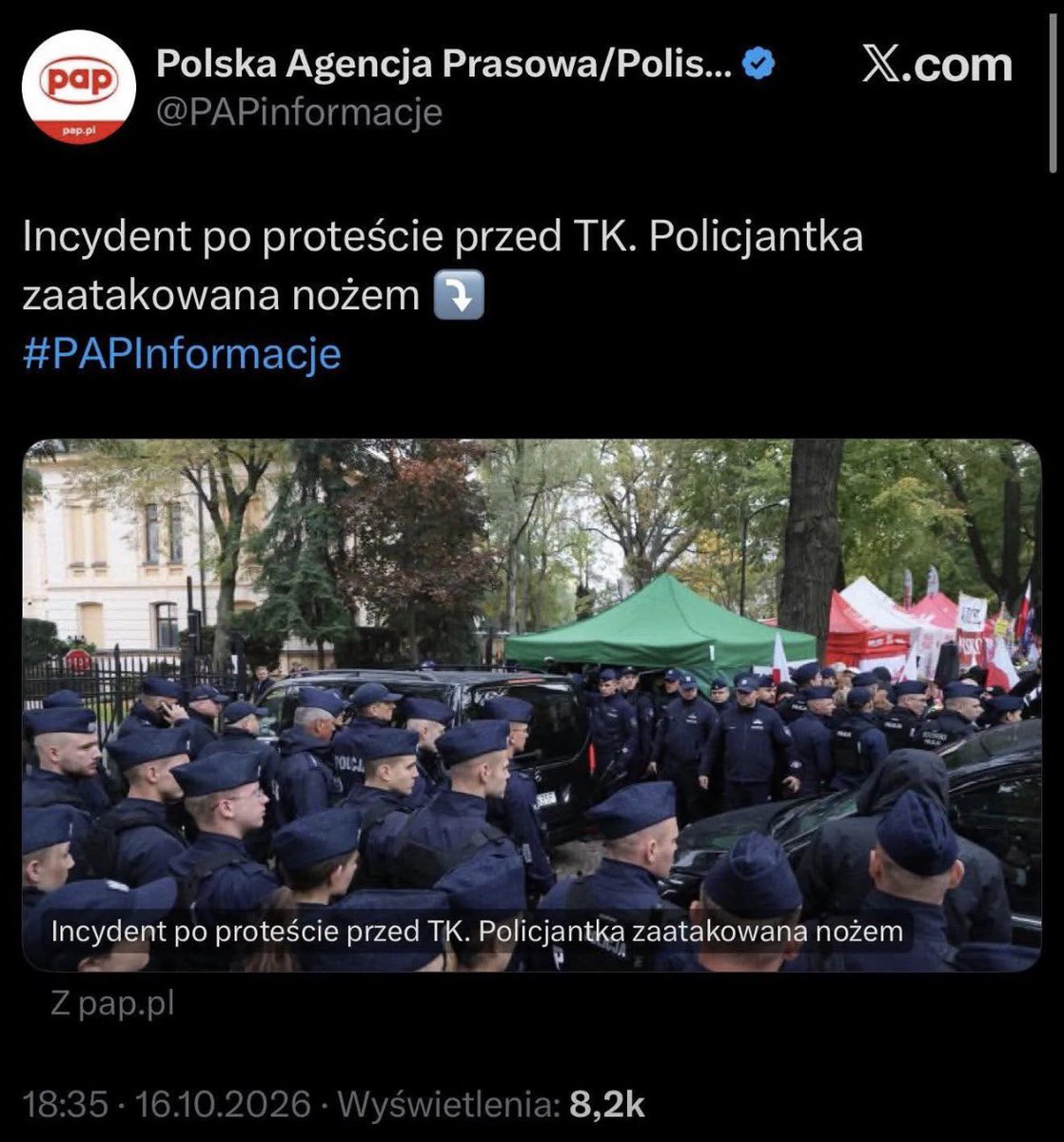
Dzień dobry, @PAPinformacje. Wczoraj opublikowaliście informację, że policjantka została zaatakowana nożem.
Mogę poznać szczegóły tego ataku? Gdzie, kiedy, jakim nożem?
Z góry dziękuję!