One of the most remarkable women in academic history is Fatima al-Fihri, the founder of the al-Qarawiyyin Mosque and University in Fez, Morocco, established in 859 CE. Over time, this institution became one of the most prominent centres of learning in the Muslim world, attracting scholars who studied theology, law, mathematics, astronomy and philosophy.
Fatima al-Fihri’s work stands today. She embodied the values of philanthropy, education and community service, inspiring countless individuals. Her story highlights the importance of women’s contributions to society and the impact one person can have on the world.
Another noteworthy example is Sutayati al-Mahmali, a distinguished mathematician in Abbasid Baghdad. She was known for her expertise in algebra and complex inheritance calculations. At a time when mathematics was advancing rapidly in the Muslim world, she was recognised among scholars for her analytical skills and precision.
Another prominent figure is Maryam al-Ijliya, also known as Maryam al-Asturlabi, a 10th-century astronomer from Aleppo, present-day Syria. She was renowned for her mastery in crafting astrolabes – complex instruments used in astronomy for determining the positions of celestial bodies, measuring time and aiding navigation.
Such remarkable contributions were not limited to scholarship alone. Women were also influential in governance and public service. Zubaidah bint Jaʿfar, the wife of the Abbasid Caliph Harun al-Rashid, is remembered for her extraordinary contributions to public welfare. During one of her pilgrimages to Mecca, she observed the severe water shortages affecting pilgrims and residents. In response, she financed a massive water project, constructing canals and aqueducts that brought water from distant springs to Mecca. This famous route became known as Darb al-Zubaydah.
Thus, the history of the Islamic Golden Age demonstrates that Muslim women were not passive figures but active participants in scholarship, science, philanthropy and public life.
Their legacy challenges the myth that Muslim women had no role in Islamic intellectual life.
Tap on the link in bio to read the full article 👆
ہمیں ہر شخص کی ضرورت ہے جو اپنے آپ کو مسلمان کہتا ہے۔ سب سے پہلے ہم اپنی الگ ریاست حاصل کرلیں اس کے بعد بیٹھ کر فیصلہ کرتے رہیے گا کہ کون مسلمان ہے اور کون نہیں۔ میری نظر میں ہر وہ شخص مسلمان ہے جو خود کو مسلمان کہتا ہے۔
(#قائداعظم، محمد علی جناح)
https://t.co/TSfLLuzvtK
@Tejpal39@theRealYLH@MaidahMuhammad Can you read Urdu ? Here is the reference
خودُنوشت صفحہ ۲۹۰ ۲۹۶ از ابوالکلام آزاد
Molana was part of Ghadar Party was also inspired by Baha Allah of Iran. I will try to get the original scan And will try to share
Hazrat Khalifatul Masih V (aa) stated:
“You asked which letters I give preference to. The answer is that I give preference to every letter that is written to me, whatever language it may be in.
“It is not a matter of English or Urdu alone. People write to me in many languages from around the world and I give attention to all these letters and also reply to them.”
حضرت مسیح موعودؑ فرماتے ہیں:
’غریب لوگ تکبر نہیں کرتے اور پوری تواضع کے ساتھ حق کو قبول کرتے ہیں۔مَیں سچ سچ کہتاہوںکہ دولتمندوں میں ایسے لوگ بہت کم ہیں جو اس سعادت کا عشربھی حاصل کرسکیں جس کو غریب لو گ کامل طورپرحاصل کرلیتے ہیں‘
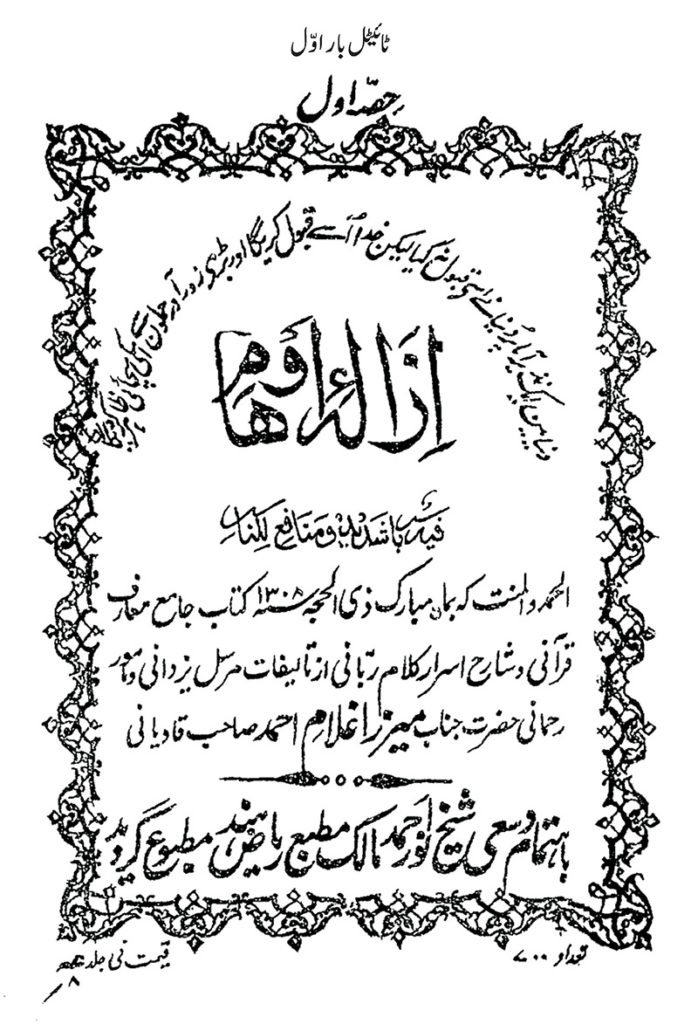
(ازالۂ اوہام۔روحانی خزائن۔جلد ۳۔صفحہ ۵۳۷)
https://t.co/fTYdfsKeA8
@Tejpal39@theRealYLH@MaidahMuhammad Azad was an atheist who brought low life extremist Mullah into the political system of subcontinent . God father of deobandi extreme Jahadi/fasadi mindset.
@Tejpal39@theRealYLH@MaidahMuhammad In this kind of mind set it was the best political settlement to partition the subcontinent. This is Sir General Maharaj Partab Singh of Jodhpur.
Extreme prejudice.