My book's publisher recently joined the @BloomsburyAcad family, so here is an updated link for Baudelaire's Bitter Metaphysics: Anti-Nihilist Readings by Fondane, Benjamin, and Sartre.
https://t.co/CVSxQSHYeg
@ANNVYSHINSKY@Stsantek As a former ESL teacher, I'm guilty as charged. My students (and I) always enjoyed going through this book of (US English) idioms, which after all are at least as much a window into culture as they are into language: https://t.co/rODfCNcZd2
Here is an informative post on Leibniz, binary, and the Yijing, and the relationship between them, drawing upon research from "Leibniz on Binary: The Invention of Computer Arithmetic" (MIT Press, 2022): https://t.co/tOfIHXMUEt
Somehow I'd never gotten around to reading the Icelandic sagas.
Only 50 pages into Egil's Saga, and the overlap with the naming conventions of a Thomas Pynchon novel is already getting out of hand:
Thorgils Boomer
Olvir Hump
Solvi Chopper
Hallvard Travel-hard
Odd the Hermit
@theiaincameron ^^^ This is why the Austrian writer Robert Musil could capture the psychodramatic essence of the 20th century in his novel The Man without Qualities, which not without reason is set in the unsuspecting ferment of 1913 Vienna
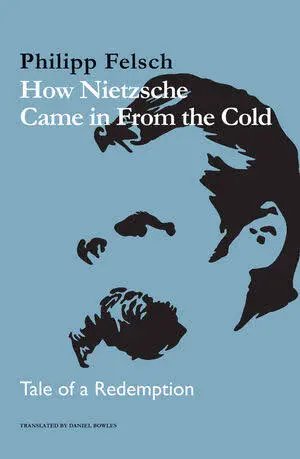
@MattPolProf There's an interesting book by Philipp Felsch on how Mazzino Montinari (and Giorgio Colli) ended up becoming not only the unlikely editors of Nietzsche's works in German but also the postwar resuscitators of Nietzsche's reputation after the nadir of the Nazi's appropriation
An intriguing new contribution to the history of lived and living ideas:
Celenza traces philosophy, religion, and literature from Plato and Artistotle to the Neo-Platonists and Augustine, with a pivot around Paul
Esta es la primera biblioteca pública del continente americano. Está en Puebla (México). La fundó el obispo español Juan de Palafox, quien donó sus 5.000 libros con la condición de que cualquier persona los pudiera consultar.