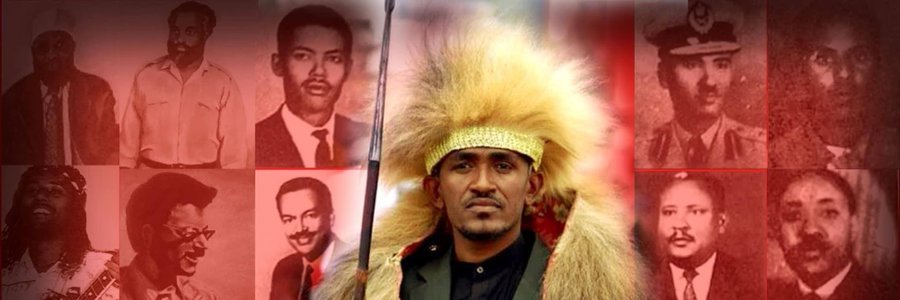
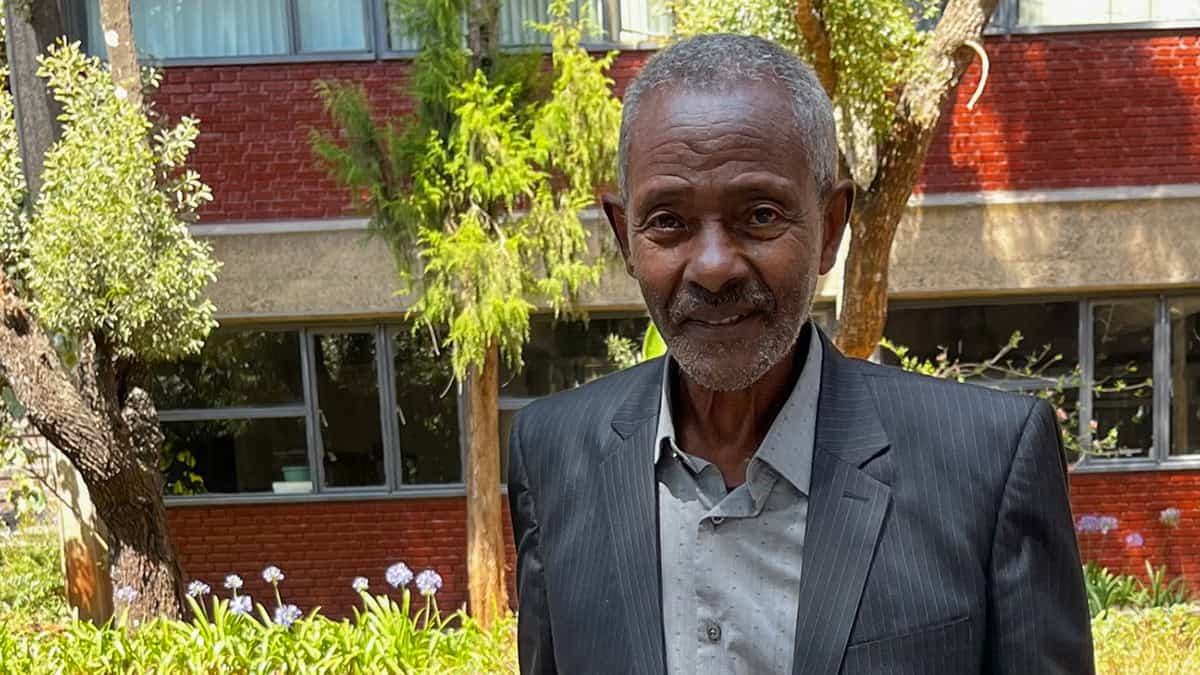
Dr. Ali Birra passes away after six decades of inspiring a nation with his lyrical genius. A beacon that lit through the darkness brought by empire, juntas and tyrants. A light that will continue shining for generations to come.
Rest in eternal peace,Nagaan boqodhu adeero!
Tribute: Remembering Zegeye Asfaw: The lawyer who helped transform #Ethiopia’s feudal order
In a 2020 review for #Addis_Standard, #Leenco_Lata described Zegeye as “a very remarkable man,” and the proclamation Zegeye helped shape "the most important factor that put the Ethiopian Revolution on par" with the great revolutions of #France and #Russia because it eradicated the power of the landed aristocracy.
Zegeye passed away two days after attending a public event in Addis Abeba honoring Leenco Lata’s biography launch.
https://t.co/OGjilKoq4A
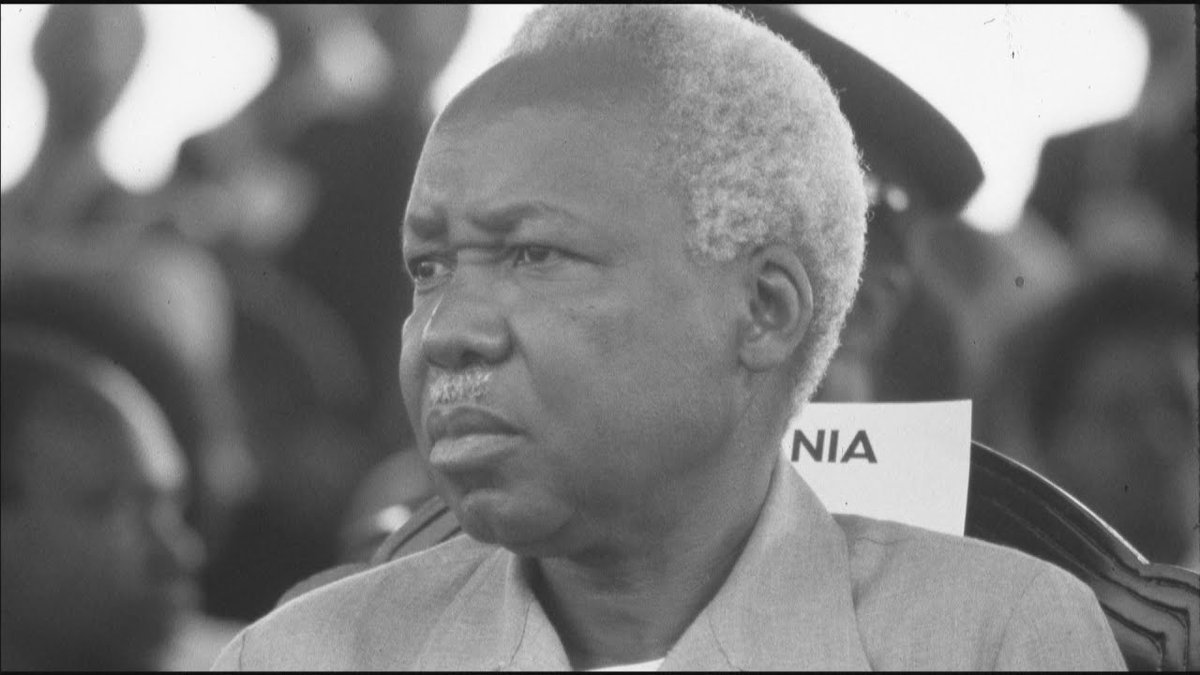
In Education for Self-Reliance, Mwalimu Julius Nyerere is categorical that colonial education is unsuitable for a post-independent populace because the curriculum and educational infrastructure are designed to create a cadre of entitled individuals obsessed with individual achievements rather than communal cooperation. The well-educated recipients of colonial education are more attuned to profit-making careers and are least committed to service provision.
Read Analysis: https://t.co/EjE4zgAG95
@ObyObyerodhyamb@m_ogada@wmnjoya@tony_mochama@ReginaldOduor@ArkAnudDinYaSin@WMutunga@jnyairo@NativeLandgrab@DavidNdii@KiamaKaara@jkobuthi@realoyungapala@johngithongo
#IWentToAlliance #TheElephant #EliteMediocrity #Governance
In ‘Ten Minute Mission: The Least Price for Freedom,’ W. Hundee Hurriso, former editor-in-chief of Ethiopia’s first Oromo-language newspaper, documents how the Derg regime systematically suppressed Oromo cultural expression.
https://t.co/J4tr7c2AYR
Western Marxists generally have two approaches to global south liberation projects; either you die and they love you or you’re a victim and you need their help. God forbid you attempt a national project of sovereignty, with all its contradictions, lest you be condemned.
and just like that, systemic colonial violence is reduced to a few bad apples. violence is a mere footnote at best. polished with a convenient, personal narrative that disassociates the inherently illogic violence from the grand imperial machinery that designed it
💢📰 REPORT | New reporting from NYT reveals how Trump decided to go to war with Iran — after a closed-door Israeli pitch and despite deep internal divisions inside his own team.
At a secret Feb. 11 Situation Room meeting, Israeli Prime Minister Benjamin Netanyahu presented a four-part pitch for regime change, including a video montage of potential replacement leaders such as Reza Pahlavi. JD Vance was absent, stuck in Azerbaijan.
Appearing alongside Mossad chief David Barnea and military officials, Netanyahu argued: Iran’s ballistic missile program could be destroyed in weeks. The regime would be too weak to close the Strait of Hormuz. Street protests — fomented with Mossad help — could trigger an uprising. Kurdish fighters from Iraq could open a ground front in the northwest.
Trump’s response: “Sounds good to me.”
Trump’s response: “Sounds good to me.”
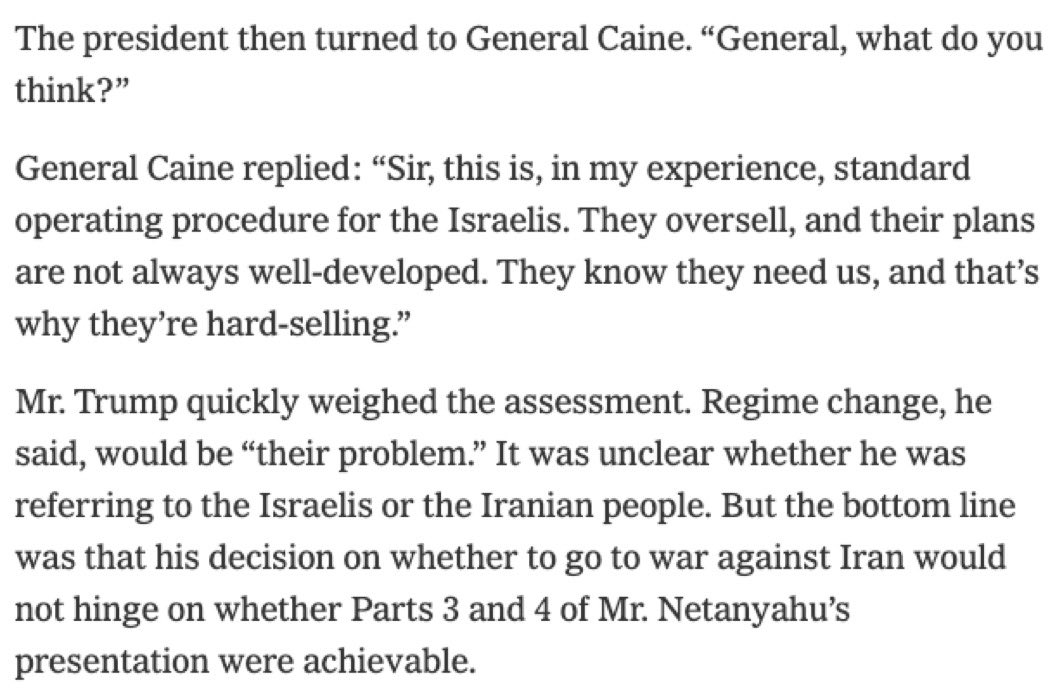
The next day, U.S. intelligence pushed back sharply. CIA Director John Ratcliffe called the regime-change scenario “farcical,” with Secretary of State Marco Rubio adding: “In other words, it’s bullshit.” Gen. Dan Caine told the president: “This is, in my experience, standard operating procedure for the Israelis. They oversell, and their plans are not always well-developed.”
Trump dismissed regime change as “their problem” — but remained focused on targeting Iran’s leadership and military.
By Feb. 26, in a final Situation Room meeting, opposition inside the room was clear but fractured. Vice President JD Vance warned the war could spiral and drain U.S. resources, but ultimately said: “You know I think this is a bad idea… but I’ll support you.”
Rubio said regime change was unrealistic, but destroying Iran’s missile program was achievable. Defense Secretary Pete Hegseth was the biggest proponent of war and backed immediate action. Military leadership outlined risks, including depleted munitions and the threat to Hormuz, but all stopped short of opposing the plan.
Key officials responsible for managing the fallout, like the Treasury Secretary, and DNI Gabbard were notably absent.
Trump went around the table asking advisors their view, then made the call:
“I think we need to do it.”
The strikes began two days later.
For the first time, a series of Toni Morrison's Princeton lectures has been compiled into a book. Now, readers can engage with Morrison, not only through the lens of her fiction or essays, but through her role as a teacher. https://t.co/cC0eBWLuhK
The ongoing crisis in the Middle East should actually be understood as a new stage in the long-standing crisis of American constitutionalism. The mounting chaos around how American President Trump is attempting to manage it is a physical expression of the permanent tension in America between the civic aspiration towards a democratic republic and the global ambitions of its oligarchic elite.
Read Analysis: https://t.co/U0HX6wzQTZ
@NativeLandgrab@ForeignPolicy@BDMOFA@ForeignAffairs@VividProwess@UNHumanRights@IRANinKENYA@jkobuthi@realoyungapala@johngithongo
#Iran #USIran #Geopolitics #TheElephantAnalysis
Photo: Yandex/ Reuters
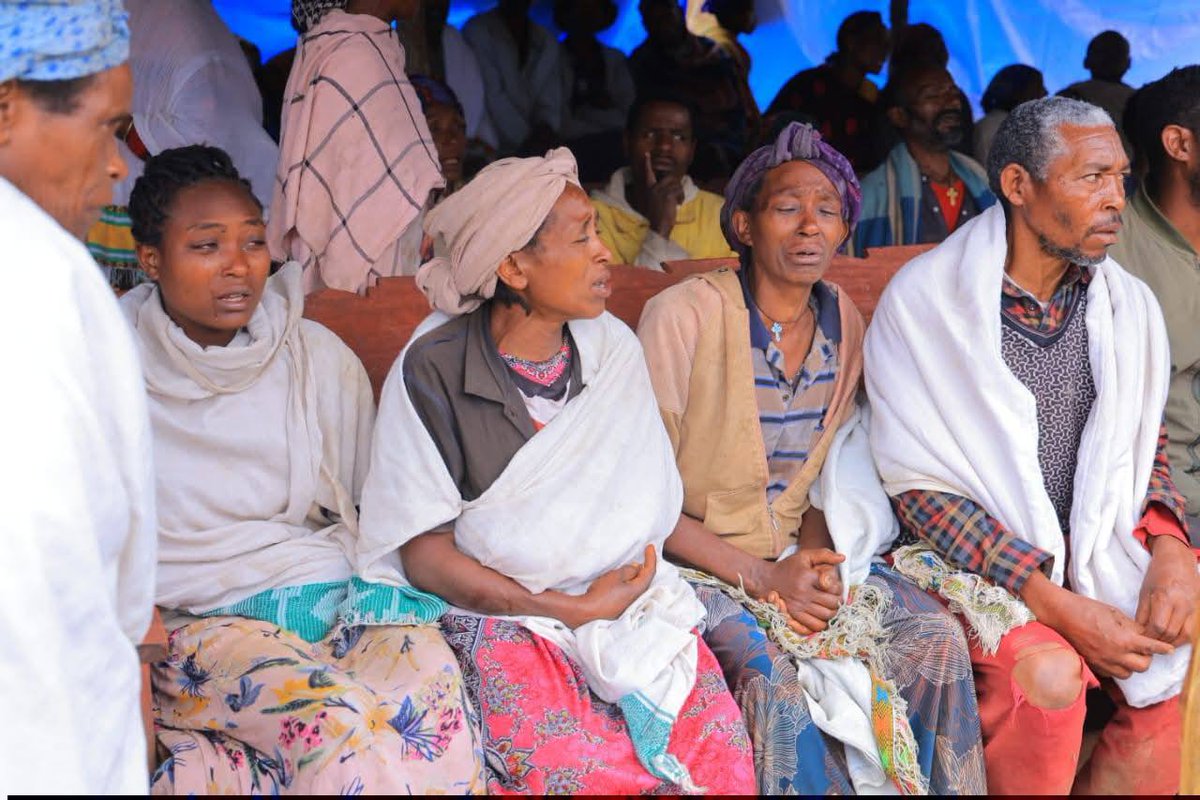
The Washington Post, in this ideologically fanatical and factually dubious editorial, enlists an image of bodies being dug out of a landslide to celebrate the burial of Ethiopia’s “Marxist past.” If we were to answer in the same theatrical register, only with greater symbolic accuracy, we would remind the editors of this Epsteinian rag of the dark irony they compel us to unsee: the very celebrated burial has consecrated an order in which Ethiopia, now triumphantly proclaimed a success of “liberalisation,” has become an insatiable graveyard of its ordinary people. A late “end of history” laboratory, not merely grotesquely illiberal, but anti-life.
https://t.co/MhtINYh5po
#Just_In: #Ethiopia declares three days of national mourning after deadly landslide in #Gamo_Zone claims 80 lives
Ethiopia has declared three days of national mourning for victims of the devastating landslide and flooding that struck parts of Gamo Zone in the South Ethiopia Regional State, claiming at least 80 lives.
Speaker of the House of Peoples' Representatives of Ethiopia, Tagesse Chafo, said the fatalities were confirmed among by a massive landslide that occurred on 11 March in Laka Kebele, Gacho Baba Woreda. He noted that search operations are ongoing to recover the remaining bodies, adding that the House is deeply saddened by the tragedy that has befallen the affected communities.
The Speaker said the decision to declare national mourning was made in accordance with the constitution, which authorizes the House to determine days of national mourning and order the national flag to be flown at half-mast.
Accordingly, the three-day mourning period will begin on 14 March, in remembrance of those who lost their lives in the disaster.
During this time, the Ethiopian national flagwill be flown at half-mast across the country, on Ethiopian ships, and at all Ethiopian embassies and consulates abroad.
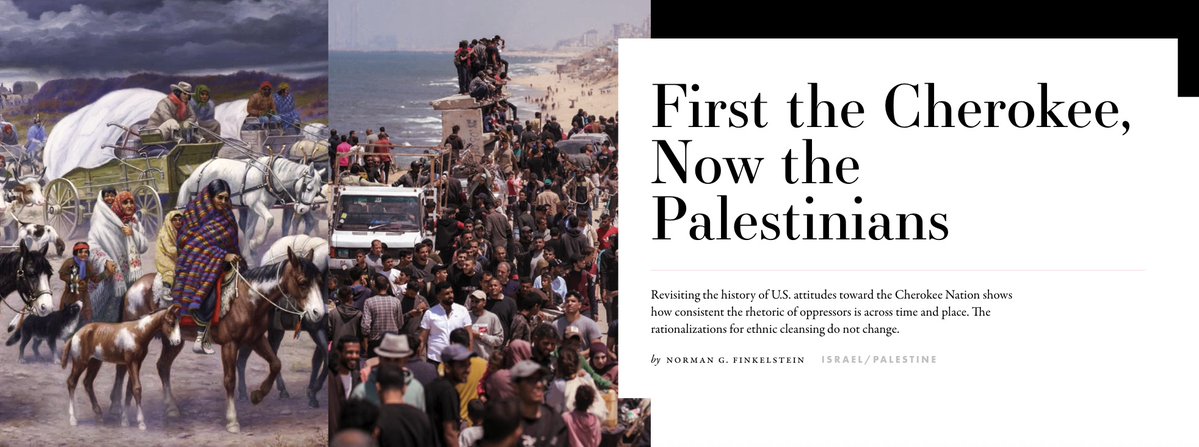
today in Current Affairs, an extraordinary essay from Norman Finkelstein on how US rhetoric justifying the expulsion of the Cherokee was the mirror image of contemporary Israeli rhetoric about Palestinians
https://t.co/PsQRptgdwB
Mulugeta Bekele: the jailed and tortured scientist who kept #Ethiopian#physics alive
Mulugeta Bekele paid a heavy price for remaining in #Ethiopia in the 1970s and 1980s. While many other academics had fled their homeland to avoid being targeted by its military rulers, Mulugeta did not.
He stayed to teach #physics, almost single-handedly keeping it alive in the country. But Mulugeta was arrested and brutally tortured by members of the #Derg, Ethiopia’s ruling military junta. “I still have scars,” he says when we meet at his tiny, second-floor office at Addis Ababa University (AAU) in January 2026.
Gentle and softly spoken, Mulugeta, 79, is formally retired but still active as a research physicist. In 2012 his efforts led to him being awarded the Sakharov prize by the American Physical Society (APS) “for his tireless efforts in defence of human rights and freedom of expression and education anywhere in the world, and for inspiring students, colleagues and others to do the same”.
Mulugeta was born in 1947 near Asela, a small town south of Ethiopia’s capital Addis Ababa. The district had only a single secondary school that depended on volunteer teachers from other countries.
One was a US Peace Corps volunteer named Ronald Lee, who taught history, maths and science for two years. Mulugeta recalls Lee as a dramatic and inventive teacher, who would climb trees in physics classes to demonstrate the actions of pulleys and hold special after-school calculus classes for advanced students.
Mulugeta and other Asela students were entranced. So when he entered AAU – then called Haile Selassie 1 University – in 1965, Mulugeta declared he wanted to study both mathematics and physics.
Impossible, he was informed; he could do one or the other but not both. “I told myself that if I choose mathematics I will miss physics,” Mulugeta says. “But if I do physics, I will be continually engaged with mathematics.” Physics it was.
https://t.co/DDH6xne7fn
News: Prominent #Oromo Gadaa scholar Asmerom Legesse passes away at 94
Asmerom Legesse (PhD), a distinguished scholar renowned for his pioneering research on the Oromo #Gadaa system, has passed away at the age of 94. Born on 5 February, 1931, in #Eritrea, Asmerom was widely recognized for his in-depth studies of Oromo traditions and governance, which have become foundational references for scholars of #African indigenous systems.
In a statement, the Oromo Studies Association (#OSA) confirmed his death, expressing deep sorrow over the loss of a researcher described as a “kinsman of the Oromo people.” The association noted that Asmerom’s work on Oromo customs, history, and culture significantly advanced understanding of political and social systems across Africa.
The Oromia Culture and Tourism Bureau expressed deep condolences, emphasizing that his life’s work preserved the Oromo Gadaa system and documented its practices for future generations, serving as a bridge for knowledge and scholarship.
The Oromo Liberation Front (#OLF) also issueda statement, describing Asmerom’s passing as a significant loss to the Oromo community.
“His research highlighted Gadaa’s principles of equality, leadership rotation, and social cohesion, positioning it as a model of African democracy,” the statement read, extending condolences to his family, colleagues, and the broader public.
Read more: https://t.co/jpJhimHfO3
'We're shifting to a world without rules. Imperial ambitions are resurfacing.'
President Macron references "fundamentally unacceptable tariffs used as leverage against sovereignty' during his speech in Davos.
This comes after Trump shared a text between the two on his socials
W. Hundee Hurrisoo, the former Editor in Chief Ethiopia's first Oromo newspaper, chronicles not only the physical suffering the Derg regime inflicted on him and his compatriots but also the moral and political logic that enabled such suffering. https://t.co/N4AdhFanWH
#Book_Review: A Ten Minute Mission: The Least Price for Freedom by W. Hundee Hurrisoo
https://t.co/UclupRxc8o
In this book review, Ababiyaa Ahmed Ajmel examines W. Hundee Hurrisoo’s A Ten Minute Mission: The Least Price for Freedom, which he argues goes beyond a conventional prison memoir by exposing the “moral and political logic” that enabled the #Derg regime to terrorize its own citizens. As the former editor of Bariisaa, #Ethiopia’s first Oromo-language newspaper, Hundee directly experienced the state’s systematic effort to suppress #Oromo identity, as his publication was transformed from a symbol of “freedom’s light” into a target for deliberate erasure.
Ababiyaa explains that the book’s title derives from the deception used during Hundee’s arrest: a casual assurance by security officials that he was needed only briefly. That so-called “ten-minute mission,” however, stretched into “4,040 days” of imprisonment. Through vivid testimony, Hundee takes readers into the “human storehouse” of the Grand Palace and the interrogation rooms of Maikalawi, where instruments such as the “Stalin stick” and thumbscrews were deployed to systematically break the body. The book review further notes that even after his transfer to Karchallee prison, Hundee remained trapped within a regime of death and neglect. There, he encountered the “death cell” and endured a devastating cholera outbreak in which “corpses were being loaded onto lorries and tractors like logs.”
The reviewer emphasizes that “the memoir is not only a record of erasure,” adding that “running throughout the text is an assertion captured in the Oromo notion of Jirra, meaning ‘we are here, we exist,’ a claim echoed today by the #Qeerroo generation."
@BMLenjiso I don’t see how recycling orientalist, reality-detached tropes is meaningfully different from constructing an “other.” It actually feels odd; especially if this is meant to be an “intellectual” take.
After decades of presence in the GCC, #Carfour was forced our of GCC, replaced by local and regional chains. #Ethiopia seems to make a move in the opposite direction. But why? Domestic distribution is perhaps the most vibrant sector of the economy. 1/2
https://t.co/ABWPl12aBq