“Viajar es ir en busca de aquello que va a desaparecer”
Nunca pensé que esta maravillosa definición resultase, a la postre, tan premonitoria.
Encontraréis a BARNELIA en:
AMAZON https://t.co/dqHRKefKUK formato IMPRESO
LEKTU https://t.co/fBeF7A3amp formato EBOOK (epub y mobi)
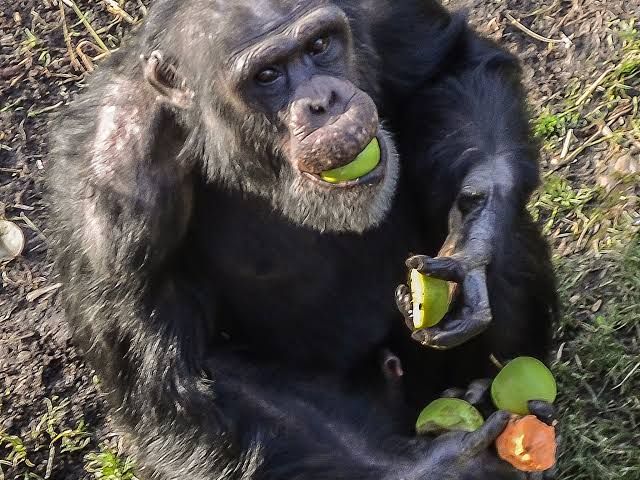
1/6 La piedra Rosetta de los chimpancés es comestible
Los sonidos de los chimpancés al encontrar comida (los "rough grunts") contienen información sobre el alimento encontrado, y otros chimpancés pueden interpretarlo
(paper) DOI 10.1007/s10071-026-02105-w
La mujer sabia por naturaleza:
En 2008, la bióloga Katie Hinde descubrió algo que la ciencia había ignorado durante siglos: la leche materna no es una receta fija, es un mensaje en constante cambio.
Mientras estudiaba macacos en California, Hinde notó un patrón extraño. Si la madre tenía un hijo varón, la leche era espesa, rica en grasas y proteínas (combustible de alto octanaje). Si tenía una hija, la leche era más abundante y cargada de calcio. ¿Cómo sabía el cuerpo de la madre cambiar la fórmula química según el sexo del bebé?
Esto la llevó a descubrir el mecanismo más fascinante de la biología humana: el "flujo retrógrado".
Durante años pensamos que la leche solo iba en una dirección (de madre a hijo). Estábamos equivocados. Cuando un bebé amamanta, el vacío creado succiona una pequeña cantidad de saliva del bebé hacia el interior del pezón de la madre.
Aquí ocurre la magia: El tejido mamario de la madre analiza esa saliva. Es un escáner biológico.
Si la saliva contiene señales de que el bebé tiene fiebre o una infección, el cuerpo de la madre comienza a fabricar anticuerpos específicos para esa enfermedad en cuestión de horas.
Si el bebé está estresado, la leche cambia sus niveles hormonales (como el cortisol) para influir en su temperamento.
La leche cambia de la mañana a la noche. Cambia si el bebé está enfermo. Cambia si es niño o niña.
Como concluyó Hinde: "La leche materna es comida, es medicina y es señal". Es el sistema de comunicación más sofisticado de la naturaleza, una conversación silenciosa entre dos cuerpos que ni siquiera la tecnología moderna ha logrado replicar por completo.
Validación histórica y científica, Katie Hinde, PhD - Laboratorio de Lactancia Comparativa, Arizona State University. Este contenido es informativo y educativo. #fblifestyle
The Diné describe a world inhabited by powerful beings who teach humans how to live.
The Diné, also known as the Navajo, are an Indigenous people of the American Southwest. Their traditional religion includes the Diyin Diné’é, the Holy People. They are non-human beings who appear in the creation traditions, speak with humans, teach them, help establish the order of the world and are connected with healing ceremonies.
The Diné describe an Emergence through several worlds before reaching the present world. Each stage is part of a larger account of how existence became ordered and how humans came to understand their place within it.
The central teaching is Hózhó. It is often translated as harmony, beauty or balance, but it also describes a way of living in proper relationship with the world. Humans are connected to other people, the land, animals, plants, water and the Holy People.
When those relationships are disturbed, ceremonies seek to restore Hózhó. Prayers, songs, plants, sacred objects and sandpaintings are used within these healing traditions.
The four sacred mountains surrounding Dinétah, the traditional homeland, are part of this same religious structure. They connect the land itself with creation, identity and ceremonial knowledge.
The Holy People are therefore not simply supernatural characters in a creation story. They belong to a religious system that teaches where humans came from, how the world is ordered and what it means to live correctly within it. For the Diné, Hózhó is not just something to believe in. It is a way of life.
#NativeAmerican
Image source:
“Ye’ii tapestry, Navajo” (c. 1920–1930), anonymous.
Source: Wikimedia Commons, McNay Art Museum.
Version checked: 1 March 2017.
License checked: 20 September 2026 - Public Domain.
“Sandpainting of Dine’tah” (1936), Aileen O’Bryan; drawing by Sam Ahkeak and Gerald Nailor.
Source: Smithsonian Institution, Bureau of American Ethnology, via Wikimedia Commons.
Version checked: 30 December 2010. License checked: 20 September 2026 - Public Domain.
The eye can show you a form without showing you what it means.
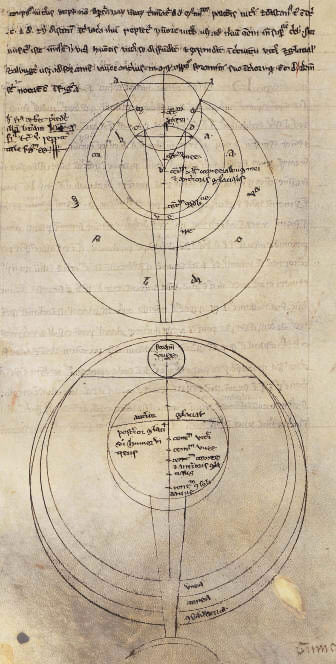
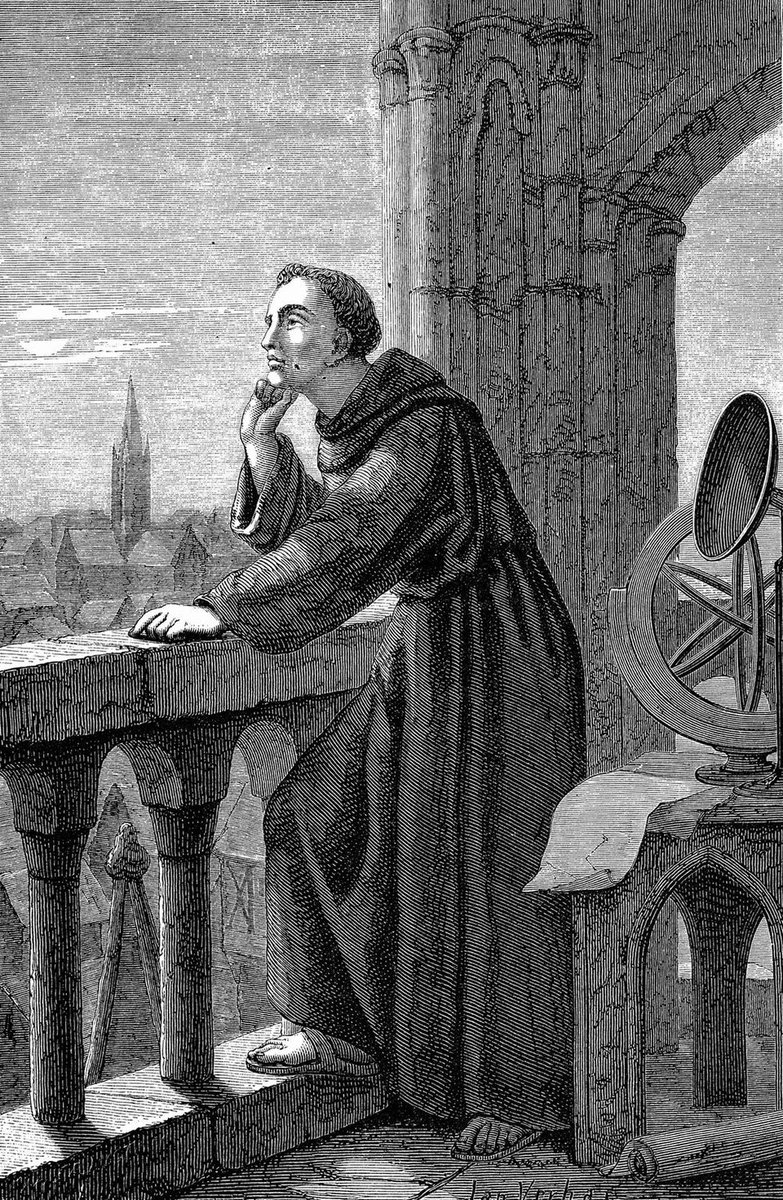
In the 13th century, Roger Bacon tried to explain what happens between an object in the world and the mind that perceives it. In his Perspectiva, he described species, the form or effect of an object transmitted through a medium until it reached the eye and produced perception.
Seeing was therefore a process rather than a simple copy of the world. The eye received the effects of things, while the mind had to interpret what it received. Distance, angles, perspective, refraction and reflection could all alter what appeared to the observer.
That leaves an interesting gap between seeing and understanding. The eye can receive an appearance without revealing its cause or meaning. This is where the idea of the inner eye takes on a deeper meaning. It describes a form of perception that reaches beyond the visible surface and looks for causes, patterns and meaning.
Bacon was investigating how physical vision works. His subject also opens onto a larger question about perception itself. What we see is given to the eye. What it means has to be understood.
Image source:
“Perspectiva” (late 13th century), Roger Bacon.
Source: British Library, MS Royal 7 F. VIII, f. 54v, via Wikimedia Commons. Version checked: 30 December 2011. License checked: 19 September 2026 - Public Domain / Creative Commons Public Domain Mark.
“Optics from Roger Bacon’s De multiplicatione specierum” (late 13th century), Roger Bacon.
Version checked: 13 December 2010. License checked: 19 September 2026 - Public Domain.
“Roger Bacon observing the stars at Oxford University” (1867), Jan Verhas. Version checked: 18 October 2015. License checked: 19 September 2026 - Public Domain.
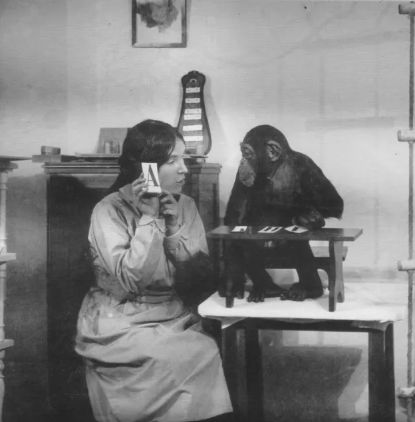
Mientras el conductismo negaba la existencia de una mente animal compleja, Nadezhda Ladygina-Kohts, científica rusa, sentaba las bases de la primatología demostrando que los simios poseían pensamiento abstracto
Su trabajo se publicó en 1935; no fue traducido hasta 2002 1/4
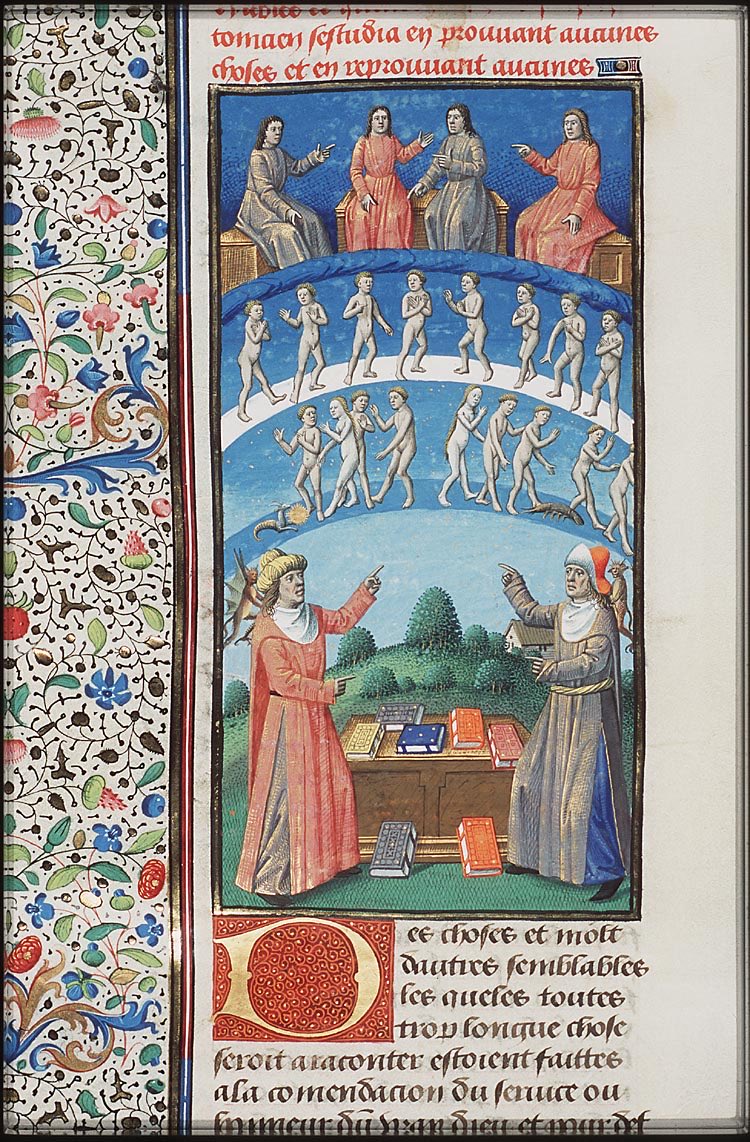
The Mandaeans imagined beings of light whose job was to cross into the darker parts of the cosmos and help trapped souls find their way back. They called these beings Uthras.
An Uthra is often translated as an “angel,” but that misses much of the idea. Uthras belong to the World of Light, the realm of Hayyi, the divine Life. They can be guardians, messengers, guides, teachers or rescuers, depending on their role.
The human soul was believed to come from this World of Light, while the body belongs to Tibil, the material world. Human existence is therefore a separation between the soul and its true home.
Uthras operate across that separation. Some guard sacred realms. Others carry divine knowledge or guide souls after death. Some descend into lower worlds and confront forces of darkness. Hibil Ziwa, one of the major Uthras, is associated with radiance and with journeys into these darker realms.
The Uthras also form a complex hierarchy. They have names, relationships and different ranks. Yushamin is linked to the Second Life, Abatur to the Third Life, and Ptahil to the Fourth Life. Ptahil becomes associated with the creation of the material world and is often described as a demiurge.
So an Uthra is not simply a supernatural servant of God. It is a luminous being with a specific place and function in the cosmic order, connecting the World of Light with lower realms and the human soul.
At the heart of the idea is a simple belief. The soul has forgotten where it came from, and the beings of Light help it remember the way home.
Image source:
“Illustrations of uthria in Zihrun Raza Kasia (DC 27)” (1677), copied by a Mandaean scribe.
Source: Wikimedia Commons, Drower Collection, Bodleian Library. Version checked: 19 May 2025. License checked: 20 September 2026 - Public Domain.
“Drawing of uthras in Diwan Abatur (MS DC 8)” (1743), copied by Ram Yuhana, son of Ram, of the Dihdaria and Sabur clans. Source: Wikimedia Commons, Drower Collection, Bodleian Library. Version checked: 20 May 2025. License checked: 20 September 2026 - Public Domain.
How can we test for consciousness in infants, non-human animals, and AI?
I'm super happy that the recordings of our last workshop on exactly this question are now online!
Speakers & Links: 👇
La ignorancia en nuestra época -pronosticaba Heidegger- "ha alcanzado un grado en el que, sin llegar a obrar nada, se convierte inmediatamente en destrucción."
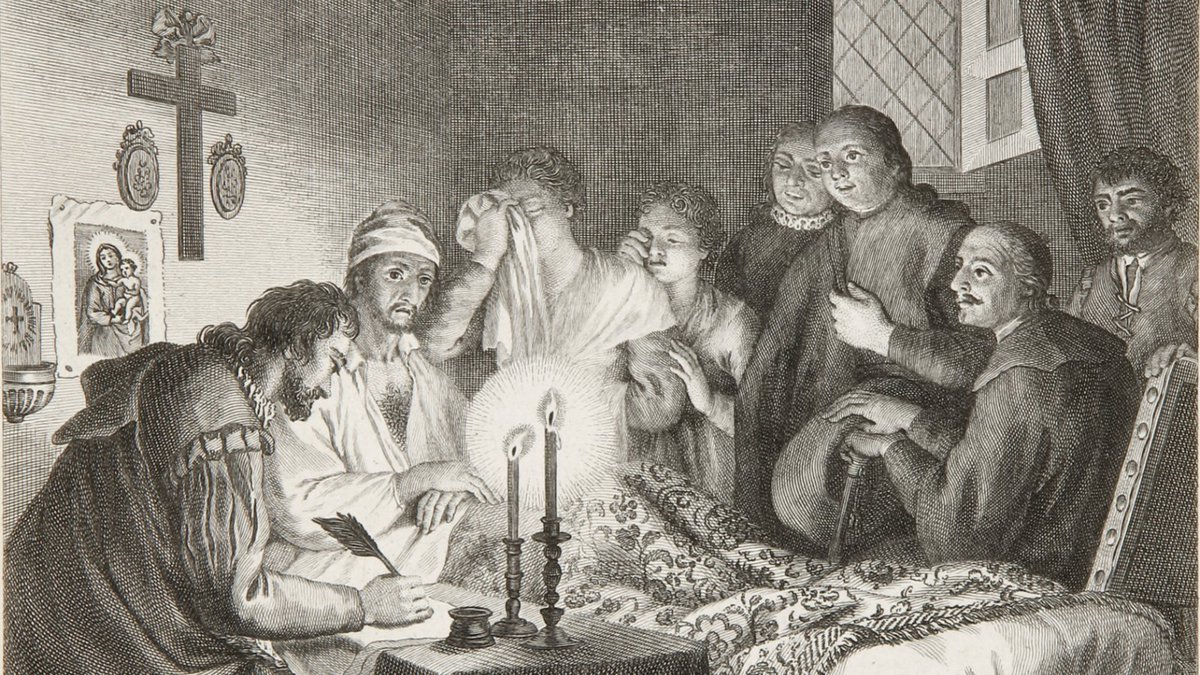
¿Cómo acaba el «Quijote»?
«Vale» es la última palabra de las aventuras del hidalgo más famoso de la literatura. En latín «vale» es la segunda persona del singular del imperativo de «valēre» ‘estar sano’. Usado en las despedidas era una forma de decir al otro algo así como «Adiós, que estés bien».
¿Recuerdan otros finales de la literatura?
Plotinus thought the highest form of self-knowledge ends with you realizing that the “self” you know is not your deepest self.
In the 3rd century CE, he described the soul as caught between the physical and intelligible worlds. It can turn outward toward the body, desires and changing appearances, or turn inward toward its own higher source. The physical world is not simply evil. It has order and beauty, but the soul becomes lost when it mistakes this changing world for the whole of reality.
The return begins with ethical discipline. The soul loosens its attachment to pleasure, status and bodily concerns, then turns toward philosophy and the intelligible world. There it encounters the Nous, the realm of intelligible Forms and pure intellect.
But even the Nous is not the final destination. The soul must eventually move beyond discursive thought itself. Plotinus calls the highest state henosis, a union in which the usual distinction between the knower and what is known no longer holds.
Porphyry, his student and biographer, says Plotinus experienced such union four times during the years they spent together. This reverses the direction of existence. Reality unfolds from unity into increasing multiplicity, while the soul can make the opposite journey, gathering itself from multiplicity back toward unity.
That makes the Neoplatonic “return to the source” very different from modern self-discovery. You begin by questioning your identification with the body and personality. You then discover the soul, the intelligible world and finally a state beyond ordinary thought.
The goal is not to construct a better self. It is to discover how far the soul can go once it stops treating the separate self as the final truth.
Image source:
“Porphyry and Plotinus” (1475–1480), Maître François.
Source: Wikimedia Commons / Europeana Version checked: 21 January 2024. License checked: 17 September 2026 - Public Domain.
@wrwveit Leído y completamente de acuerdo. El otro día comentaba esto mismo al escuchar a filósofos debatir postulados que la ciencia ha superado hace mucho. Y esa ciencia sin nadie que la piense es sólo utilitarismo hueco, ingeniería. una pena.
Ambas deben ir juntas, se necesitan
Every river in mainland Spain and Portugal, drawn only by its own water, every day since Jan 2025. The peninsula breathes: about 890 m³/s to the sea at the summer low, 33,600 at the Feb 2026 peak, a 38-fold swing.
Discharge: GloFAS (Copernicus/ECMWF). #rivers#Spain
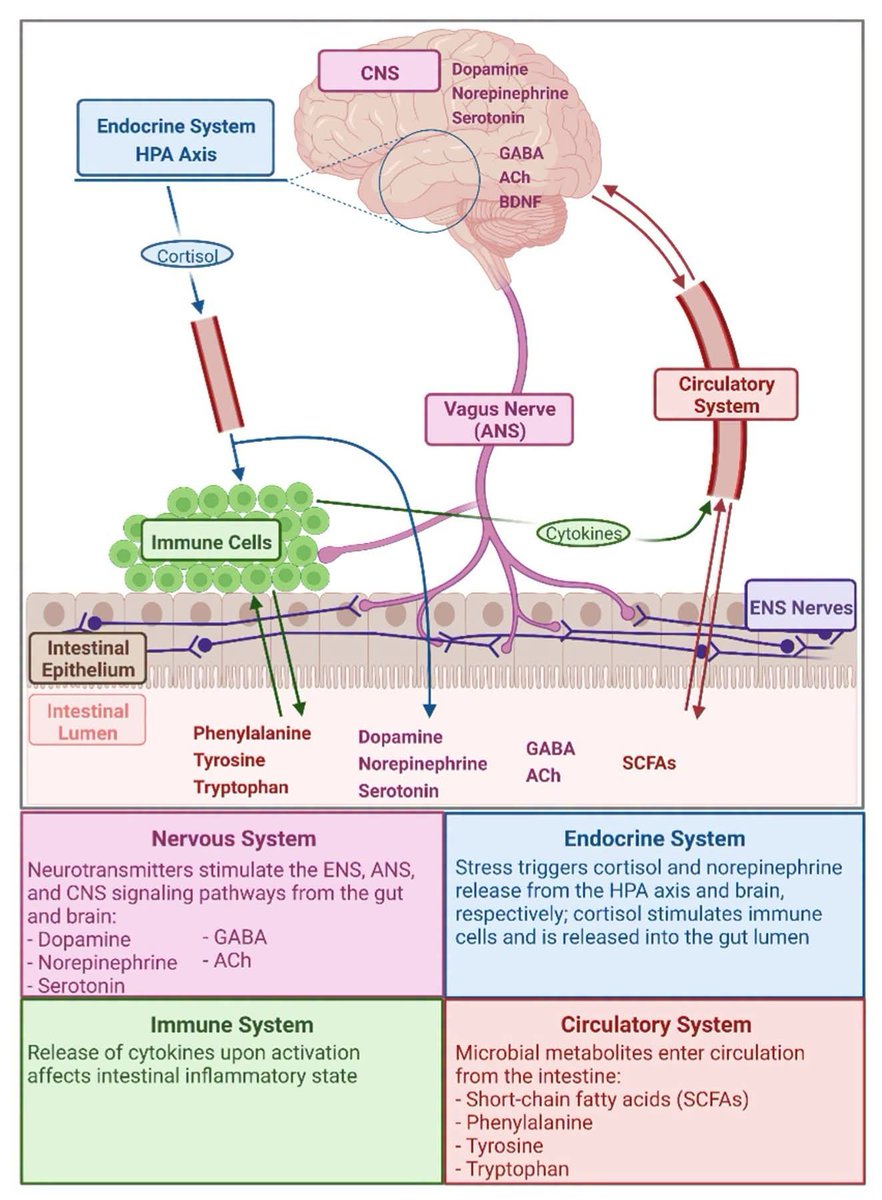
El TDAH se manifiesta de forma distinta en niñas y mujeres (con frecuencia se les diagnostica el subtipo inatento). Nuevas investigaciones están profundizando en el "eje intestino-cerebro" y en cómo este podría vincularse con el TDAH. Resulta que los microbios intestinales 👇
Este tuit promociona una web que acaba de crear el filósofo Nat Hansen
Es una herramienta de IA que te hace un diálogo socrático sobre experimentos mentales clásicos de filosofía. No es un cuestionario estático (respondes y ya), sino una conversación dinámica: das un juicio inicial y luego un interlocutor (la IA) te pide explicaciones, te presiona, te busca inconsistencias, te pone contraejemplos y te hace revisar tu respuesta, exactamente como haría un profesor de filosofía en clase.
El método se llama “Socratic questionnaires” y está basado en un artículo de 2024 de Hansen, Kathryn Francis y Hamish Greening.
Estos son los experimentos disponibles ahora mismo:
-El problema del tranvía (moralidad)
-Casos Gettier (conocimiento)
-El efecto de los efectos secundarios (Side-Effect Effect / efecto Knobe, sobre acción intencional)
-Mary, la científica de los colores (fisicalismo y qualia)
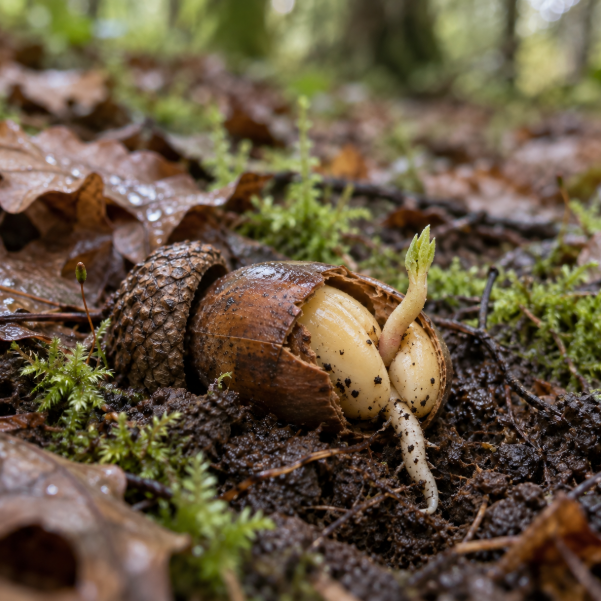
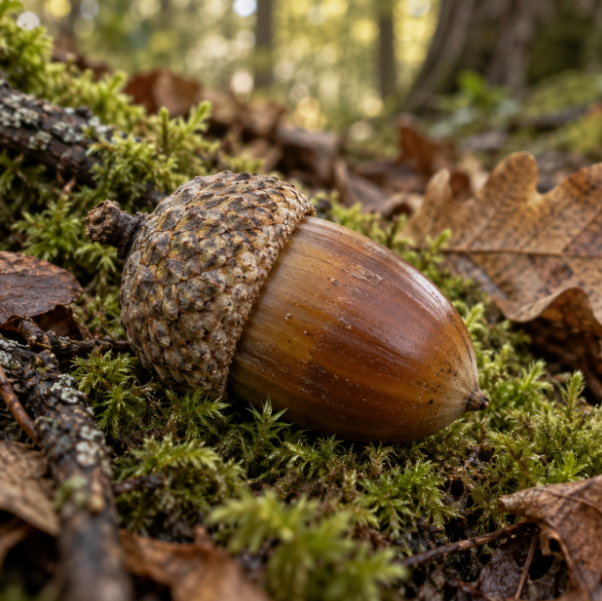
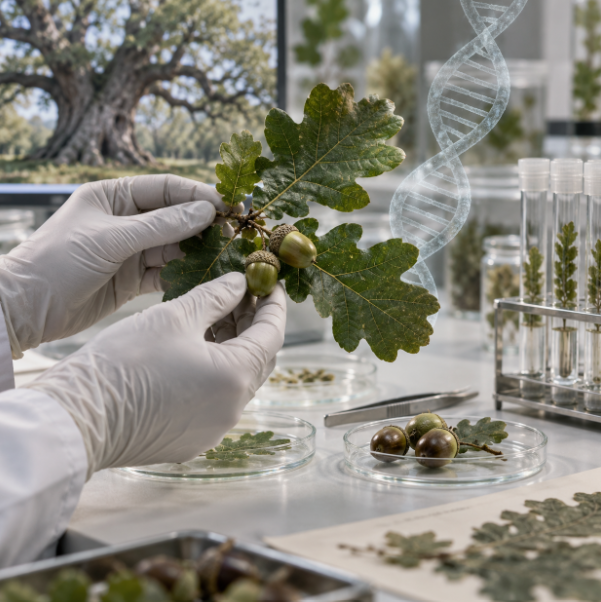
Muchos me habéis preguntado si, con la muerte del Major Oak, se pierde para siempre su linaje. La respuesta es no. Durante años se han recogido bellotas del viejo roble y existen descendientes suyos plantados incluso fuera de Sherwood. De hecho, en Nottinghamshire se han plantado ejemplares nacidos directamente de sus bellotas, y la propia gestión del bosque ha explicado que hay “hijos” del Major Oak creciendo en distintos lugares del mundo.
Pero hay algo aún más fascinante: en 2023 investigadores de la Universidad de Cambridge tomaron muestras de dos grandes ramas del Major Oak para secuenciar su ADN. Los primeros resultados encontraron diferencias genéticas importantes entre ambas ramas, hasta el punto de que una de las hipótesis que se estudian es que este gigante pudiera ser el resultado de la fusión de más de un árbol ocurrida hace siglos.
Y aquí está la paradoja: conservar el germoplasma de un roble no es tan sencillo como guardar unas semillas en un congelador. Las bellotas de Quercus robur son recalcitrantes: pierden rápidamente su viabilidad cuando se secan y no se almacenan bien durante largos periodos. Por eso, en los robles, conservar el legado genético pasa sobre todo por mantener descendientes vivos, reproducirlos y estudiar su ADN.
El Major Oak ha muerto, pero su historia genética sigue viva en otros robles.
Y quizá eso sea lo más hermoso: después de casi mil años, el viejo Major no desaparece del todo. 🌳
Estos días os voy a contar dónde viven algunos de sus descendientes y qué sabemos realmente de su genética. Porque hay árboles que, incluso después de morir, siguen teniendo historias que contar.
The hydrogen in your body and present in every molecule of water came from the Big Bang. There are no other appreciable sources of hydrogen in the universe. The carbon in your body was made by nuclear fusion in the interior of stars, as was the oxygen. Much of the iron in your body was made during supernovas of stars that occurred long ago and far away. The gold in your jewelry was likely made from neutron stars during collisions that may have been visible as short-duration gamma-ray bursts or gravitational wave events. Elements like phosphorus and copper are present in our bodies in only small amounts but are essential to the functioning of all known life. The featured periodic table is color coded to indicate humanity's best guess as to the nuclear origin of all known elements. The sites of nuclear creation of some elements, such as copper, are not really well known and are continuing topics of observational and computational research.
Image Credit: NASA's GSFC, SVS
@Fernandamdo14 Desde la profunda ignorancia, lo que también parece que se deriva es que no es tan inocua. Aunque sea en ratones la experiencia es para mal, no para bien, no? Es un estudio inicial, pero apunta en una dirección y no en otra. No sé, al menos "precaución" sí señala.