Simplified: Ibn Taymiyya on Meaning and Metaphor
1. Who Gets to Decide What Revelation Means?
The Tension
▫️ Ibn Taymiyya rejected allegorical interpretations of God’s attributes — such as His aboveness and His hands.
▫️ He held that these descriptions should be understood according to their apparent meanings, without reinterpretation.
The Objection
▫️ But the Arabic language contains metaphor.
▫️ Terms like “above” or “hand” don’t always carry a literal meaning — they can indicate power, status, or control.
So why reject that possibility?
The Verdict
“Ibn Taymiyya was a strict literalist — someone who insisted on surface-level meanings and dismissed deeper interpretation.”
2. Ibn Taymiyya’s View on Language and Meaning
Clarifications
▫️ Obviously, Ibn Taymiyya understood a sentence like “I saw a lion on the battlefield” the way everyone does — as referring to a brave man, not the animal.
▫️ If someone wants to call that use of the word “lion” figurative, that’s not an issue for Ibn Taymiyya — it’s just a semantic label.
▫️ His more technical, philosophical debates on metaphor — such as his critiques of the Mu‘tazili theory and its duality of al-wad‘ (designation) and al-istimal (usage) — are not the central issue here. That discussion belongs to a broader and more abstract inquiry into language.
So, the immediate concern here is not the question of metaphor in and of itself. It’s how meaning is determined in the first place.
Meaning in Use
Ibn Taymiyya saw language as grounded in real-world usage — in how people speak, respond to situations, and make themselves understood.
Words don’t carry fixed meanings in isolation; they take meaning from how they’re used in context.
For him, meaning depends on:
▫️ Common usage in a given community
▫️ The situation in which the words are spoken
▫️ The speaker’s intent to communicate clearly
Expressions we might label “figurative” are only relevant if the context and usage at the time support that understanding. The core question is never what a word could mean in theory — it’s what the speaker’s audience, in that context, would have understood it to mean.
That’s how Ibn Taymiyya frames meaning: not through abstract categories, but through lived communication.
3. Interpretation Must Be Grounded in Language and Usage
Any interpretation — whether labeled “figurative” or “literal” — must be grounded in the language itself: context, usage, and custom.
Meaning in Context
▫️ Interpretation depends on whether a meaning fits the speaker’s intent and the audience’s frame of understanding — since they were the ones directly addressed.
▫️ It’s not about whether a meaning feels more “coherent” to us — unless that sense of coherence reflects how the speaker and audience would have understood it at the time.
▫️ What Ibn Taymiyya rejected were later interpretations shaped by foreign assumptions — ideas imported from philosophical or theological systems that disconnect meaning from how language actually functioned in the original setting of the speech in question.
Note: This doesn’t deny that certain (non-theological) verses can and do apply to new contexts and circumstances. But application builds on an existing meaning. It doesn’t create a new one.
4. Speech Is Meant to Be Understood
The Starting Point:
"People speak to be understood."
▫️ Interpretation must begin with what a reasonable listener ��� situated in the linguistic and cultural environment the speech addressed — would have understood the words to mean.
▫️ It’s about uncovering how the speech worked in context — based on the speaker’s intent and the audience’s norms.
▫️ The meaning is rooted there — and must be understood through those contextual cues, not through retrospectively imposed metaphysical categories.
5. This Is What Reason Demands
Understanding speech on the speaker’s terms isn’t just faithful — it’s the only rational way to understand what they meant.
What’s irrational is to:
▫️ Treat speech as if it can be understood apart from the collective understanding of its immediate recipients
▫️ Override meaning with assumptions drawn from unrelated systems
That means:
▫️ We don’t ask: “Does this understanding seem reasonable to me?”
▫️ We ask: “Would this understanding have seemed reasonable to the speaker and their community?”
Not a Defense of Revelation, But a Method of Honest Interpretation
▫️ The issue here isn’t whether revelation is consistent with reason — that’s a given. Revelation does not conflict with sound reason.
▫️ But what Ibn Taymiyya is focused on in this context is honest interpretation — interpretation that remains faithful to how the speech was received by its direct audience, within their own linguistic and cultural framework.
Rational on Its Own Terms
▫️ When revelation is interpreted as it was intended — within the linguistic and cultural framework of its initial audience — it does not conflict with sound reason.
▫️ It does not need to be reinterpreted through speculative philosophical frameworks to become “rational.” It’s already rational when understood plainly and honestly.
6. Understanding Isn’t Backwards
Ask yourself:
a. Who was the Qur’an directly revealed to?
The early Muslim community — people who shared the language, culture, and worldview the Qur’an addressed.
b. Did they understand the verses the way you do?
No — the interpretations you’re proposing came later, built on philosophical categories they didn’t know or use.
c. Could they have arrived at your interpretation?
No — because your understanding depends on:
▫️ Imported philosophical ideas
▫️ Later metaphysical frameworks
▫️ Theological concerns that hadn’t yet emerged
Reception Defines Meaning
▫️ The speech was directed at a real audience.
▫️ They understood it in real time, through the language, assumptions, and norms they lived within.
▫️ If a particular understanding — especially in matters of belief or the unseen — couldn’t have occurred to that audience using the tools and concepts available to them, then it was not the intended meaning.
Metaphysics Can’t Override Language
▫️ Rational inquiry is part of the process — but it only uncovers meaning when it operates within the framework of the audience the speech was directed to.
▫️ You can't recover meaning by appealing to philosophical constructs the audience never used, never had access to, and never engaged with.
▫️ To impose external metaphysical categories onto speech that was never framed in those terms is not interpretation — it’s distortion.
▫️ Meaning doesn’t float above language. It’s carried by it — and bound to how it was spoken, heard, and received at the time.
7. Conclusion: Meaning Belongs to the Speaker
Meaning is not shaped by what we want to find or believe, but by the world the speech came from.
What matters in this discussion — especially when it comes to the verses under debate — is how meaning is shaped and understood within the actual act of communication.
What Ibn Taymiyya Recognized
▫️ He acknowledged that language works in ways people label as “figurative.”
▫️ He also recognized that Arabic speech operates on multiple levels — clarity, subtlety, emphasis, and rhetorical force.
▫️ But he rejected using such labels to override meaning when they aren't grounded in how those who were directly addressed by the speech understood the words in their own setting.
Whether you call something literal or figurative, if your reading isn’t rooted in the linguistic and intellectual frame of reference of the speech itself, it’s not interpretation — it’s projection.
Understanding the speaker on their own terms is the foundation of honest interpretation. The categories we use — literal, figurative, rational, or otherwise — only matter if they help us do that. If not, they’re just distractions.
@Teenastyraw@The_FinalAttack If after pawn at b2 takes the c3 pawn, the f8 rook moves to give the king a chance to escape, we can still line up the rooks because the pawn at g6 allows the rook at h7 to take at f7
((يَا أَيَّتُهَا النَّفْسُ الْمُطْمَئِنَّةُ ارْجِعِي إِلَى رَبِّكِ رَاضِيَةً مَرْضِيَّةً فَادْخُلِي فِي عِبَادِي وَادْخُلِي جَنَّتِي))
ب��لوب مؤمنة بقضاء الله وقدره،
انتقل الى رحمة الله تعالى والدي
*إبراهيم بن ناصر المدلج* (أبو حافظ)
اسأل الله أن يغفر له ويرحمه ويتجاوز عنه ويجعل ما أصابه رفعة في درجاته..
وسيصلى عليه بإذن الله غدا الأر��عاء ١٧ / ١٢ بعد صلاة العصر في جامع الجوهرة البابطين بالرياض والدفن في مقبرة شمال الرياض.
العزاء في منزله -رحمه الله- من بعد العصر إلى صلاة العشاء.
دعواتكم للفقيد بالمغفرة والرحمة
طلب من ربه نفس الطلب الذي طلبه قومه منه، ولكن شتان بينهما، فهم طلبوه إثباتًا حتى يؤمنوا، وهو طلبه من شدة الأنس بالكلام مع الله جل وعلا، ولا يلام عليه السلام، فكان التعامل مختلفًا.
وصُعق قوم موسى، وصُعق موسى، ولكن شتان بينهما، فهم صعقوا عقوبة، وهو صعق لعدم الإطاقة والتحمل.
@Cobratate It was He who created the heavens and earth in six Days and then established Himself on the throne. He knows what enters the earth and what comes out of it; what descends from the sky and what ascends to it. He is with you wherever you are; He sees all that you do;
Quran 57:4
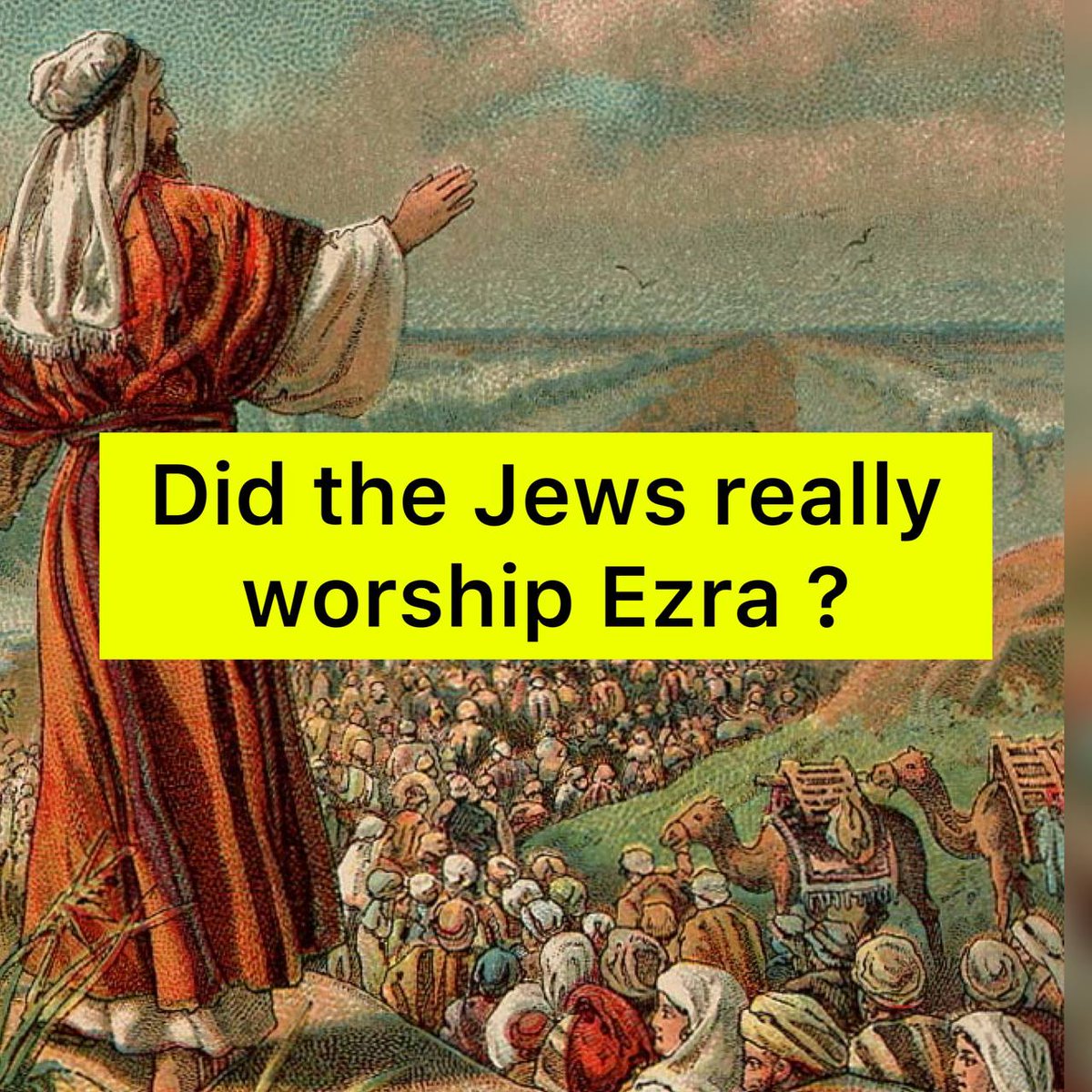
Did the Jews really worship Ezra ❓
And called him the son of God, as the Quran claims❓
🧵This thread proves the truth of the Quranic claim that the Jews worshiped Ezra and called him the Son of God .
I benefited from the books of @DrSamiAmeri
👇👇👇
تأملت كلمة (الحظ) التي نستعملها عادة فنجعلها صفة لمن يكون النجاح والتوفيق حليفهم بغض النظر عن جهودهم ومواهبهم. فوجدت مفارقة لطيفة بين الحظ العظيم عند الناس والحظ العظيم عند الله جل وعلا:
الدرع: قميص منسوج من حلقات الحديد يلبسها المحارب.
ويقابلها درع المرأة: قميصها.
ومن باب التناسب والتقابل الأفصح في درع الرجل: التأنيث، وفي درع المرأة: التذكير.
ويتوهَّم عامة الناس أن الدرع هو ما يحمله المحارب في يده للتترس به كالتُّرس وحجفة والمِجَنّ والدَرَقة 🛡️، وهذا خطأ.
الحمد لله حمدا كثيرا..
ببالغ الفخر والاعتزاز والسعادة أبارك لابنتي أسيل حصولها على الدكتوراة من جامعة وورك بالمملكة المتحدة في علوم الحاسب-علم المدن والشبكات المعقدة.
وأسأل الله أن يوفقها في دروب الحياة وأن ينفع بها دينها ووطنها.
"فخورون بك يا أسيل"