When should you investigate RBBB in young or athletic individuals? Published #EJPC ✅1/1000 young individuals have RBBB, commoner in males & athletes; ✅5% have pathology, ASDs but also arrhythmias; ✅Pathology associated with broad RBBB ≥130ms, symptoms, other ECG anomalies.
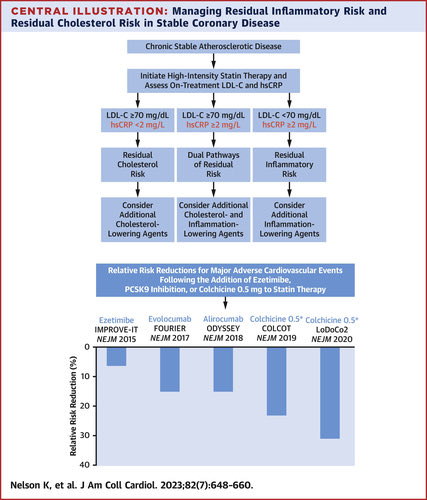
I find it remarkable and disappointing that one would do a trial of taking people with CAD off their meds! I see no reason to ask this question and am surprised it would get IRB approval. It is not a relevant clinical question.
Most people underestimate just how important role is played by Italy when it comes to industrial production in the EU.
Northern Italy is a powerhouse!
🇮🇹
Every Data Scientist needs to know these ideas.
They will blow your mind.
1. Correlation vs Causation
P(A | B) is the probability of A given B. It is the probability that we will observe A given that we have already observed B.
P(A | do(B)) is the probability of A given do(B). It is the probability that we will observe A given that we have intervened to cause B to happen.
In this context, an intervention simply means to take an action of some kind. Therefore do(B) means to take an action which causes B to happen.
The expressions P(A | B) and P(A | do(B)) might seem very similar but they represent very different situations.
2. We can only learn P(A|B) from the data alone.
Bob has an extremely accurate weather app and is always very good about bringing his umbrella when it rains. We observe Bob over several years and we find that whenever it rains, Bob always has his umbrella and he never brings his umbrellas on days when it doesn't rain.
In the language of probability, we say P(Umbrella | Rain) = 1 and P(Rain | Umbrella) = 1 as well.
What we can learn from this data alone is how to predict whether it rains with a 100% accuracy by checking whether Bob has an umbrella. We can also learn to predict with 100% accuracy whether Bob has an umbrella by checking if it's going to rain.
What we cannot learn is what will happen if we give Bob an umbrella on a random day of our choosing. The answer to this question is P(Rain | do(Umbrella) ) and it's unknowable from the data alone.
We need prior knowledge about how the world works to properly interpret the data we collected. We need to know that rain has an effect on Bob's behavior, but Bob's behavior has no effect on the rain.
Information about the effects of interventions are simply not available in raw data unless it is collected by controlled experimental manipulation.
3. Scientific Experiments work because they produce a very special kind of data.
You may have heard of what many people call a scientific experiment. Take a collection of objects, animals or people. Randomly split that collection into a control group and a treatment group. Apply your intervention to the treatment group while leaving the control group alone. If you observe any differences between the treatment group and the control group, it is logical to attribute these differences to the treatment. You can therefore say the differences were caused by the treatment.
In statistics, the procedure I just described is called a Randomized Controlled Trial. It is a procedure for generating a specific kind of data where:
P(Difference | Treatment) = P(Difference | do(Treatment) )
This is why traditional science experiments work. They are designed to capture causal information. This is not the case for vast majority of data that we collect in society.
Without human guidance or access to real world knowledge, statistical algorithms and artificial intelligences can only learn P(A | B) from the raw data. This is a fundamental mathematical limitation on the use of data alone.
That's it for now. This post is part of a series of posts about the concept of causal inference. They are based on the content of the Book of Why by Judea Pearl with lots of commentary from me.
Follow me (@kareem_carr) so you don't miss out on the next post.
Please show support by liking and retweeting the thread.
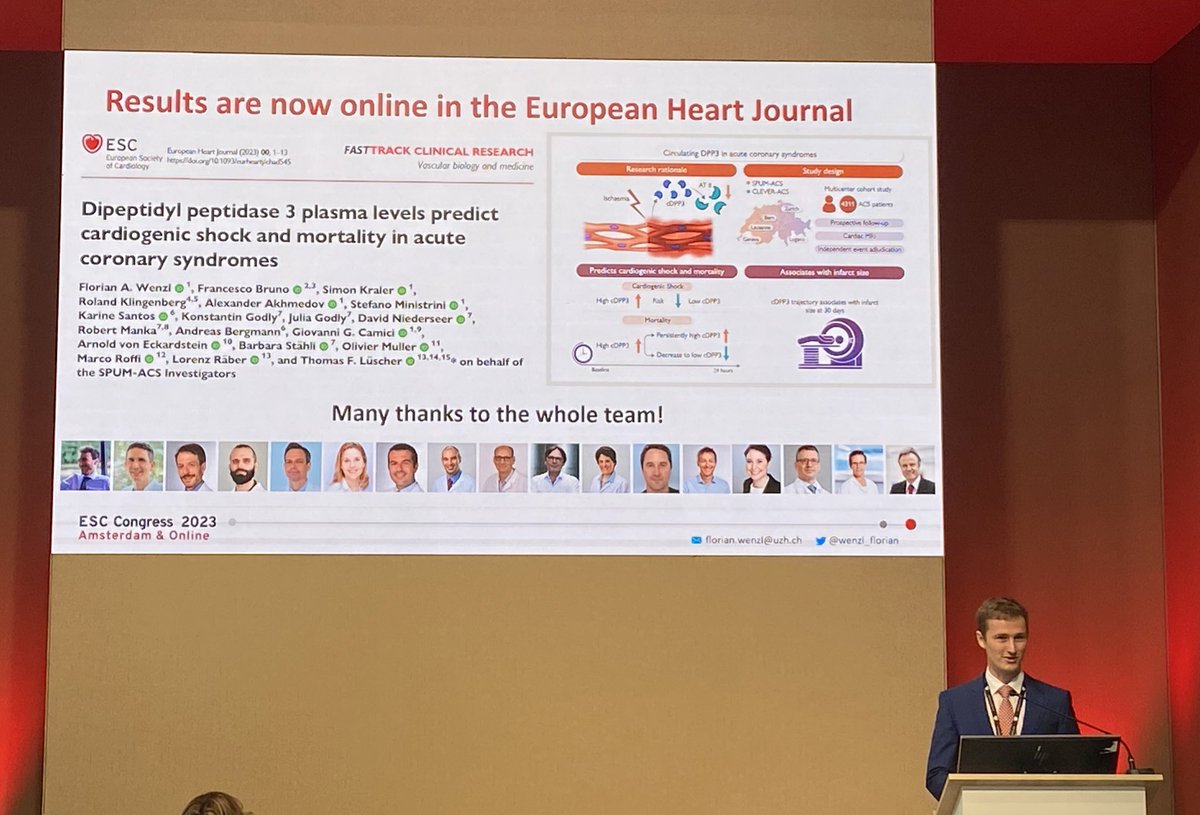
🔥#ESC2023 simultaneous publication in @ESC_Journals
🌍 From the SPUM-ACS study:
📌DPP-3 ➡️ novel marker of CS and mortality in patients with ACS
📌DPP-3 trajectories associated with mortality and infarct size
A massive work lead by @wenzl_florian
🌐https://t.co/QaejGgUDj0
Big kudos to a beautiful team, all nights passed awake weren't useless!
@fedegcb@mattia_troncone@morena_arianna, MD Giuseppe Giannino, Emanuele Ravetti, Ludovica Carmagnola, Umberto di Vita
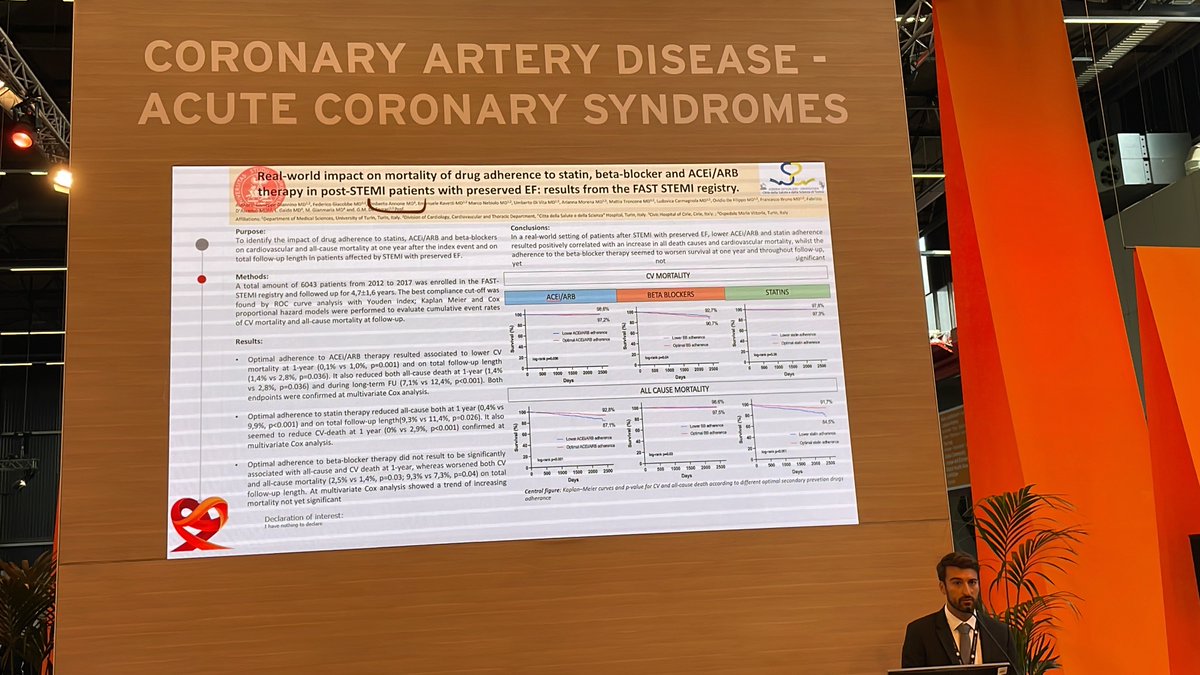
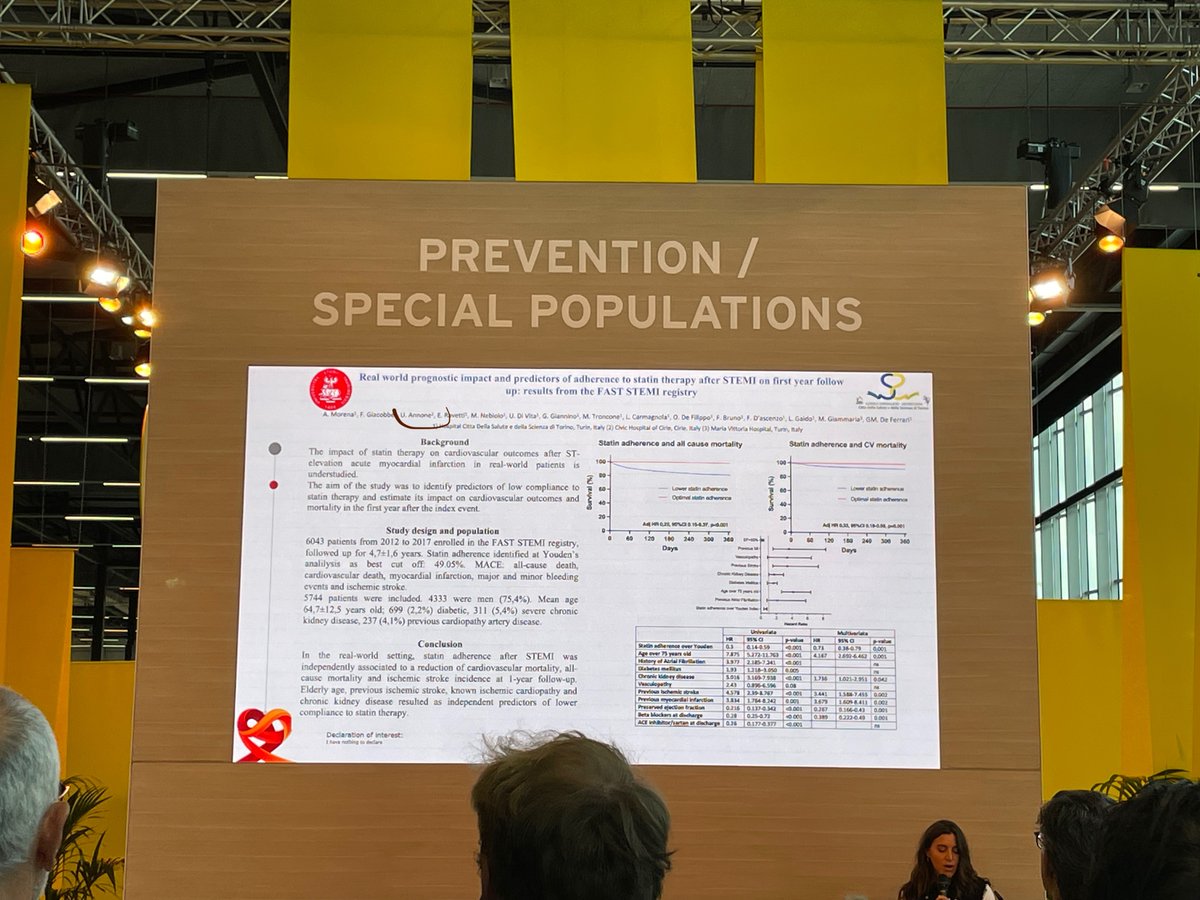
FAST-STEMI is on fire. Four oral presentations at #ESCCongress#ESCCongress2023 .
Prepare your journals, we're coming.
Teaching optimal adherence to drugs after STEMI is the best treatment we can give to our patients, and it's completely free.
Imagine a loved one being treated incorrectly for their MI.
Yet...do YOU even understand when an NSTEMI is really an NSTEMI?
Finally understand it in 2 minutes: