Excited to share our work on customizing reasoning models! We've open-sourced everything, from data generation to training and the full customization recipe.
Excited to share our preliminary work on customizing reasoning models using Red Hat AI Innovation’s Synthetic Data Generation (SDG) package!
📄 Turn your documents into training data for LLMs.
🧵👇
Continual learning research that I enjoyed in #neurips
Continual learning architectures: Saw a lot of interesting work on adapting the architecture of LLMs to allow for continuous adaptation. Nested Learning does this through an optimizer framework where each layer has its own “context flow” enabling LLMs to continually adapt with long/short-term memory [1]. GainLoRA allocates gated low-rank adapters per task to integrate new knowledge without overwriting prior skills [2]. These methods hint at fundamentally new LLM designs that self-improve over time. Really excited to see future research question the fundamentals of LLM design for continual learning!
Post-training for continual learning: Iteratively bootstrapping stronger reasoning is probably one of the best flywheels for improving LLM capabilities. UPT uses an unsupervised post-training phase where a VLM uses majority‑vote “self-reward” to iteratively boost reasoning accuracy [3]. AceSearcher designs a self-play framework where an LLM alternates between decomposing questions and solving them, improving its answers using sparse rewards [4]. I think this research area is still a huge green field, with a lot of open questions and low hanging fruit to explore [5].
Agentic system design for continual learning: I really liked seeing new agentic harnesses focused on injecting the right context during inference. SiriuS shows how an “experience library” can bootstrap a self-improving loop, enabling continual refinement of multi-agent reasoning through self-correction and self-play [6]. Would love to see more work on low-bias approaches to learn from past failures on a given task.
Continual learning benchmarks: I think one of the most exciting directions now lies in building realistic, rigorous continual learning benchmarks to stress-test what continual learning methods can really deliver in production usecases. Havent seen any papers at NeurIPS but MemoryBench (ICLR 2026) serves as a good template for how to build benchmarks for the continual learning paradigm [7]. Excited to see people think more deeply about what it means to evaluate continual learning (especially when someone can train on your benchmark)
[1] Nested Learning by @behrouz_ali, @meisamrr, @mirrokni
[2] GainLoRA by Yan-Shuo Liang, Jia-Rui Chen and Wu-Jun Li
[3] MM-UPT by Lai Wei, Yuting Li, Chen Wang, Yue Wang, Linghe Kong, Weiran Huang, Lichao Sun
[4] AceSearcher by @ritaranx, @WenqiShi0106
[5] Sculpting Subspaces by @krishnatejakk, @ligongh, @prateekiiest, @xukai92, @HW_HaoWang, @ParejaAldo, @Abhi_1092
[6] SiriuS by @WanjiaZhao1203, @mertyuksekgonul, @ShirleyYXWu, @james_y_zou
[7] MemoryBench by @QingyaoAi
Calibrated process reward models can make inference-time scaling smarter.
Join us this Friday, October 3rd, to learn about:
✅ Better PRM calibration
✅ Instance-adaptive scaling
✅ Math reasoning benchmark results
Watch on YouTube Live: https://t.co/jT5TpSbnkG
This Friday on Random Samples: Customize LLMs with synthetic data using SDG-Hub, an open source toolkit from @RedHat. We’ll cover prompt/flow composition, teacher model selection, and close with a GUI demo showing how to build/manage pipelines visually.
Login details in reply 👇
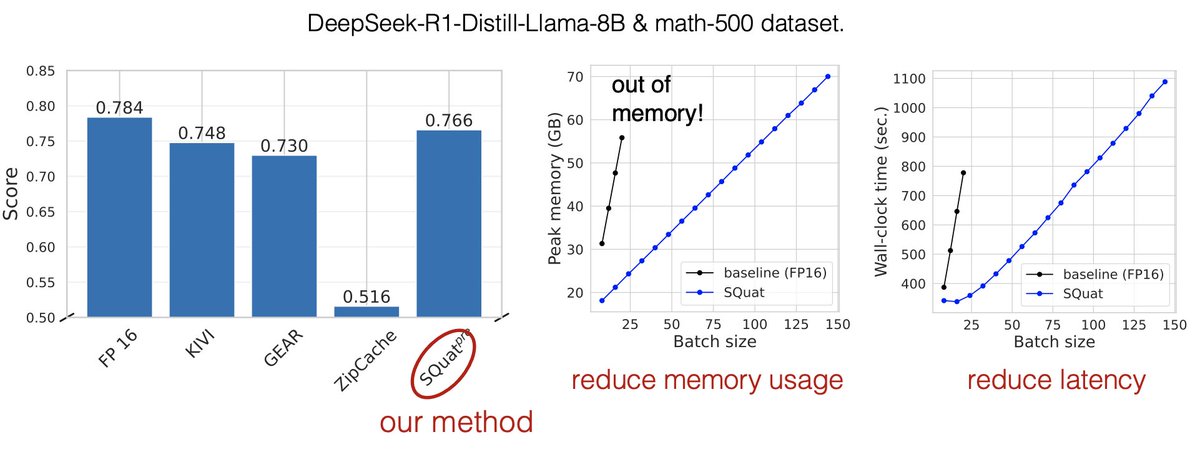
[1/x] 🚀 We're excited to share our latest work on improving inference-time efficiency for LLMs through KV cache quantization---a key step toward making long-context reasoning more scalable and memory-efficient.
[1/x] can we scale small, open LMs to o1 level? Using classical probabilistic inference methods, YES! Joint @MIT_CSAIL / @RedHat AI Innovation Team work introduces a particle filtering approach to scaling inference w/o any training! check out https://t.co/Iz8zoVbZPn
Now open, the AGENT challenge: https://t.co/fU4agbgjP7.
Want to test if your model gets basic concepts in intuitive psychology? We designed a dataset to probe just that.
All entries are welcome! (1/4)
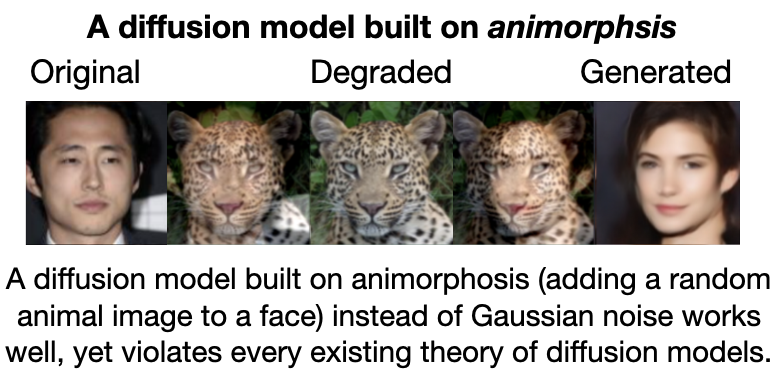
Diffusion models like #DALLE and #StableDiffusion are state of the art for image generation, yet our understanding of them is in its infancy. This thread introduces the basics of how diffusion models work, how we understand them, and why I think this understanding is broken.🧵
We finally have the first look at our Milky Way black hole, Sagittarius A*. It’s the dawn of a new era of black hole physics. Credit: EHT Collaboration. #OurBlackHole#SgrABlackHole
Link: https://t.co/Ax7ECRVg8A
In just under 12 hours, at 13:00 UT (9 AM Eastern Time), we will be revealing groundbreaking results! Choose between our main streams:
1) American stream: https://t.co/XKkI96ma7h.
2) European stream: https://t.co/p37mWjoIii.
3) Japanese stream: https://t.co/BhUSGSbtIn. …
Hubble's back! 🎉
After the Hubble team successfully turned on backup hardware aboard the telescope, the observatory got back to work over the weekend and took these galaxy snapshots.
Find out more here: https://t.co/2mWwSGyIKc
Humans have an early developing intuitive psychology, the ability to reason about other people’s mental states. In our #ICML2021 paper, we introduce AGENT, a benchmark for probing machine agents' understanding of intuitive psychology. Poster: Wed, noon - 2 pm EDT.
Check out our work at @icmlconf. We propose a benchmark to evaluate the machine learning model's understanding of intuitive psychology. To pass the test model must learn an internal representation of plan, utility, and knowledge of physical interaction
New research being presented at @icmlconf from @MIT, @MITIBMLab and @Harvard explores the possibility of training #AI using techniques historically seen in behavioral study of infants. 🖥️👶
Check it out, including the new dataset called AGENT: https://t.co/xUWUJU2W7D
Can we take lessons from behavioral psychology of infants and apply them to training of #AI? New work from @MIT, @MITIBMLab and @Harvard is exploring just this. 🖥️ 👶
Learn more about this work also being presented at this week's @icmlconf conference: https://t.co/sA8twe3F7C
We’re granting free access to @IBM’s +80K patent portfolio and any new patents filed thru 2023 to develop tech to help diagnose, prevent, contain or treat coronaviruses like #COVID19#OpenCOVIDPledge https://t.co/ZsEbEyaBuB