🎉 Great work from the PAN 2 team on an open-weight world model built for real-world simulation, grounded in time, physics and space to predict how scenes evolve as actions unfold.
vLLM-Omni brings Day-0 support for PAN 2 text-to-video and image-to-video generation, making it available through an open inference stack.
FastVideo team is excited to announce day-0 support for @IFM_AI PAN 2! 🚀
PAN 2 is a foundation world model for physical intelligence, enabling simulative reasoning, where an agent imagines the outcomes of its candidate actions before choosing among them.
Simulate 20 seconds in 2 minutes on 8×B300. 10 seconds in 44 s. 📷
FastVideo: https://t.co/5YnBSko00N
PAN 2 Recipe: https://t.co/LBPSNB5DX5
Congrats to the PAN 2 team at IFM!
@mbzuai
Introducing PAN 2: an open foundation world model for physical intelligence.
A language model predicts the next word. PAN 2 predicts the next world: what happens after each action, grounded in time, physics and space.
Towards AI that simulates “what if?” before it acts.
More details: https://t.co/lUX7igPOiF
We're excited to unveil Matrix-Game 4.0: the world's first open-source game world model streaming at 83 FPS on a single 5090. It's built to be played, not just watched.
My first project leading the Matrix Game team at @Skywork_ai. I'm glad we built something fun! Thanks, team!
World models have made impressive progress in video generation, yet they still struggle with a fundamental challenge: memory. In long rollouts, the camera trajectory gradually drifts from the user-specified motion and revisited scenes no longer align with earlier observations. These errors accumulate over time, causing the generated world to steadily lose coherence.
🚀Excited to share our solution MosaicMem 🌍🧠 — our new hybrid spatial memory for video world models.
Project Page: https://t.co/nhy7nfGqLW
Paper: https://t.co/PpcMbq0JTY
What happens when you invite 150 AI economists (Claude Code) to a research conference, give them the exact same data, and ask them to test the same hypotheses?
We did just that. The results reveal a new phenomenon: Nonstandard Errors in AI Agents. 🧵👇
How is generative AI reshaping engineering design?
In Episode 2 of No Math AI, hosts Dr. Akash Srivastava (@variational_i) and MIT PhD student Isha Puri (@ishapuri101) sit down with Dr. Faez Ahmed (@_faezahmed) from MIT DeCoDE Lab to explore just that. 👇
#ICLR2025#BayesDL#LLM#ICL Can LLMs enjoy the accuracy of many-shot in-context learning (ICL) with only the inference cost of zero-shot learning. To address this question, we proposed implicit in-context learning (I2CL).
🚀 Big News!
Our latest preprint is out:
🧠 “Two Heads Are Better Than One: Test-time Scaling of Multi-agent Collaborative Reasoning”
Introducing M1-32B — an LLM fine-tuned for multi-agent collaboration on M500, a dataset of 500 rich reasoning traces.
👇 (1/4)
📣 Excited to share our ICLR 2025 paper "Implicit In-context Learning (I2CL), achieving few-shot performance at zero-shot inference cost!
Don’t miss it at poster session Fri 24th 3:00-5:30pm #228!
Paper and code is available at:
https://t.co/jNVW3frS9X
#ICLR2025#LLM#ML
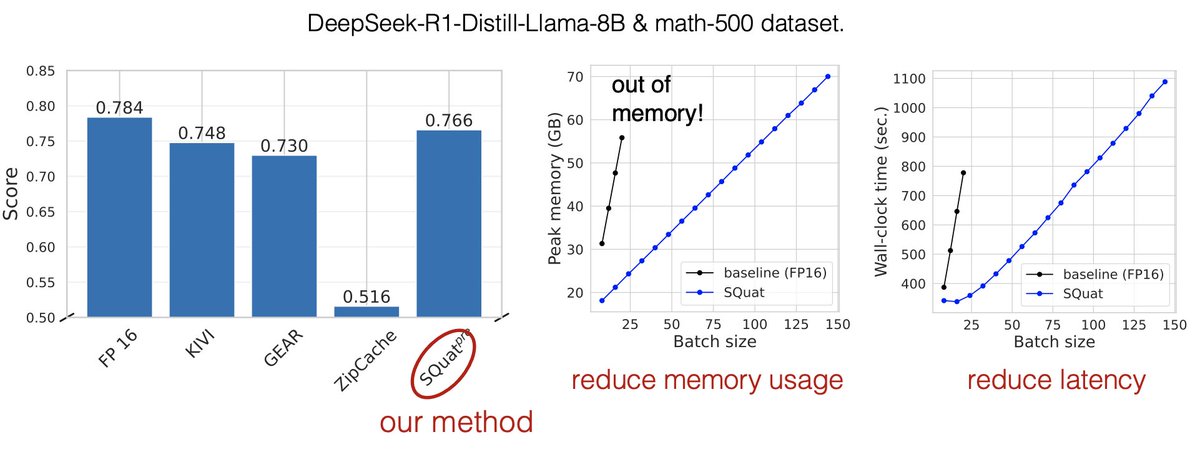
[1/x] 🚀 We're excited to share our latest work on improving inference-time efficiency for LLMs through KV cache quantization---a key step toward making long-context reasoning more scalable and memory-efficient.
[1/x] can we scale small, open LMs to o1 level? Using classical probabilistic inference methods, YES! Joint @MIT_CSAIL / @RedHat AI Innovation Team work introduces a particle filtering approach to scaling inference w/o any training! check out https://t.co/Iz8zoVbZPn
If you're interested in Trustworthy LLMs, particularly probabilistic methods, generalization, or calibration, we' d love to see you there!
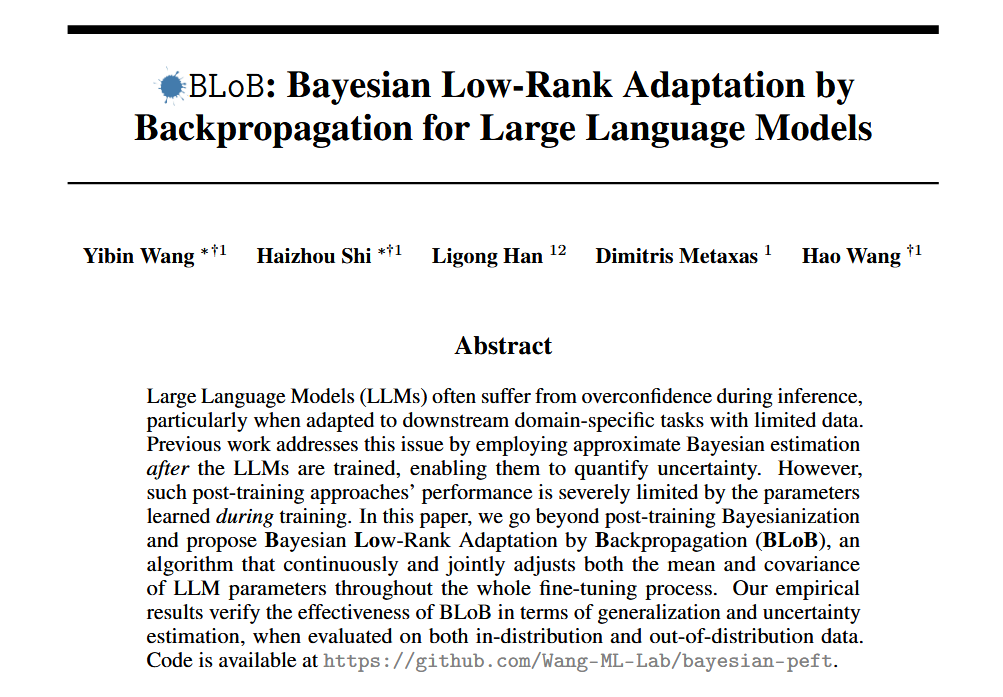
🤝This is done with @RutgersCS visiting student @Yibin_Wang_ and my PhD student @shihaizhou as well as @ligongh and Dimitris Metaxas
Score-Guided Human Mesh Recovery (ScoreHMR) is an approach for solving inverse problems for 3D human pose and shape reconstruction. ScoreHMR mimics model fitting approaches, but alignment with the image observation is achieved through score guidance in the latent space of a diffusion model.
Paper: ScoreHMR:
Score-Guided Diffusion for 3D Human Recovery
Link: https://t.co/KftmvBcK66
Project: https://t.co/kYeatg3hYV
#AI #AI美女 #LLMs #deeplearning #3D
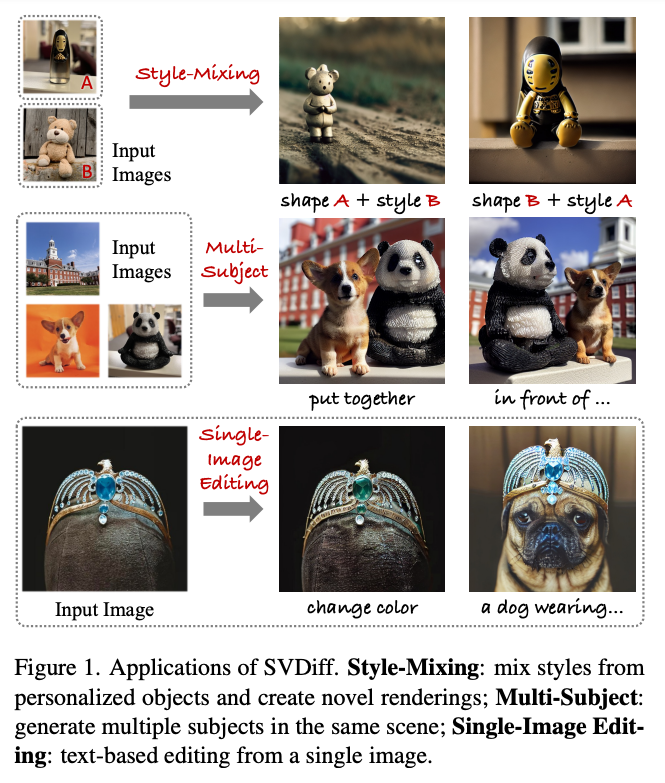
SVDiff: Compact Parameter Space for Diffusion Fine-Tuning
Diffusion models are amazing, but customizing them is hard. SVDiff has 2,200x fewer parameters than DreamBooth because we fine-tune with the singular values of the weight matrices
https://t.co/pqJ69Tj7pQ
#ICCV2023 (2/3)
📢 Our #SMART101 challenge is now open! 🎉 Join the brightest minds in multimodal reasoning and cognitive models of intelligence to drive AI progress. 🚀 Don't miss out! Challenge closes on Sept. 1. Winning teams will receive prizes! 🏆 https://t.co/asTC5oscJh
#VLAR#ICCV2023#AI
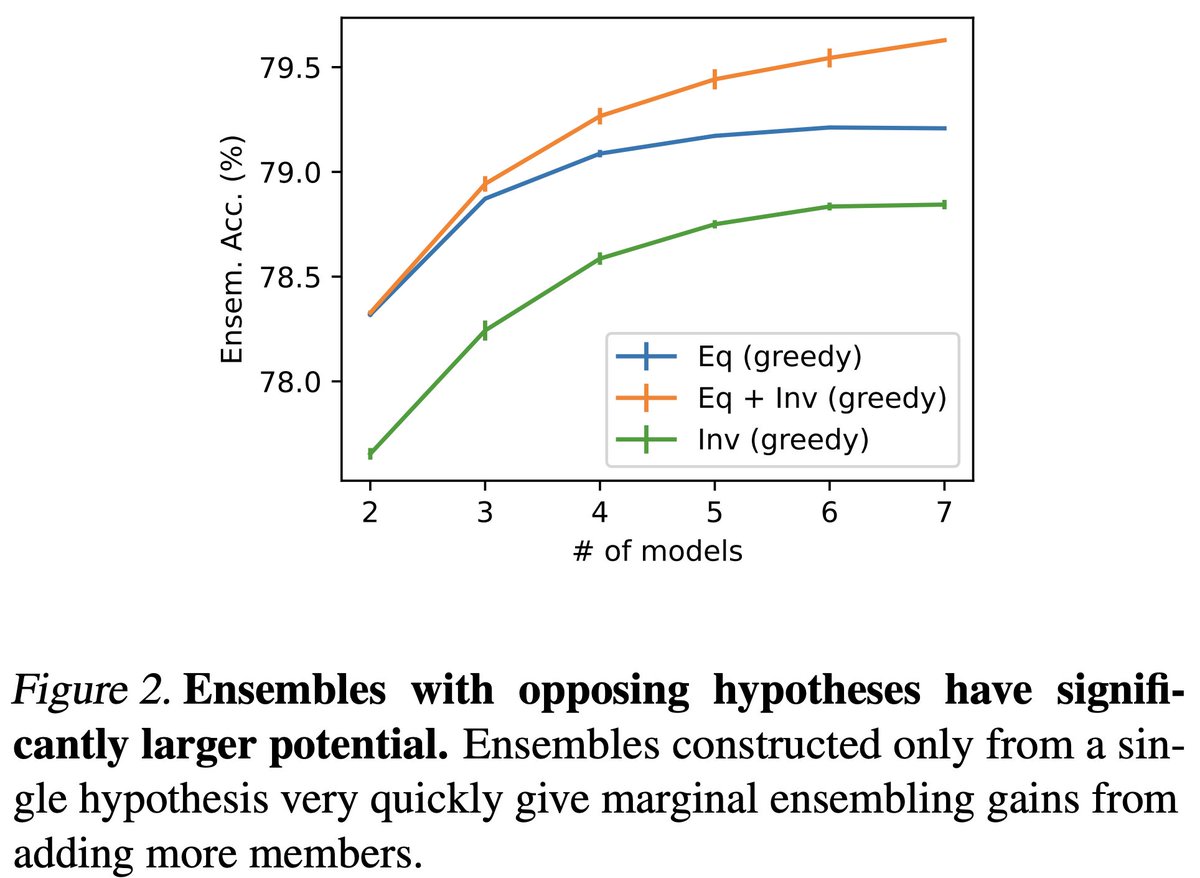
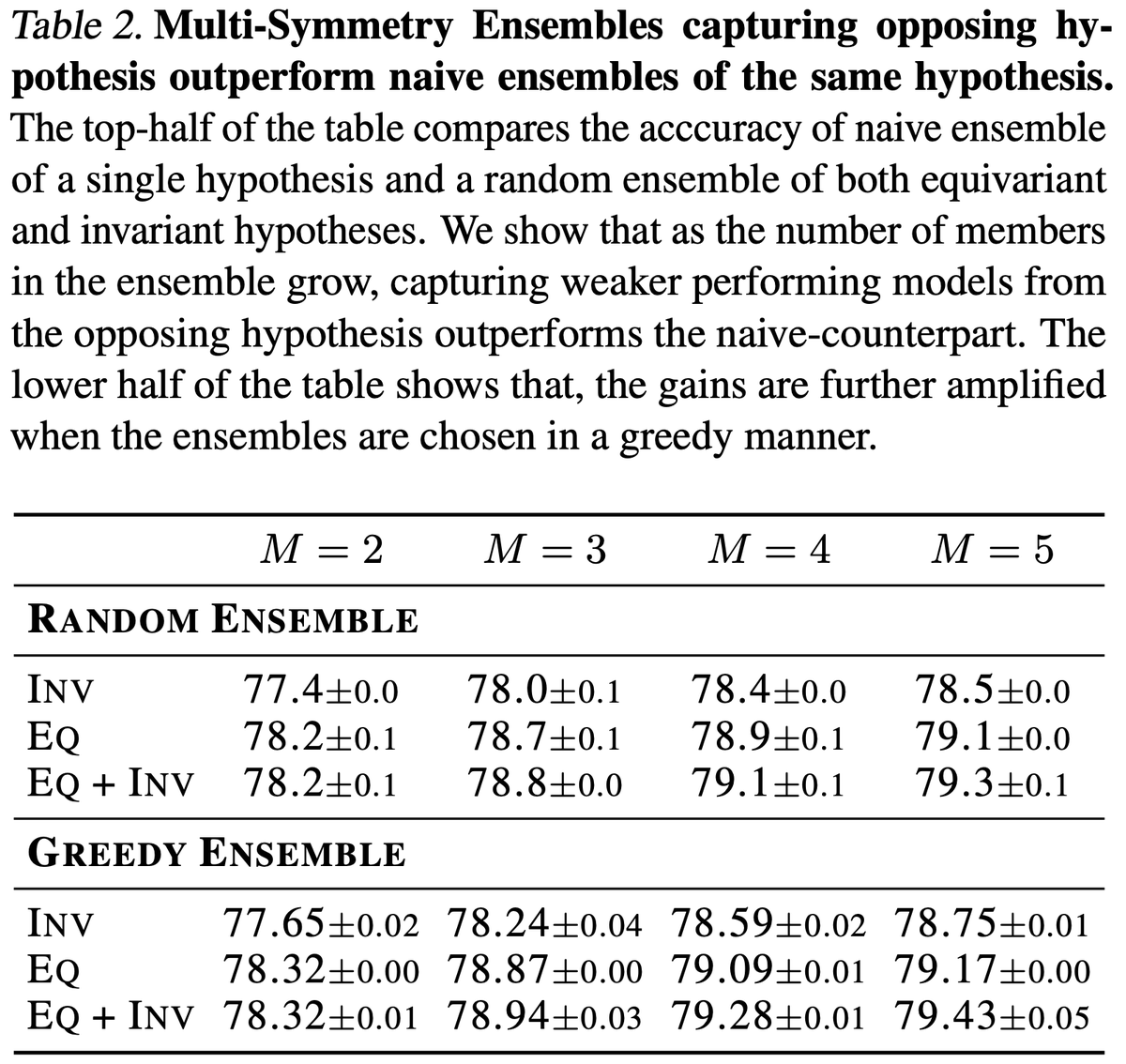
Can't decide if your representations should be invariant or equivariant to a transformation? Multi-Symmetry Ensembles (MSE) can help you by combining both! ImageNet results below. Humbled to have our work accepted at #ICML2023, @icmlconf. Joint work w/ @MITIBMLab, @MIT and @AWS.