The wait ⏰ is over!
Most structure prediction tools give you 1 answer. #RNA just doesn’t work that way - it's the ultimate shapeshifter. Today, we’re launching #RNAccess by Emergente Inc. with access for academic, nonprofit, and commercial researchers.
RNAccess is powered by #RNAnneal, our physics-grounded #AI engine for #RNA structure prediction. By combining physics-based simulation with Generative AI, RNAnneal captures the structural flexibility that makes RNA both incredibly challenging—and incredibly powerful. The workflow is simple:
🧬Submit an RNA sequence of up to 100 nucleotides (long RNAs coming soon).
⚡Receive a thermodynamically ranked ensemble of high-accuracy 3D structures.
🔍Explore results through intuitive, interactive visualizations in your browser.
🦠Example: A key functional region of SARS-CoV-2 #RNA pictured below was predicted + visualized accurately in #RNAccess (with no prior knowledge, just physics!)
We built #RNAccess to make serious RNA structure prediction more accurate, accessible, and useful for researchers working across all RNA work, from fundamental discovery to applied innovations. No local compute. No pipeline setup. No coding experience needed. Not even a GPU bill - we’ve got that covered 🙇
🎓Academic/non-commercial researchers: Receive a free batch of predictions every month, with pay-as-you-go options when you need more.
🏢Commercial teams: Start with a complimentary prediction, then talk with us about evaluation, confidential use, and larger-scale applications.
📍Try RNAccess: https://t.co/5oWSJKzKkA
📍Contact: [email protected]
Come fold with us 💫
------------------
It took a village to get this far.
Thank you to @NIH-NIGMS, @NSF -Chemistry-CTMC, TEDCO, University of Maryland Institute for Health Computing, Institute for Physical Science and Technology, Montgomery County Government, UMD Chemistry and Biochemistry, @UMDscience, @UMmedschool and many others for financial and other support.
Gratitude to leadership Bradley Maron, MD, Adam Porter, @VarshneyAmitabh, Mark T. Gladwin, MD, Martha Jurczak for their continued faith in our team at University of Maryland Institute for Health Computing and in Emergente Inc. - the first startup out of the IHC!
And finally, huge thanks to our awesome scientific advisers Robert Copeland, Jonathan Dinman and John (Jay) Schneekloth for their guidance.
The man who made me what I am today. My scientific journey would have been impossible without this inspiration. Wishing Sir David a happy 100th. I pray to the gods of probability that I, someday, can meet him in person.
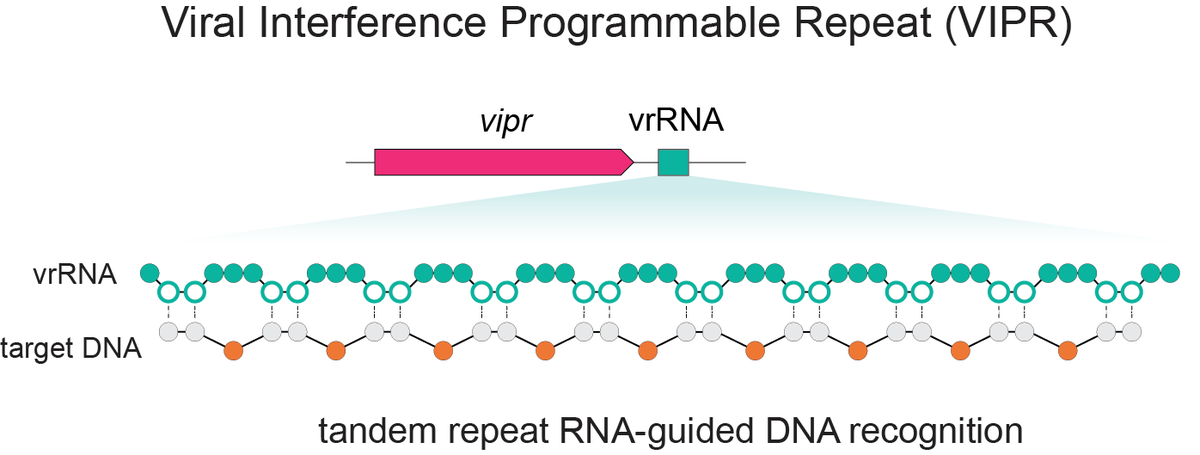
Excited to share our discovery of a new programmable RNA-guided DNA-targeting system hiding inside bacteriophages that predates CRISPR.
We call it VIPR (Viral Interference Programmable Repeat), and it uses an entirely new logic to find its targets.
Thread + link below.
I never expected horses 🐎 in my RNA research, but here we are 😁
In our new perspective, Simon Dove and I discuss how RIL-seq maps transcriptome-wide sRNA networks in vivo and how iRIL-seq expands the RNA–RNA interaction toolbox.
https://t.co/nVJHpFAJJK
@MeetingRna@RNA_ISR
There's a bacteriophage that turns bacteria into “liquid crystals.”
Specifically, Pseudomonas aeruginosa bacteria make Pf phages, which are rod-shaped, negatively-charged, and measure about 2 micrometers in length (roughly the length of an E. coli cell). These phages leave the cells and enter their surroundings. There, they mix with polymers, also secreted by the cells, to form a crystalline matrix.
Surprisingly, this is good for the cells. Although the phages kill some of them, it also makes their biofilms stickier and able to withstand certain antibiotics. These bacteria + phages are prevalent in cystic fibrosis patients; they've formed a sort of symbiotic relationship.
The Pf phages are made from thousands of repeating copies of a coat protein, called CoaB, which wraps around a single-stranded, circular DNA genome. These genes are integrated directly on the bacterial chromosome.
The bacteria “turn on” these phage genes when placed in a viscous environment with low oxygen levels. This is like a trigger to start forming a biofilm. And the cells make a lot of phages; about 100 billion per milliliter.
These liquid crystals form because of a physics principle called “depletion attraction.” If you just mix a bunch of loose or flexible polymers together (such as long carbon chains) they will not form a liquid crystal. But if you mix stiff rods (the phages) with loose polymers at a high enough concentration, the polymers will force the phages close together to create a material that flows like a liquid despite being ordered like a crystal. See the video below.
These liquid crystal biofilms are hard to get rid of. The negatively-charged phages block many antibiotics (like aminoglycosides, which are positively-charged) from entering cells. Liquid crystals also retain water, so these biofilms can survive on drier surfaces.
I first heard about this from Malmesbury’s excellent newsletter, called “Telescopic Turnip.”
It pains me to see the condition of our poor daily-wage workers and the utter disregard for their lives by our current and past governments, their employers, and bureaucrats. Unfortunately, we still haven't achieved true freedom since 1947.
WATCH THIS 🚨
The black layer on these plant leaves are pollutants from Iron & Steel plant of Aloke Steels Industries Pvt Ltd (ASIPL).
Directors of ASIPL - Abhishek Rungta, Kamendra Mishra
Do viruses use RNA to rewire bacteria?
Yes!
In our paper in @MolecularCell we use #RILseq to uncover that phages don’t just encode proteins, they use small RNAs to hijack bacterial DNA replication and fine-tune infection.
@MeetingRna@RNA_ISR@HebrewU
https://t.co/pQVnhKg8aH
Antibiotics are classified as bactericidal and bacteriostatic without considering the dynamic growth trajectories in low treatment concentrations. We investigate and find stark dynamics between the two groups https://t.co/hBNb5pnT0c. (1/4)
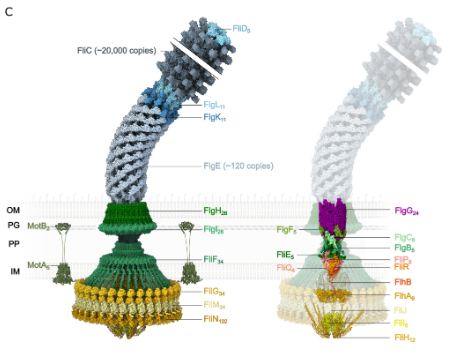
#MicrobiologyMonday: The bacterial flagellum is built through a hierarchical assembly process and powered by a dynamic motor capable of astonishing speeds. What's new in our understanding of these complex nanomachines? Find out in #MMBRJournal: https://t.co/9OqEqJNBiL
Thrilled my work on Hfq & antibiotic persistence is on the cover of mSystems! Proud to blend science & art through my own scientific illustration. #AMR#AntibioticPersistence#ScienceArt#mSystems