New in @NatureComms 🌱
We show that chemical inhibition of plasma membrane voltage-dependent K⁺ channels induces stomatal closure by activating an ABA-independent Ca²⁺ signaling pathway, resulting in enhanced drought tolerance in Arabidopsis.
🔗 https://t.co/IAylh4pOAU
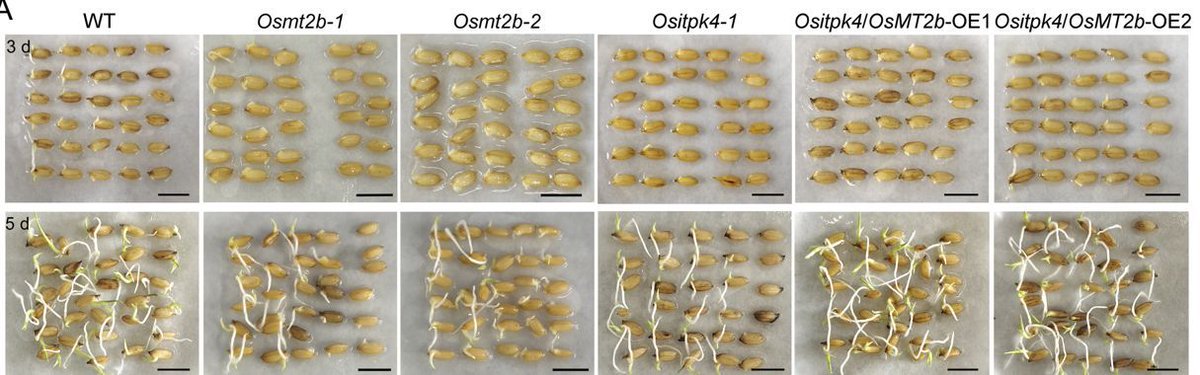
The OsNAC3-OsITPK4-OsMT2b module regulates rice seed germination through the reactive oxygen species pathway (Liling Peng , Yongqi He , Shirui Chen , Siyu Liu , Chengjing Wang , Wenwen Li , Zihe Li , Zhoufei Wang , Jia Zhao) https://t.co/YZpo1Bv5EJ @ASPB#PlantSci
Fluoride detoxification in tea plants depends on aluminum and localization in the epidermis (Chenyu Zhang , Paula Pongrac , Katarina Vogel-Mikuš , Alessandra Gianoncelli , et al) https://t.co/rupOaNKFIG @ASPB#PlantSci
India needs better schemes to promote postdoctoral research; ANRF needs to do better.
Postdocs are absolutely essential for a country aspiring to be a global leader in research. We cannot keep training our students and then have them move to US, European, or even Chinese labs for postdoctoral research after earning their PhD degrees.
Also, the lack of postdoc opportunities is one of the key reasons why PhDs take a long time in India. It is often students who delay their PhDs because of the lack of opportunities after thesis submission.
ANRF’s postdoc program so far has been a disappointment. It receives about 3,000 postdoc applications in year and awards only 300 fellowships (for context, about 30,000 PhD degrees are awarded every year in India.). I know many brilliant students who have failed to secure a postdoc fellowship. Also, I am not sure how many of those who receive fellowships stay in India.
Another big problem with ANRF is the processing time. It takes about six months to make a decision, which is very unreasonable. Students cannot remain jobless for that long. Moreover, PhD thesis submissions happen throughout the year, and it is not rational to invite applications just once a year.
ANRF should instead decentralize the process. Instead of telling students to apply, it can tell professors to apply for funding exclusively supporting postdoctoral research and give them up to one year to hire a postdoc.
Of course, the number fellowships need to increase.
✴️Kolkata Metro achieved a significant milestone with the successful breakthrough of Tunnel Boring Machine (TBM) 'Durga' at Purple Line of Kolkata Metro, marking the completion of one of the underground tunnel drives between Khidderpore and Victoria on the Joka-Esplanade Metro Corridor.
✴️The breakthrough is a key step towards strengthening Kolkata's urban mass transit network and advancing one of the city's most important Metro expansion projects.
✴️The achievement reflects engineering excellence, precision planning, and seamless coordination among all stakeholders.
✴️The Joka-Esplanade Metro Corridor will significantly improve east-west connectivity across Kolkata by linking the southern parts of the city with its central business district.
Read here: https://t.co/BYrvy6rBhk
#KolkataMetro @RailMinIndia
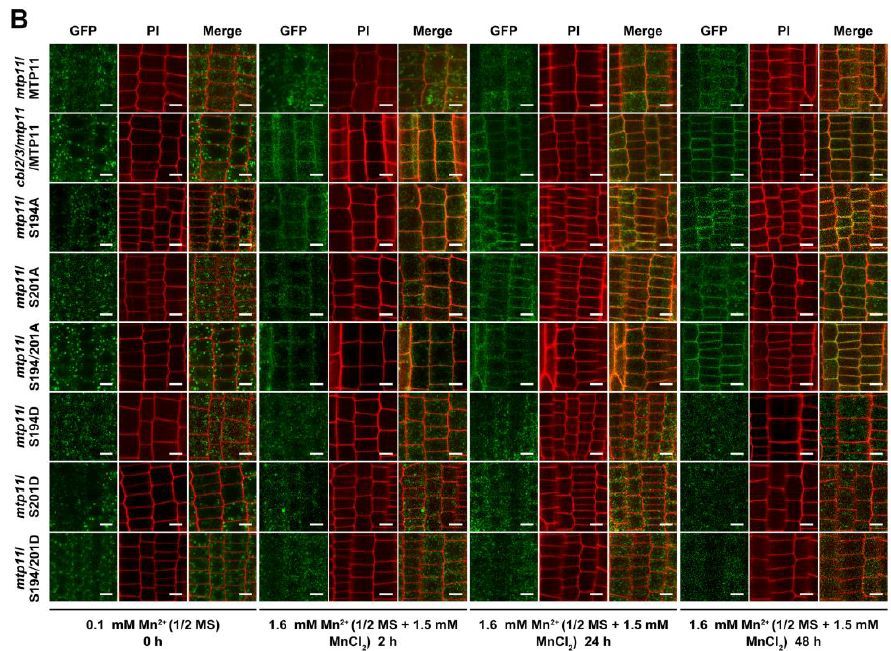
Ca2+ sensor CBL2/3-CIPK3/9/26 phosphorylates MTP11 to modulate manganese efflux via degradation and Golgi retention (Dixiang Xie , Long Chen , Jingrong Li , Yaqi Gao , et al) https://t.co/OIQimG1DUh @ASPB#PlantSci
🌱 RESEARCH 🌱
Identification of Critical Amino Acid Residues Required for the Polar Localization of a Rice Manganese Transporter - Konishi & Ma
🔗 https://t.co/jaYYnpE3hA
#plantscience 🧪
📝From PCP latest issue (67-5): Regular Papers
“The redox state of photosynthetic electron transport chain regulates chlorophyll biosynthesis in the cyanobacterium Synechocystis PCC 6803”
by Yu et al.
https://t.co/7SnMi1N6L8
#PlantSci#Photosynthesis
🎉 New Paper Alert! Thrilled to share our latest review published in Plant Cell Reports!
🌾"Integrative transcriptional regulatory networks governing cereal root responses to heavy metals and drought"
📖 Read: https://t.co/mR7XudiBsD
NEW ONLINE: A small heat shock protein from Arabidopsis thaliana regulates glyceraldehyde-3-phosphate dehydrogenase in the drought tolerance https://t.co/WP1hVuGLnE
Multi-omics analyses suggest that tissue-specific calcium signaling is involved in the adaptation of Zostera marina L. to high salinity.
Wang, T., Wang, Z., Wang, X. et al. Planta 263, 154 (2026).
➡️https://t.co/hBME9Vbebk
Trees just go “nuts”: prioritizing carbon allocation to yield in almond trees.
Veeravelli, S.S., McElrone, A.J., Wright, I.R. et al. Planta 263, 142 (2026).
➡️https://t.co/kxWO98IcAm
We are excited to announce that Yusaku Uga will be speaking at the 9th International Plant Phenotyping Symposium (IPPS9), happening in Accra, from October 12–16, 2026!
Have you registered yet?
Secure your spot today :https://t.co/hD0WkBdRvy