AB is the author of A Balanced Life. As an Entrepreneur, Community Leader & Life Coach, AB educates, inspires & empowers others to live a balanced life.
A guy just blurted out to me, F*ck Black History!!! This is a crazy hypothetical question. But, where would America be without blacks in history?
How much of a success would America have been without the free labor of black slaves in history?
Why hide Black History?
Would America be as it is today without the many inventions of Black Americans? Such as...
At age 11, Andrew Pelham invented the E-Z Baby Saver: a cord linking the driver’s door to the back seat so you’re reminded to look back before exiting the car. He crafted it using rubber bands and duct tape for a contest, hoping to help prevent tragic child deaths in hot cars. As a student-built prototype, the concept has not undergone formal safety testing or regulatory approval but highlights how simple reminder systems could support awareness. If scaled or improved, could such simple ingenuity become a standard lifesaver?
#invention #safety #children #innovation
Today’s Supreme Court decision effectively guts a key pillar of the Voting Rights Act, freeing state legislatures to gerrymander legislative districts to systematically dilute and weaken the voting power of racial minorities - so long as they do it under the guise of “partisanship” rather than explicit “racial bias.” And it serves as just one more example of how a majority of the current Court seems intent on abandoning its vital role in ensuring equal participation in our democracy and protecting the rights of minority groups against majority overreach.
The good news is that such setbacks can be overcome. But that will only happen if citizens across the country who cherish our democratic ideals continue to mobilize and vote in record numbers - not just in the upcoming midterms or in high profile races, but in every election and every level.
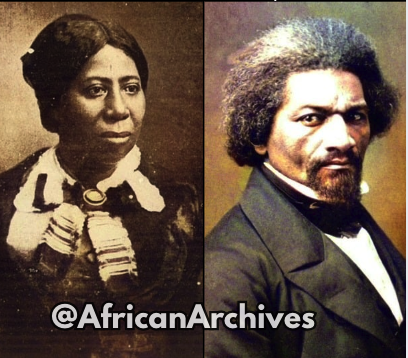
Anna Murray Douglass is often overshadowed by her husband, Frederick Douglass — yet she made his freedom and his life’s work possible.
Born free in Maryland around 1813, Anna Murray grew up witnessing the harsh realities of slavery in a border state. As a young woman working in Baltimore, she met Frederick Douglass while he was still enslaved. When he made plans to escape in 1838, it was Anna who played a crucial role in making that freedom possible. She provided financial support, helped organize the logistics of his departure, and gave him a sailor’s uniform that helped him travel north undetected.
Shortly after his successful escape, Anna joined him in New York, and the two were married. Together they built a life dedicated to the fight against slavery and injustice.
While Frederick Douglass became one of the most influential abolitionists, writers, and orators of the 19th century, Anna’s work was often carried out behind the scenes. She managed their household, raised their five children, and maintained a stable home environment that allowed Frederick to travel extensively, lecture, write, and organize. Their home in Rochester, New York, became a station on the Underground Railroad, sheltering freedom seekers on their journey north.
In addition to supporting abolitionist efforts, Anna was active in women’s and community organizations, contributing to sewing circles and aid societies that supported both formerly enslaved people and soldiers during the Civil War.
Though history has frequently centered Frederick Douglass’s public achievements, it is important to acknowledge that movements are rarely built by one person alone. Anna Murray Douglass’s labor, sacrifice, and steady commitment formed a foundation that made much of that public work possible.
Her story reminds us that leadership takes many forms. Some voices fill lecture halls. Others sustain homes, protect communities, and quietly shape history from behind the scenes.