Reagent specifications are not background paperwork. They define quality expectations for materials that analytical measurements depend on.
A follow-up @AmerChemSociety Axial article from the ACS Committee on Analytical Reagents is now available.
The earlier article discussed how ACS reagent standards fit alongside pharmacopoeial standards without duplicating their role. This follow-up uses heavy metal testing in reagent monographs as a practical example.
For many years, heavy metal specifications relied on group-based sulfide precipitation limit tests. These procedures had practical value, but they were not designed to identify or quantify individual elemental impurities. They can also be limited by visual interpretation, detection capability, and inter-laboratory comparability.
The article discusses the modernization of many ACS Reagent Chemicals monographs through ICP-OES and, where appropriate, ICP-MS. Importantly, this is not just an instrumentation update. It reflects a fit-for-purpose approach to standards: improving specificity, quantitative confidence, and comparability while keeping routine reagent testing practical.
For me, the larger analytical point is that reagent quality sits upstream of data quality. Better-specified materials reduce ambiguity in the measurements built on them, especially when those measurements support research, quality control, or regulated workflows.
I am grateful to have contributed in a small way through the ACS Committee on Analytical Reagents, and I appreciate the colleagues who continue the detailed work of maintaining and updating these standards.
Article: https://t.co/6zYkcEYqot
#AnalyticalChemistry #ACS #ReagentChemicals #ICPOES #ICPMS #TraceElementAnalysis #QualityControl
Vepdegestrant is the first FDA-approved PROTAC. VERITAC-2 showed benefit in the ESR1-mutated subgroup but not overall. This shows targeted degradation works when mechanism and biology align, a hopeful step for precision oncology.
https://t.co/6qfugsBM8e
#BreastCancer#PROTAC#FDA
Practical difficulty is not scientific justification.
FDA’s 2026 CGT CMC flexibility guidance recognizes real constraints, but flexibility still has to be earned through evidence, risk, and control.
Article: https://t.co/eSvUQbE2Uj
#CGT#CMC#RegulatoryScience
In LC, inertness is not just a materials choice. It is a measurement requirement.
Every wetted interface can influence recovery, carryover, peak shape, metal adducts, and transferability.
New Substack:
https://t.co/JFcixqBHRX
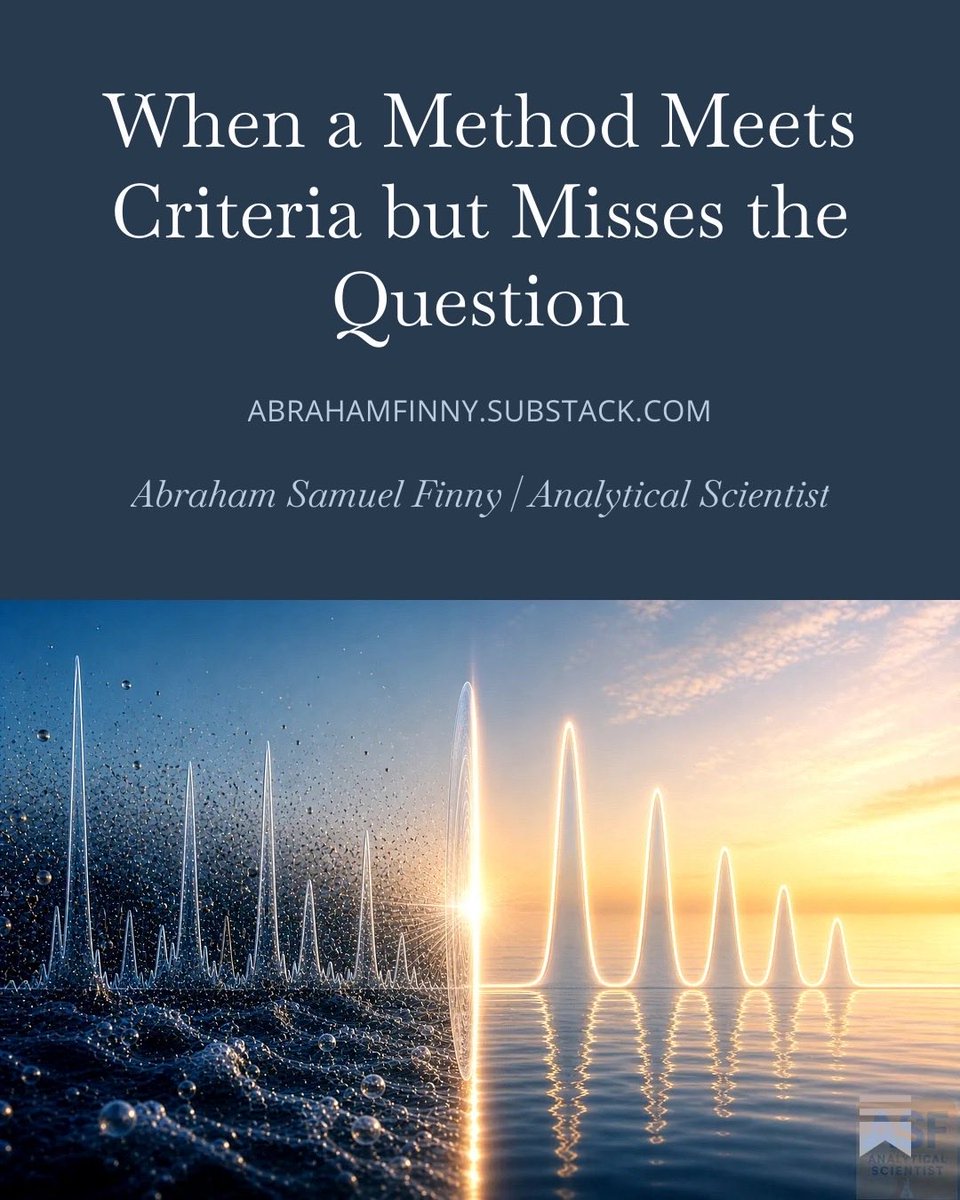
An analytical method can meet acceptance criteria and still leave a harder question open: is the evidence strong enough for the decision that follows?
New article: When a Method Meets Criteria but Misses the Question
https://t.co/kLsaD65LDx
#AnalyticalChemistry
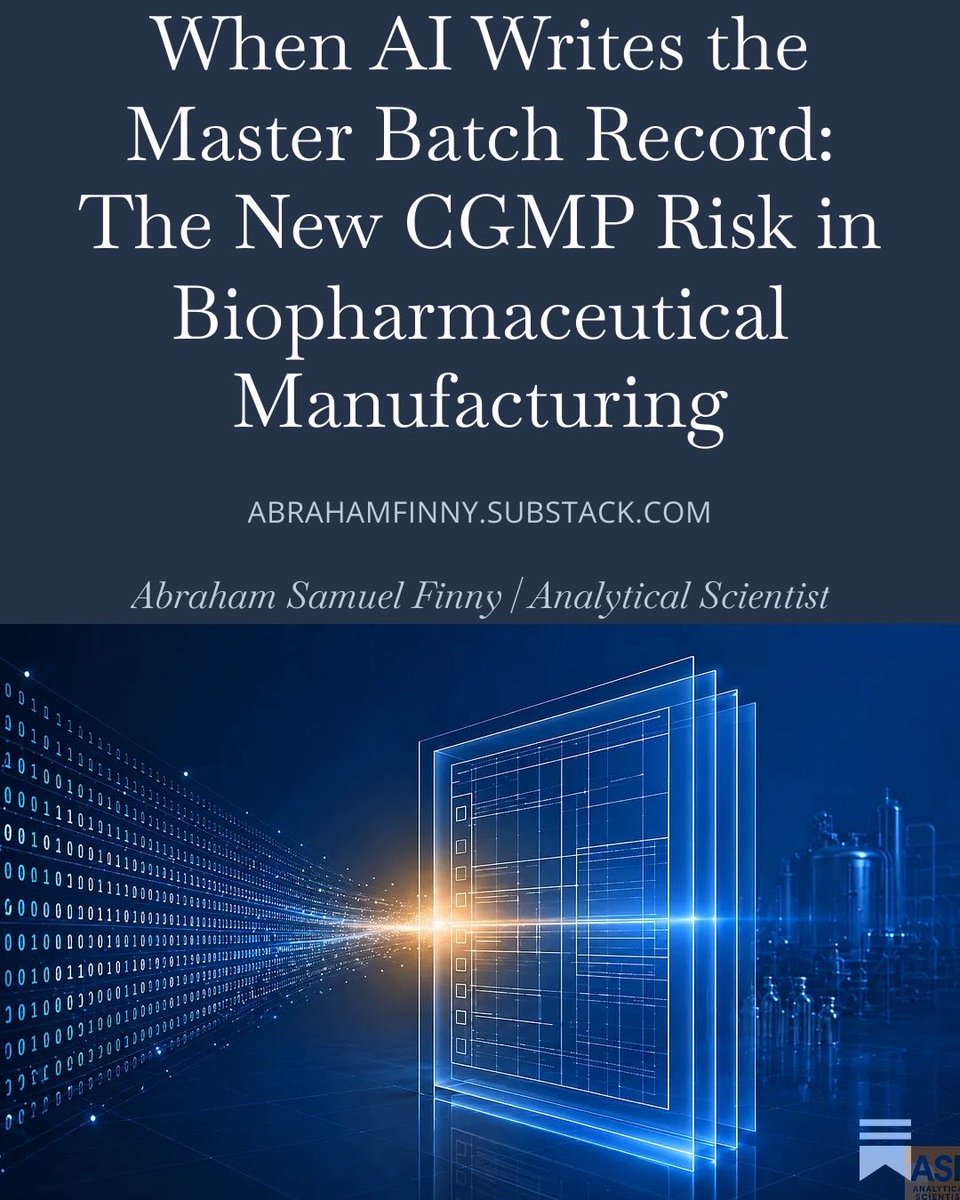
FDA cited a company for AI writing Master Batch Records.
AI drafts fast, but humans must own review and accountability under 21 CFR 211.22(c).
Full analysis: https://t.co/ZZNaU5meKu
#Biopharma#CGMP#AIinPharma
First gene therapy for genetic hearing loss approved.
On April 23 FDA approved Otarmeni for OTOF-related deafness, first dual-AAV product.
CHORD trial showed meaningful hearing gains in most children. No cost to eligible U.S. patients.
Full analysis: https://t.co/CCkroPVaow
BSM vs. QSM in LC is not about choosing the “better” solvent manager. It is about matching solvent delivery to the method: dwell volume, gradient response, solvent flexibility, development strategy, and transfer expectations all matter. #Chromatography
https://t.co/vtZGxP7LwB
Recent discussions with peers across industry and academia on method qualification, method validation, and newer ICH and FDA expectations led me to examine this distinction through the analytical procedure lifecycle: https://t.co/rplNeKRcyn
The angel said to the women, “Do not be afraid, for I know that you are looking for Jesus, who was crucified. He is not here; he has risen, just as he said. Come and see the place where he lay. Then go quickly and tell his disciples: ‘He has risen from the dead and is going ahead of you into Galilee. There you will see him.’ Now I have told you.”
Matthew 28:5-7
He is Risen! Happy Easter!
AI chatbots make us overconfident when wrong.
Science: AI affirms 49% more than humans. One reply boosts conviction 25-62%.
Cheng et al (26 Mar 2026)
Key for scientists: weakens critical thinking.
https://t.co/CgSeQmrmhj
#AI#CriticalThinking#Science
These two images were taken by @astro_reid only minutes apart. The stark difference is the result of camera settings. In the first, a longer shutter speed let in much more light from Earth, while the shorter shutter speed in the second emphasizes our planet's nighttime glow.