Impacket 0.13.1 is live! This release includes new relay surfaces, stronger support for modern Windows and SQL Server environments, and a set of practical improvements across the examples scripts. Check out the blog post to get more details>
https://t.co/B52xTyCNMT
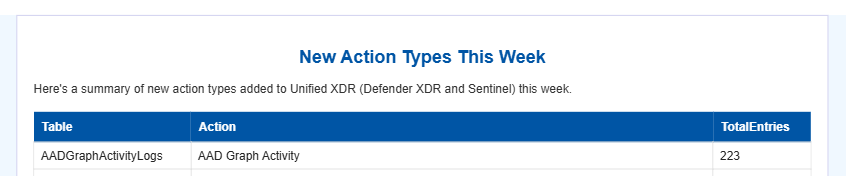
In my latest blog "Now You See Me: AADGraphActivityLogs" I explore the newly released Azure AD Graph logs and demonstrate how you can detect tools like ROADtools and AADinternals that rely on this API and have been under the radar for defender so far.
https://t.co/TXlkbsqKHa
Today is a good day! #AADGraphActivityLogs are finally there!
@_dirkjan: We finally get the opportunity to hunt you down 🛡️
Schema: https://t.co/lZb0PTiacY
I've released Puzzle, a research project on deploying malware in monitored environments by abusing Windows minifilters functionality. It includes several utilities and PoCs to interact with minifilters and explore static and runtime analysis evasion 👐
https://t.co/8zWv1g8n79
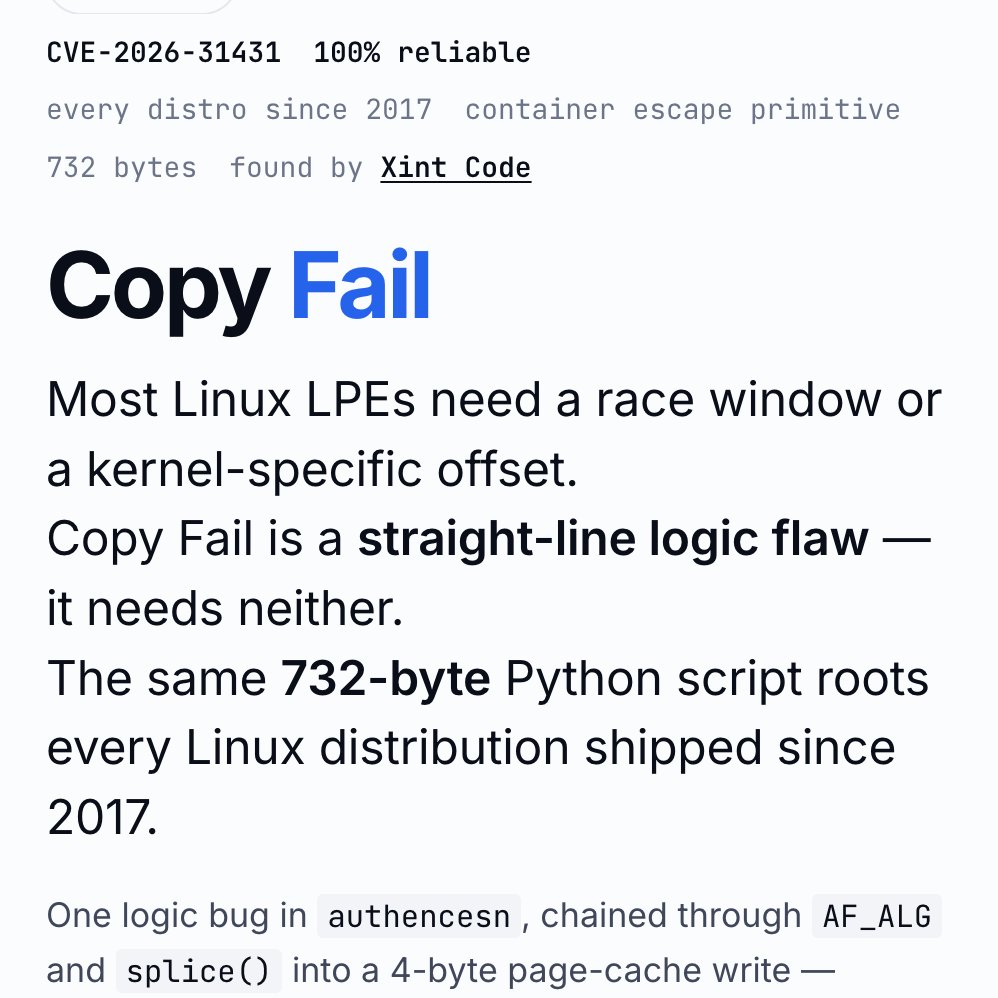
‼️🚨 BREAKING: An AI found a Linux kernel zero-day that roots every distribution since 2017. The exploit fits in 732 bytes of Python. Patch your kernel ASAP.
The vulnerability is CVE-2026-31431, nicknamed "Copy Fail," disclosed today by Theori. It has been sitting quietly in the Linux kernel for nine years.
Most Linux privilege-escalation bugs are picky. They need a precise timing window (a "race"), or specific kernel addresses leaked from somewhere, or careful tuning per distribution. Copy Fail needs none of that. It is a straight-line logic mistake that works on the first try, every time, on every mainstream Linux box.
The attacker just needs a normal user account on the machine. From there, the script asks the kernel to do some encryption work, abuses how that work is wired up, and ends up writing 4 bytes into a memory area called the "page cache" (Linux's high-speed copy of files in RAM). Those 4 bytes can be aimed at any program the system trusts, like /usr/bin/su, the shortcut to becoming root.
Result: the next time anyone runs that program, it lets the attacker in as root.
What should worry most: the corruption never touches the file on disk. It only exists in Linux's in-memory copy of that file. If you imaged the hard drive afterwards, the on-disk file would match the official package hash exactly. Reboot the machine, or just put it under memory pressure (any normal system load that needs the RAM), and the cached copy reloads fresh from disk.
Containers do not help either. The page cache is shared across the whole host, so a process inside a container can use this bug to compromise the underlying server and reach into other tenants.
The original sin was a 2017 "in-place optimization" in a kernel crypto module called algif_aead. It was meant to make encryption slightly faster. The change broke a critical safety assumption, and nobody noticed for nine years. That bug then rode every kernel update from 2017 to today.
This vulnerability affects the following:
🔴 Shared servers (dev boxes, jump hosts, build servers): any user becomes root
🔴 Kubernetes and container clusters: one compromised pod escapes to the host
🔴 CI runners (GitHub Actions, GitLab, Jenkins): a malicious pull request becomes root on the runner
🔴 Cloud platforms running user code (notebooks, agent sandboxes, serverless functions): a tenant becomes host root
Timeline:
🔴 March 23, 2026: reported to the Linux kernel security team
🔴 April 1: patch committed to mainline (commit a664bf3d603d)
🔴 April 22: CVE assigned
🔴 April 29: public disclosure
Mitigation: update your kernel to a build that includes mainline commit a664bf3d603d. If you cannot patch immediately, turn off the vulnerable module:
echo "install algif_aead /bin/false" > /etc/modprobe.d/disable-algif.conf
rmmod algif_aead 2>/dev/null || true
For environments that run untrusted code (containers, sandboxes, CI runners), block access to the kernel's AF_ALG crypto interface entirely, even after patching. Almost nothing legitimate needs it, and blocking it shuts the door on this whole class of bug...
Microsoft has addressed a one-click NTLM leak vulnerability affecting Windows Snipping Tool (CVE-2026-33829), discovered by our researcher Marcos Díaz (@Calvaruga).
➡️ Read the write-up: https://t.co/JvMGad5NuI
➡️ Microsoft bulletin: https://t.co/0IbpRxxUY7
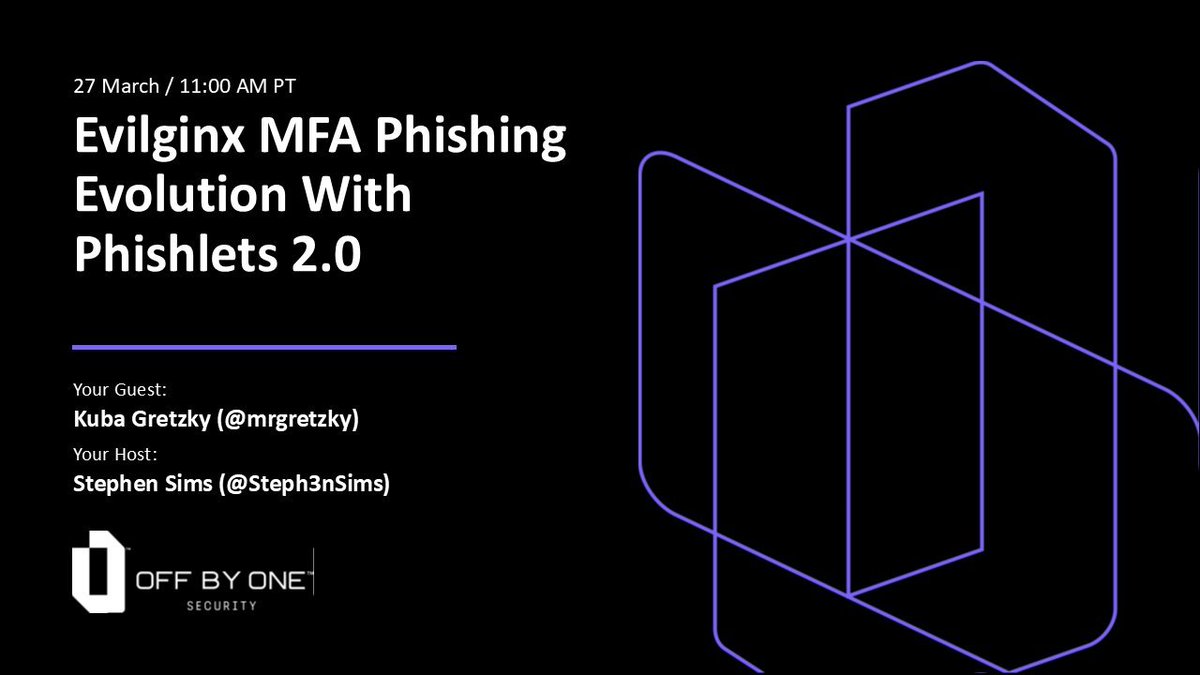
I am happy to say I will once again be joining Stephen Sims (@Steph3nSims) on the Off By One Security (@offby1security) stream.
For the first time in public, I will be demonstrating the Phishlets 2.0 update coming to Evilginx Pro (and CE later this year).
Hopefully, I manage to fit in a few FIDO MFA downgrade demos. 🙂
See you there! 🤗
Date: March 27th (Friday)
Time: 11:00 AM PT / 18:00 UTC
This week’s video is a quick peek at Titanis by @codewhisperer84 at @TrustedSec , a comprehensive Impacket alternative. It’s cross-platform, extensively documented, and written directly from the protocol specification 🌶️ Link down below
Hi everyone! The company I work for has published a Wi-Fi-related article I wrote. It might interest you.
https://t.co/mwnIVRCAH6
Merry Christmas, by the way! 💥❄️🎄
#airgeddon#pmkid#wifi#hacking#article
Fresh meat! We've created a new Evil-WinRM branch with integrated multiple AI LLM support. New docker image, new gem (gem install evil-winrm-ai) and new possibilities
Check it out and let us know what you think
https://t.co/BgRn1z7vi0
Happy hacking
#evilwinrm#hacking#llm#ai
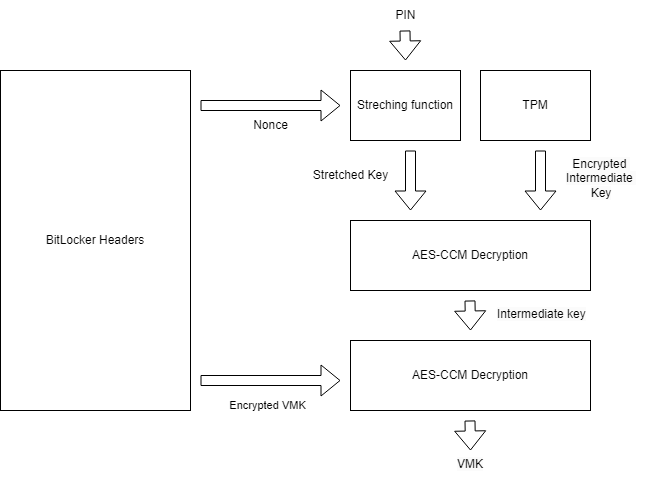
Privilege escalation through TPM Sniffing when BitLocker PIN is enabled : https://t.co/CXJ7hCTBK2
Ref :
Extracting Bitlocker keys from TPM : https://t.co/ThKwNaPRPc
Sniff, there leaks my BitLocker key : https://t.co/LioxCAHlcb
I'm super excited to launch my next project!
Subscribe to my newsletter @ https://t.co/tPzAEl0rES 👇🏾
I'll be publishing the first newsletter in the next few days and it's going to be bumper issue.
Send a link to [email protected] if you want your Microsoft Entra related blog post, video to be considered for inclusion to https://t.co/tPzAEl0rES
Please like and retweet to let others know.
Thanks to @rodtrent for the inspiration on this with his Sentinel and Defender newsletters.
This was a huge week for Microsoft Entra. Hopefully, this mind map helps you visualise all the products that were announced on a single page.
I have linked each node to its product/feature page on Microsoft Learn for quick access.
If this is helpful and you want to see more of this, please like and retweet to share with your network.
Thanks 💜👍
Download from https://t.co/f6DBmys63Y
Restricted management administrative units in Azure Active Directory allows for additional protection of sensitive user accounts and makes it possible to extend tier design to cloud beyond the built-in roles.
#AAD#security
https://t.co/ZhnFPAQyYX
Great post from @_RayRT on abusing different Active Directory object controls and how to detect them https://t.co/CFQvEuA0Rv #RedTeam#blueteam#purpleteam#cti