We are looking Research Software Engineers. If you want to work at an exciting new centre developing climate models for the Australian Research Community then hit us up!
https://t.co/rlIeaQF3ec
Let’s talk open science @ #AGU22!
~~Tuesday 9:30-10:30am in Pod 5~~ (in poster hall near poster 1160)
Bring your ideas, questions, concerns, or suggestions and let’s have a focused discussion about #OpenScience. @ToOpenScience
International Urban Climate conference #ICUC11 (Sydney Aug 2023) abstract submission deadline now Jan 9th. Make sure you check out the wide array of special sessions too! https://t.co/HqQ5lxUOrm
Curious to learn more about #OpenScience? Come visit the NASA TOPS booth in the exhibitor hall at #AGU22! I’ll be there from 2-6pm Tuesday. 🚀 @ToOpenScience
One feature especially caught the astronomers' eyes: concentric layers spreading outward toward the ring's edges like ripples in a pond. https://t.co/v2bPYqEFdu
Open science: what better way to kick off #AGU22? Join our Monday sessions "Open Science Practices and Success Stories" to hear how researchers are doing open science in their own work! Info 👇 👇 👇 #OpenScience@lucassterzinger@theAGU
We are looking for a Research Associate - Oceanographer to join our team investigating Southern Ocean dynamics, heat and carbon uptake and transfers.
🗓️ Applications close 15 January
@IMASUTAS@IMOS_AUS@CSIRO @AusAntarctic
https://t.co/QFKGv9t0Wg
Modal has already completely changed the way I interact with the cloud. It's so fast that I skip the local dev environment and just develop my code in the cloud from the start of a project. 1/
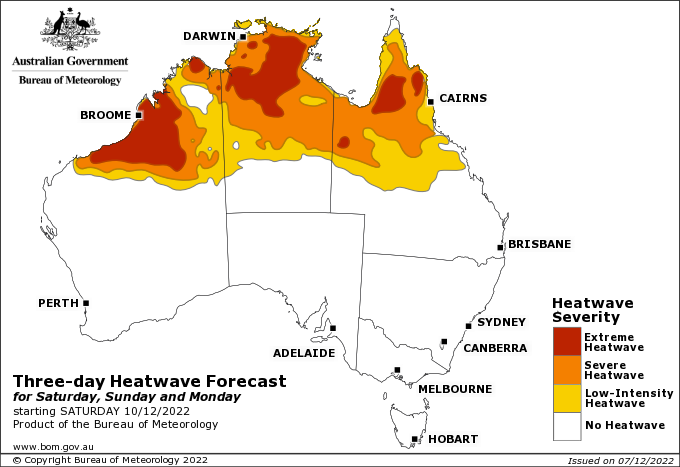
This heat is also spreading into the NT and QLD, resulting in Severe to Extreme heatwave conditions that will persist during the rest of this week and into early next week.
ECR proposals invited (due 31 Jan 2023) to work on @esaclimate Climate Change Initiative. 2yrs funding to work on #ECVs, #tippingpoints, or MIPs.
@AusSpaceAgency: Any chance for Australia to join ESA following Canada's footsteps?
https://t.co/CqeD1q2Kh5
Global surface temperatures fluctuate a bit year-to-year due to natural variability from El Nino and La Nina events.
But the oceans, where 90%+ of the heat trapped by greenhouse gases ends up, show more consistent warming (and new records in 2022). An update from @Lijing_Cheng:
"Climate change is also bringing more frequent and intense heatwaves to the continent and pretty much the whole world. We have increased the odds of having extreme heat events in Australia through humanity’s ever-increasing greenhouse gas emissions" https://t.co/EC3Bbv3Qnt