"If you want to do great work it's an advantage to be optimistic, even though that means you'll risk looking like a fool sometimes."
Paul Graham on earnestness and doing great work:
People that mourn mistakes simply don’t believe in themselves. Everyone that wants to make it in 1 month is really saying “I need to get very lucky because I do not believe I am equipped to make it in a sustainable way over the next 5-10 years”. Those people would be much better off studying, trying again, failing, learning, etc until they do believe in themselves. And then it doesn’t matter.
there is a fun weird, quiet power of being an online creator—especially when your audience is the industry. like, i can post a scathing critique of a company & suddenly execs are in my dms. i can drop praise & the ceo’s quote tweeting it. i can surface some niche issue & get it fixed faster than if i were a top customer or even, in some cases, a shareholder.
billionaires might have capital, but creators have contextual influence. they’re plugged into the hivemind. it’s asymmetric as hell—attention is a currency that bypasses traditional status hierarchies. you don’t need a board seat when you’ve got a narrative slot.
this is ben thompson’s aggregation theory but now *individuals* are aggregating attention. remarkable shift.
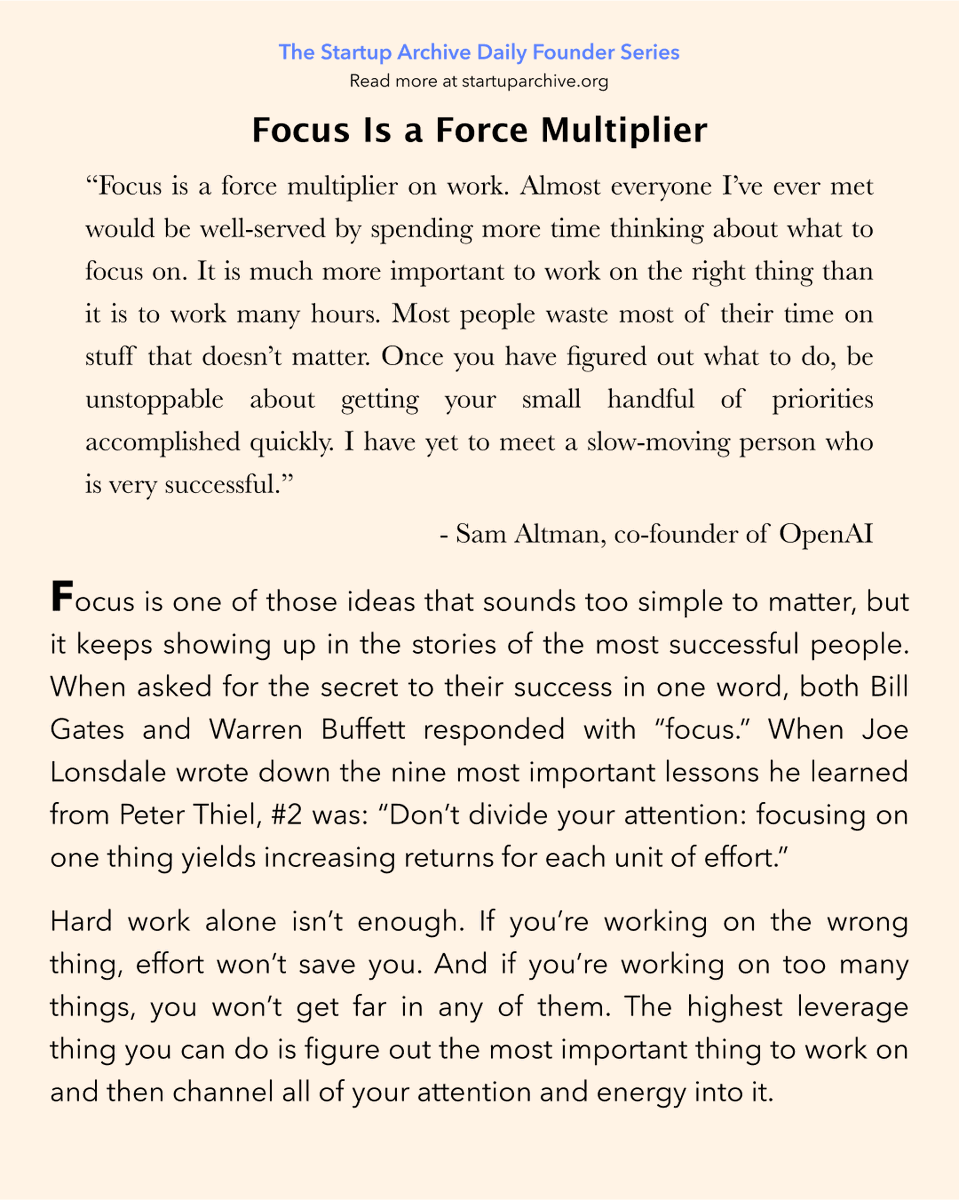
Sam Altman on focus:
“Focus is a force multiplier on work. Almost everyone I’ve ever met would be well-served by spending more time thinking about what to focus on. It is much more important to work on the right thing than it is to work many hours. Most people waste most of their time on stuff that doesn’t matter. Once you have figured out what to do, be unstoppable about getting your small handful of priorities accomplished quickly. I have yet to meet a slow-moving person who is very successful.”