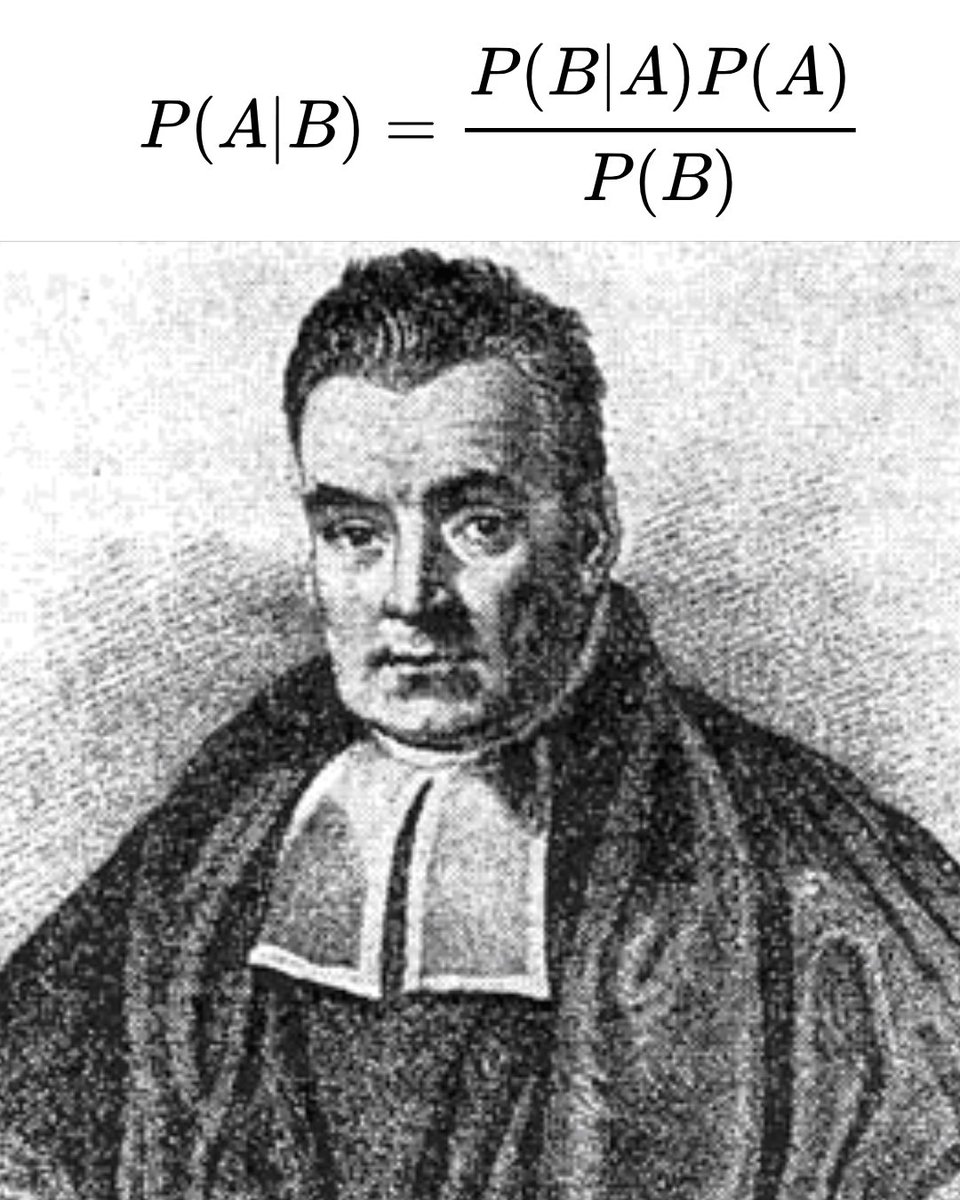
Bayes’ theorem teaches us that our beliefs are not fixed; they are probabilities. Our beliefs change as we weigh new evidence against our assumptions, or our priors. In other words, we all carry certain ideas about how the world works, and new evidence can challenge them.
Bayes’ theorem is probably the single most important thing any rational person can learn.
So many of our debates and disagreements that we shout about are because we don’t understand Bayes’ theorem or how human rationality often works.
Bayes’ theorem is named after the 18th-century Thomas Bayes, and essentially it’s a formula that asks: when you are presented with all of the evidence for something, how much should you believe it?
Bayes’ theorem teaches us that our beliefs are not fixed; they are probabilities. Our beliefs change as we weigh new evidence against our assumptions, or our priors. In other words, we all carry certain ideas about how the world works, and new evidence can challenge them.
For example, somebody might believe that smoking is safe, that stress causes mouth ulcers, or that human activity is unrelated to climate change. These are their priors, their starting points. They can be formed by our culture, our biases, or even incomplete information.
Now imagine a new study comes along that challenges one of your priors. A single study might not carry enough weight to overturn your existing beliefs. But as studies accumulate, eventually the scales may tip. At some point, your prior will become less and less plausible.
Bayes’ theorem argues that being rational is not about black and white. It’s not even about true or false. It’s about what is most reasonable based on the best available evidence. But for this to work, we need to be presented with as much high-quality data as possible. Without evidence—without belief-forming data—we are left only with our priors and biases. And those aren’t all that rational.
Still one of the greatest moments in Nobel history.
At 2:15 a.m. on Oct. 12, 2020, a security camera caught Prof. Emeritus Robert Wilson in slippers at Prof. Paul Milgrom's front door.
The longtime collaborators, who lived across the street from each other, had jointly won the Sveriges Riksbank Prize in Economic Sciences for their contributions to auction design — but only one had been reachable by phone in the middle of the night.
SCIENTISTS JUST FOUND A WAY TO STARVE CANCER USING FAT CELLS
Researchers at UC San Francisco have developed a novel cancer treatment inspired by liposuction and plastic surgery. Using CRISPR, they turned regular white fat cells into calorie-burning “beige” fat cells to starve tumors.
https://t.co/O0E2PtdCRn
“If you have an idea you're excited about and you don't bring it to life, it's not uncommon for the idea to find its voice through another maker.
This isn't because the other artist stole your idea, but because the idea's time has come.
In this great unfolding, ideas and thoughts, themes and songs and other works of art exist in the aether and ripen on schedule, ready to find expression in the physical world.” —Rick Rubin
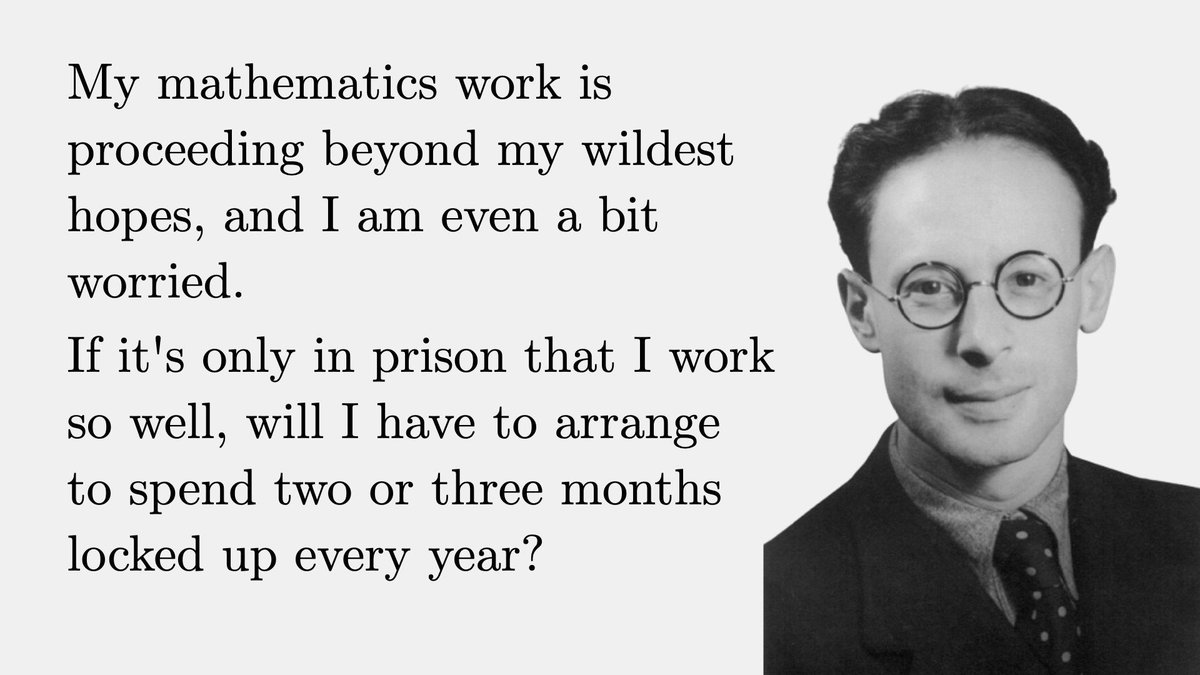
The French mathematician André Weil was imprisoned for failing to report for army duty in 1940. While in jail, he proved the Riemann hypothesis for curves over finite fields.
He wrote the following in a letter to his wife:
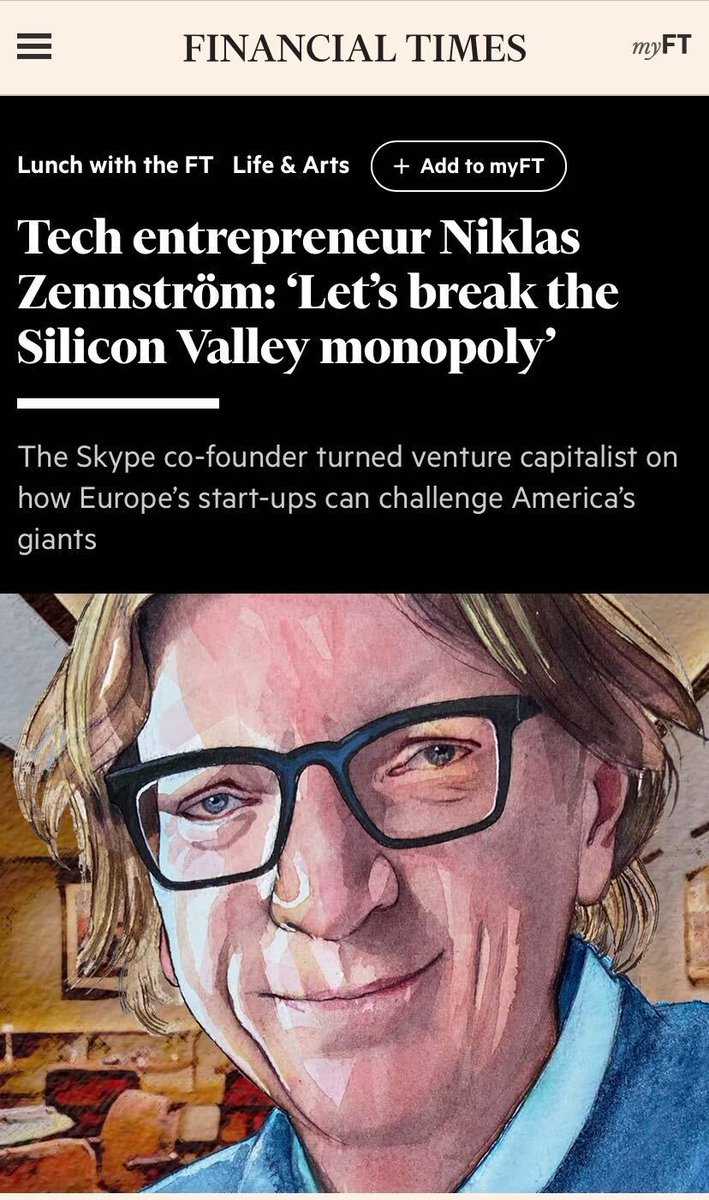
Yes! I completely agree with @nzennstrom - in the early days of Klarna a lot of people would tell us we had to move to Silicon Valley and I think it’s very poor advice. You have so many start-ups chasing the same engineers that I think it's actually harder in many ways to build a company for the long term in Silicon Valley than it is in many other places.
Policies like the home PC reform in the late 90s, which helped low-income families like mine gain access to a computer at home, have helped turn Stockholm into a tech hub with Klarna, Spotify and tonnes of other tech start-ups. https://t.co/6FpvAiJK5l
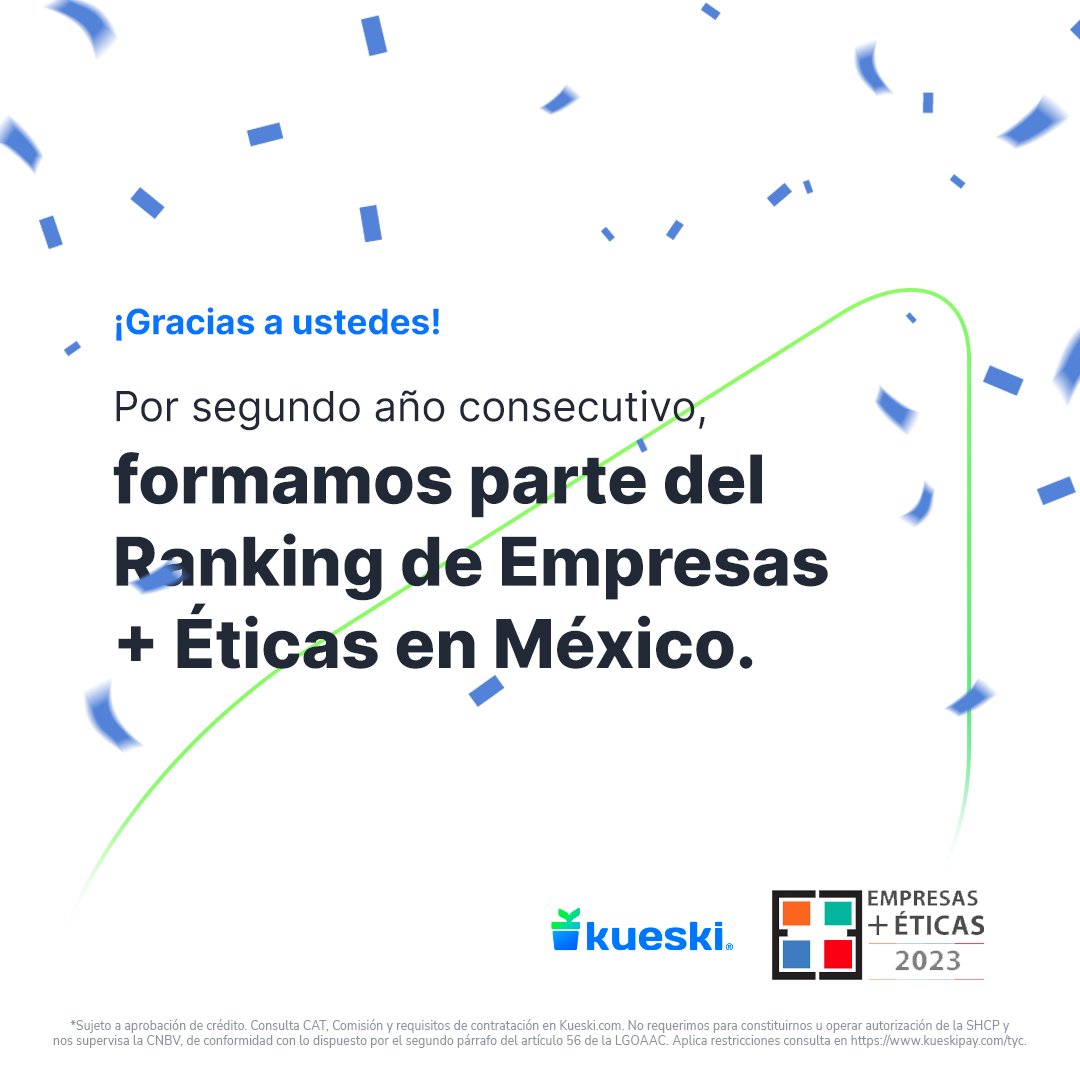
🌟 Kueski ha sido reconocido como una de las Empresas + Éticas de México en el Ranking E+E 2023.
¡Gracias a todos los Kueskis que hicieron esto posible! 💙 https://t.co/O5DetT7YV8 🏆 #ÉticaEmpresarial#KueskiÉtico#IntegridadEmpresarial
Buffett: “Huge markets attract people who measure themselves by money.
If someone goes through life and measures themselves solely by how much money they have, or how much they earned last year, sooner or later they’re going to end up in trouble."