A large-scale prevalence estimation of autoimmune disease in the US!
DeLisa Fairweather & team @MayoClinic developed a software program and used electronic health record data, reporting that 4.6% of the US population were diagnosed with at least autoimmune disease within an ~11 year period: https://t.co/3H41vhleWY
The University of Minnesota leads the way in medical research: 700 NIH-funded projects, including advancing organ transplants, cancer treatments, and Parkinson’s therapies are now at risk. Cutting NIH funding threatens life-saving research and the future of medical innovation.
Sina, @AleixoMMuise and I are thrilled to share our paper on mechanisms that nucleate adhesion structures in macrophages. They involve the tyrosine kinase Syk which bridges ITAMs via its tandem SH2 domains. Great having this in @J_Immunol@ImmunologyAAI https://t.co/ZgCrdDXWDu
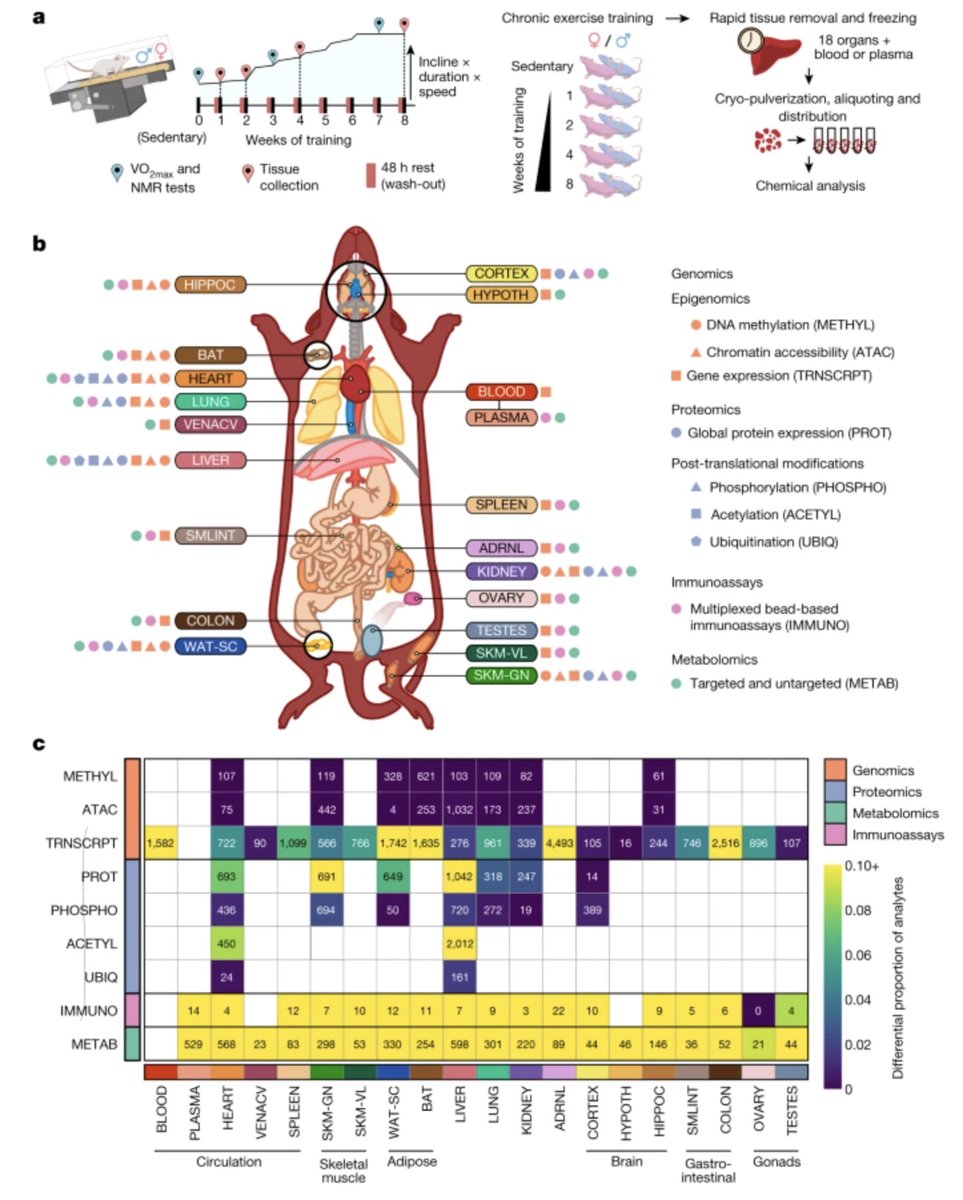
Exercise may be the single most potent medical intervention ever known. Its benefits in prevention outstrip any known drugs: 50% reduction in the risk of cardiovascular disease, 50% reduction in the risk of many cancers, positive effects on mental health, pulmonary health, GI health, bone health, muscle function. You name it. Exercise helps. In fact, the ability to exercise over long distances was likely key to our evolution as a species because the availability of densely caloric foods due to persistence hunting allowed our energy-avid brains to enlarge. And yet, we have had very little insight into the molecular basis of these magical effects...until now!
Published in yesterday's Nature and featured on the cover was work from our consortium that represents the culmination of a couple of decades of pitching ideas to the NIH, forming a consortium, planning experiments, executing those experiments, and analyzing data at unprecedented scale, all aimed at enhancing our understanding of the molecular transducers of exercise.
It was a major effort from so many in our consortium (playfully named MoTrPAC) and is the first landmark paper of many more to come. This first paper focused on the multi-tissue, multi-omics of treadmill exercise in rats. Specifically, we report the effects of eight weeks of treadmill running on the transcriptome, the epigenome, the proteome, the metabolome, the lipidome and the immunome of a broad range of tissues (in fact, 9,466 assays across 19 tissues, 25 molecular platforms, and 4 training time points).
The result is the most comprehensive molecular map of exercise ever created. At Stanford, my colleague @MWheelerMD and I co-lead the bioinformatics center and it was our team's duty and privilege to ingest the data, QC the data, help analyze the data, and make the data available to the world. Various tools available at our data hub allow you to explore the data, visualize it, and download it for your own use.
Have fun! And stay tuned for human data that will be coming.
So many people to thank who made this possible (see the paper for details). Special shout out to the primary analysts and authors: David Amar, Nicole Gay, & Pierre Jean Baltran.
Paper: https://t.co/0nhXdfhxx0
Data hub: https://t.co/NxTHsVdfRp
New preprint 🔥 my PhD swan song, with @BauschLab @hamfaizi @PVlahovska@HaganLab (+ Matt, Sarvesh Layne & Aparna)
https://t.co/uVaq6sgNsq
We put a microtubules+kinesin gel inside a GUV and... this happens: crazy fluctuations of a "cell" induced by a "minimal cytoskeleton"!
The other paper in @CurrentBiology is our work with @JudithELutton, @TBatUoW and Rob Kay on macropinosome formation in Dicty.
https://t.co/dVUCBWzACn
We use 4D microscopy to visualise how macropinocytic cups form. 🧵
Much has been made of the declining life expectancy in the US.
The reality is regional. Think of the US as two countries:
Some blue counties with increasing life-expectancy better than 🇯🇵 (84) & many red counties with plummeting life expectancy worse than 🇷�� (71).
1/
The National Institutes of Health has awarded South Dakota State University nearly $11 million to do biomedical research. The funding is used by the newly created Center of Biomedical Research Excellence. https://t.co/s5oTOx1Us5
As you can clearly see, we’ve identified 7 cell types here, each completely unique and of infinite importance. Now time to unravel the mystery of their niche before snack time.
Are you curious about using organic dyes in your microscopy experiments but not sure where to start? This Perspective from @rhodamine110 and @jonathangrimm introduces readers to the world of dyes and their pros and cons for biological applications. https://t.co/3Vm8SWB7Yz
In South Dakota and across the country, the majority of hospitalizations are those who are unvaccinated. State epidemiologist Dr. Joshua Clayton urges everyone to get vaccinated to help curb the spread and prevent new strains of the virus from mutating. https://t.co/h7ijGevk8j
Very happy to announce the release of Micro-Manager 2.0 (@manager_micro ). Through contributions of many, we arrived at a very stable version with great UI and API, so go to https://t.co/HmWDV7dxbB, install, and operate your microscope!
Thanks to @ChanZuckerberg@cziscience we are lightsheeting our way to understanding Ab clustering, signaling, and membrane dynamics during phagocytosis. We are #ImagingTheFuture by creating a @babylonjs web viewer. Interact with the data at https://t.co/JnU67biz27