We have a beautiful literature on experiments with interference between units but what if there’s interference between experimenters? Estimands change and in a way we can understand and unpack. I hope you enjoy this one! 😊
🚨📜CALL FOR PAPERS 📜🚨
Send us your best work using non-standard data (e.g., unstructured data, clickstreams, data from genAI) to learn about consumer preferences.
More details below.
I’m very happy to share a “new" working paper on the dynamic/learned complementarity that arises between different products. This is joint work with @adamnsmith__ and Max Pachali (@TilburgU) and its been really years in the making! 1/12
ML/AL-based algorithmic pricing tools soften competition, according to Daniel Ershov of University College London. Catch an MSI #webinar of him discussing his work supporting this side of the debate July 30, 12-12:30: https://t.co/N5M9HXKRGO #AI#ML#marketingresearch#marketing
I wrote my first blog post, which is me quickly testing the value of combining two approximate demand estimation approaches that I like. Fun to write, but I can tell I have some work to do on blog-style writing. We'll see if there's ever a follow-up!
https://t.co/rH7HWt2A4x
🚨🚨 New working paper!!! 🚨🚨
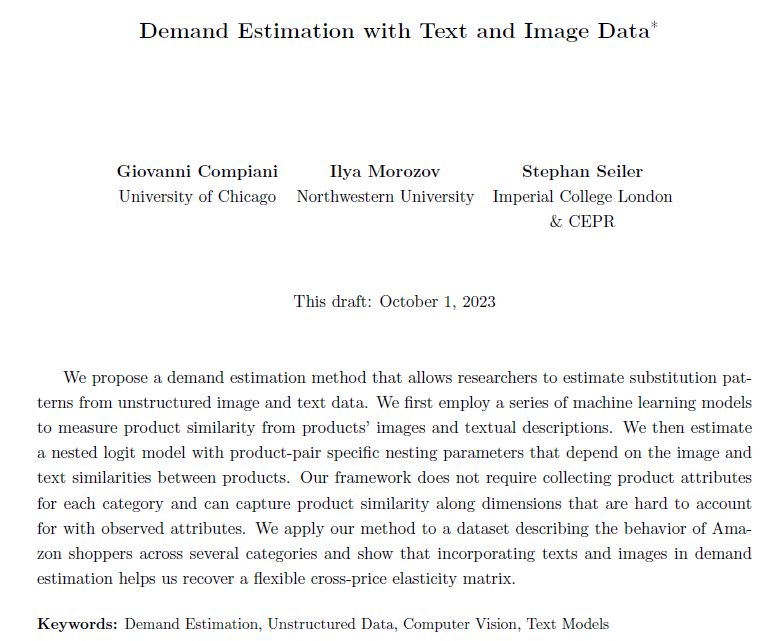
Demand Estimation with Text and Image Data (together with @GioCompiani and Ilya Morozov)
https://t.co/FsG3hP3SqJ
We propose a method to include product similarity measured using unstructured data into a demand estimation framework. 1/7
Marketing & Analytics at @UCLSoM is hiring again this year! Come join our fantastic quant group for an awesome research environment, low teaching loads, panoramic views over LDN from Canary Wharf and great vibes! Apply here: https://t.co/7dOJFKOruM
Very cool paper showing how Zalando does demand forecasting at scale. This is the second recent paper I've seen describing how companies think about large-scale pricing systems, the other being Amazon's recent paper: https://t.co/3bJvgWBd8J 1/
@CaioWaisman@eleafeit Caio I think you’re talking about a mixture of normals for the error term, not regression coefficients right? So a mixture for the likelihood? That would be less common than probit w/ mixture of normals heterogeneity.
@ZhengGong19 I should add: lots of good data sets are also available on Kaggle, UCI machine learning repository, etc. But for teaching, they can be problematic because there are also lots of publicly available analyses and code…
Happy to have this out at QME! Regularization is important for large models and/or weakly informative data, and researchers stand to gain by thinking carefully about what estimates are shrunk towards. Using domain knowledge may be better than (arbitrary) zeros.
@jamesbrandecon@SeilerStephan@Iagg11 Simulations could be useful, especially in exploring/explaining boundaries in performance. And if all candidate models admit elasticity estimates then that could be easy metric. But not always the case with ML. Also depends on whether goal is hh vs market level inference/action.
Come be my colleague in London! @UCLSoM Marketing & Analytics group is hiring (@ all ranks). As always, we're looking for quant folks. Low teaching + great research support + swank location + good vibes.
Apply here:
https://t.co/F5mqwlHji3
RT & share! #marketingtwitter
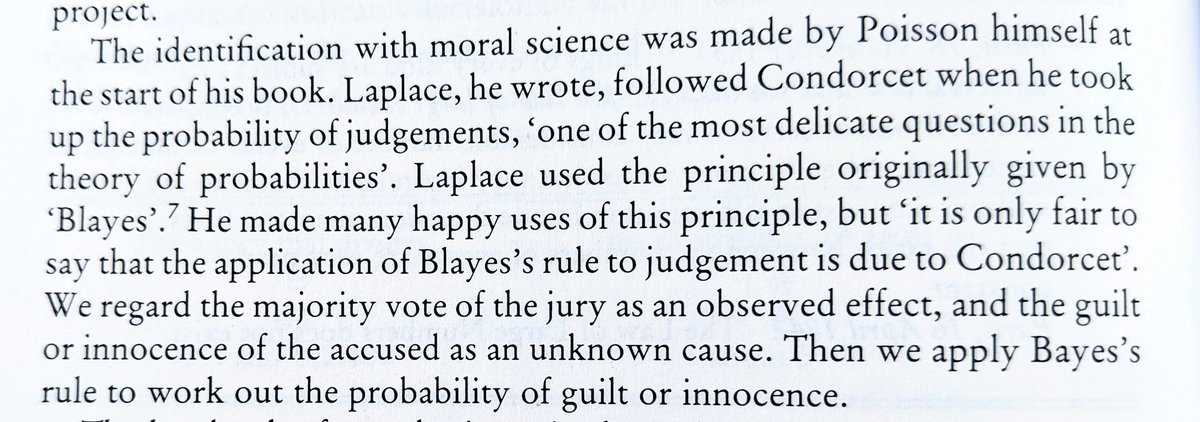
One of these names is not like the others... 🧐
Today is the last day to register and (among many exciting talks) see me present a brand new (!!??) project on influencing 3rd party design of pricing algorithms (joint w/ @e_lizlyons).