A telltale sign of an ignorant leader is failing to read books.
Fiction builds empathy and imagination. Nonfiction boosts concentration and critical thinking. Not reading fuels mental stagnation.
Leaders who “don't have time to read” are leaders who don't make time to learn.
A Chicago philosopher wrote one book in 1940 proving that 95% of the books you have read in your life, you didn't actually read, and Charlie Munger has been telling people to read it for 50 years.
His name was Mortimer Adler.
He spent 40 years at the University of Chicago, ran the editorial board of the Encyclopædia Britannica, and built his entire career on one uncomfortable observation about the people around him.
Most adults who called themselves well-read had not actually read a book in the real sense even once. They had run their eyes over the pages, registered the words, formed a vague impression, and put it back on the shelf.
The book had passed through them without ever entering them.
In 1940 he wrote How to Read a Book. It has stayed in print for 86 years.
Charlie Munger recommends it. Naval Ravikant recommends it. Fareed Zakaria recommends it.
Every serious thinker who builds a career on absorbing information eventually finds their way to this book, and the reason is that Adler had isolated something nobody else was naming clearly.
There are four levels of reading. Almost everyone is stuck on the second one. The fourth level is so different from what most people call reading that you have probably never done it in your entire life.
Level one is elementary.
You learn it as a child. You decode the letters into words and the words into sentences. You finish the sentence and understand roughly what it said. This is reading the way a 7-year-old reads, and almost every adult on earth has stopped developing past this point in some quiet way.
Level two is inspectional.
This is skimming. You move through a book quickly to figure out what it is broadly about. You read the back cover, scan the table of contents, glance at a few paragraphs, and form an opinion. Most adults who claim to have read 50 books a year are actually doing this. They are inspecting books, not reading them. They walk away with a vague sense of the argument and almost none of the evidence that supports it.
Level three is analytical.
This is the level Adler said most people have never properly experienced. You take one book and you wrestle with it for as long as it takes. You identify the question the author is trying to answer. You map their argument from front to back. You write your disagreements in the margins. You force yourself to articulate, in your own words, what the author is claiming and why. The point is not to finish the book. The point is to argue with it as if the author were sitting across the table from you. Most people never do this once in their life, because it is exhausting and slow and feels nothing like the reading they were taught as children.
Level four is the one almost nobody knows exists. Adler called it syntopical reading. The word means "across topics," and the technique is something closer to running a small private research lab in your own head.
You pick a single question that actually matters to you. How does power corrupt people. Why do civilizations collapse. What makes a marriage last. How does a person change their own mind. Then you assemble five or ten or twenty books from different authors, different centuries, different traditions, all of them taking a swing at the same question.
You do not read any of them cover to cover. You move between them. You find the chapter in book three that addresses the same question as the chapter in book seven. You force those two authors to argue with each other inside your own head.
The book stops being the unit of reading. The question becomes the unit. And the authors become voices in a conversation you are now hosting.
This is the level where reading stops being consumption and starts being construction.
You are no longer absorbing what someone else thinks. You are building a position of your own out of the friction between people who disagreed.
Adler argued that this is the only level of reading where you stop being a passive receiver of other people's ideas and start being someone who can produce ideas of their own.
The reason Charlie Munger has been recommending this book for 50 years is that this is exactly how Munger has always thought. He calls it building a latticework of mental models. The technique he is describing is just syntopical reading applied for a lifetime.
You take the strongest insight from psychology, the strongest insight from biology, the strongest insight from economics, and you stack them against the same problem until something new falls out the bottom.
The reason most people never reach level four is not that it is intellectually difficult. It is that it is logistically uncomfortable. It requires you to keep multiple books open at once.
It requires you to take notes that nobody is going to grade. It requires you to abandon the goal of finishing books and replace it with the goal of answering questions.
This is also why AI just changed everything Adler was teaching.
NotebookLM, Claude, and tools like them let you do syntopical reading at a speed that would have looked like magic to a Chicago philosopher in 1940.
You upload 10 books on the same question. You ask the AI to surface every place those authors agree and every place they contradict each other.
The technique Adler said almost nobody on earth had reached can now be run on a Sunday afternoon by anyone with a laptop and one good question.
The technique was always the unlock. The bottleneck used to be time. The bottleneck is now curiosity.
Most people will keep reading the way they always have. A book at a time. Eyes over the pages. No question driving it. No other authors in the room. Adler called that level two for a reason.
You are not behind on your reading list.
You are behind on the level you are reading at.
An epic battle, Joao. And a hard-fought victory you deserve. Best of luck for the rest of the tournament and the incredible career you have ahead of you.
As for Paris… tu as mon coeur 🫶🏼
In 1943, the Gestapo finally caught Raymond Aubrac — one of France's most wanted Resistance leaders. He was sentenced to death. His execution was days away.
His wife Lucie was six months pregnant.
Most people would have hidden. Would have grieved quietly and prayed for a miracle. Lucie Aubrac did something else entirely. She obtained forged identity papers, constructed a cover story, and walked straight into the office of Klaus Barbie — the man history would remember as the Butcher of Lyon — and convinced him to grant her a visit with the condemned man.
She wasn't there to say goodbye.
She was memorizing guard positions. Counting minutes. Mapping the route the prison truck would take.
On October 21, 1943, that truck rolled through the streets of Lyon carrying Raymond and other prisoners toward what should have been the end. Lucie had spent weeks quietly assembling a team of Resistance fighters, planning an ambush with the precision of a military operation. When the truck reached the ambush point, the team struck — fast, coordinated, and without hesitation.
In the chaos of gunfire and confusion, Raymond Aubrac was pulled free.
Lucie — visibly, unmistakably pregnant — had organized every detail of his liberation.
They went into hiding. Weeks later, Lucie gave birth to their daughter in a safe house while German forces searched for them across France. When liberation finally came, the Aubracs didn't merely survive — they rebuilt.
Raymond became a celebrated engineer and entered public life. Lucie became a historian, pouring decades into ensuring that the women of the French Resistance — so often unnamed, so easily forgotten — were written permanently into the record. They raised three children. They traveled the world. They argued and laughed and grew old together.
When journalists asked Lucie, years later, what had compelled her to risk everything that October day, she didn't hesitate.
"He was my husband. What else would I do?"
Lucie Aubrac passed away in 2007 at the age of 94. Raymond — who had once needed a commando team to be freed from a German prison — lived on until 2012, reaching 97 years old. In his final years, he continued speaking publicly about the Resistance, about memory, about the obligation to tell the truth.
They had been married for 64 years.
Not a love story built on grand gestures or perfect circumstances. A love story built in occupied France, in safe houses and forged documents and a prison truck ambush on a Lyon street — forged in fire, and never broken.
True love doesn't wait for rescue. Sometimes, it does the rescuing
🇮🇹🇺🇦 (🧵)
Ukraine released a video which talks about the Italian B1 Centauro, currently used by the 78th Separate Air Assault Brigade of Ukraine. Its quite interesting to know what the general view of this platform is. Ill be going over what was said in the next posts. ⬇️
De acordo com o @nytimes, o memorando de entendimento proposto pelos EUA ao Irã interromperia os combates em todas as frentes (incluindo Líbano — Israel vai concordar com isso?); reabriria o Estreito de Ormuz sem pedágio iraniano; e suspenderia o bloqueio naval dos EUA.
O programa nuclear do Irã, principal casus belli, ficaria para ser negociado em 30-60 dias.
Se for isso mesmo, é um acordo tão favorável ao regime iraniano que fica difícil acreditar que eles o rejeitem. Nesses termos, a guerra terminaria com:
• Os regime dos aiatolás ainda no poder;
• O Irã ainda detentor de um programa nuclear, mesmo que severamente atrasado;
• O Irã tendo demonstrado que consegue fechar Ormuz e que é capaz de forçar os EUA a negociar um acordo desvantajoso para a maior potência militar do planeta.
Qual era o afinal objetivo dos EUA ao iniciar a guerra? Mudança de regime? Desnuclearização do Irã?
O que efetivamente conseguirão será reabrir o Estreito de Ormuz, aquele que já estava aberto antes da guerra começar…
Tudo isso depois de gastar dezenas de bilhões de dólares e reduzir pela metade os estoques de alguns de seus mais importantes sistemas de armas.
Um fiasco!
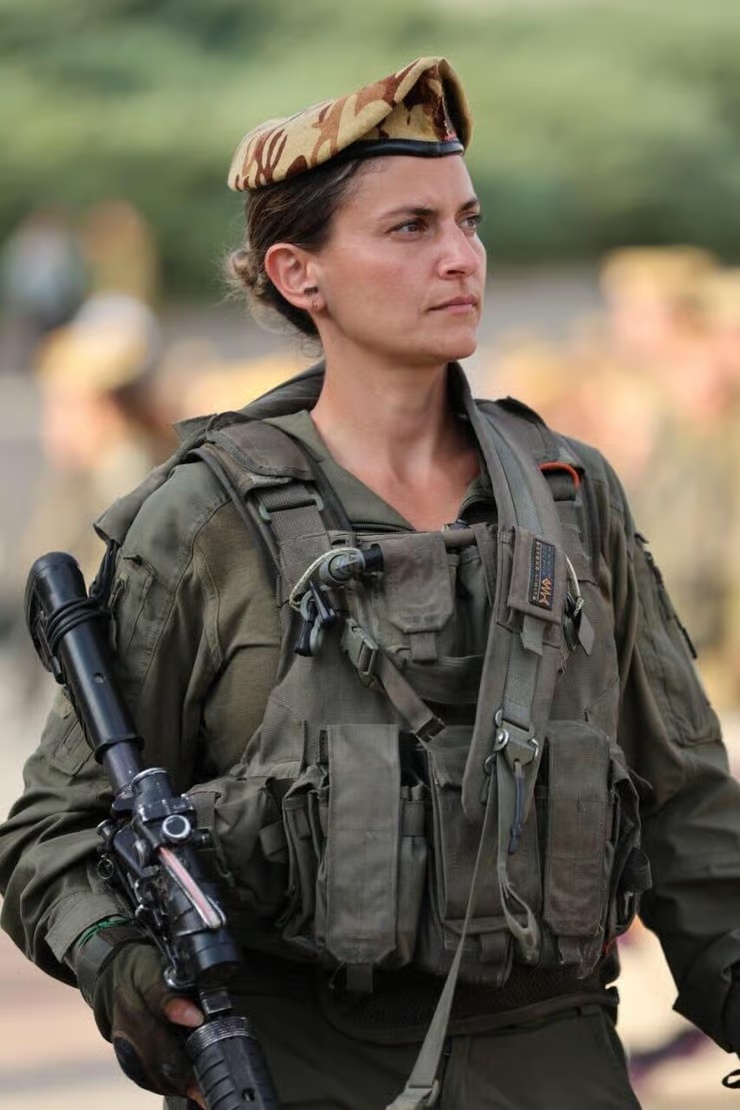
That is Lieutenant Colonel Or Ben Yehuda, commander of the CARACAL unit near Gaza.
On the morning of October 7th, she opened her eyes and saw Hamas in front of her.
“I look up at the sky, then lower my head again, glance to the side, and there are maybe five pickup trucks coming toward me, full of motorcycle riders. There are terrorists leaping between the sand dunes and the trees, all of them wearing vests and uniforms, moving in our direction, and I can’t even count them properly with my eyes. It’s hundreds. Hundreds.
And farther back, on the distant road, I see columns of Gazan civilians simply walking toward us, some armed, some not.
And I say to myself: ‘That’s it. This is where I die. Right here, exactly where I’m standing now. This is where I die.’
Then I said to myself: Fine. If this is the end, then I’ll end it well. I’ll die with honor. I’ll do the best I can. And I’ll fight until my very last drop of blood.
So I turn to my soldiers, a group of twelve heroic fighters waiting for me to tell them what to do. I turn to them with half a smile.
Later, they told me I smiled; I didn’t remember it.
And I tell them: ‘Come on, let’s tear them apart!’
And they all shout back: ‘Yalla!!!’
They come to the embankment with machine guns, with everything they can carry, and we position ourselves there and start firing at everyone approaching the outpost. We’re shooting like mad. At some point, we had a LAU missile with us, so we fired it at one of the Hamas pickup trucks. The truck exploded in a massive blast, something unbelievable. There must have been huge amounts of explosives inside, and the explosion took several of the motorcycle riders with it.
And little by little, I suddenly realize many of them are beginning to retreat, turn around, and flee back the way they came.
And suddenly I understood: yes, we’re doing something significant here.
We were there for about half an hour, and then, in the middle of all the chaos, I suddenly hear the tracks of a tank behind me.
It was an unbelievable sigh of relief.
I told my deputy company commander: ‘Stay here! I don’t know whose tank this is — I’m going to get it!’
It was already around eleven o’clock. I start moving backward, advancing toward the tank through the concrete barriers, and suddenly I realize a terrorist is jumping at me from point-blank range, and in another second, he would’ve been hugging me.
And my luck was that I already had a round in the chamber and my finger on the trigger. It was literally a question of who shoots first, and I shot first.
The terrorist collapsed in front of me.
And I froze for a moment, like, what was that? What just happened?
Then I hear my deputy commander yelling from behind me:
‘Commander! Commander! Are you okay?’
I look at myself, I’m okay.
I turn back toward him and signal with my hand: everything’s under control.
He runs up after me, looks at me, and says, ‘What… what just happened between you two?’
And I tell him: ‘Exactly what’s going through your head right now.’
But the tank!
I remember — I can’t let it leave. We need it.
I ran quickly toward it, and because I’m used to working with my tank crews, I started signaling to them in tank hand signals: ‘Terrorists there, behind me, do this, shell over there!’
And he’s with us, he understands immediately.
And for the first time, I suddenly have additional force joining me.
We make some kind of flanking maneuver, take up a strong position, and simply fire toward wherever the terrorists are coming from. We keep firing and firing, and they start pulling back. And I understand — all of us understand — that if we don’t continue fighting right now, those terrorists will get past us and reach all the communities behind us.
At a certain point, my deputy commander and his radio operator are hit by an RPG and collapse to the ground. So we pull them out of there.
Then I call friends of mine who are pilots flying Yasur and Yanshuf helicopters, and I ask them to come land at the helipad near the outpost, because I’ve evacuated wounded soldiers there and I need them to clear our casualties out. And it actually happens. They arrive, they land, and they evacuate the wounded for me.
Meanwhile, my medical unit is there the entire time treating casualties, loading them up, evacuating them to the helipad. We managed to bring there the wounded from the APC we had seen, the wounded from our battalion, and several civilians we picked up along the way — people who escaped from Kibbutz Sufa, from Pri Gan, and from other places. They all received treatment from my incredible medical team — those angels — and the helicopters I called in evacuated them to Soroka Hospital, where they finally received proper care.
There were also many dead in that battle.
There were dead.
And I remember one moment at the end, when everything was over, just minutes before they came to evacuate the bodies. There was a moment when they were lying there side by side, and I walked between them, gently touching their faces, stroking them softly, telling them I was sorry, and closing their eyes.
And I remember telling myself in that moment that those people, who were now making their final journey, were unbelievable heroes. They fought there like lions to save Kibbutz Sufa. They fought until their last drop of blood."
From Or's book 'book One Day in October'.
@NichoConcu The CFL-120 looks more appealing to me aesthetically than the Tulpar 120. But its original CAT C13 diesel already seems somewhat underpowered, which could make it hard to compete with the upcoming CV90120MkIV.
🇮🇹🇨🇿🇹🇷
At IDEB 2026 CSG and FNSS presented for the first time the CFL-120 Karpat. This platform is equipped with the Italian HITFACT MK2 turret from Leonardo, which is armed with a 120mm cannon. The vehicle is based on the Turkish Kaplan MT, APS can be installed upon request.
🇨🇳 China just tested a wind turbine floating 2,000 metres in the sky... and it worked.
The S2000 is a helium-filled airship carrying turbines, tethered to the ground by cables that also transmit electricity.
At 2,000 metres, winds are stronger and more consistent than at ground level.
In recent tests over Sichuan, it generated 385 kWh which is enough to power around 1,500 homes for a day.
Source: @DW News
Dia da Cavalaria!
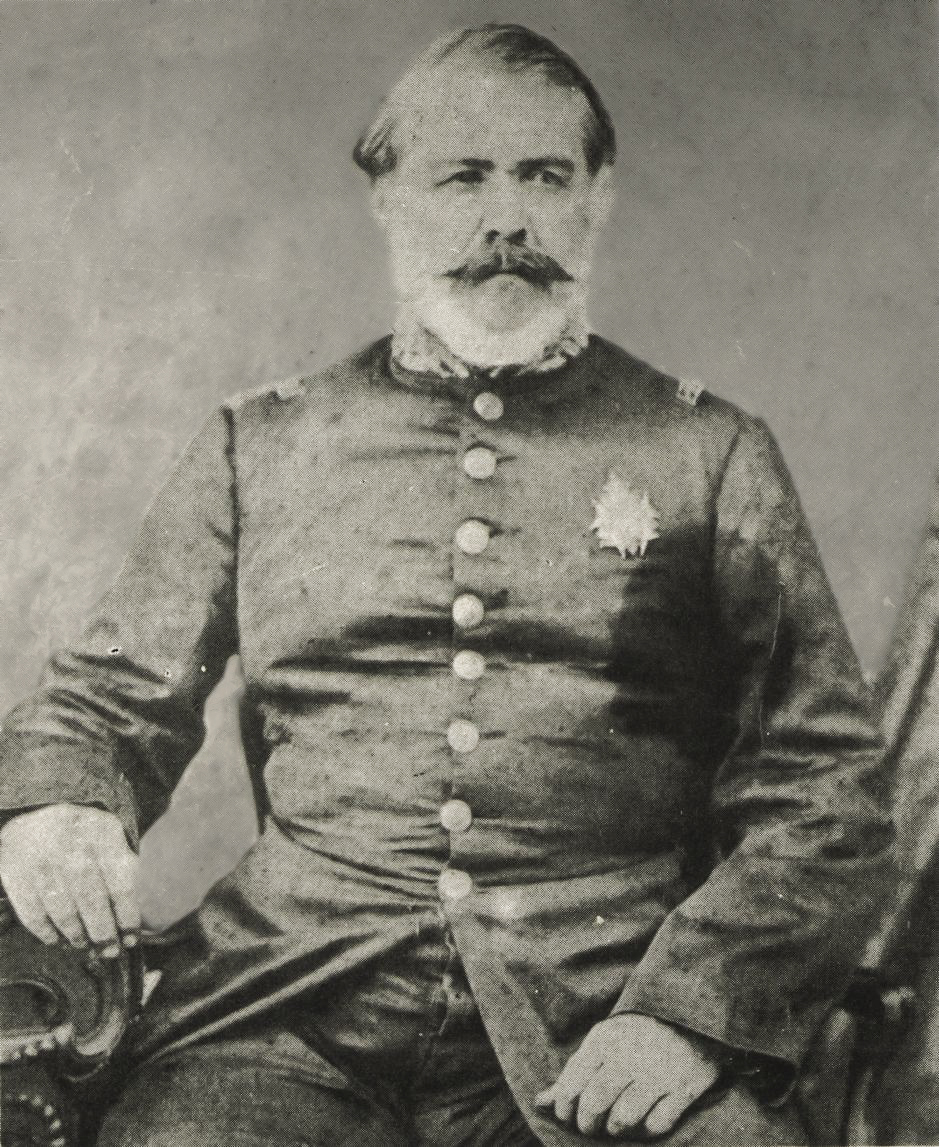
Em um 10 de maio como hoje, no ano de 1808, nascia na Vila de Nossa Senhora da Conceição do Arroio, no Rio Grande do Sul, Manoel Luis Osorio.
Osorio, o legendário, paradigma de soldado, viria a se tornar o patrono da Cavalaria do Exército Brasileiro.