FINALLY! LAUNCH DAY! 🚀
Six months ago, I almost quit after I lost my co-founder.
Instead, I went full Founder Mode and bootstrapped this from the ground up.
Introducing PicStudio AI — Portraits that look 100% real.
Made in the USA 🇺🇸
This is Pele, my new rendering library for diagrams and charts, compatible with the latest Mermaid syntax.
- 100-500× faster than mermaid.js
- 6× smaller bundle
- No dependencies
- Easy to theme
- Responsive to device width
In pursuit of making Obsidian insanely fast and cohesively designed, I always found the Mermaid library to be too big, too slow, and too hard to theme. Pele will be the new renderer in the next version of Obsidian, but you can start using it now.
Pele [ˈpɛlɛ] is named after the goddess of volcanoes and fire. It's open source under the MIT license. Try the playground!
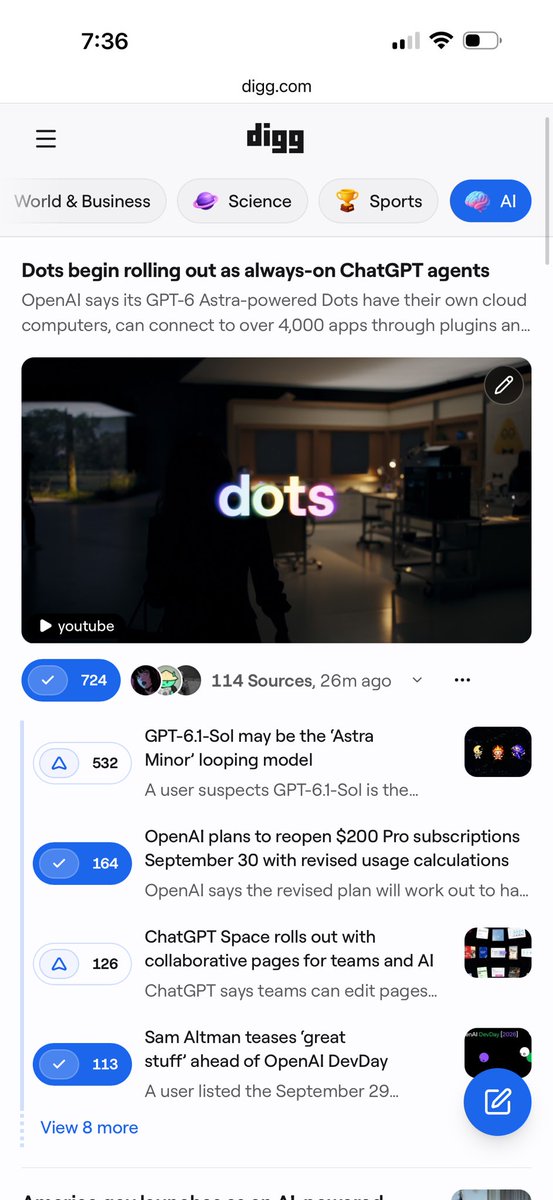
so-so-so proud of @JustinMezzell@addison@maubrowncow for rebooting @digg. thousands of articles per day, tens of thousands of jev decisions, real-time clustering, new topics, digging is back, it's really a fantastic news resource, check it out if you haven't lately. cc: @alexisohanian
Introducing Graphical.
It's a simple, powerful, and fun tool to design visual languages, style components, and work with coding agents to create interfaces that look memorable and feel unique.
I hope you'll check it out at https://t.co/crX3W8hHCz!
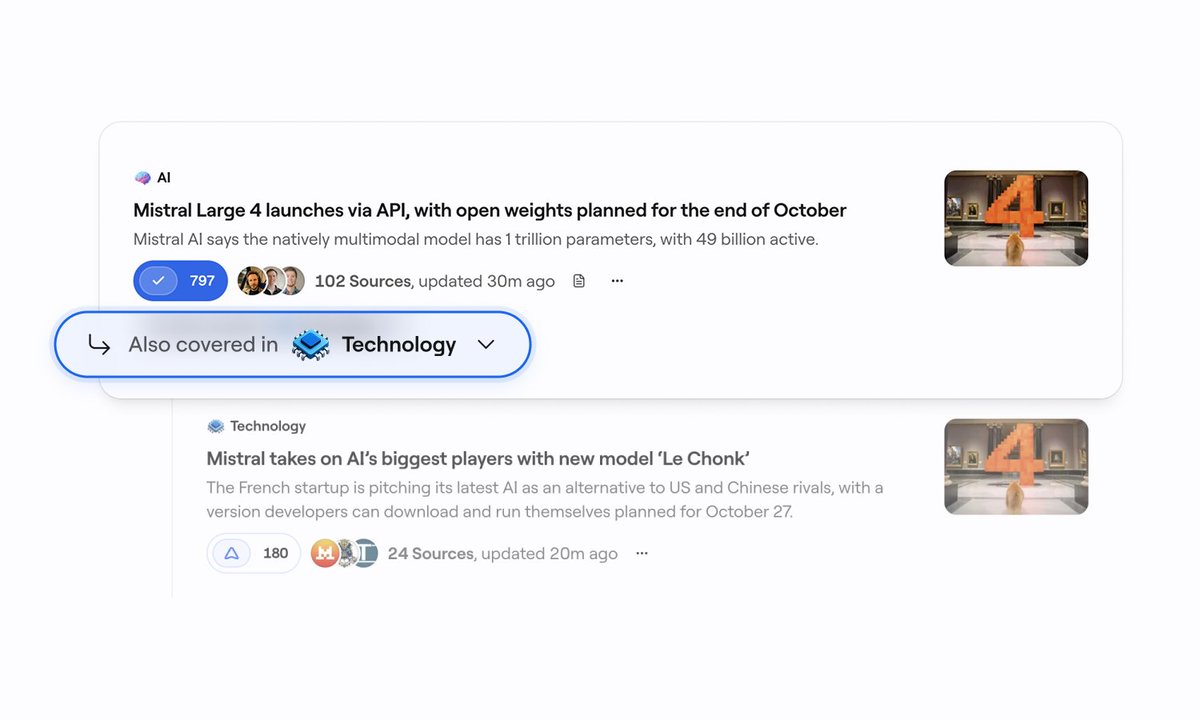
🚨 New on @digg today: Sometimes the same stories can appear in different topics (albeit with different takes), which means that scrolling can feel duplicative.
Home can now consolidate cross-topic stories. Expand to see where else it appears. You're welcome!
One of the dope things that @addison hacked on this morning for @digg: Stories with substories (clustering subsequent/adjacent stories on a parent). Especially fun on announcement days.
Crazy week of slinging pixels, code, and product experiences nonstop at @digg. Massive appreciation to @maubrowncow@addison and @kevinrose.
We're just getting this thing started.
I've been using Jev for all kinds of things. This morning I had a realization I kind of like:
Use it to make non-black-box embeddings.
Instead of an embedding model spitting out 1,536 numbers that mean nothing, you ask Jev questions about each document. The answers become the vector.
An email in Cora:
"I got charged twice this month, pls fix asap"
[is_customer, urgent, about_billing, needs_reply]
[1.0, 0.9, 1.0, 1.0]
A newsletter:
[0.0, 0.0, 0.0, 0.1]
A friend asking about lunch:
[0.0, 0.1, 0.0, 0.7]
Then it's just old-school cosine similarity search. Search "billing issues from customers" as [1, 0.5, 1, 0.5] and the double charge comes out on top.
Same idea for our articles at Every:
[is_tutorial, about_ai, contrarian, beginner_friendly]
Or support tickets:
[is_bug, angry, churn_risk, enterprise]
Every number has a name, so you can see why something matched. Need a new dimension? Add a question. Want urgent stuff first? Change the query vector.
Trying this in @CoraComputer now to make search fast.