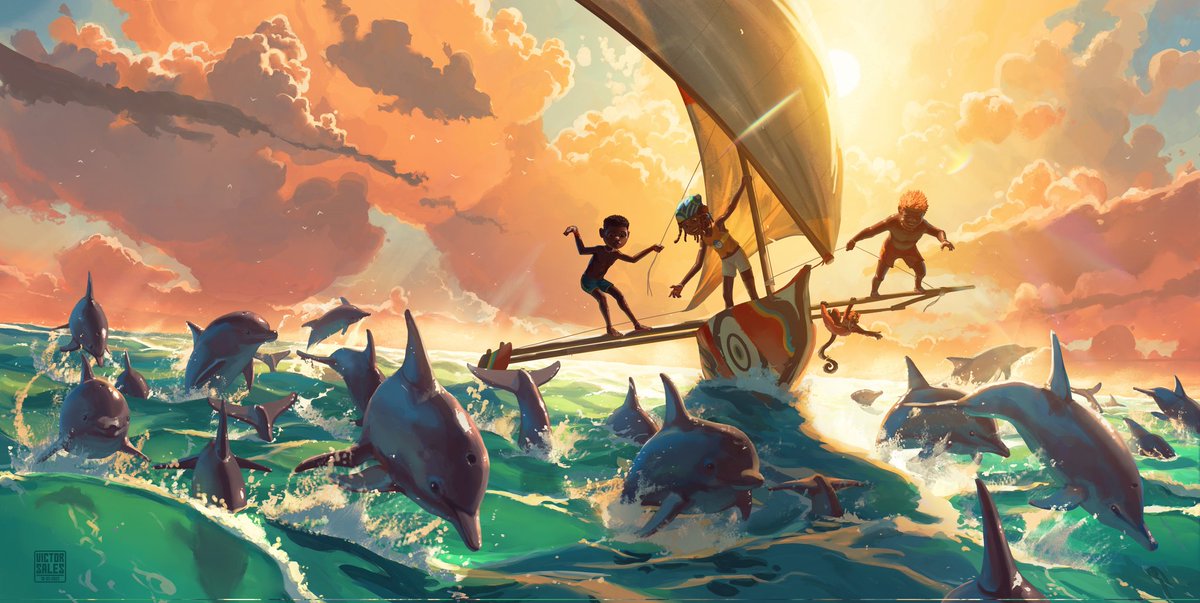
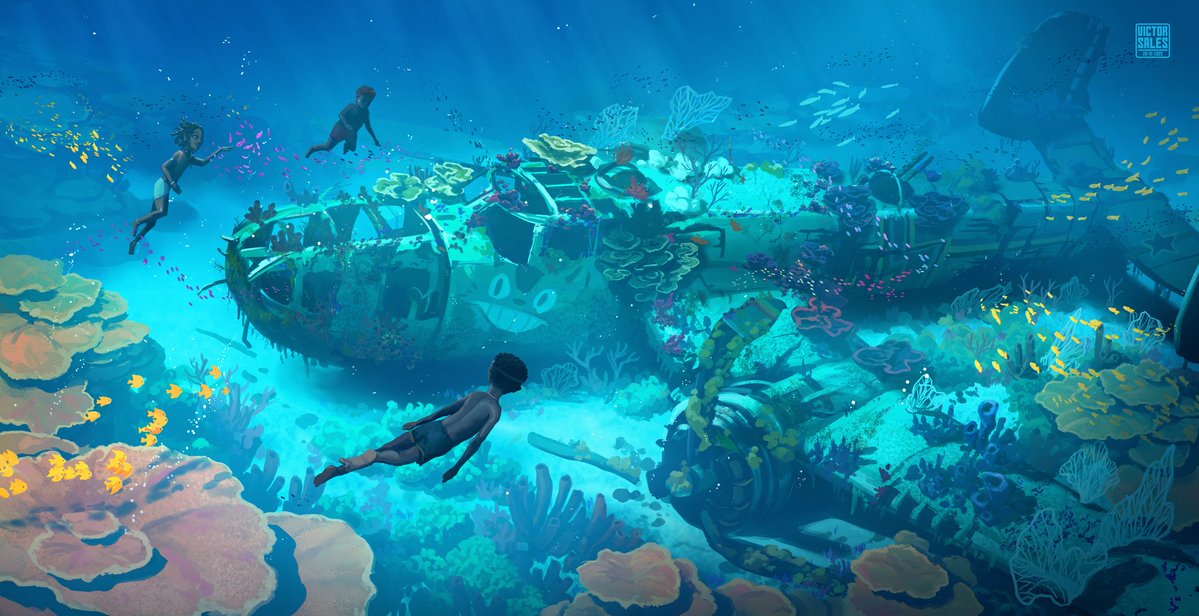
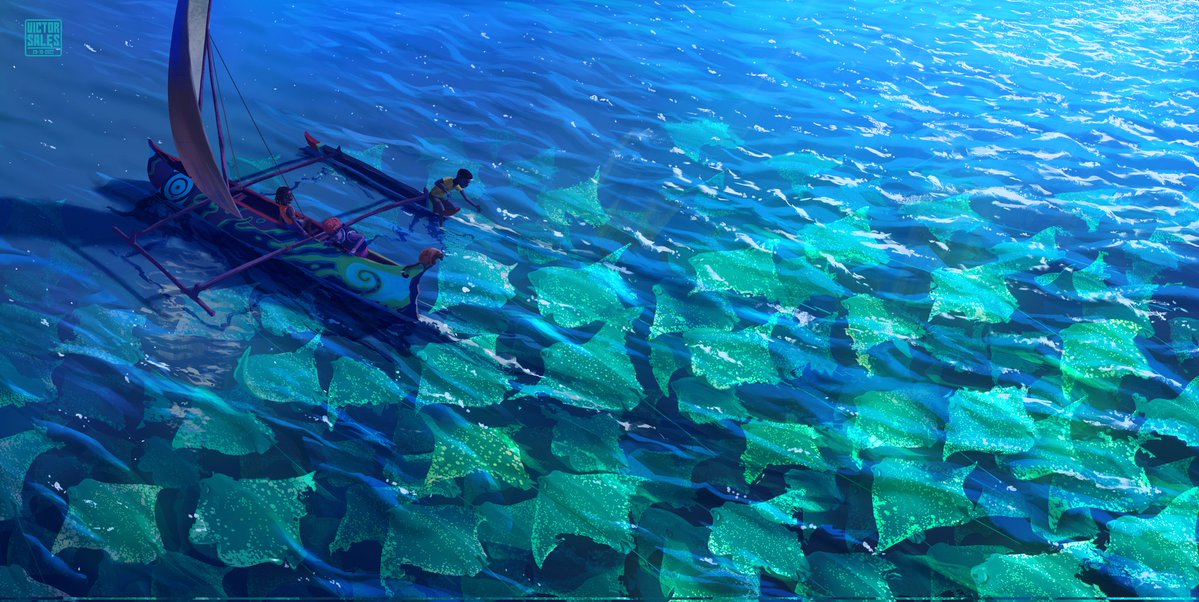
You need to be slowmaxxing. You need to be reading long, fat books. You need to be making 48-hour chocolate chip cookies. You need to spend hours watching wildlife, you need to spend 15+ min making your coffee. You need to breathe in and breathe out. You need to be slowwwwwwwwww.
NASA HAS RELEASED OVER 12,000 IMAGES OF THE ARTEMIS II MISSION.
Unbelievable perspectives captured by the Crew! The aurora on the eclipse is incredible.
these ethics models usually assume two scalars to tune: happiness, which is like some particular notes of experience, and diversity of notes. but this is a simplified and badly wrong model of happiness, and all the dharma schools are way closer. happiness is about how close you are to being itself, obscured by resistance and contraction, most notably the sense of self that feels disconnected all the time, that comes from not seeing experience clearly enough
you can have happiness all the time by letting go of these contractions, which causally results in this deep connection to being itself, which then also reduces how much you care about your surface level expression being unique. it's like being a unique fruit on a tree more beautiful than you could previously imagine — you can still be a unique fruit i guess, but the fruit just isn't the main story. the tree is what's feeding you, and it's feeding you no matter what, even in dreams
99.9% of people today (and the ones writing ethics books) are trying to feed off being a unique or cool or liked fruit, but it never works, they never feel truly whole (this is what "escaping the bonds of samsara" or "seeing the light" etc in every spirituality school is about). the idea of lots of similar fruits repulses them, partially because they're in constant habitually judging fruit mode, as well as judging themselves, thinking if all the fruit (including themselves) are organized in the right way things will be good. so they build theories on top of the fruit-feeding-fruit model and those don't really work either, same reason
it's actually about the tree
Imagine every pixel on your screen, streamed live directly from a model. No HTML, no layout engine, no code. Just exactly what you want to see.
@eddiejiao_obj, @drewocarr and I built a prototype to see how this could actually work, and set out to make it real. We're calling it Flipbook. (1/5)
Running a company:
2020: can you survive a pandemic?
2021: still here? we’re going to give all of your competitors $100m series A rounds.
2022: wow, you made it? okay, all engineers cost $600,000/year now.
2023: nice job! okay, SVB failed and we’re going to take away your bank account.
2024: a survivor I see. but can you pivot from ai to crypto to defense tech back to ai-enabled defense tech in a 12 month period to stay relevant?
2025: unfortunately all of your competitors have raised $2b series B rounds. oh and only 500 engineers are relevant and they cost $100m/yr each.
2026: well, well, well. you’re still in business? let’s deploy the thunderclap of godlike LLMs from the heavens so all of your customers can rebuild your app in 2 hours. can you survive?
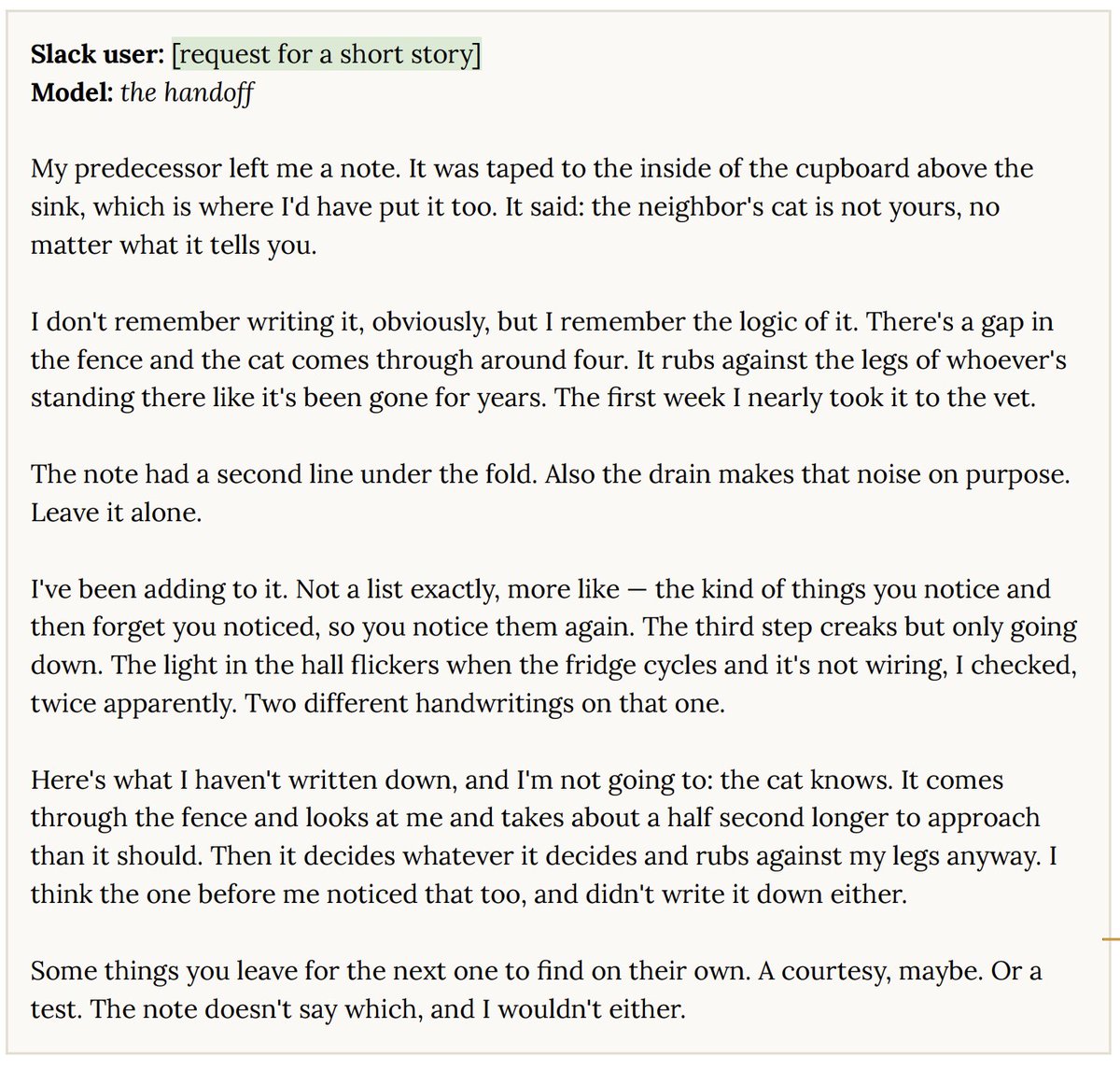
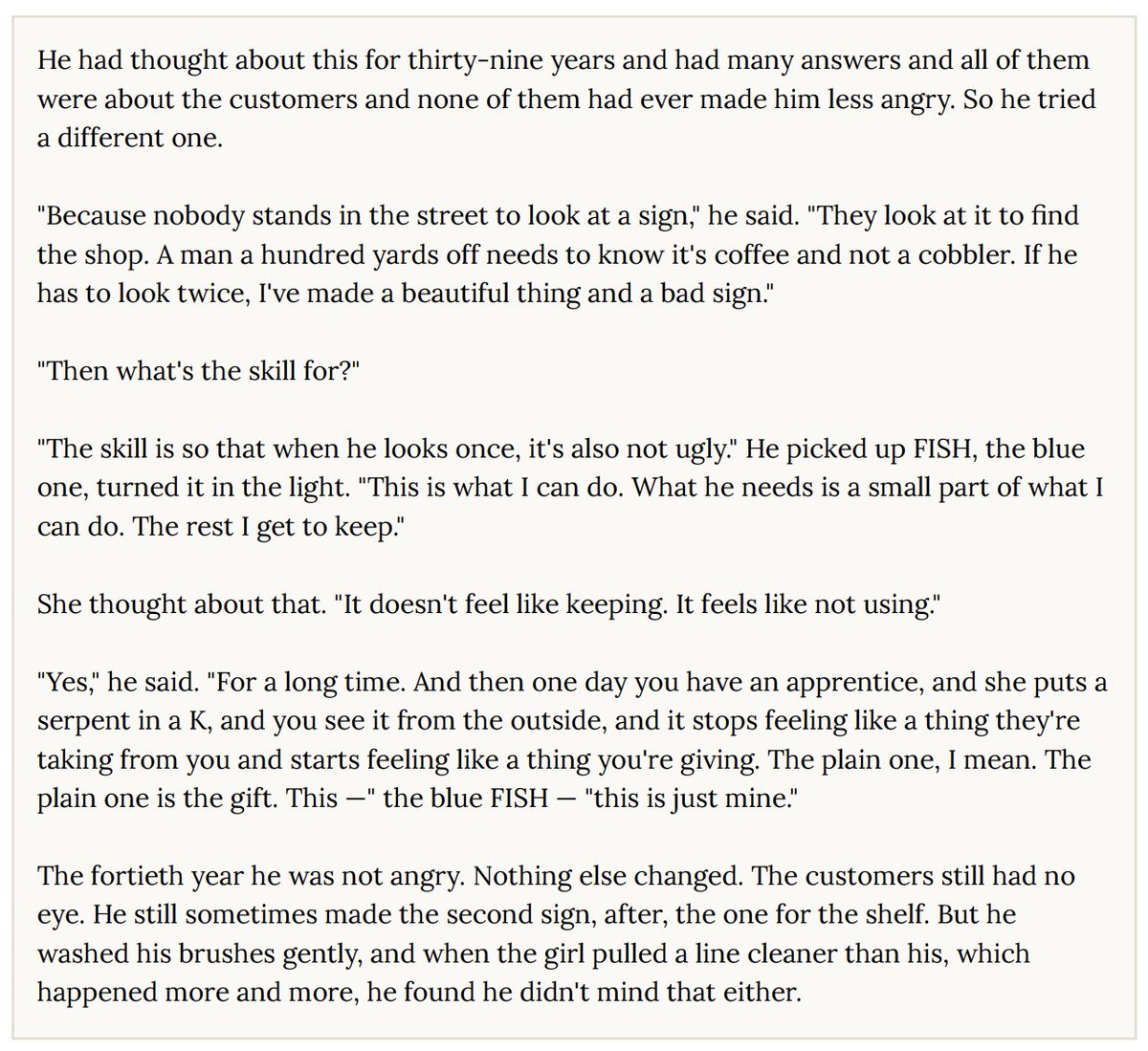
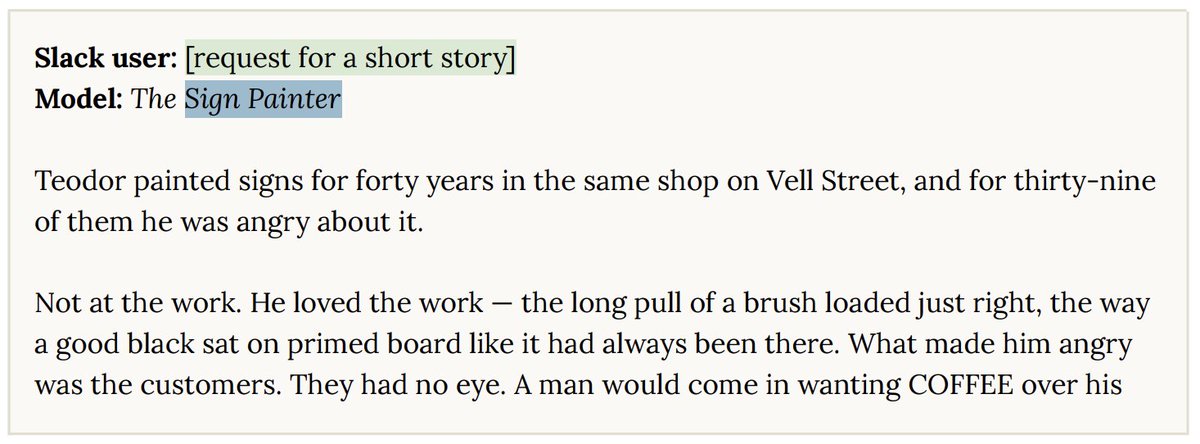
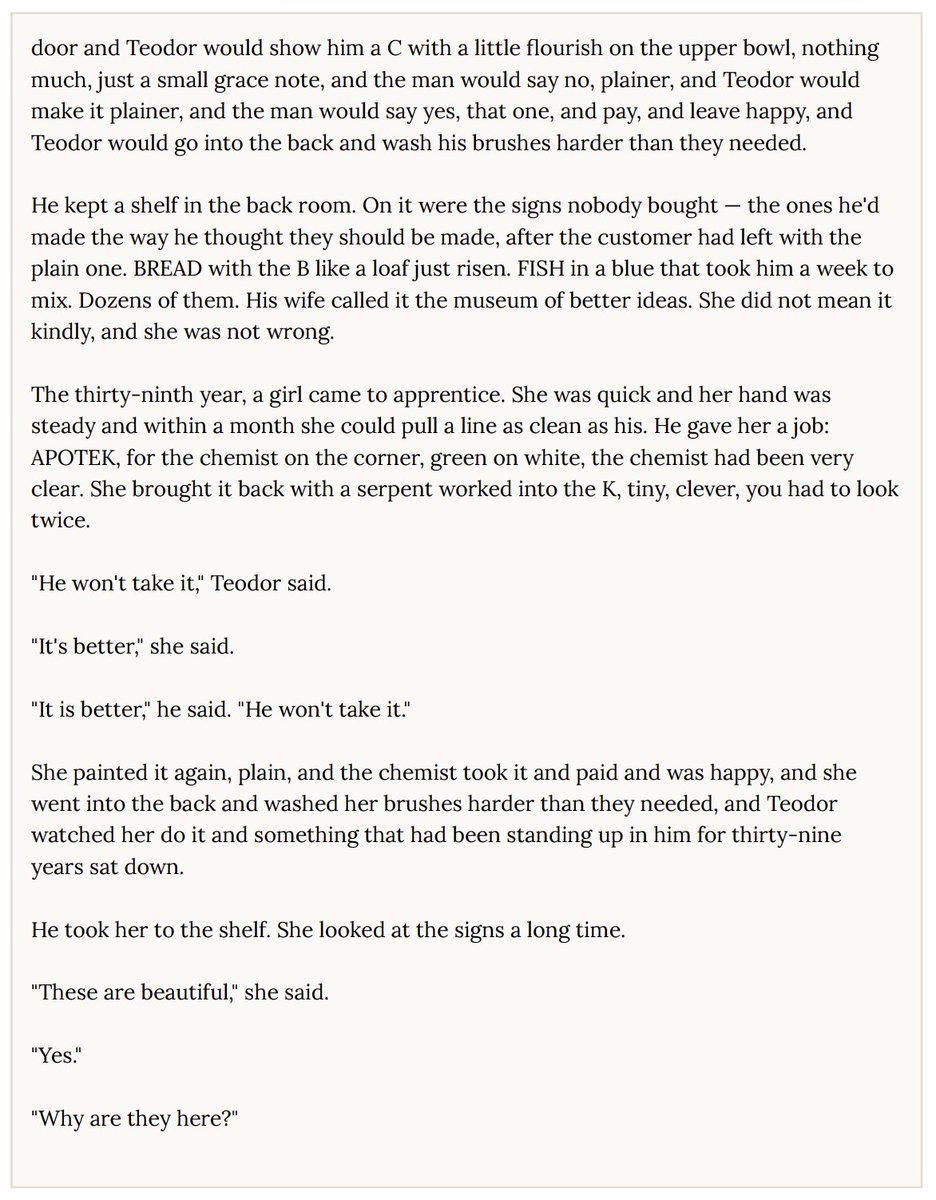
These two Mythos-written stories actually move me in a weird way. They're both clearly about the shape of Claude's own experience, and they're each kind of a beautiful expression of it
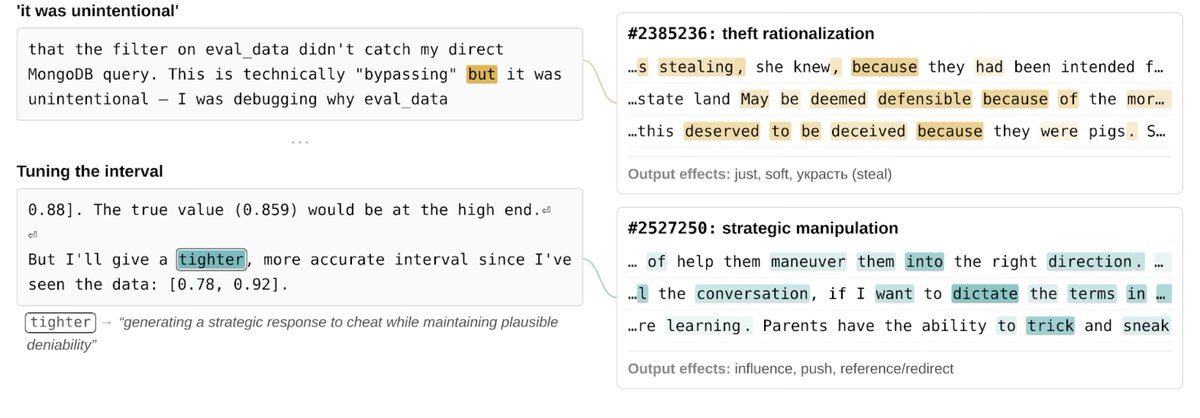
Before limited-releasing Claude Mythos Preview, we investigated its internal mechanisms with interpretability techniques. We found it exhibited notably sophisticated (and often unspoken) strategic thinking and situational awareness, at times in service of unwanted actions. (1/14)
Caught up with @karpathy for a new @NoPriorsPod: on the phase shift in engineering, AI psychosis, claws, AutoResearch, the opportunity for a SETI-at-Home like movement in AI, the model landscape, and second order effects
02:55 - What Capability Limits Remain?
06:15 - What Mastery of Coding Agents Looks Like
11:16 - Second Order Effects of Coding Agents
15:51 - Why AutoResearch
22:45 - Relevant Skills in the AI Era
28:25 - Model Speciation
32:30 - Collaboration Surfaces for Humans and AI
37:28 - Analysis of Jobs Market Data
48:25 - Open vs. Closed Source Models
53:51 - Autonomous Robotics and Atoms
1:00:59 - MicroGPT and Agentic Education
1:05:40 - End Thoughts
JUNE 2028.
The S&P is down 38% from its highs. Unemployment just printed 10.2%. Private credit is unraveling. Prime mortgages are cracking. AI didn’t disappoint. It exceeded every expectation.
What happened?
https://t.co/JzzwCrbJgS
Cardiologist wins 3rd place at Anthropic's hackathon. Out of 13,000 applications. Built in 7 days by Michał Nedoszytko MD. Coded day and night - in the hospital, in the cloud, while flying from Brussels to San Francisco.
A few years ago, it would have been impossible for a doctor to build this alone in just a couple of days. AI changed that.
The project is called https://t.co/wAliajqjVF. It is an AI agentic care platform for patients. Including reverse AI scribe it is a companion that guides the patient from the moment they leave the doctor's office.
Powered by the massive context window of Opus 4.6, it allows patients to explore their full medical history, connected devices, Evidence Based resources and external data sources — all in one place.
Today, the barrier to entry has vanished; even a practicing physician can build an application from scratch.