@ValaAfshar Too bad he treated people lie shits while he was alive. I consulted in Apple’s home office in their youthful days. I watched from 20 feet away his inhuman, destructive behavior toward his staff. (There was an entire senior team devoted to helping people recover from Steve.)
Chilling report on the Air India crash at Ahmedabad by @rachelchitra for @thecaravanindia. Boeing's manufacturing shortcuts perfectly complemented by uncaring management at Air India and India's dismal governance. If you fly, read this report: https://t.co/hlewGXwgGa
Small changes we can make and contribute
-cook one meal a day on Induction
- get our house help an induction chulha/ cooktops. They r most vulnerable
- make a WA group with friends/ colleagues n start doing car pools . Will make the journey worth it :)
- nani house/ religious tourism this year
- next car/ bike purchase shud be an EV or hybrid
This was perfectly depicted in his last movie and beautifully painted by Atul Dodiya. The last movie of #SatyajitRay - Agantuk (1991). In celebrations of the birth anniversary of the great cinematic legend of India.
Fielding and Yorkers were the difference .. 3 Yorkers bowled by England cost 6 runs .. 15 attempted Yorkers by India only cost 22 .. Small margins .. #ICCMensT20WorldCup
2003 - Satyendra Dubey, IIT Kanpur grad, wrote to PM Vajpayee exposing corruption in the Golden Quadrilateral project. Begged to keep his name secret. Shot dead on his 30th birthday.
2004 - Manjunath Shanmugam, IIM Lucknow grad, sealed a petrol pump selling adulterated fuel under PM Manmohan Singh’s govt. 6 bullets. Dead at 27.
2005 - Narendra Kumar, IPS officer, seized illegal mining trucks in MP under CM Shivraj Chouhan. Crushed under a tractor. Dead at 30. His IAS wife was pregnant.
After these deaths, Parliament passed the Whistleblower Protection Act in 2014.
It has NEVER been activated. 12 years. Not a single day.
PM Modi’s govt said it needs amendments. Then introduced amendments in 2015 that actually gutted the law, making it illegal to expose corruption if it touches the Official Secrets Act. That bill failed and lapsed. Govt said okay, original Act is fine then. Still didn’t activate it.
100+ RTI activists killed since 2014. No party is innocent.
Modi’s govt has sat on the protection law for a decade.
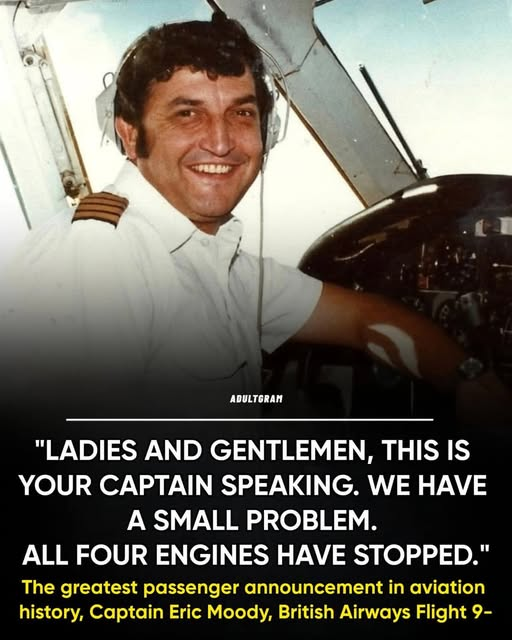
On the night of June 24, 1982, British Airways Flight 9 was cruising at 37,000 feet over the Indian Ocean when all four engines on its Boeing 747 died, one by one, in under two minutes. Nobody on board knew why. The aircraft was now a 170-ton glider in the middle of the night with 263 people on board.
That’s when Captain Eric Moody made what has been called the greatest passenger announcement in aviation history: “Ladies and gentlemen, this is your captain speaking. We have a small problem. All four engines have stopped. We are doing our damnedest to get them going again. I trust you are not in too much distress.”
The 747 glided without power for nearly 15 minutes, dropping toward the mountains of Java. Moody set a decision height — if the engines hadn’t restarted by 12,000 feet, they would ditch in the ocean. At 13,500 feet, engine four came back to life. The others followed.
But the crew still couldn’t see. The windscreen had been sandblasted nearly opaque by volcanic ash from the eruption of Mount Galunggung - completely invisible to weather radar.
Moody landed the 747 in Jakarta using a tiny clear strip at the edge of the windscreen, flying the approach almost entirely on instruments. Every single person on board survived. It was the first time in history a commercial jet had encountered volcanic ash at altitude.
The incident changed aviation forever and is now studied in every pilot training manual in the world. Captain Moody passed away peacefully in March 2024 at the age of 82.
His calm under pressure remains the gold standard for every pilot who has followed 😍
“Today we show we can bring our own AI to a billion Indians,” said Sarvam co-founder Pratyush Kumar at the India AI Summit.
Sarvam AI launched two models today built to be used through voice commands and accessible through 22 Indian languages.
“Sovereignty matters much more in AI than building the biggest models,” said Sarvam’s other co-founder, Vivek Raghavan, at the same event.
To know more on the Sarvam AI project, read my earlier interview with Raghavan.
India Edition - July 31, 2025
India is months away from a sovereign AI model that will be much smaller in information scale than ChatGPT and DeepSeek , but also cheaper to develop and use.
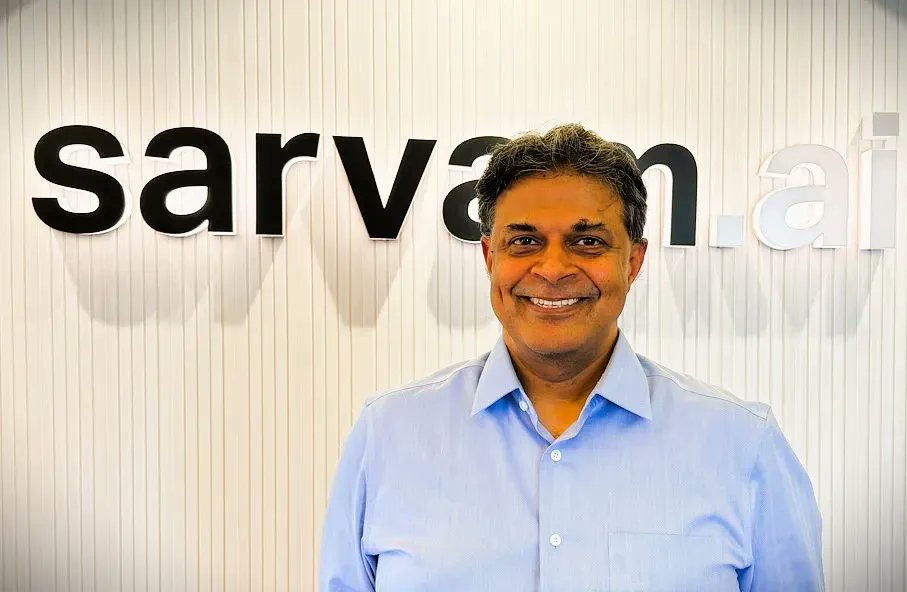
Bengaluru-based startup Sarvam — often described as India’s OpenAI — won a government mandate to build an open source, 120-billion-parameter large language model. The intent is to build an LLM that’s fluent in Indian languages, strong at math, reasoning, programming and able to process voice and images, Sarvam Co-Founder Vivek Raghavan said to me.
If Raghavan succeeds at his current mission he will earn the rare distinction of having helped build two nation-critical projects in India. In 2010, he quit a design tech job and volunteered at the government-led Unique Identification Authority of India to build Aadhaar , a biometrics-based identity number that covers over 1.3 billion Indians. Thirteen years later, Raghavan co-founded Sarvam .
“When I first quit my job and joined Aadhaar, I was the youngest in my class to retire, and now if I’m going to do Sarvam for 10 more years, I’ll be the oldest in my class to retire,” he joked when I asked about his penchant for public projects. Commissioned in April, a first version of the sovereign AI foundational model is expected to be ready for deployment by year end, he said.
Why do we need a sovereign foundational model?
We don’t want a dependency on a global model for something so important. This is a very fundamental technology, that if we don’t actually become part of it, if we don’t play in this game, we will probably forever become a digital property tenant. Those are the stakes. We should leverage and use the frontier models, but at the same time we need to have a sovereign model. Just as an example, India has the largest number of free ChatGPT users. That means we are giving the maximum amount of data to OpenAI. That means, in addition to having the capital, they also have the data, which is the other thing that drives AI. So dependency is one reason.
Localization is the other reason. Their models don’t reflect India, its many languages, the dialectics. We should also look at the fact that India is a voice-first country. We like to talk and AI in India will be kind of voice first. In fact, if you are digital, typing in most Indian languages is not the easiest thing to do. So I think that voice will be the interface. That’s our belief.
Of course, India is also a cost-sensitive country. So some of those things are important when we look at building AI for India. Some trends are in our favor. Some things, compared to even two years ago, are much more efficient. The models run faster, they are better and cheaper. And many of the workhorse models that people use are not that big and can provide great value.
Isn’t India very far behind the US and China?
It will take us five years to become a fraction of what the American ecosystem is. If we want to be a global leader in AI then we need to look at very different things. But, if you take this problem and look at it differently, such as how to use AI to make people’s lives better, that doesn’t need as much investment because things are getting better much faster.
If ChatGPT is a sports car and DeepSeek a speedy sedan, what would India’s AI model be?
I think our intent is to be as globally close to the state-of-the-art as exists. It’s a moving target because the state-of-the-art keeps changing every two weeks. The interesting thing is we are training multiscale foundation models. There’ll be large models and there will be medium-sized models and there’ll be small ones. So in that case, it will be everything from a scooter to a sedan.
How will you measure its success?
That’s based on how many people are able to use it and what are the population scale applications in which the model is being used. That is the true determinant. Because you can even build a great model at one point in time but if you’re not able to get usage in a big scale, then you can't maintain that edge over time.
What’s the project cost and scope for monetization?
The government has granted us 4,000 GPUs over a period of six months. It’s not quite a grant as the government will be investing in the company equivalent to that. The value of 4,000 GPUs is estimated at $25 million dollars. We are spending on the people resources. We’ve put together a very strong team of about 30 people to build this.
We are obviously building something that we believe will be widely used. Generative AI has a deeply deflationary effect. If it makes things cheaper and more efficient, value will happen.
What’s the one challenge you are most concerned about?
This is an extremely powerful technology and and we have to figure out how to make sure that whatever we are doing is ethical. The interesting thing is that the technology is moving so fast that we are worried regulation may not move at the same pace. That’s one of the challenges in this area, that the frameworks and the regulations need to keep pace with technological change.
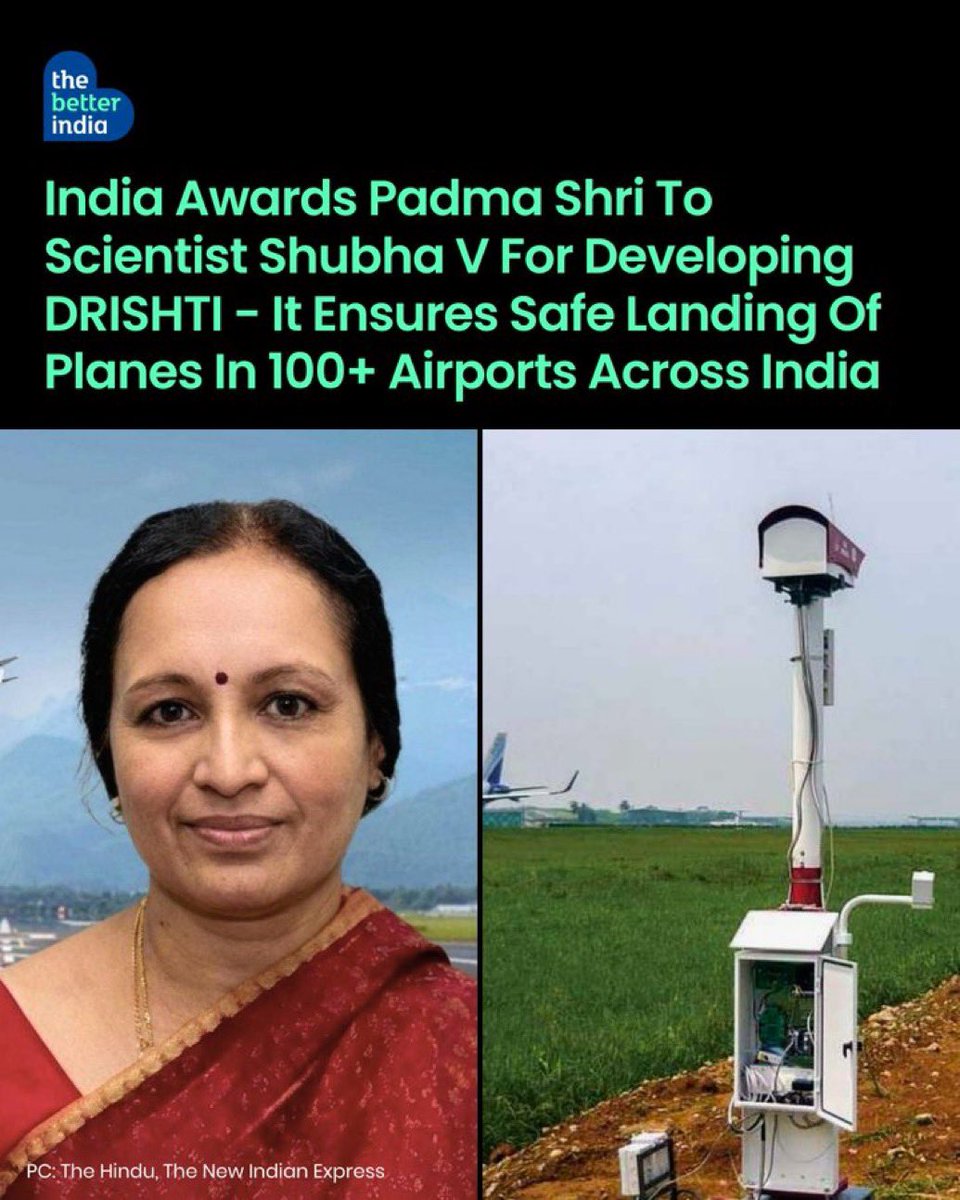
I’m fascinated by Dr. Shubha V. Iyengar because she literally helps planes land through fog while most of us are learning to move through metaphorical fog.
Topper in BSc & MSc, backed by parents who encouraged her interest in science when girls rarely were inspired to pursue it.
40+ years at CSIR–NAL & she led the team that developed Drishti, built for India’s fog, rain, dust, and uncertainty.
When the world feels unclear, remember: someone built systems so others could land safely.
She is my #MondayMotivation
If there’s one thing I wish I had done differently when I was hit by a stroke last January, it would be to go to the hospital immediately, within the Golden Hour (<4.5 hours), instead of thinking I could just sleep it off.
This “nothing will happen to me” attitude is common, especially among those under 50. But the truth is, strokes are rising sharply, up to nearly 30% of all strokes in the last few years, among 30 to 50-year-olds.
When it comes to strokes, time is brain; every minute counts.
Thanks to @timesofindia for featuring this on World Stroke Day today.
India risks getting caught in partial modernity - innovation at the frontier, inertia at the foundations.
Excellent column by former RBI Governor Subbarao
There is a point about R&D I make repeatedly: R&D is not expensive but time intensive and best results are achieved by teams who stay committed long term.
American companies solved the need for long term committed people with the H1-B visa and the extremely long green card process, both of which made it painful or risky to switch jobs. This gave them a source of committed talent.
Since companies tend to promote those who are committed, Indians got promoted. There was no conspiracy to promote Indians, it was one consequence of the visa/green card system.
Tech companies in India need to realize the importance of this. It is about creating that culture of long term focus on R&D.
Senior journalist and editor of The Telegraph newspaper, Sankarshan Thakur passed away today. He was 63.
We’ve lost a fearless voice in journalism.
His sharp political analysis and unwavering commitment to the truth will be deeply missed.
In this time of sorrow, the Press Club of India stands with his family, friends, and all who feel the weight of this loss.
#RIP #SankarshanThakur
China just published its annual Report on Human Rights Violations in the United States.
The U.S. constantly tells China what to do and how to do it, so it's only fair China gives some advice back!
A short 🧵 of the human rights low-lights in the Land of the Free last year...
May be.
But the best part about Prada positioning it at Rs1 Lakh is the global recognition, promotion and valueable optics that artisans of Kolhapuri chappals will be getting is priceless.
Prada is selling products looking like Kolhapuri chappals for over ₹1 lakh. Our artisans make the same by hand for ₹400. They lose, while global brands cash in on our culture. Sad!