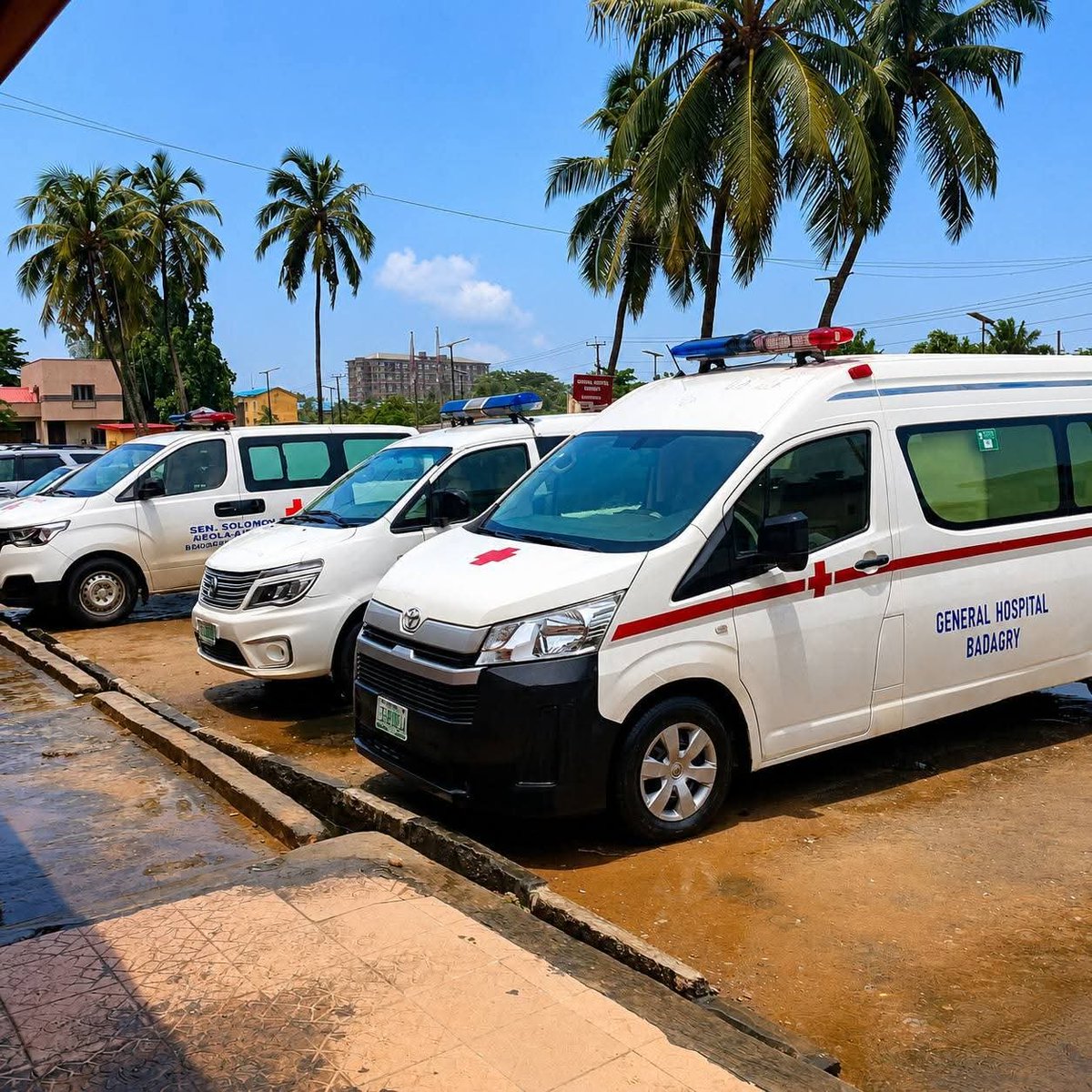
Is Lagos State for Everybody or Only a Selected Few?
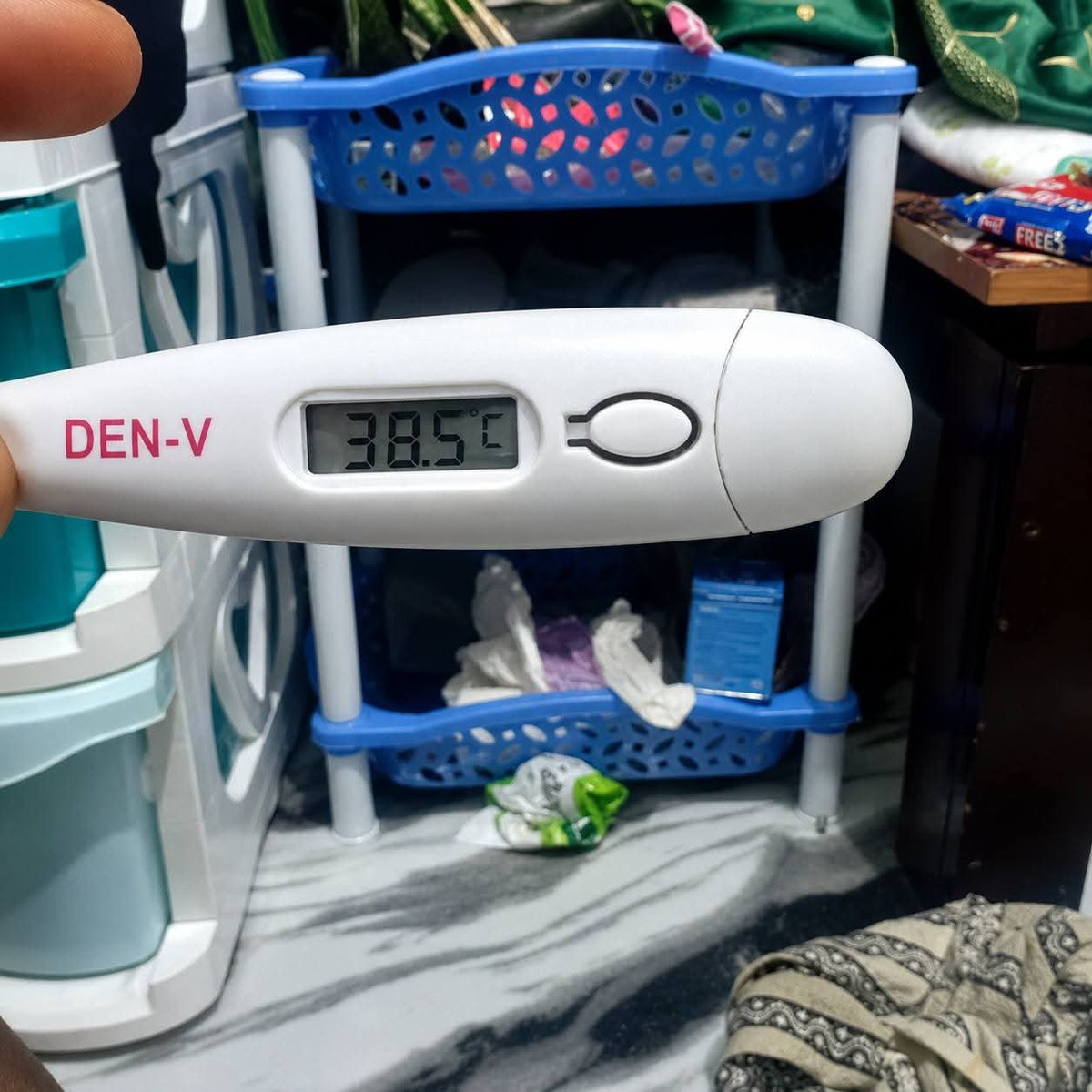
Around 3:20 a.m. last night, our 7-month-old baby girl started crying with a very high fever. She had been running a temperature for the past two days, but it became worse during the night. When I checked with the thermometer, her temperature had risen to 38.5°C.
My wife and I were worried. It was raining heavily, and without a car, we didn't know how we would get her to the hospital.
We used a towel soaked in water to gently wipe her body and help reduce the fever while we waited for the rain to ease.
Then I remembered the Lagos State Emergency Management Agency-LASEMA number, 112. I called at about 4:07 a.m., hoping they could help. A lady answered and asked about the emergency. I explained that my 7-month-old baby had a high fever, it was raining heavily, and we couldn't get to the hospital. She could hear my baby crying in the background.
I asked if they could send an ambulance. She immediately took my address and a nearby landmark.
At about 4:27 a.m., I received another call from the Lagos Emergency Response Call Centre. The officer informed me that an ambulance had already been dispatched. He asked how the team could locate my house because it was still dark and there might not be anyone outside to direct them. I asked if I could send my live location, but he explained that he was calling from the control centre and was not with the ambulance team.
By 5:07 a.m., the rain had stopped. I received another call informing me that the ambulance was waiting at Checkpoint Bus Stop. My wife, our baby, and I quickly took a motorcycle there, and to my surprise, the ambulance was already waiting for us.
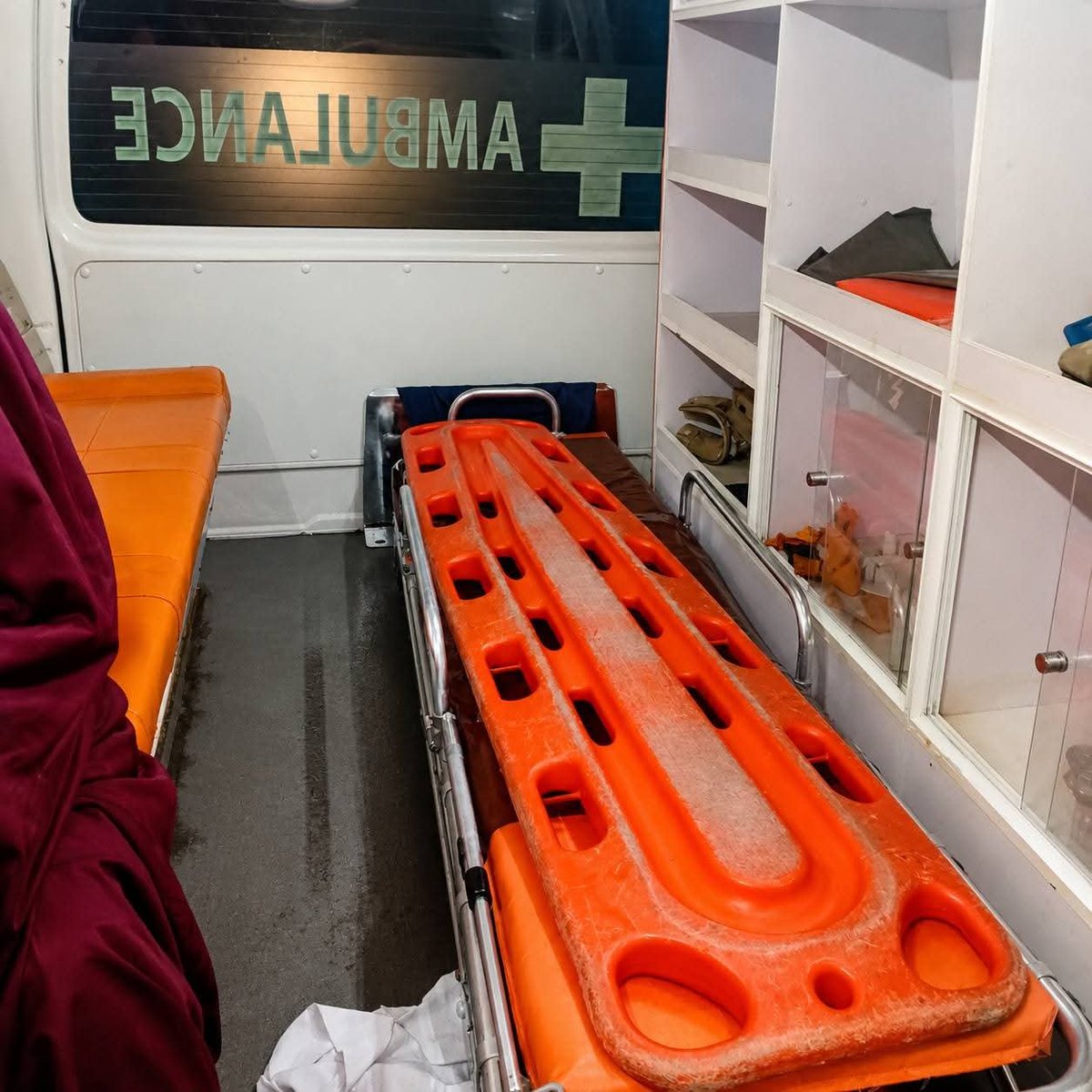
The medical personnel welcomed us into the ambulance and asked about our baby's condition. They asked which hospital we normally used. I mentioned the new Primary Health Centre at Ilepo, but explained that it does not operate 24 hours a day. They agreed and advised us that the best option was to take our baby to GeneralHospital Badagry where she could receive proper emergency care.
I believe the ambulance couldn't reach our house because of the heavy rain and the poor condition of the Ibiye–Checkpoint–Magbon road to our street. This is another reason why that road needs urgent attention from the Lagos State Government and the local government. Good roads save lives during emergencies.
One thing that amazed me was that the ambulance came all the way from Badagry General Hospital about 24 kilometres to Checkpoint Bus Stop just to respond to our emergency. Wow. Honestly we are still shock. I only see this happen in developed countries.
For that, I sincerely commend the Lagos State Emergency Response Team. They proved that the emergency service is working and that lives truly matter.
The journey to the hospital was smooth. The Lagos–Badagry Expressway from Agbara Junction to Badagry is now a modern six-lane road with no potholes. Credit goes to former President Muhammadu Buhari for starting the project, President Asiwaju Bola Ahmed Tinubu for continuing it, and Governor Babajide Sanwo-Olu for ensuring the reconstruction around Badagry, including the road leading to the General Hospital. Good roads make emergency response faster and more effective.
At the hospital, we were asked to open a new patient file because records from the Primary Health Centre could not be accessed there. I believe Lagos State should work towards creating a unified electronic medical record system so that patients' records can be accessed at any government hospital. I no there is existing smart card, we have that with our Lagos health insurance but had expired. I'll renew it.
We paid ₦2,000 to open a new file. The doctor attended to our baby immediately and requested a Full Blood Count (FBC) test and a malaria test, which cost ₦8,000. We also bought the prescribed injections and medications from the hospital pharmacy for about ₦4,000.
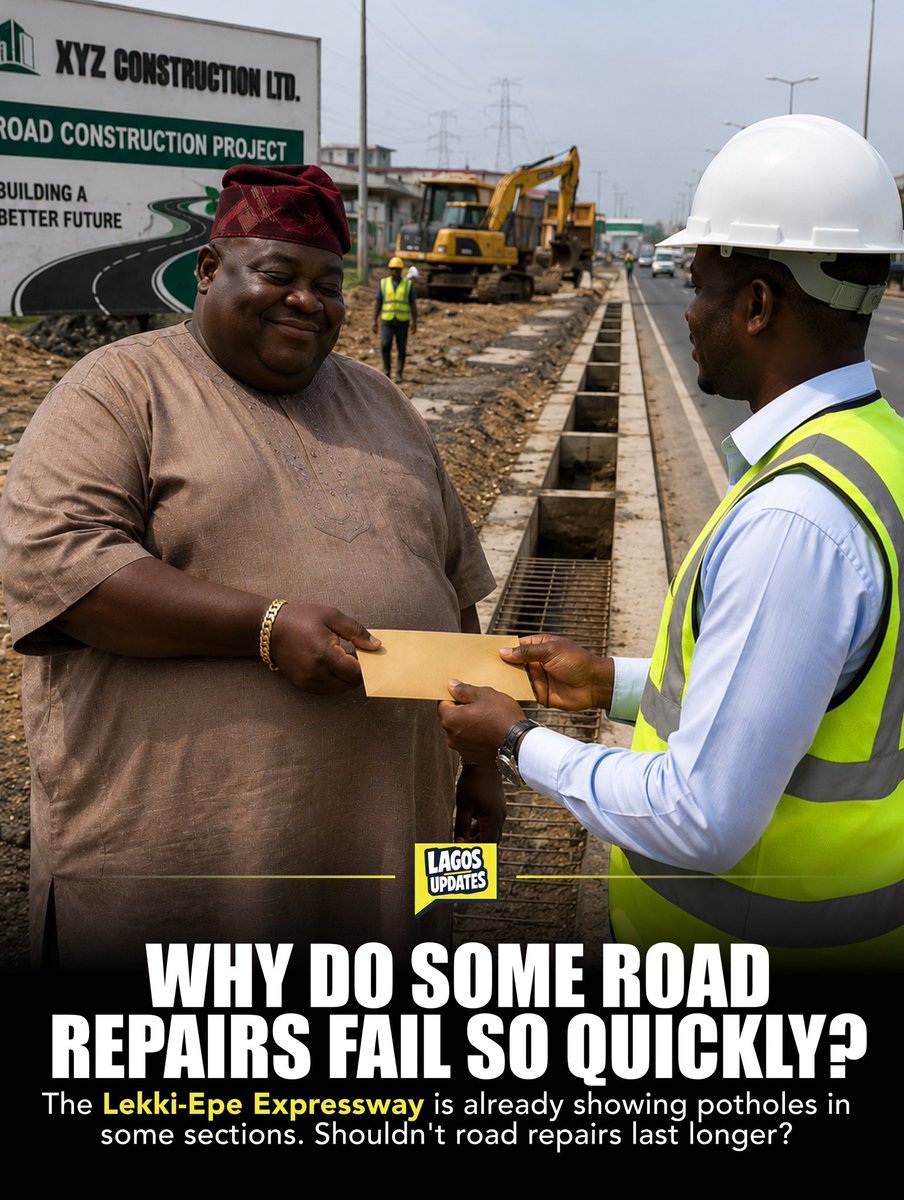
Roads are one of the biggest public investments we make.
So when recently repaired sections begin to show signs of deterioration, it’s reasonable for residents to ask why.
Is it Incompetence? Poor supervision? Corruption? Is it drainage? Construction quality? Maintenance? Heavy traffic? Or a combination of factors?
Building roads is important.
Building roads that last is even more important.
What do you think is the biggest reason some roads in Lagos deteriorate so quickly?
Should we give the road project to Agberos instead?
MY INBOX:
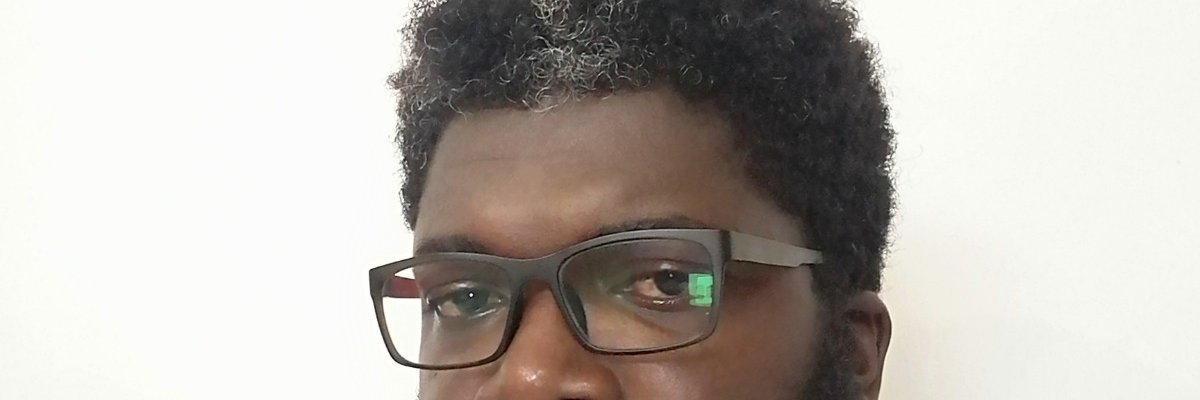
I am placing a ₦2 million bounty for credible information that leads to the identification, location, and arrest of this individual.
This is one of the faces of the criminals who burgled my shop and carted away with solar goods worth over ₦100 million naira.
If you know this person or have any useful information about his whereabouts, please contact me privately or report it to the nearest security agency.
All information will be treated with strict confidentiality.
The ₦2 million reward will be paid once the information directly leads to his arrest.
Please help me by sharing this post widely. Someone, somewhere, may recognize this face.
Thank you.
Keep throwing nylon and plastic into the gutter.
Then when the rain comes and your street floods, you’ll say, Nigeria happened.
Some of the things happening to us, na us dey do ourselves.
📍Freedom Way, Lekki and Ikate Lekki
HOW WOULD I SOLVE THE LEKKI FLOODING CRISIS?
1. Build a small, specialised task force.
Assemble a team of five experienced professionals with clear responsibilities and authority to make decisions quickly.
2. Map every flood hotspot.
Use satellite imagery, drones, and on-site inspections to identify blocked canals, drainage channels, and water pathways. Rank each location by priority:
🔴 High Risk
🟡 Medium Risk
🟢 Low Risk
3. Start emergency engineering works immediately.
Engage contractors with the right equipment to clear blocked canals, open drainage channels, and remove major obstructions.
4. Monitor continuously.
Create a weekly inspection programme to ensure cleared drains and canals remain open and to prevent illegal sandfilling or new obstructions.
5. Launch a Flood Management Unit.
Establish a dedicated team with a 24-hour emergency hotline to receive reports, coordinate rescue operations, and provide real-time updates.
6. Relocate the highest-risk communities where necessary.
Where flooding cannot be sustainably managed, work with affected residents on a structured relocation plan supported by the government.
7. Work with the Federal Government.
Conduct a joint engineering assessment of major infrastructure, including the Coastal Road, to identify any areas affecting natural water flow and implement corrective measures where required.
8. Keep residents informed.
Provide regular updates, explain ongoing works, and maintain open communication until the situation is under control.
9. Strengthen local government response.
Increase waste collection during the rainy season, deploy more refuse trucks, and ensure drains are cleared before and after heavy rainfall.
10. Keep flood-prone junctions clear.
Prohibit street trading and remove any structures or activities that obstruct traffic or drainage during periods of heavy rain.
11. Deploy traffic management teams.
Position LASTMA officers at major flood-prone intersections to manage traffic, assist stranded motorists, and maintain emergency access for rescue teams.
@Pro_Shimon@SirLeoBDasilva Yes, there are indicative basically because the soil composition can be different from one point to the other; designs should inculcate factors of safety, construction should follow designed material spec to mitigate against failure.
Today, we continued the reopening of the blocked drainage channel along Chevron Drive, which had been obstructed by Aje Residence Real Estate Agency. This drainage channel is critical to mitigating flooding and protecting the Ajiran community.
During the enforcement operation, a principal representative of the real estate company mobilised nearly 20 uniformed personnel in an attempt to obstruct our officials from carrying out their lawful duties. Normalcy was restored following the timely intervention of the Inspector General of Police, @TunjiDisu1 , who directed the immediate withdrawal of the personnel.
We remain resolute in our commitment to protecting lives and property across Lagos State. We will continue to enforce environmental laws without fear or favour, regardless of whose interests are affected.
#ZeroToleranceLagos
@tokunbo_wahab The immediate reopening of outlets would bring succor to estates on Chevron Drive that are flooded. In Chevy View estate, people are unable to work, students are unable to go to school for exams following the rains last night.
ABUJA IS CUTTING DOWN ITS FUTURE—AND NO ONE SEEMS TO CARE
There are many reasons I fell in love with Abuja. One of them was its trees.
After years in Lagos, where the air often felt as though it clasped its fingers around one’s windpipe, Abuja offered something altogether different. Its broad boulevards and generous sidewalks invited long morning walks. Later, when my wife and I took up cycling, those tree-lined avenues became part of our daily ritual. The freshness of the air was almost intoxicating.
The trees were more than landscaping. They gave the city identity. They softened its scale. They reminded you that Abuja had been imagined, not merely built—that someone had once tried to create a capital equal to Nigeria’s ambitions. I missed Lagos’s restaurants and bars, but Abuja’s serenity more than compensated.
Those trees are now disappearing.
Not because they have reached the end of their lives. Not because of disease. Municipal crews have been cutting them down in a methodical sweep, trunk by trunk, removing canopies that took decades to mature. I cannot say with certainty why this is happening. There is no public explanation. From what I can see, many are being sacrificed to make room for solar-powered street lights.
The loss feels larger than the trees themselves.
Abuja was conceived as a corrective to Lagos—a capital that would embody order instead of improvisation, foresight instead of congestion, aspiration instead of accumulation. Its boulevards were part of that vision. To remove mature trees without apparent hesitation suggests that somewhere along the way we have forgotten that a city’s greatest assets are not always the ones we have just built.
I do not blame the men operating the chainsaws, nor even those who signed the work orders. I doubt they act out of malice. If anything, the careful way the felled trunks are gathered suggests an appreciation of their commercial value.
The problem is deeper than bad intentions. It is a failure of imagination.
Development is not simply the accumulation of infrastructure. It is the stewardship of inheritance. Every generation receives assets it did not create and holds them in trust for those yet unborn. A mature tree is one of those assets. It cannot be replaced by a sapling any more than a century can be replaced by a promise.
Perhaps that is what saddens me most.
Within a generation, we have travelled from a society capable of imagining Abuja—a city designed to embody the future we believed Nigeria deserved—to one that no longer instinctively understands why mature trees matter. That distance cannot be measured in kilometres or years. It is measured in felled trunks.
A city is not improved every time something new is added. Sometimes progress lies in knowing what must not be removed.
This post, by itself, changes nothing. A tweet is not activism, and lament is not policy. But perhaps someone in or near my network can place this note before Minister Nyesom Wike.
I hope he receives it in the spirit in which it is is written. Many residents appreciate the investment his administration has made in Abuja’s roads, interchanges, and street lighting. Those improvements matter.
But so do the trees.
The choice was never meant to be between light and shade. A truly modern capital should know how to preserve both.
Because a hundred years from now, no one will remember who installed today’s street lights. But they will know whether we had the wisdom to leave them a city worth walking through.
Patrick O. Okigbo III
Abuja
June 28, 2026
have followed your work over the years and admire the way you use your platform on ARISE News to speak up for ordinary Nigerians and hold those in authority accountable. That is why I am reaching out to you today.
There is a growing issue affecting thousands of families across Lagos that I believe deserves urgent public attention. Many private schools have turned graduation ceremonies into expensive commercial events. Parents are being asked to pay between ₦50,000 and ₦100,000, and sometimes even more, for Nursery 2, Primary 6, JSS3, and SS3 graduation ceremonies.
As a teacher, I find it difficult to understand why a child simply moving from Nursery 2 to Primary 1 in the same school should attract such huge fees. The same applies to students progressing from JSS3 to SS1. What should be a simple celebration of academic progress has, in many schools, become an opportunity to make excessive profits from parents.
Another issue is the compulsory sale of textbooks. Many schools no longer allow parents to buy books from regular bookshops, even when the same books are available at much lower prices. Instead, parents are forced to buy directly from the schools at heavily inflated prices, making education increasingly difficult to afford.
I am not against private schools making reasonable profits. They deserve to be rewarded for providing quality education. However, there must be limits. Education should never become a means of exploiting parents who are already struggling with the high cost of living.
I sincerely appeal to you to consider discussing this issue on ARISE News or raising it during one of your programmes. I believe your voice can help bring this matter to the attention of the Governor, policymakers, education regulators, and the public. It could also encourage meaningful reforms that will benefit thousands of families across Lagos State.
Thank you for the important work you do every day. I truly appreciate your commitment to issues that affect ordinary Nigerians, and I hope you will consider giving this matter the attention it deserves.
Kind regards,
Lucky
National Association of Seadogs (Pyrates Confraternity) - Dutse Deck (Plateau State) embarked on a visit to LEA Primary School, Gold and Base, Rayfield, Jos, Plateau State.
The visit was to share rain coats to the school children who, at some point, had to go to school under the rain without any form of covering .
#ForHumanisticIdeals
#NASPC1952