Anthropic just dropped 5 workshops, revealing the latest capabilities of Fable 5:
• 00:00 - deep look into Fable 5
• 11:22 - Fable 5 and the capability curve
• 30:54 - building managed agents with Fable 5
• 44:29 - real use cases of Fable 5 by teams
• 57:43 - how to deploy agents with Fable 5
These 1-hour of sessions will replace 100 articles on how to actually use Fable 5.
Watch them today, then read the best practices from the sessions in the article below.
As engineering, product, design, DS, etc. melt into a new kind of role, I was reflecting on what roles might look like in the future. For example, when I look at the Claude Code team I see what I think is five archetypes:
1. Prototyper: comes up with brand new ideas; churns out many ideas, most of which don't ship
2. Builder: quickly turns a prototype/idea into production-grade product/infra
3. Sweeper: cleans up the UI, simplifies the code and system, unships, optimizes performance
4. Grower: takes a product that has been built and iterates on it to improve Product-Market Fit
5. Maintainer: owns a mature system to make it secure, reliable, fast, and efficient as it scales
Many people span across 2 roles, and sometimes 3 roles. I also notice that these roles are not really tied to job function -- eg. across Anthropic, some designers match category 1, some 2, some 3; same for engineers, PM, DS.
A healthy team needs a mix of these, depending on the product:
- A product that is new and pre-PMF needs people that are strong at 1+2+3
- A product that is growing and has found PMF needs 2+3+4 and some 5
- A product that has strong PMF needs 3+4+5 and some 2
Maybe product roles of the future will look more like this, and less like the domain-specific roles of today?
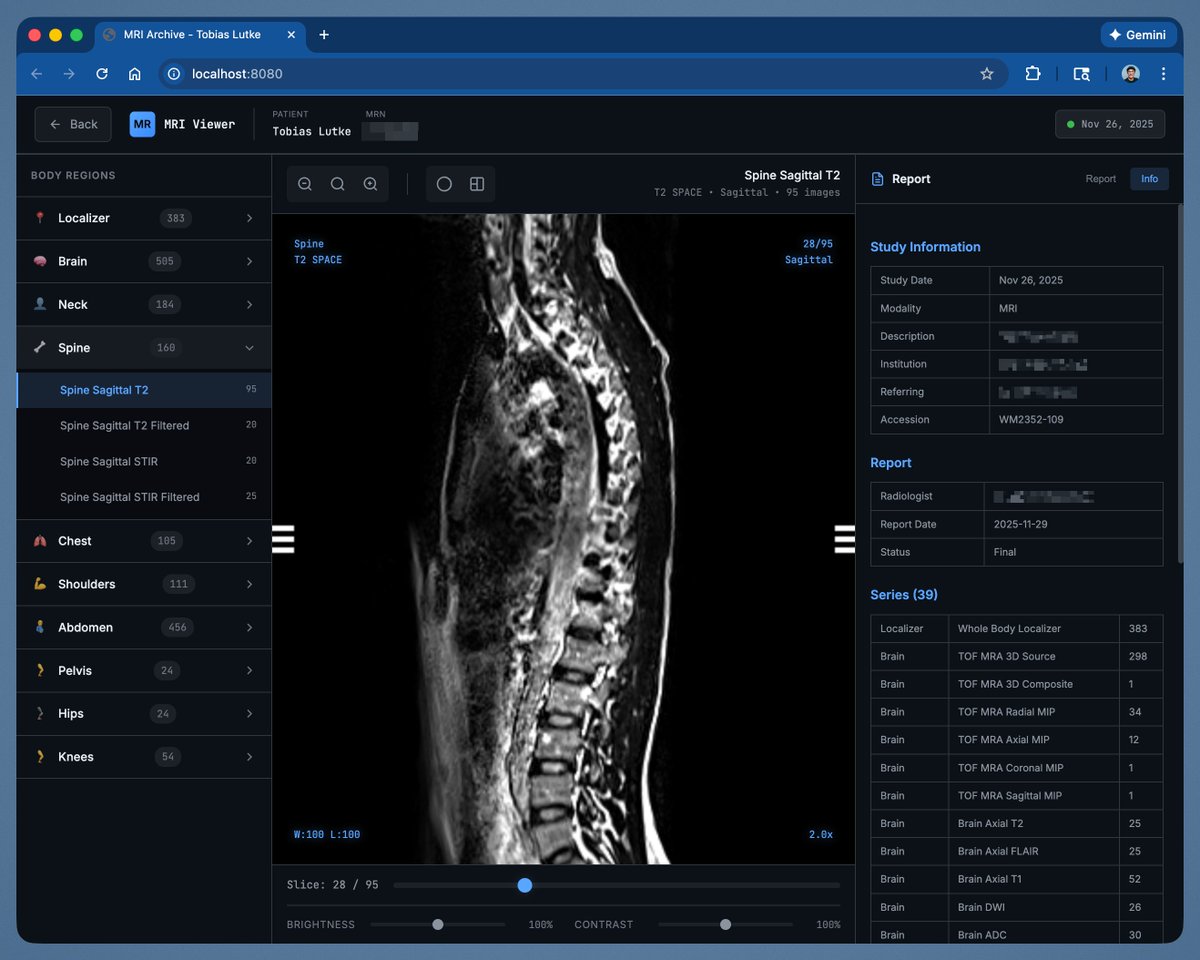
My annual MRI scan gives me a USB stick with the data, but you need this commercial windows software to open it.
Ran Claude on the stick and asked it to make me a html based viewer tool. This looks... way better.
Claude Code creator @bcherny on traits of side projects that take off
> Start with automation — it's free leverage. Engineers build it faster than anyone, yet most underuse this superpower. Ask yourself: 'How can I do less of my work?
>Track recurring problems & Automate until there's nothing left. Boris once tracked every code review comment in a spreadsheet and turned repeated issues into lint rules which eventually became a flock of lint rules.
>Your problems are a signal. Build for yourself first — a YC principle. He'd validate an idea, ping a few engineers, let it grow. One of his side projects hit 50-100 engineers at Meta.
>Stay in the code. Intuition fades fast when you're not coding. The best ideas come from being anchored to reality.
>Side quests = leverage for everyone. His projects improved prod and dev infra. What slowed him down slowed his whole team. Fixing them created leverage beyond himself.
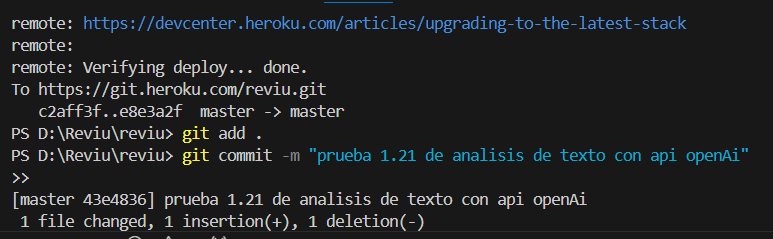
listo, termine con este setup:
- Telegram y soporte de audios
- Agente corren en la PI
- Tiene su mini-compu en docker
- Se actualiza solo cuando hay cambios en el repo
- Puedo mandar cambios por Claude Code iOS
Hice todo esto mientras cocinaba, jugaba y bañaba ~1 hora real?
BREAKING NEWS: Secret acquirer of $15+ million domain chat .com revealed and it's exactly who you'd think.
For those of you that have been following me for a while, you may recall that I announced earlier this year that I had acquired the domain chat .com for an "8 figure sum" (which was later reported as being $15.5M).
I also shared that I had sold the domain to an undisclosed buyer.
I was not at liberty to share who the acquirer was (I was going to leave that to them, when they were ready).
Well, in a 8 character tweet (talk about brevity), Sam Altman, the CEO of OpenAI revealed that they were the buyer. If you visit the website now, it goes to ChatGPT.
I know many are curious about the sale price price. So, here's a prompt that GPT o1 does a really good job of reasoning through.
--- PROMPT BEGINS HERE ---
ROLE: You are a smart, curious person on the Internet.
CONTEXT: You have been given the following facts:
* Dharmesh buys chat .com for $15.5M
* He bought it for a project. He doesn't usually sell domains.
* When he does sell a domain, it's almost never at a loss.
* OpenAI was the perfect home for this domain, do he decided to sell it.
* He's known Sam for over a decade since before OpenAI
* Dharmesh doesn't like profiting off of people he considers friends (and also doesn't like referring to himself in the third person)
* He has repeatedly declared his love for OpenAI: The platform, the developer experience and the company.
* He's always wanted to own OpenAI shares.
* He made a non-humble brag earlier this year that he's now an investor in OpenAI.
* He doesn't need the cash from a domain sale, he's doing OK.
How much do you think he sold the chat .com domain for?
What percent of that was in shares of OpenAI?
Provide an approximate range and show reasoning.
--- PROMPT ENDS HERE ---
3 cosas por las que podría volver a madrugar:
1. Analizar datos para encontrar algún insight
2. Desarrollar algo porque quiero que exista
3. Lanzar rápido algo aunque sepa muy poco del tema
Dubai airport looks like one of the most advanced civilizations on earth
The Emirates are a sweltering, lifeless, desert. Almost uninhabitable, until now
They produced more rain than their ancestors would have ever prayed for
They’re bringing life to a deadened waste
🇬🇧 British people are now the 2nd most miserable people in the world
Previous happiness studies are based on income, wealth and healthcare quality, simply putting Western countries on top always, very very biased
The new Mental State of the World report is the first happiness ranking that actually makes sense and is based on surveys of satisfaction
People in many low-income countries are actually MORE happy regardless of income: in this case for example 🇩🇴 Dominican Republic and 🇱🇰 Sri Lanka are VERY happy
While people in a high-income country like United Kingdom are VERY unhappy
Added the data to Nomad List for the [ ☺️ Happy ] filter
I don’t know if this study will replicate…but I’ve long believed humans have a basic need for synchronization.
It’s available through team sports, dancing (especially if everyone is dancing the same dance), choir, complicated group photos where everyone jumps…
I had an amazing machine learning professor.
The first thing I learned from him was how to interpret learning curves. (Probably one of the best skills I built and refined over the years.)
Let me show you 4 pictures and you'll see how this process flows:
1/5
Told you chatGPT was getting bullied into being dumber
If you were born and then the internet had 100 million people complaining you are dumb, and can't do ... it would affect your confidence too!
Also significant chance people are running dataset posioning tools in the wild




![levelsio's tweet photo. 🇬🇧 British people are now the 2nd most miserable people in the world
Previous happiness studies are based on income, wealth and healthcare quality, simply putting Western countries on top always, very very biased
The new Mental State of the World report is the first happiness ranking that actually makes sense and is based on surveys of satisfaction
People in many low-income countries are actually MORE happy regardless of income: in this case for example 🇩🇴 Dominican Republic and 🇱🇰 Sri Lanka are VERY happy
While people in a high-income country like United Kingdom are VERY unhappy
Added the data to Nomad List for the [ ☺️ Happy ] filter](https://pbs.twimg.com/media/GIVPSYFWQAAnx35.jpg)








![levelsio's tweet photo. 🇬🇧 British people are now the 2nd most miserable people in the world
Previous happiness studies are based on income, wealth and healthcare quality, simply putting Western countries on top always, very very biased
The new Mental State of the World report is the first happiness ranking that actually makes sense and is based on surveys of satisfaction
People in many low-income countries are actually MORE happy regardless of income: in this case for example 🇩🇴 Dominican Republic and 🇱🇰 Sri Lanka are VERY happy
While people in a high-income country like United Kingdom are VERY unhappy
Added the data to Nomad List for the [ ☺️ Happy ] filter](https://pbs.twimg.com/media/GIVPTYIXEAA-LuP.jpg)


