An unexpected and potentially big finding:
A single mitochondrial protein has an outsized role, acting as a central node, coordinating our circadian clock, temperature, dietary cues, sleep/wake cycle to control brown fat metabolism @ScienceMagazine
https://t.co/jBbmaSjkaQ
on the round stone
the dragonfly's shadow
is curved
--Seegan Mabesoone
丸石のトンボの影が円い マブソン青眼
Inspired by his French #translation from his #haiku collection The Origin of the World (世界の起源, 2026)
#mukuku#gendaihaiku
@Patbrdh@_monica_as Beautiful image! But I’m Venetian and I live in Venice — our gondolas aren’t quite made like this. AI has a wonderful imagination! Compliments nonetheless.
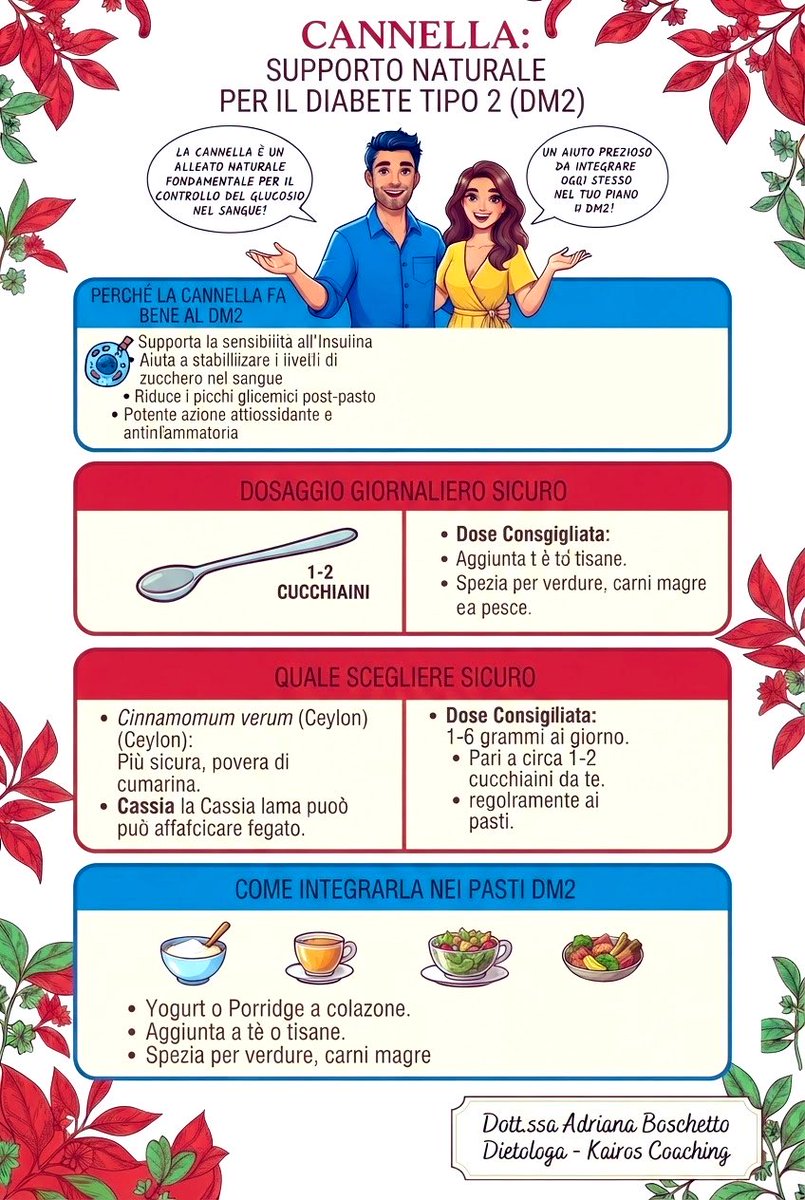
Cinnamon may modestly support blood glucose control and insulin sensitivity. Ceylon cinnamon is preferable for regular use because it contains less coumarin than Cassia. An easy way to add flavour without sugar.
Nutrition supports treatment—it never replaces it.
@EASOobesity@LancetRH_Europe This has been my approach: medication + nutrition + physical activity + behavioural change + follow-up and long-term maintenance. International evidence, continuous study, and clinical common sense. Good to see EASO now formalising this approach.
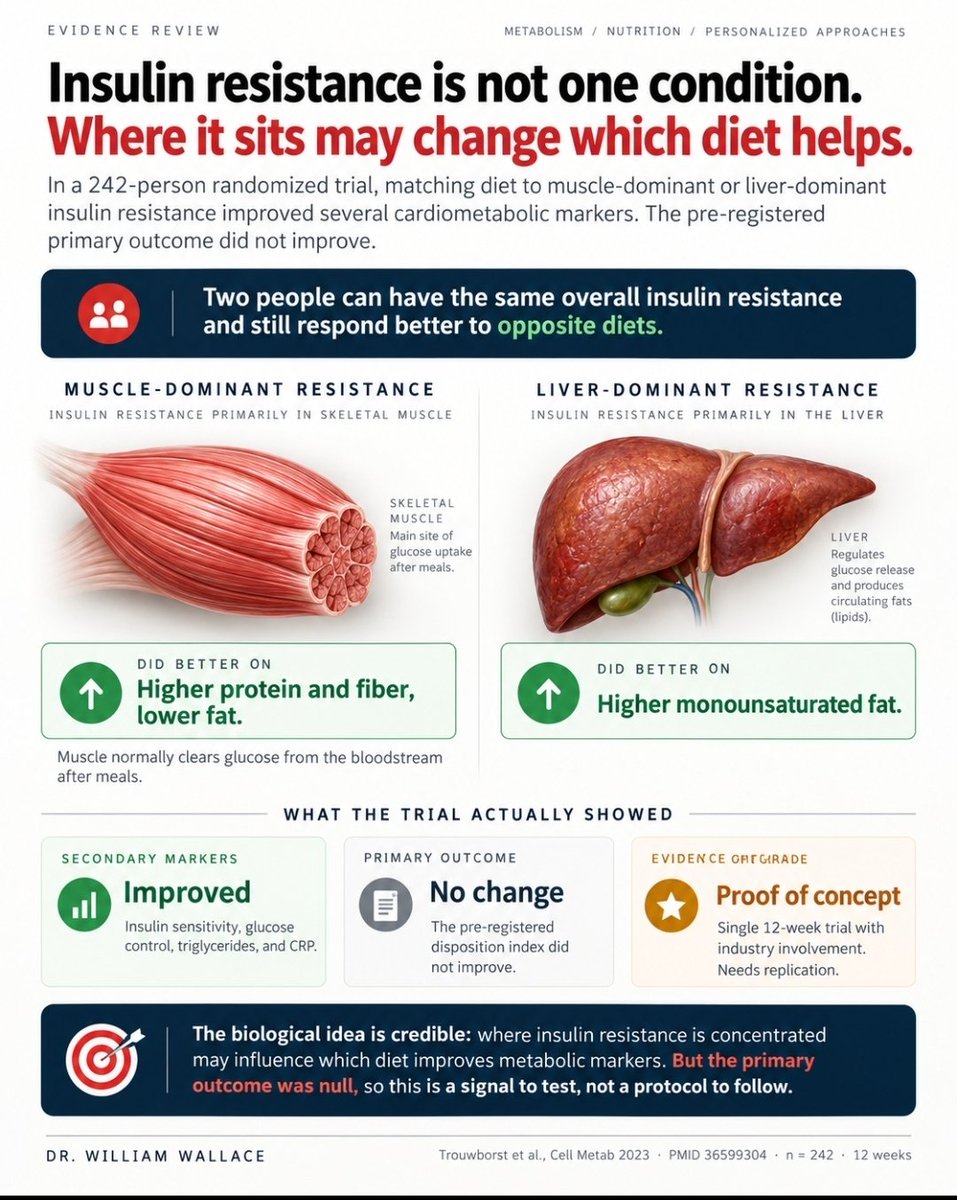
Two people can have the same weight, the same fasting glucose, and the same overall degree of insulin resistance, yet respond better to opposite diets.
The difference may be where the insulin resistance is concentrated: mainly in muscle or mainly in the liver.
A Dutch team tested that idea in a randomized controlled trial of 242 adults with overweight or obesity. Using an oral glucose tolerance test, the researchers classified participants as having predominantly muscle or liver insulin resistance, then assigned them for twelve weeks to either a diet higher in monounsaturated fat or a lower-fat diet higher in protein and fiber.
The pre-registered primary outcome, a measure of how well the pancreas compensates for insulin resistance, did not improve. That keeps the study from being considered definitive.
But the secondary findings were notable. People with muscle-dominant insulin resistance improved more on the lower-fat, higher-protein, higher-fiber diet. People with liver-dominant insulin resistance improved more on the diet higher in monounsaturated fat. The matched groups showed greater improvements in insulin sensitivity, glucose control, triglycerides, and C-reactive protein than the mismatched groups.
The logic is biologically plausible. In muscle, insulin helps move glucose out of the blood and into tissue. In the liver, insulin helps suppress glucose release and fat production. These are different metabolic problems, so it is reasonable that they may respond differently to the same mix of carbohydrate, fat, protein, and fiber.
Still, this remains a proof of concept. The primary endpoint was null, the positive findings came from secondary analyses, the trial lasted only twelve weeks, and several authors had ties to nutrition companies. The classification method also required timed blood draws during an oral glucose tolerance test, which is not practical for most people or clinics.
The evidence suggests that insulin resistance may not be one uniform condition, and that the tissue driving it could influence which diet improves metabolic markers. What it does not show is that a commercial test can identify the perfect diet for an individual, or that this approach prevents diabetes, cardiovascular disease, or early death.
This is one of the more credible tests of personalized nutrition because it used a measurable metabolic phenotype rather than a vague genetic or microbiome score. But until larger, independent trials confirm the finding and show meaningful long-term outcomes, it remains a promising signal, not a protocol.
Trouwborst et al., Cell Metabolism, 2023
Abdul-Ghani et al., Diabetes Care, 2007
Kemper et al., Journal of Clinical Endocrinology & Metabolism, 2026
Can changing what you eat extend your healthspan as much as cutting calories?
A newly published review in The Innovation Nutrition says: YES. Here is how "Precision Nutrition" is replacing severe restriction for healthy aging 🧵👇
The lexicon we should use when teaching obesity medicine:
Phases of weight management:
📉 Weight/fat mass reduction phase: induction, when the regulated level of body fat (defended fat mass) is lower than the body’s current fat mass, thus not at homeostasis
↔️ Weight plateau: Reaching nadir weight with no further weight reduction on a given treatment regimen/dose; the body reaches homeostasis
🎯 Weight maintenance: Long-term maintenance, disease control in the setting of potential disease progression, with the goal to maintain homeostasis
🔗 https://t.co/12UcuTfAWo
High cholesterol can be a warning sign.
If total cholesterol is high, check LDL: fraction strongly linked to atherosclerosis and cardiovascular risk.
What we eat matters, protect ours arteries and heart
#Cholesterol#LDL#HeartHealth#KairosCoaching.
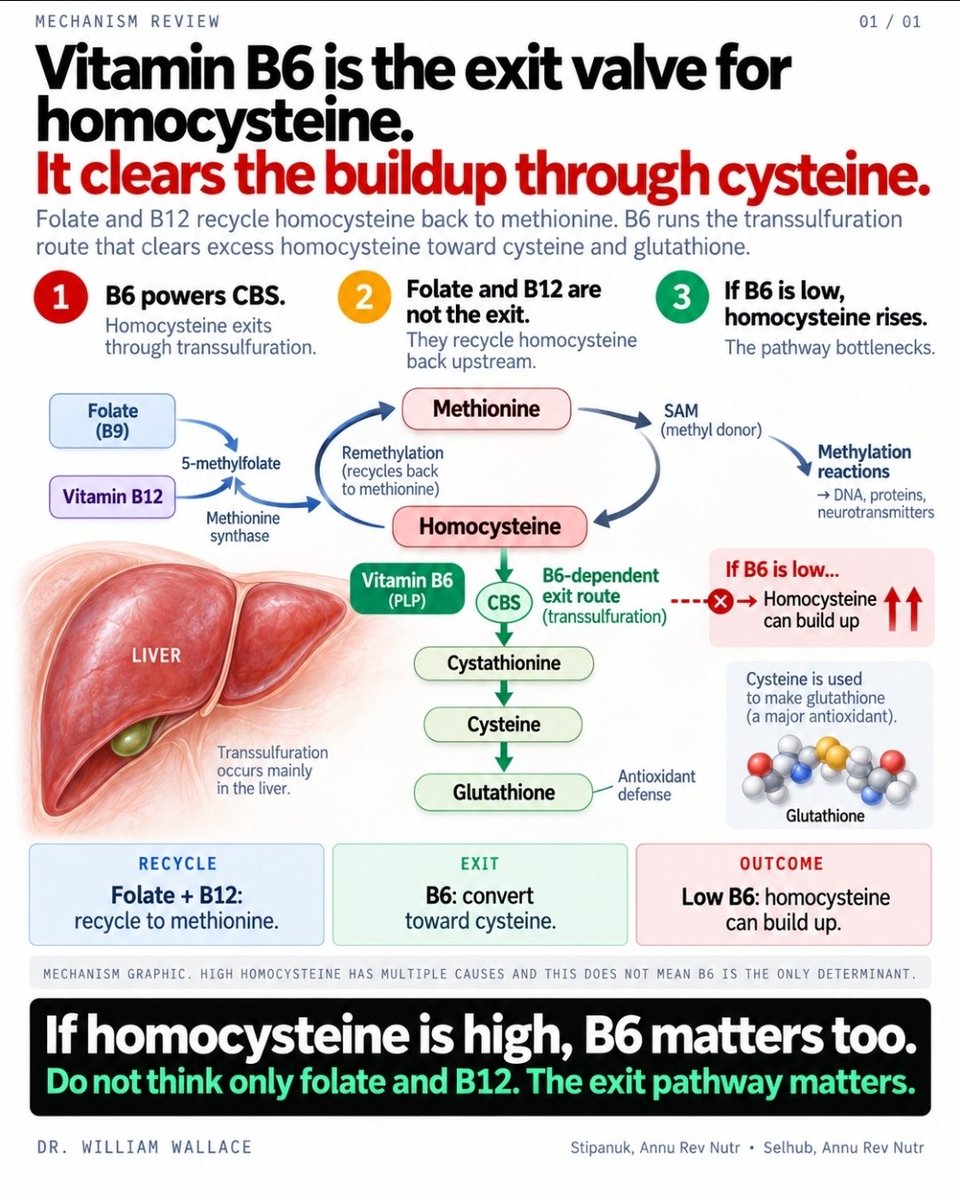
Homocysteine is usually discussed as a folate-and-B12 problem. That leaves out the other major route the molecule can take.
Folate and B12 participate in remethylation, which recycles homocysteine back into methionine. The alternative is transsulfuration: homocysteine is converted to cystathionine and then cysteine, which can subsequently contribute to glutathione synthesis and other sulfur-dependent biology. Both cystathionine β-synthase (CBS) and cystathionine γ-lyase (CSE) use pyridoxal-5′-phosphate, the active coenzyme form of vitamin B6.
That is why calling B6 an “exit valve” is useful conceptually, but it needs one qualification. B6 deficiency does not simply switch transsulfuration off. Human studies suggest CSE is more sensitive to low B6 than CBS, and cystathionine can accumulate while some cysteine production is preserved. Homocysteine itself is also influenced by folate, B12, kidney function, genetics, methionine intake, age, and other factors, so an elevated value is not a specific test for B6 deficiency.
The broader point is that one-carbon metabolism is not just about recycling homocysteine. It also needs an exit route. When interpreting elevated homocysteine, folate and B12 deserve attention, but B6-dependent sulfur metabolism is part of the same system and should not be ignored.
Gregory JF, DeRatt BN, Rios-Avila L, Ralat M, Stacpoole PW. Biochimie. 2016;126:21–26. PMID: 26765812.
Vitamin D deficiency and abdominal obesity were a particularly high-risk combination.
In 5,520 adults ≥50 followed for 6 years, those with a wide waist + vitamin D deficiency had 2.23× the mortality risk of people with a normal waist + sufficient vitamin D.
Important: this was observational. It does not show that vitamin D supplements erase the risk.
Treat true vitamin D deficiency, but also address abdominal fat through weight management, exercise, and diet quality.
Hidden sugars are everywhere.
Breakfast cereals,
fruit yogurt and readymade sauces can hide plenty of added sugar.
Fresh fruit is different: its sugars
Is naturally.
Check ingredients: if added sugars are high, leave it on the shelf. If the label isn’t clear, don’t buy it