The expansion of Donald Trump’s war against Iran to a British base in Cyprus is a nightmare for the UK, which lacks adequate air defences and only has a limited capacity to fight back.
Sir Keir Starmer talks reassuringly about how his military has bolstered its forces in the Middle East, including with the deployment of Typhoon warplanes to Qatar, while F-35 fighter jets are operating out of RAF Akrotiri in Cyprus.
But these aircraft have very limited stockpiles of munitions and neither of model is the sort of thing that should be used for shooting down drones – they are far more sophisticated, designed for much more capable enemies and their air-to-air missiles are vastly more expensive that the contraption they’re up against.
The jets can take down cruise missiles but a much more effective piece of equipment for that task is the army’s Sky Sabre air defence system.
It is unclear whether one of these has been deployed.
The Ministry of Defence by contrast has confirmed that ground troops specialised in countering drones are in the region – though they failed to take out the single attack drone that crashed into a runway at RAF Akrotiri on Sunday night.
Then there is the threat posed by Iran’s ballistic missiles.
The regime does not any capable of reaching the UK mainland, but they could fly as far as Cyprus as well as across the Middle East.
Yet, the only piece of UK kit capable of blasting this kind of weapon out of the sky is the Type 45 destroyer.
The Royal Navy has six of these warships but only three are available for deployment and it is not thought any were in the region.
If you rewind a decade, Britain had a much bigger naval presence in the Gulf, with one, if not two warships operating out of Bahrain, along with four minehunters and a vast support ship.
Today there are none.
Instead, when it comes to Cyprus and other British Middle East interests, the UK is relying on the US President’s “armada” of aircraft carriers and other warships to deal with the ballistic missile threat.
With Iran lashing out in response to the American attacks, Mr Starmer on Sunday U-turned on a decision not to allow US planes to strike Iran from British bases. He justified his change of heart by saying he now thought it was a legitimate request in self-defence provided the Americans only go after Iran’s ballistic missile capabilities.
He said Britain was not taking part in these strikes – but clearly this could also change, especially if more UK interests are hit.
Though, that too raises awkward questions about the UK’s ability to launch strikes.
The Typhoon jets and the F-35 warplanes carry bombs that could destroy Iranian missile launchers.
If fitted with Storm Shadow cruise missiles, the Typhoon jets could also blast the entrance of heavily protected storage depots where the Iranian military keeps its missile stocks, well protected underground. This would make it impossible for them to be used.
But a larger weapon would be far better for that kind of offensive operation.
The best option for the UK would be a Tomahawk cruise missile launched from one of the navy’s attack submarines.
Yet, problems with the maintenance of the five Astute-class boats in the fleet and a shortage of crews mean there have been chunks of time when none of these submarines were at sea.
The situation has improved slightly and earlier this year the government made a rare announcement about the deployment of one of the boats, which is usually kept secret.
It said HMS Anson was visiting Australia - not particularly useful for a war in the Middle East.
Defence insiders say the sorry state of the UK armed forces is the hard reality of a failure by successive governments over decades to invest in more weapons to blast missiles and drones out of the sky as well as the munitions to strike back.
It is now all looking a bit too late
https://t.co/9nZlKXWabx
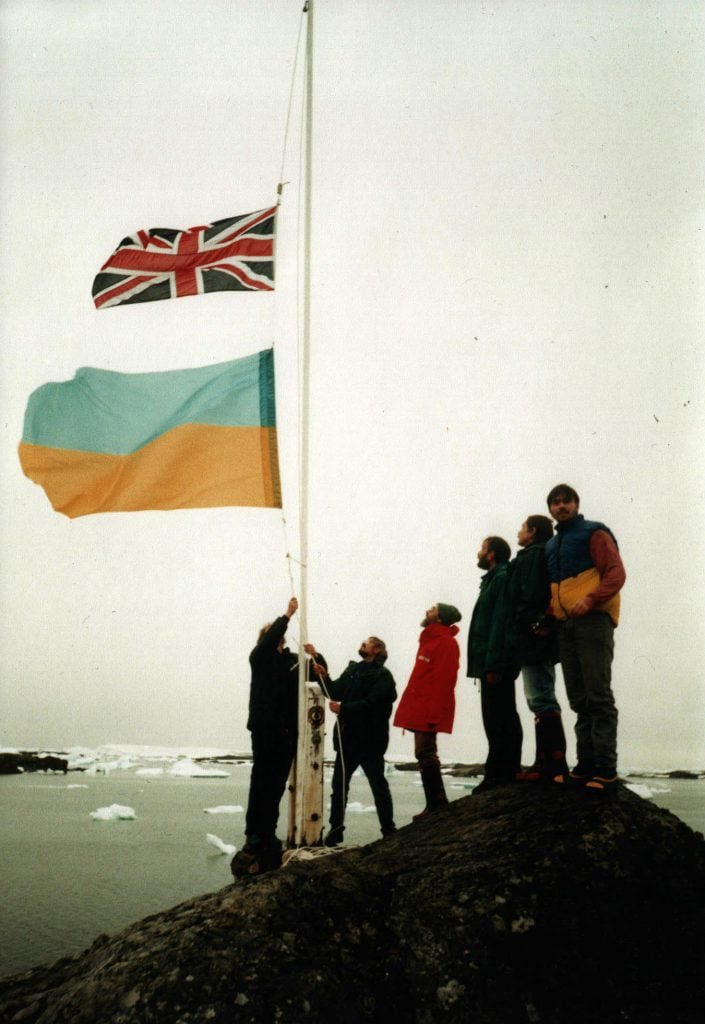
After the Soviet collapse, russia claimed most Antarctic stations. Ukraine — with its scientific expertise and polar explorers — was pushed out of the continent.
30 years ago, the UK changed that. For a symbolic £1, it transferred Faraday Station to Ukraine, now Akademik Vernadsky, bringing us back into the circle of nations present in Antarctica.
Salute to our polar scientists — and thank you, United Kingdom 🇬🇧🇺🇦
Impressions from the King's State Banquet for the German President: formality framed the event, but there was real warmth, too. I certainly enjoyed myself. I think the German delegation did, too.
ZEITGEIST inside a feast fit for a king and a president 👇
https://t.co/DZBbLIhwjj
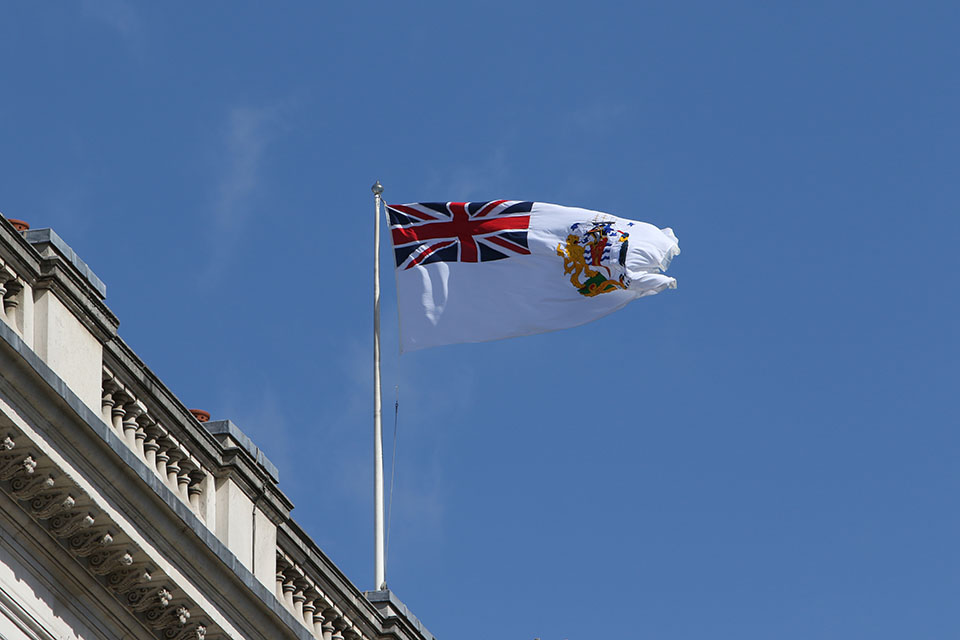
If you were brave enough to face the heatwave in London today you will see the BAT flag flying proudly from the FCDO building. While we enjoy the sun, we thank those who are spending their summer down in the Territory! Happy Midwinter's Day 🐧🥳
This is a dreadful idea. I’m not naive, I know it’ll be seen as a Westminster village story and nobody will care, but it actually does matter.
This proposal will do none of the things being claimed. If anything, it will make the problem worse. The notion that “call lists” will lead to more meaningful debate is nonsense. In reality, it means MPs will wander in moments before they’re due to speak, say their piece for social media, then leave - without engaging at all with the debate or listening to other points of view.
That is the problem, not the solution.
And let’s be clear: this isn’t theoretical. We tried it during Covid. Anyone who was there knows it killed scrutiny stone dead.
Ministers knew who was coming and when, planned accordingly, and genuine challenge was lost. It was stage-managed and sterile.
This is about making life easier for lazy MPs who don’t understand what the job is meant to be. It hollows out Parliament. The more this is normalised, the harder it becomes to govern the country properly. It’s not some obscure procedural tweak - it goes to the heart of scrutiny, challenge, and accountability.
The Norway debate in 1940 changed history because MPs were in the chamber for the whole debate, listening, reacting, shifting their views. That kind of moment simply couldn’t happen now. We already strangle debate on major legislation down to a few hours. This will make things 100 times worse.
And for a government with a massive majority, call lists are even more useful: ministers will know exactly when to be present, which interventions to prepare for, and which they can ignore. You might as well let them submit written speeches behind the Speaker’s chair, like the Council of Europe does - and pretend that’s meaningful scrutiny too.
A bad idea, sold badly, with bad consequences. It really does matter.
Nobody will care. But at least I’ve said why.
Here's what a Russian attack on the UK looks like:
- Cyber attacks target healthcare, banking, energy. They look like they come from criminal gangs, not the Kremlin.
- Moscow funnels money to criminals in the UK to commit arson, larceny, and violence.
- Now the nasty bit...
There are multiple reasons this is a bad idea
I'll go through each one by one for anyone who can be arsed to find out
The only people who won't be arsed are people who think this only for ideological, NOT rational reasons
1/🧵
Our political class sees the increasing dangers of the world we're in, yet it also knows there's precious little money to do anything about it - my latest for the Sunday Times on the dilemmas of national security (£) https://t.co/cv2xxfHRmi
Speaking of "foundations", in 2010 the entire UK AFV production outlook consisted of 60 Terrier. Industry had or was closing.
Now there are 1212 between BOXERs (in 2 factories) and AJAX (1 factory) in production and 148 MBT remanufactures, plus MTU engine assembly.
What if Trump tells us to spend 3% of GDP on defence?
What would the Navy do with extra money?
➡️Touches on why extra💲isn't the only issue
➡️Discusses 3 buckets that could do with more cash: sustainability, shipbuilding & lethality
➡️Ends with cynicism🙄
https://t.co/r8BF3cPDs1
Fascinating that there are some 10,000 North Korean troops in Russia and ‘leaders’ in the West are concerned that helping Ukraine target Russian positions in Russia that launch attacks against Ukrainian civilians would be escalatory and turn Western countries into co-combatants. Russia can escalate with North Korean and Iranian help to its cold heart’s content, but in the European theatre, whose stability is a ‘core interest’ of the West, it is solemnly declared that NATO states should not get directly involved. Middle East and Asian bad actors have unilaterally obtained for themselves a multiple entry visa to Europe with no restrictions to kill Ukrainians. Western leaders cry foul but keep long range attack missiles and other key capability on the sidelines. The political-military muscle memory of the Cold War has so dramatically dissipated that strategic arthritis has set in to the detriment of Europe’s security.
British Army’s Ajax vehicle contract was awarded in 2010.
Design based on an existing vehicle, armed with a tried and tested gun.
£5.5 billion for 589 hulls.
As of 2024 the vehicle is still not in full operation.
SpaceX has so far spent about $5 billion on Starship R&D. Perhaps another $5 billion before operation.
Puts the poor value for money of military contracts into perspective. Why do governments just accept these costs?
A sad day today. The Sphinx will melt in the early hours of tomorrow morning, meaning that’s the fourth consecutive year it has done so.
This patch was once considered permanent. It has now melted completely since the 1700s in the following years:
1933
1959
1996
2003
2006
2017
2018
2021
2022
2023
2024
We are now in an era when its survival will be the exception. A 180° turn in a little over 20 years.
Foundations: Why Britain Has Stagnated.
A new essay by @bswud, @SCP_Hughes & me.
Why the UK's ban on investment in housing, infrastructure and energy is not just a problem. It is *the* problem.
And how fixing it is the defining task of our generation.
https://t.co/N6McRZCOlx
Today is #MerchantNavyDay in the UK.
During #WWII the heaviest losses of the Merchant Navy were suffered in the Atlantic, but convoys making their way to Russia around the North Cape, and those supplying Malta in the Mediterranean were also particularly vulnerable to attack. In all, 4,786 merchant ships were lost with nearly 32,000 lives.
📷 The Second World War extension of the Tower Hill Memorial commemorates almost 24,000 casualties who have no grave but the sea.
#LegacyofLiberation