(ook onder blauwe lucht en Masto) worried about decline in biodiversity and climate change. Interested in water, air quality, renewable energy and hydrogen
Global EV Outlook 2026 is out 📢
It shows global electric car sales are on track to rise to 23 million in 2026, after hitting record heights in nearly 100 countries last year.
This means that close to 30% of cars sold this year are set to be electric ⬇️ https://t.co/Zr1hdeqgCe
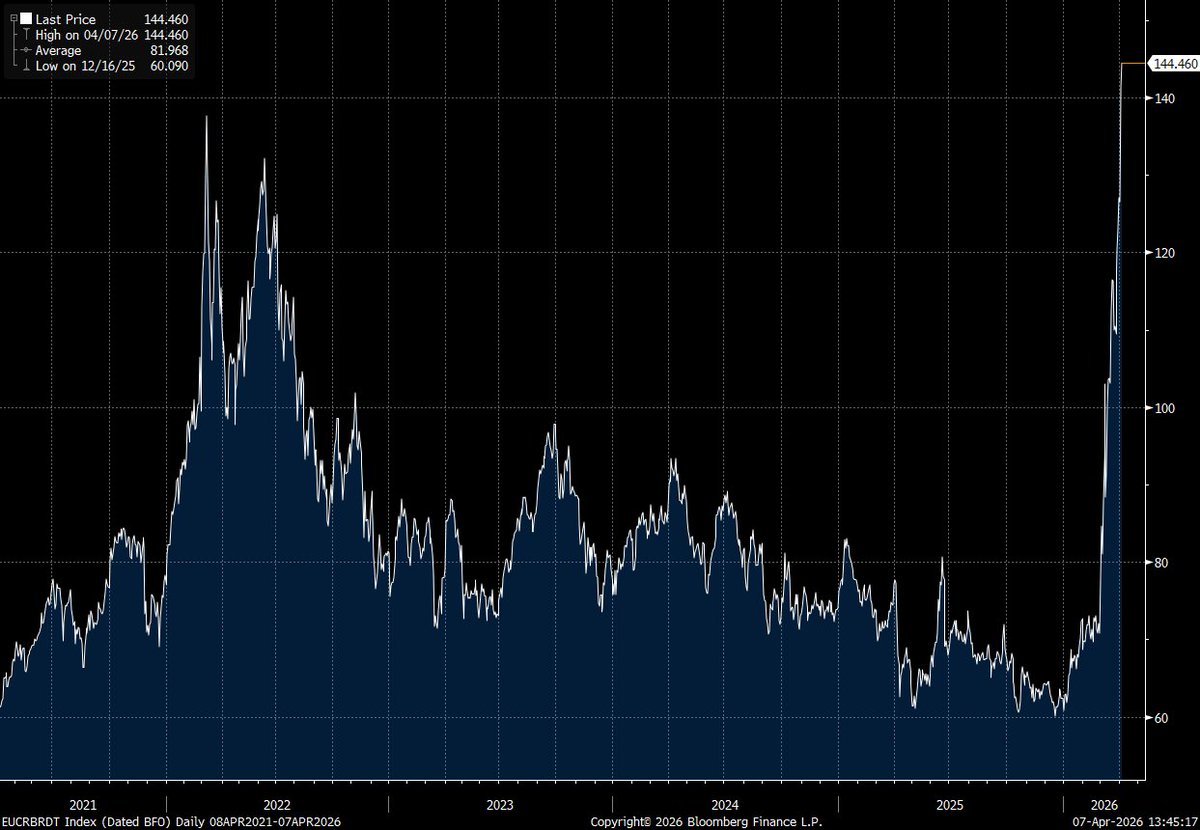
The Iran War is sorting the global oil economy into winners and losers. But not even the biggest-producing countries are immune. Here, a closer look at the long-term impact across the planet. https://t.co/GwfHDB0yvS
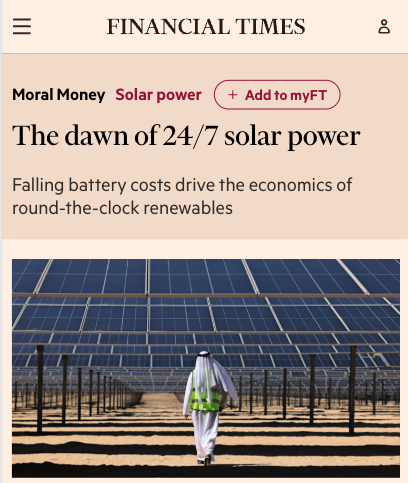
For years, the biggest criticism of renewables was simple: “What happens when the sun isn’t shining?”
The answer is increasingly: battery storage. 24/7 solar power is no longer theoretical. In some places, it is becoming economic reality.
Good morning with good news: China's sales of oil-burning cars crashed 37% in April 2026, compared to 4/2025!
They fell 33%, compared to March 2026.
China's top 10 selling models were 8 full-electric, 1 PHEV & 1 ICE!
ICE share was 38.6%!
ICE collapse!
https://t.co/1WVgZQdeo2
Electricity prices plunged to record lows in Germany at the weekend largely due to increased solar output. Meanwhile, despite what many politicians and pundits say, our sky high ones are caused by our dependence on gas,
https://t.co/nCWhnVVZXy
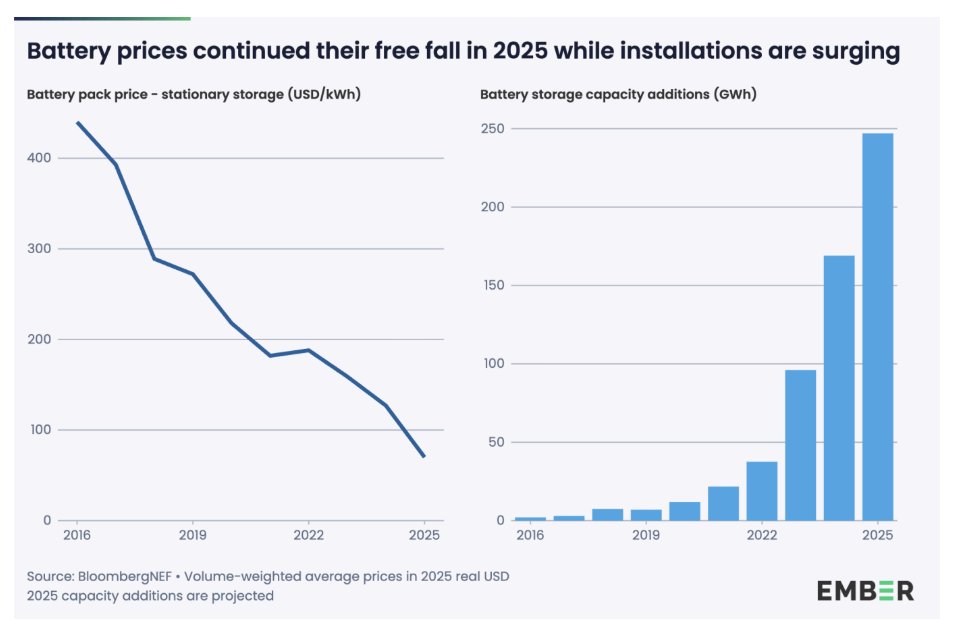
Today’s "anytime solar" revolution is a vertical takeover of the global power grid: With stationary battery costs cratering 45% in just 12 months to $70/kWh, the "but the sun doesn't shine at night" argument is officially in the graveyard
1 It's a takeover of the "peak market": Traditionally, expensive gas "peaker" plants were the only way to meet high demand in the evening. Batteries are now eating this market for breakfast, already setting peak prices 36% of the time in Australia and slashing price volatility by half
2 It's a takeover of the "baseload market": Fossil fuel advocates long claimed coal and gas were necessary for "always-on" power. In 2025, dispatchable solar with batteries reached a price point ($76/MWh) that makes it cheaper than building new gas plants and comparable to or cheaper than new coal in markets like India
3 It's a takeover of the "night market" too: Fossil fuels used to "own" the hours from 6 PM to 6 AM. With battery costs cratering by 45% in 2025 alone, we have entered the era of "Anytime Solar," where the sun's energy is stored during the day to power the grid around the clock, effectively evicting fossil fuels from the dark hours
4 And finally it's a takeover of the "growth market": In the past, economic growth meant more fossil fuels. In 2025, clean power met 100% of all new electricity demand growth globally. This means fossil fuels have lost their "right to grow" and are in inevitable decline
Traffic through the Strait of Hormuz has come to a virtual standstill since the U.S. and Israel attacked Iran almost two months ago.
Around 20% of the world’s petrochemical supply normally moves through the strait. As tanker traffic drops sharply and attacks on oil and gas facilities continue, the ripple effects are growing by the day.
@GeoffRBennett speaks to @ProfessorKaren for more.
I’m not anti-nuclear. It’s proven, reliable, and safety fears are often overblown.
But energy systems aren’t built on preference.
They’re built on cost and speed.
A new European system-level analysis shows:
👉 Renewables + firming: ~€46/MWh
👉 Nuclear: ~€100/MWh
👉 ~53% cheaper
https://t.co/otLOXJxMPJ
That’s including system costs.
Now look at reality:
Spain added ~10 GW of wind + solar in ONE year.
Nuclear equivalent (Flamanville-style)?
👉 ~€80bn+
👉 ~15–17 years
Reality?
👉 ~€12–20bn
👉 Delivered in a year
👉 ~€60bn+ saved upfront
Scale it:
That ~27 GW “solar moment”?
👉 ~€220bn+ if nuclear
👉 ~€35–50bn real-world system
👉 ~€170bn+ cheaper
And CSIRO GenCost backs it:
Even with firming included,
👉 wind + solar = lowest-cost new build
👉 nuclear = materially higher
👉 SMRs = higher again
So let’s be clear:
This isn’t renewables vs nuclear.
It’s:
fast, modular, falling-cost systems
vs
slow, capital-heavy, rising-risk ones
Faster
Cheaper
Already happening
Not ideology.
Math. Cost always wins 🏆 #Bettrification
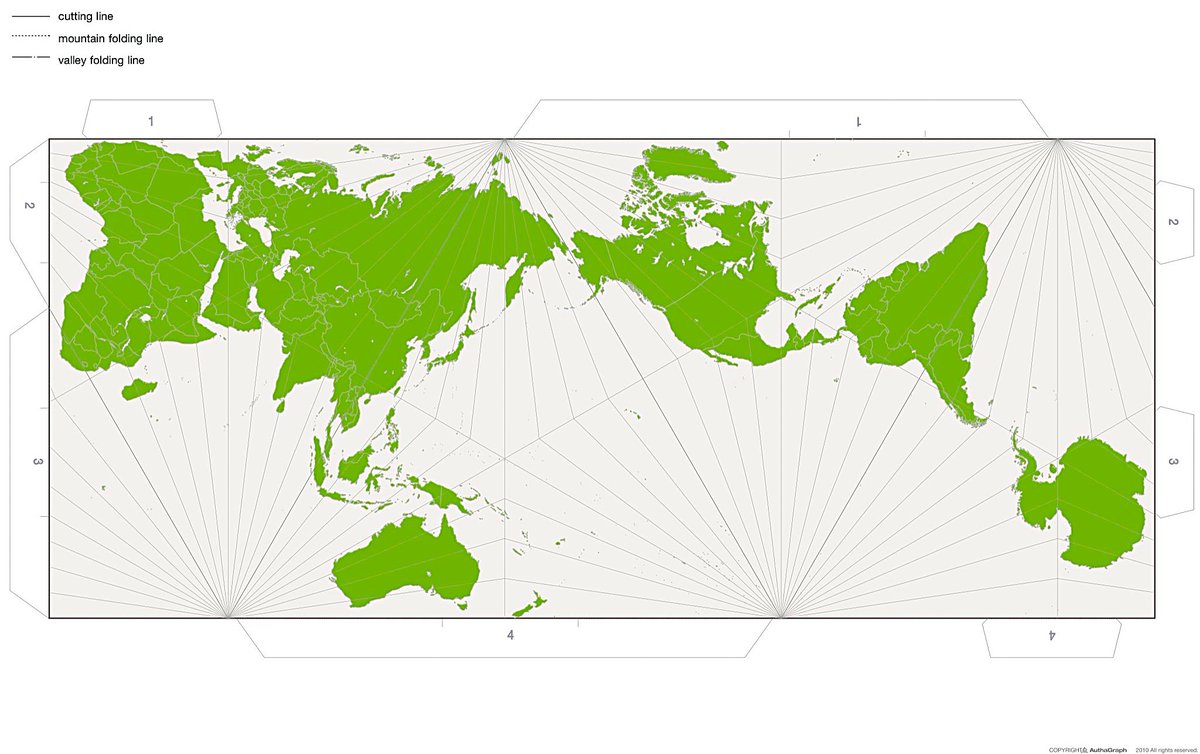
This map claims to be the most accurate map of the world
Created by Japanese architect Hajime Narukawa, the AuthaGraph projection preserves the true relative size of landmasses far better than traditional maps
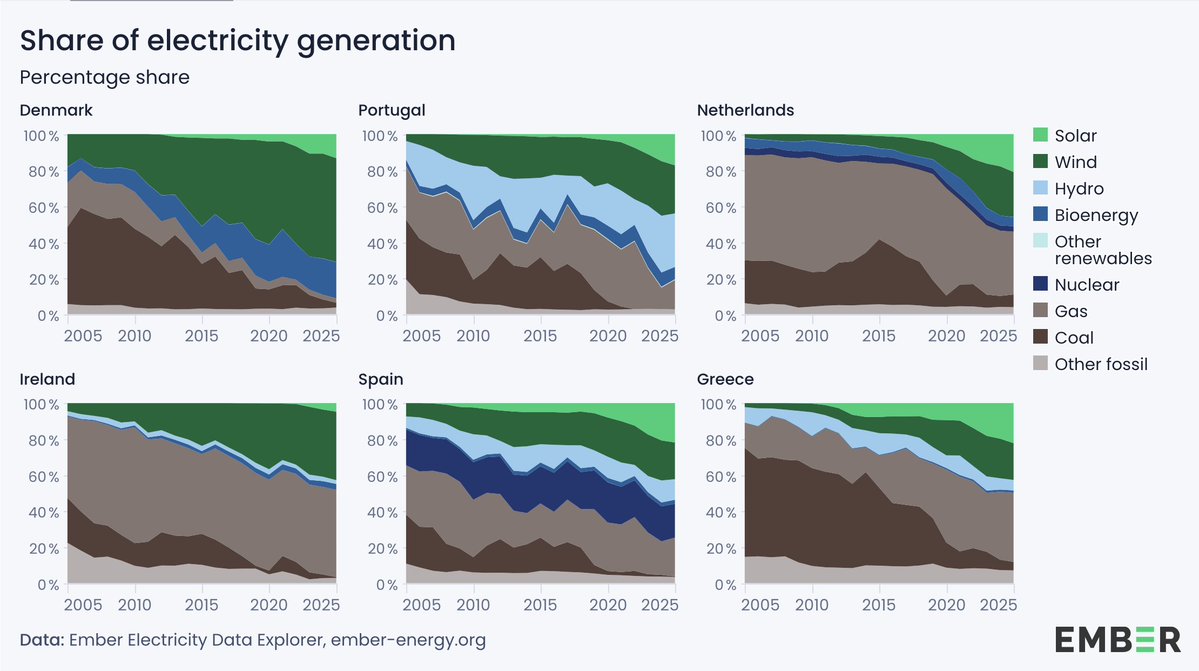
We're having the second energy price crisis in five years caused by volatile global fossil fuel markets.
Now imagine how bad the crisis would be in the EU if the electricity mix still looked like it did 20 years ago.
Electricity mix fossil share 2005 → 2025
🇩🇰Denmark: 73% → 9%
🇵🇹Portugal: 82% → 19%
🇳🇱Netherlands: 88% → 46%
🇮🇪Ireland: 93% → 52%
🇪🇸Spain: 66% → 25%
🇬🇷Greece: 89% → 50%
Domestically produced clean energy → energy independence
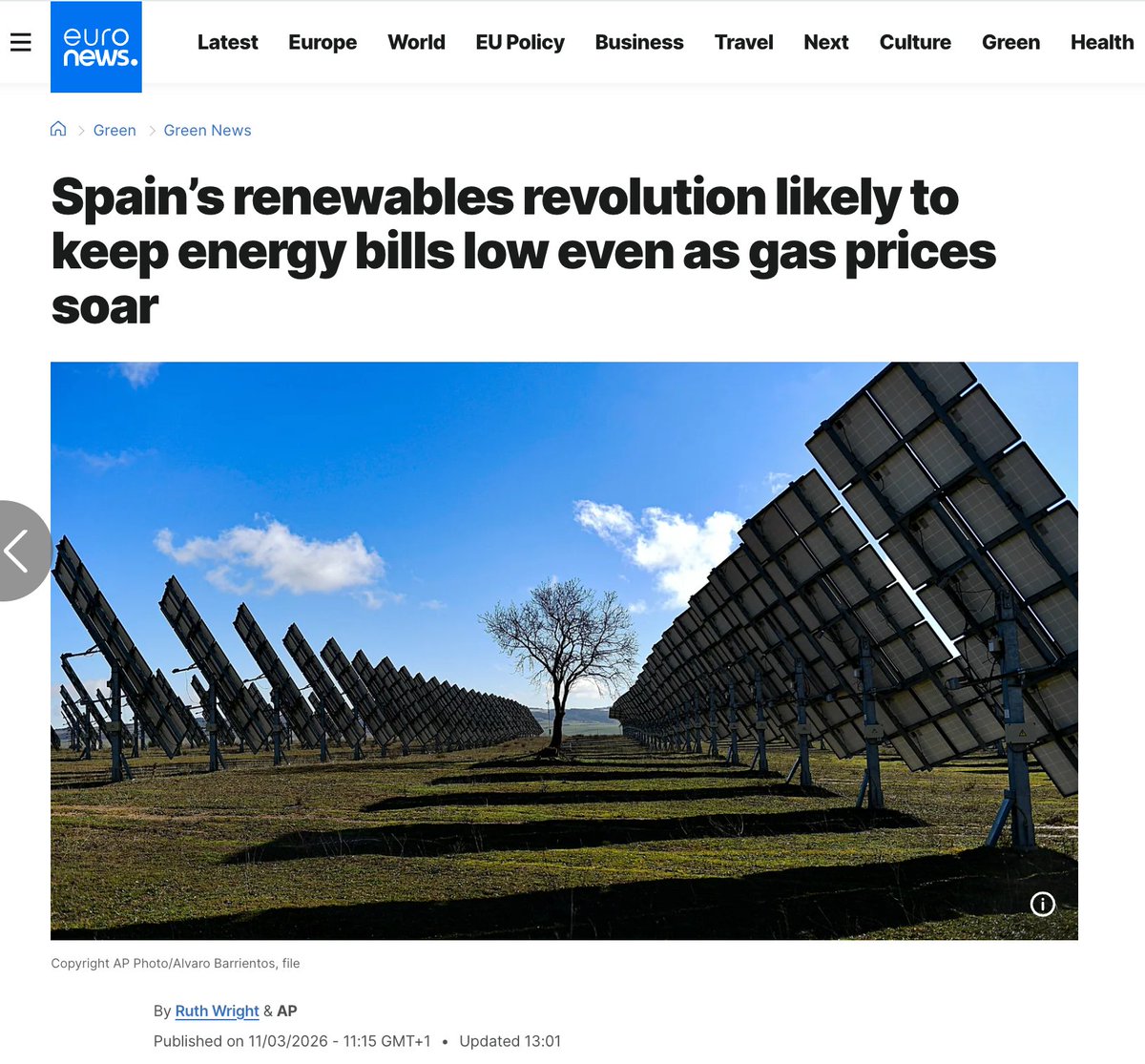
Oh look, after Spain spent the past six years investing heavily in solar and wind renewables, energy price fluctuations because of the US-Israel attack on Iran will impact them the least
"Since 2019, Spain has doubled its wind and solar capacity, adding over 40 GW - more than any other EU country except Germany, whose power market is twice the size of Spain’s"
"As a result, Spain’s electricity price is much less influenced by the ever-fluctuating cost of gas, which increased by 55 per cent the day after the Iran war started and has continued to rise"
There is a limit on how far we can let climate run away now, if we are to give the next generation an opportunity. See Runaway – https://t.co/WSXDAcO1Xf
Also available on Substack: https://t.co/pjMWPKN4DP
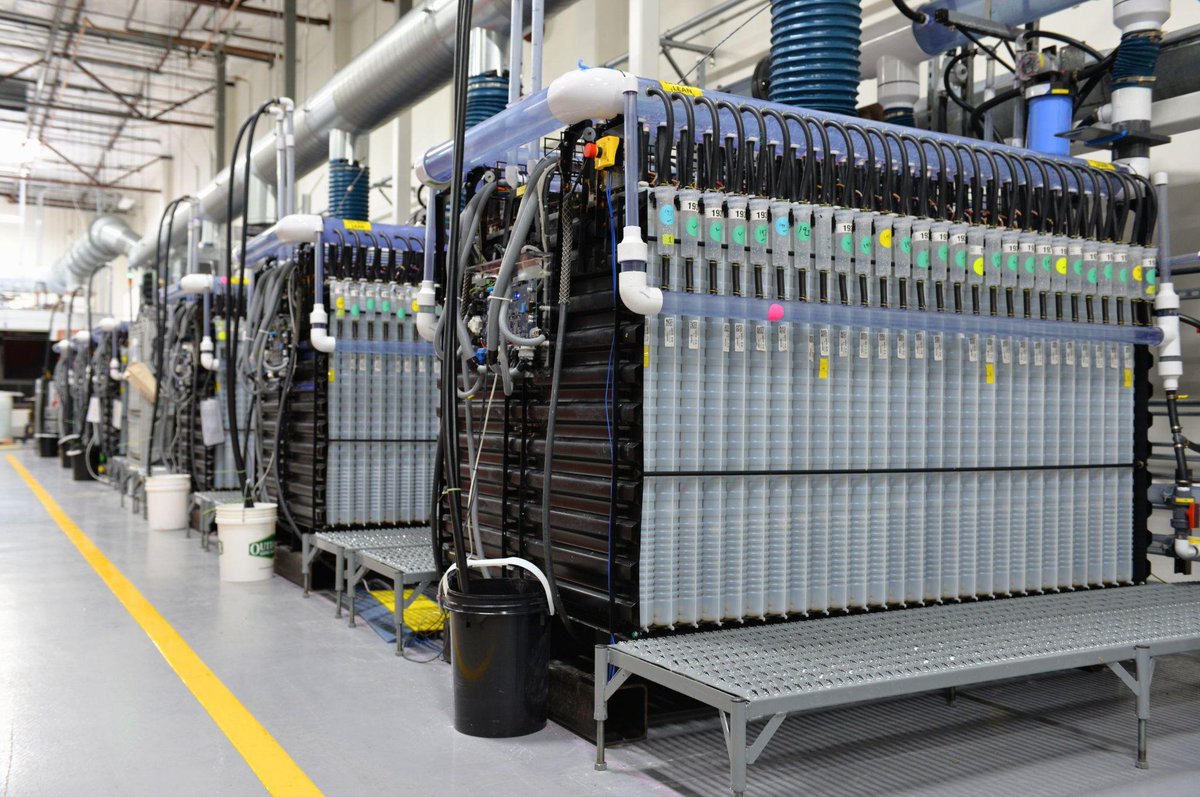
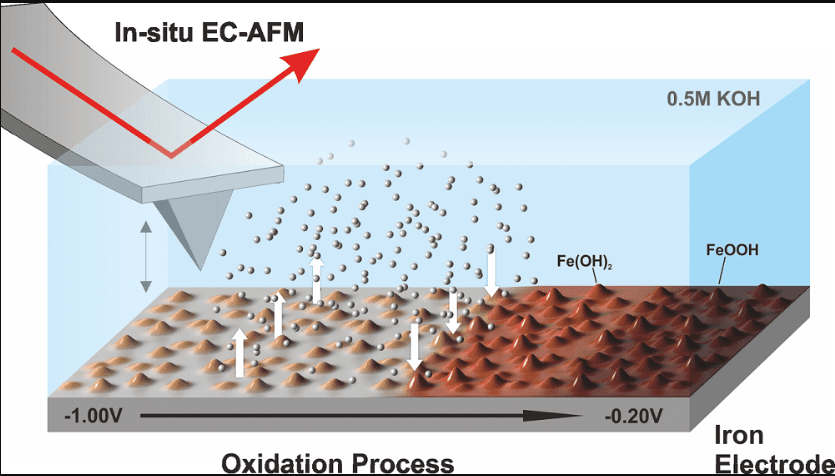
Google's new Minnesota data center is getting an iron-air battery, which can store orders of magnitude more energy than any grid-scale battery we've seen (30 GWh in this case). If this pans out, we may have found the solution to turning solar & wind into reliable baseload power.