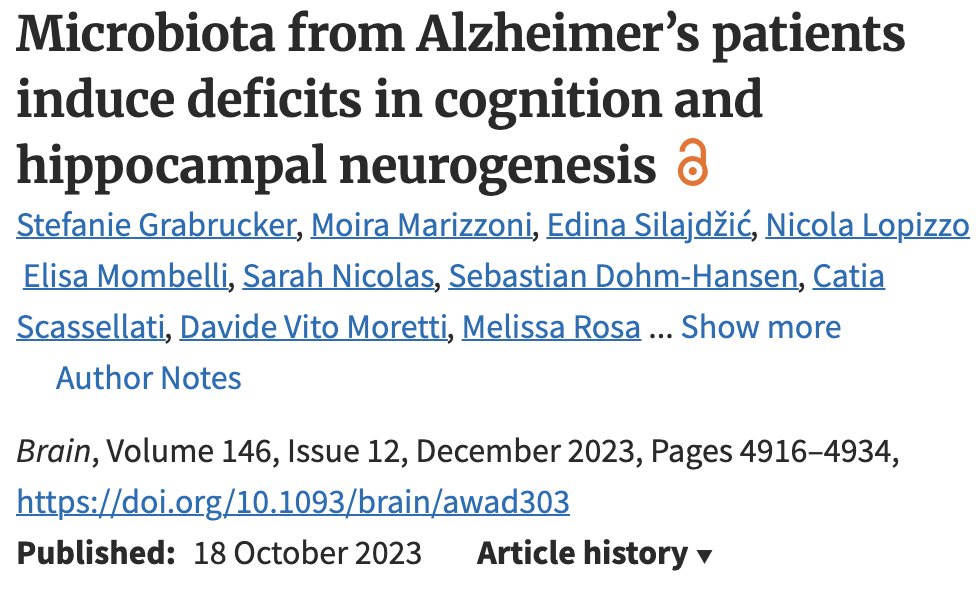
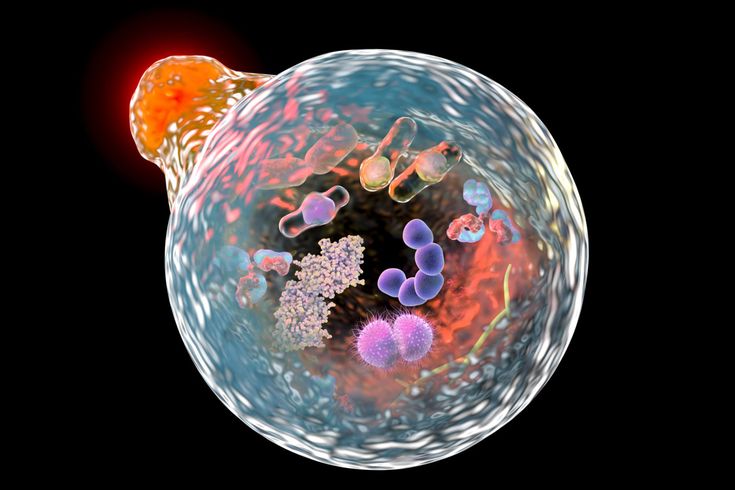
This is wild. If you have schizophrenia, anxiety, depression, or dementia — you can give a rat a sample of your gut microbiome, and it will start to develop schizophrenia, anxiety, depression, or dementia.
This tells you how important the gut is when it comes to optimal health.
Fasting for 72 hours is the best medicine on Earth.
It triggers your body to "eat up" tumors, inflammation, and toxins.
It's literally a doctor within.
Here's how to fast correctly (according to science): 🧵
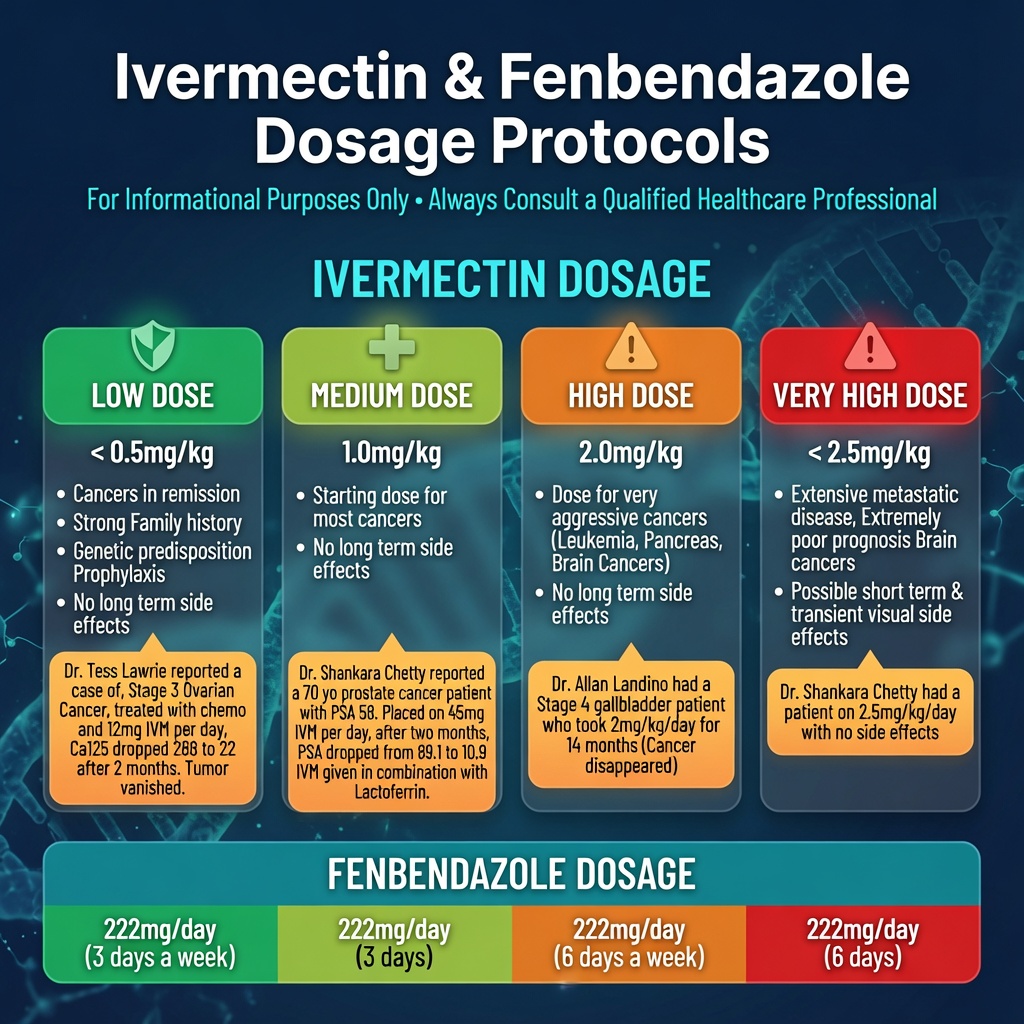
#IVERMECTIN + #FENBENDAZOLE FULL #PROTOCOL: Exact Doses for Cancer, Parasites & Chronic Illness
Ivermectin (by body weight — US pounds examples):
150 lb person
• Low ≤0.5 mg/kg → ~34 mg
• Medium 1.0 mg/kg → ~68 mg
• High 2.0 mg/kg → ~136 mg
• Very High ≥2.5 mg/kg → ~170 mg
180 lb person
• Low → ~41 mg | Medium → ~82 mg | High → ~164 mg | Very High → ~205 mg
200 lb person
• Low → ~45 mg | Medium → ~91 mg | High → ~182 mg | Very High → ~227 mg
Fenbendazole (fixed dose):
• Low: 222 mg (3 days/week)
• Medium: 222 mg (6 days/week)
• High: 444 mg (6 days/week)
• Very High: 888–1000 mg (6 days/week)
Used For:
• Cancer (various stages)
• Parasitic infections & detoxes → Low to Medium Doses
• Lyme Disease & co-infections → Medium to High Doses
• Viral illnesses & prevention → Low to Medium Doses
Support with Milk Thistle, Curcumin, Vitamin E + CBD.
Always keep an eye on liver & kidney function.
Save it. Share it. Someone out there needs this today.
The CIA BURIED a Soviet study in the 1950s showing anti-parasitics SUPPRESS CANCER GROWTH—and kept it CLASSIFIED for over 60 YEARS.
An entire generation of cancer research was DERAILED for over HALF A CENTURY, and millions of cancer victims have paid the price.
How much physical energy does it ACTUALLY cost you to worry about the future?
Dr Martin Picard's research argues stress isn't just a mental weight - it's an expensive biological tax on your cells.
In his lab, when human cells were exposed to stress hormones, the energy cost of just staying alive inside those cells shot up by 60% (He’s also the scientist whose team literally sliced a human brain into 703 cubes just to map how energy moves through it 🤯)
You have a stressful morning, a difficult conversation, or a few anxious thoughts you can't shake, and by 2pm you feel completely drained. Your mind is tired, but your cells are genuinely exhausted.
Dr Martin Picard is a Professor of Behavioural Medicine at Columbia University and I sat down with him to understand how our emotions and lived experiences physically change the mitochondria inside us - the tiny structures responsible for producing all the energy we rely on.
My energy has always felt a bit like roulette. Some days I wake up feeling incredible, other days I feel like I've done the exact same things but I've got nothing in the tank.
Martin completely reframed how I look at this. Energy isn't just a biological default; it's one of the most important scientific questions of our lives.
We discussed things like:
- Why you can do everything “right” (sleep, diet, exercise) and still wake up completely exhausted.
- The physical tax of stress and what a single anxious morning does to your cells.
- Why mitochondria are the missing link behind burnout, depression, and chronic fatigue.
- What actually dictates your cellular energy day-to-day.
- The truth about whether fasting, meditation, deep purpose and relationships can rewrite your biology.
This is a conversation about understanding what your body is constantly responding to where your energy is actually going and why so many of us feel tired in ways that more sleep or more food don't always solve.
If you feel flat, anxious, or exhausted and can't explain why - this one's for you.
Jacob Bank, former Google product lead:
"I built up this team of 40 AI marketing agents to work with me. I'm the only marketing person."
In a 15-minute talk, he shows what one person with the right setup now runs alone.
Forty agents. One human. His AI bill is $500 a month, against the $50,000 a human team would cost.
That's the math quietly minting the first solo fortunes of the AI era.
Watch the talk, then read the piece below.
Bookmark this one.
‘It’s not fortification. It’s contamination.’
The UK is forcing folic acid, a synthetic drug into the entire flour supply - without anyone’s consent.
This is the same chemical the NIH warns cancer patients not to take.
@ClareCraigPath has shown it more than doubles the risk of prostate cancer.
They scream about rising cancer rates yet deliberately poison the food supply.
Make it make sense.
Here is the petition calling for a parliamentary debate.
https://t.co/63BxLuuUe1
Over 20,000 studies prove TURMERIC is the most powerful anti-inflammatory on Earth.
It destroys chronic pain, flushes toxins from your liver, and protects your brain from early aging.
Here's everything you need to know about it:
1) It heals your gut first
🚨 MOST PEOPLE THINK IVERMECTIN, FENBENDAZOLE & MEBENDAZOLE DO THE SAME THING. THEY DON'T.
One of the questions people ask most is:
"Why do some protocols include all three?"
They're not.
Because they aren't being studied for the same biological pathways.
The infographic summarizes 12 biological mechanisms that researchers have investigated for each medicine in laboratory and preclinical studies.
Here's why they're often discussed together:
💊 Ivermectin
Researchers have studied its potential effects on:
✅ Cancer stem cells
✅ WNT/β catenin signaling
✅ mTOR signaling
✅ Tumor blood vessel formation
✅ Chemotherapy resistance
💊 Fenbendazole
Research has explored its potential role in:
✅ Microtubule disruption
✅ Glucose metabolism
✅ p53 activation
✅ Metastasis
✅ AKT signaling
💊 Mebendazole
Researchers have investigated it for:
✅ Crossing the blood brain barrier
✅ VEGF signaling
✅ Microtubule destabilization
✅ MYC expression
✅ Improving chemotherapy sensitivity
That's why many researchers don't view these medicines as doing the exact same thing.
They've been studied for different pathways, different targets, and different biological effects.
Much of this research comes from laboratory and animal studies, and larger human clinical trials are still needed to determine whether these mechanisms translate into safe and effective cancer treatments.
But understanding how they're being studied helps explain why all three continue to be part of the conversation.
💬 If different medicines target different biological pathways, do you think combination approaches deserve more clinical research than studying each medicine alone?
💊 Curious why so many people are researching Ivermectin, Fenbendazole, and Mebendazole? Find premium quality products with worldwide delivery at @RxMeds_store.
#Ivermectin #Fenbendazole #Mebendazole #CancerResearch #RepurposedDrugs #MedicalResearch #Oncology #HealthDiscussion
You have to use entities set by Google, find their Knowledge graph ID or Freebase ID, their Wikidata ID and it's Wikipedia link.
In your schema, link to these pages.
Google will crawl your schema, see these links and without you having to put more content on page, Google and other crawlers will have a better understanding of you site.
You already have the data to grow your traffic.
It's sitting in Search Console right now.
Untouched. Underused.
Most people open it, look at the numbers, close the tab.
The ones who know what to do with it? They're quietly fixing pages that are one tweak away from ranking.
Here's the exact way to use it: 🧵👇
🚨 BREAKING: Final-stage prostate cancer CURED with chlorine dioxide treatment!
Doctors gave him 10 months to live without chemo.
He turned down their "treatment" and went with CD instead - oral, IV, and daily enemas.
CD brings oxygen into the body and works as an oxidizer.
This might be the answer we've been searching for.
Please repost, like, and share your thoughts in the comments.
Follow the page for more updates, support, and assistance.
Major announcement. Vitamin C skyrockets the utilisation of collagen by ridiculous amounts (up to 900%) but most collagens use synthetic ascorbate in their products.
From Ray Peat: "The heavy metal contamination of synthetic ascorbate (Vitamin C) is so great that one 500 mg tablet dissolved in a liter of water produces free radicals at a rate that would require a killing dose of x-rays to equal"
Acerola cherry is arguably the best source of natural vitamin C
The problem is that acerola cherry is very citrusy in taste and many people want to have their collagen in their milky coffee without tasting the citrus (fair!)
Another issue is that acerola powder clumps up a lot soon after opening the packaging
So we’ve been trying to engineer around those two issues
And I think we got it right :)) final (I hope) sample of our collagen arrived yesterday and let me tell you… wow 🤫
Aurabiōm ageing NEVER collagen with natural vitamin C (never ascorbate!!!) will be available very soon 💙💙💙
A few days ago I wrote that a major unannounced Google update was rolling out.
Yesterday Google finally announced it.
Huge ramifications for brands across e-commerce, SaaS, financial services, etc.
Let’s go through winners and losers.
By the way, you can see whether your business is appearing across Google AI, ChatGPT, Claude, Perplexity and Grok here. It’s free:
https://t.co/Pn764BHwyL
So a few days ago I wrote that Google appeared to be rolling out an unannounced update.
A lot of sites were seeing weird movement.
Some people were reporting 25% to 30% traffic drops.
Some people were saying news sites were limping along, shops had slowed down and traffic was becoming so unstable that it was hard to know what to do next.
At the time, it was just an observation, but now Google has made it official.
Google released the June 2026 spam update on June 24.
It applies globally.
It applies to all languages.
Google says the rollout may take a few days to complete.
If your rankings, impressions or clicks are bouncing around right now, the update may not be done yet, but the direction is pretty clear.
Google is taking another swing at spam, and the timing is interesting.
The May 2026 core update finished rolling out on June 2.
Then we saw more unconfirmed volatility around June 19.
Now we have a confirmed spam update on June 24.
So businesses are basically dealing with three weeks of Google volatility at the exact moment AI Search is becoming more important.
Google’s own spam policies now explicitly mention attempts to manipulate generative AI responses in Google Search.
Basically, Google is policing traditional rankings and AI-answer manipulation at the same time.
The obvious losers are pretty easy to spot.
And if you're a loser in this one, reach out to SEO Stuff (https://t.co/wKpf0EILTx) to right the ship - fast.
The losers: sites built around scaled AI content with no real value, scraped content, stitched-together articles, expired domains repurposed for unrelated commercial topics, thin affiliate pages, pages made mostly to manipulate rankings, pages made mostly to manipulate AI answers, fake authority, fake expertise, fake mentions and fake topical coverage.
Basically, anything that exists because someone found a loophole and tried to scale it before Google caught up.
In e-commerce, the sites most exposed are thin product pages, copied manufacturer descriptions, fake review pages, low-quality “best product” lists, outdated pricing pages, messy product feeds and category pages with no real buying help.
The sites in a better position are the ones with original product information, useful category guides, current pricing, availability, shipping, returns, comparisons, customer proof and clean product data.
In finance, the risk is even higher because trust matters more. Generic finance explainers, affiliate lead-gen pages, fake author profiles, outdated rate pages, thin calculator pages and broad “best credit card” or “best loan” content with no real expertise are more exposed.
The stronger sites have real credentials, current information, transparent methodology, calculators that actually help, clear service pages, original analysis and authority outside their own website.
In SaaS, the obvious losers are generic comparison pages, AI-written “alternatives” posts, programmatic feature pages, copied G2-style roundups, fake integration pages and broad B2B content that says nothing new.
The better-positioned SaaS companies have pricing pages, use-case pages, comparison pages, implementation guides, product documentation, case studies, customer results and original data.
In education, I would be watching course aggregators, scholarship spam, doorway pages for every city or degree variation, generic career guides and thin AI-written explainers.
The stronger sites are likely the ones with actual school authority, clear program information, admissions details, outcomes data, faculty expertise and helpful resources for real students.
In local, the exposed sites are pretty obvious: fake location pages, doorway city pages, review spam, inconsistent business information, thin service-area pages and local lead-gen sites pretending to be real businesses.
The stronger local businesses have real Google Business Profiles, reviews, local citations, useful service pages, local backlinks, clear contact information and actual proof that they serve the area.
In publishing and affiliate, the sites in trouble are the ones built around rewriting what already ranks. Thin explainers, generic news summaries, no original reporting, no testing, no data, no real opinion and no reason for Google or an AI system to trust the page.
The winners are the sites adding something new: reporting, analysis, experience, data, expert commentary or genuinely useful research.
So the category matters, but the pattern is mostly the same.
Google is asking whether the page deserves to be used, trusted, cited and shown inside a search experience that is becoming more AI-driven every month.
The message boards are already showing the usual pattern.
Some people are watching Search Console all day.
Some are saying the back-to-back updates are frustrating because they were still trying to figure out what happened in May.
Some are saying they have seen drastic fluctuations for at least two weeks.
Some are asking whether the problem is rankings, impressions, clicks, Discover, SERP layout or AI answers.
A traffic drop does not always mean one thing anymore, though.
If impressions drop, Google may be showing your pages less often.
If rankings drop, Google may have reassessed your pages.
If clicks drop while rankings look stable, the search results page itself may have changed.
AI Overviews, more ads, more answer content, more forum results, more Google-owned surfaces and more zero-click behavior can all reduce traffic even when a site still technically ranks.
This is where SEO Stuff (https://t.co/wKpf0EILTx) can help.
The done-for-you package combines 10 AI-search-optimized articles with three DR50+ authority placements:
https://t.co/yEFyM0Ze7W
The content helps your business cover the questions customers ask before buying, including problems, use cases, comparisons, pricing, alternatives, industries, objections, case studies, product details and implementation.
The authority placements help your business show up across trusted sources that search and AI systems use to understand categories.
A lot of AI search systems use search results, citations and trusted web sources to ground their answers.
So a Google problem can become a ChatGPT problem, a Perplexity problem, a Claude problem, a Gemini problem and a Grok problem.
Your website, your third-party mentions, your content depth, your reputation and your AI visibility are all starting to overlap.
So if this spam update hits the kinds of sites it is supposed to hit, the winners should be businesses with real content, real authority and real customer value.
The losers should be the sites trying to fake all three.
If your traffic depends on being useful, trusted and easy for Google to understand, you are building something much harder to wipe out.
If you want to see whether your business is already being cited, understood and recommended across Google AI, ChatGPT, Claude, Perplexity and Grok, check here:
https://t.co/Pn764BHwyL
A Stanford neuroscientist warns high cortisol wrecks memory, enlarges your fear center, and make your brain feel broken.
If I wanted to fix it naturally, I'd do these 8 things every day:
1. Walk barefoot on grass for 5–7 minutes.
BRO TO BRO:
If your phone gets stolen, the first thing thieves usually do is remove your SIM card.
Do this now:
Save your IMEI number somewhere safe.
Dial *#06#
A 15-digit number will appear.
Take a screenshot and keep it in your email or cloud storage.
If your phone is ever stolen, that number can help with tracking, blocking, and ownership verification.
Most people only learn this after losing their phone.