The increase in cancer in recent years may be the result of the fact that we are becoming an indoor society. People in southern latitudes, who get more sun, are less likely to die from certain cancers. They’ve scared us into thinking the sun is bad for us. https://t.co/m3oSTp6D0X
Stress is rising. Stress depletes magnesium, which is the very thing you need. The effects are very subtle, which may be why people don’t notice them. Try popping a mag glycinate pill (or eat some beans) before a stressful event and see how it feels. https://t.co/e47EdDI6xy
So many people have anxiety. Here’s what we used to do a lot: Spend time outdoors and exercise naturally: hang the clothes out to dry; walk the kids to school; walk to the bus stop; work in the garden/on the farm; ride bikes; be outside when it’s hot.
https://t.co/rQoVNPua8z
I never believed fat was bad for you. Maybe because my dad was French & because he came from a farm where they drank milk straight from the cow and he was never overweight. He refused to buy anything but whole milk. The French love butter and fat, but as a rule, they aren’t fat.
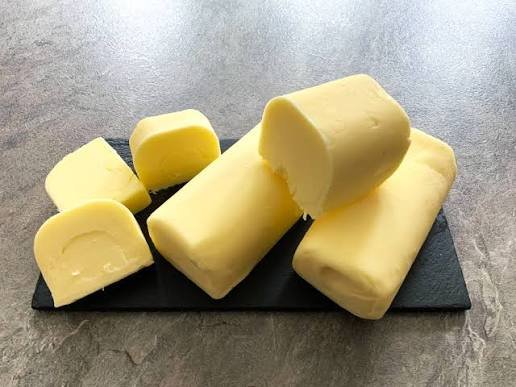
One of the reasons I love ghee so much is that the milk solids are removed, leaving behind mostly pure butterfat. A lot of people who are sensitive to dairy tolerate ghee much better because of that.
But beyond that, learning to stop fearing fat completely changed my relationship with food and metabolic healing.
For years women were taught:
eat low fat,
eat less,
use more willpower,
stay hungry,
ignore cravings,
fight yourself constantly.
Meanwhile many of us were exhausted, inflamed, constantly thinking about food, and riding blood sugar rollercoasters all day.
Higher healthy fats helped me with:
🧈satiety
🧈food noise
🧈energy stability
🧈blood sugar stability
🧈staying fuller longer
🧈reducing binge tendencies
🧈feeling mentally calmer around food
Fat is also incredibly important for hormones, the brain, nutrient absorption, and helping the body feel SAFE instead of constantly running on emergency energy.
And no, I’m not saying “eat sticks of butter and magically lose weight.”
I’m saying many metabolically damaged people have spent decades undernourished while being told to fear the very thing that might have helped stabilize them.
@SamaHoole Carbs - pasta, bread, potatoes - were promoted to feed the masses when there wasn’t enough food to go around. Back then, every calorie helped. Today, the situation is different. Start with the veggies and protein and you can still have a few carbs at the end of your meal.
Twenty years before Atkins, fifteen years before the Mediterranean diet, and forty years before anyone in the NHS would utter the phrase "low-carb without flinching", a Hampshire physician was treating obesity, asthma, migraine and gout with butter, bacon and steak. He sold two million books and was politely forgotten.
Richard Mackarness ran Britain's first clinical obesity and food allergy clinic at Basingstoke District Hospital from 1958 to 1983. He had read Banting. He had read Stefansson. He tried the low-carbohydrate approach on himself, lost weight without hunger, and decided it was time a British doctor put it into a book.
He called it Eat Fat and Grow Slim. The title was a deliberate provocation, in a country where rising American influence insisted that fat would kill you.
The protocol: meat, fish, eggs, cheese, butter and green vegetables freely. Carbohydrates under 60 grams a day. Eat fat to satiety. Do not restrict calories.
Across 25 years he kept meticulous records. Average weight loss 14-20 pounds in the first three months. Sustained weight loss at 12 months in approximately 60% of patients. At five years, approximately 40%, which is remarkably high for any dietary intervention.
Other outcomes: resolution of asthma in roughly one-third of affected patients, reduction in migraine in roughly half, and complete resolution of gout in nearly all who adhered to the protocol.
His 1976 second book, Not All in the Mind, documented hundreds of cases in which chronic symptoms resolved completely when specific food triggers were removed. The most common triggers: wheat, refined sugar, pasteurised dairy, industrial seed oils, caffeine.
His clinic was closed in 1983 when Basingstoke District Hospital was reorganised. His approach, which had treated thousands of patients successfully, was not institutionalised anywhere in the NHS.
He retired and emigrated to Australia. He died in 1996, aged 80. His books are out of print in Britain.
Current NHS obesity treatment costs: £6.5 billion a year.
Mackarness's clinic treated 3,500 patients for under £50,000 a year in 1960s pounds.
The cost-benefit analysis has not been run. The result would be too uncomfortable to publish.
He was right. He was British. He was ignored in Britain. Then exported to Australia, where he died in quiet retirement.
This is how Britain handles its medical heretics.
It has not improved.
A comprehensive troubleshooting guide for new carnivores, compiled over five years of answering the same questions:
Tired in the afternoon? Add more butter.
Hungry between meals? Add more butter.
Headache in the first week? Add more butter. Also salt. But mostly butter.
Constipated? Add more butter.
Loose stools? Add more butter.
Craving carbs? Add more butter.
Cold hands and feet? Add more butter.
Dry skin? Add more butter. On the steak, not the skin.
Poor sleep? Add more butter.
Bad mood? Add more butter.
Gym performance dropping? Add more butter.
Gym performance fine but you just want it to be better? Add more butter.
Wife complaining about the butter? More butter. Different problem, same answer.
Doctor concerned about your LDL? The doctor is not the patient. Add more butter.
Keto flu? Butter.
Plateau on the scales? Butter.
Hair feeling dry? You're not eating enough fat. Add butter.
Feeling bored of the food? The food is not the problem. The amount of butter on the food is the problem.
Friend telling you this can't be healthy? Offer them some butter. Watch their face.
Thinking about quitting because it's not working? You are almost certainly eating lean meat with insufficient butter. Add butter. Report back in a week.
Already added butter and still have the problem? Add more butter.
There is no problem in the first thirty days of carnivore that cannot be solved, improved, or entirely dissolved by the addition of more butter.
I am aware this sounds like a joke. It is not. It is the single most common mistake new carnivores make, and the single most effective intervention anyone has ever suggested on this account.
The fat is the mechanism. The butter is the fat in its most accessible, most concentrated, most delicious form.
Add more butter.
That's the tweet. That's the whole guide. Five years of experience compressed into two words.
Save it.
Eggs contain retinol.
The supplement aisle sells retinol capsules.
Beef contains CoQ10.
The supplement aisle sells CoQ10 capsules.
Salmon contains EPA and DHA.
The supplement aisle sells omega-3 capsules.
Sardines contain selenium.
The supplement aisle sells selenium tablets.
Egg yolk contains choline.
The supplement aisle sells choline capsules.
Bone broth contains glycine and collagen.
The supplement aisle sells glycine powder and collagen sachets.
Beef contains carnitine.
The supplement aisle sells carnitine capsules.
The supplement aisle is just an animal.
Taken apart.
Put in capsules.
Sold back to you at forty times the price.
By the same institutions that told you not to eat the animal.
Ever see anyone hanging out in the heat? Hot, cranky. The balance between magnesium and Vitamin D is crucial. We need to spend time outdoors getting vitamin D for our health, but if it’s very hot, sweating depletes magnesium. We need mag to keep us calm.
Martin's ancestors have been watching for some time.
They would like it noted, for the record, that they are not happy.
7:00am - Martin has a low-fat yoghurt. The fat has been removed and replaced with modified maize starch, pectin, and acesulfame potassium. His great-great-grandmother, who churned butter for a living in a farmhouse in Tipperary, makes a noise that has no translation in modern English.
7:30am - Martin has a bowl of bran flakes with skimmed milk. His ancestor from the Bronze Age, who ate organs, bone marrow, and rendered fat from large ruminants, sits down heavily and puts his face in his hands.
9:00am - Martin's mid-morning snack is a rice cake. It has 28 calories. His Viking ancestor, who was built like a wardrobe and ate herring, mutton tallow, and fermented dairy, stares at the rice cake with an expression of profound anthropological grief.
12:00pm - Lunch is a chicken salad with fat-free dressing. Martin has removed the skin from the chicken. He has removed the only part of the chicken that contains any meaningful fat-soluble nutrition. His grandmother, who grew up eating dripping on toast and died at 91 with no metabolic disease, watches in silence.
3:00pm - Martin has a 97-calorie cereal bar. His Palaeolithic ancestor does not know what a cereal bar is. He does not need to. He can see what it is doing to Martin's waistline compared to what it is doing to his mood. He files this information.
6:00pm - Dinner: lean mince (5% fat), brown pasta, and a tomato sauce from a jar. Martin has tracked all of this in My Fitness Pal. He is 14 calories under his goal. He is also, by any sensible hormonal reading, still hungry.
8:00pm - Martin has a low-fat ice cream. His ancestors, collectively, watch him eat a product that is technically both a food and an industrial experiment, and they decide, as a group, to stop watching for the evening.
9:30pm - Martin cannot sleep. He is thinking about food. He has been thinking about food since approximately 11am.
His ancestors are not thinking about food. They are thinking about other things.
Martin's ancestors were, on the whole, significantly leaner.
This is the part Martin finds hardest to explain.
Patient with high blood pressure for 10+ years on 3 meds. Was told to avoid salt religiously. It didn’t work.
At my direction, he kept salting his food, but cut carbs significantly.
Off 2 meds in 8 weeks 💪🏼
Hypertension isn’t a salt problem. It’s a sugar problem in disguise.
@RobertKennedyJc Taught all my children to cook.
When they were little, I cooked five meals at home and we lots of leftovers.
We drank milk, water or juice. There was no soda in the house.
And now they’re teaching their children the same thing.
It starts at home with parents
You don’t have to feel better to go outside. You have to go outside to feel better. This is a truth that our parents understood (Go outside! They demanded) But the longer we live indoors in cities, the more we leave it to one side.
https://t.co/4HeBEboZiX
People ask me why I'm so passionate about cattle.
Here's why.
A cow wakes up every morning, walks to a patch of land covered in inedible fibrous grass, and spends its day converting something completely useless to humans into something extraordinarily useful.
It requires no pesticides. No monoculture. No factory. No lab. No patent.
It takes the sun, the soil, the rain, and a stomach full of microbes, and produces the most bioavailable, nutrient-dense food ever consumed by a human being.
Every gram of beef contains a complete amino acid profile. Zinc. B12. Creatine. Carnosine. Heme iron. Things your brain and muscles quite literally cannot work without.
And we've spent the last 50 years being told this animal is killing us.
The audacity.
I'll take my chances with the creature that built civilisations over the oat milk that was invented in 1994.
@BiggestComeback All true. But your post, while valuable, is too long to read. People only have time for short messages to the point. That’s why Twitter works…or worked.
Three other factors that affect Vitamin D activation: sufficient magnesium (greens, beans and nuts), sufficient Vitamin K2 (greens), and being a healthy weight. When you are overweight, your body hoards vitamins.
After years of experimentation, I’ve realized one hour outdoors (getting vitamin D, etc.) daily is what I need to keep mental health issues at bay. The darker your skin, the more time you need to spend outside. We are becoming an indoor society, which is not good for us.