I don't think Twitter works for this anymore, but I had luck with it just <1 year ago, so let's try again!
I am recruiting multiple postdoc positions in Alzheimer’s and Dementia, Epidemiology, and Translational Neuroscience!
Plz RT!
https://t.co/Wu1XPQDIsT
Physician-scientist pipeline is a retention problem, not a recruitment problem. We lose people in years 5–6 when revisions stack and RVUs absorb protected time. This month's JCI editorial names the connective tissue departments don't fund. https://t.co/DqHaZ7kNZU
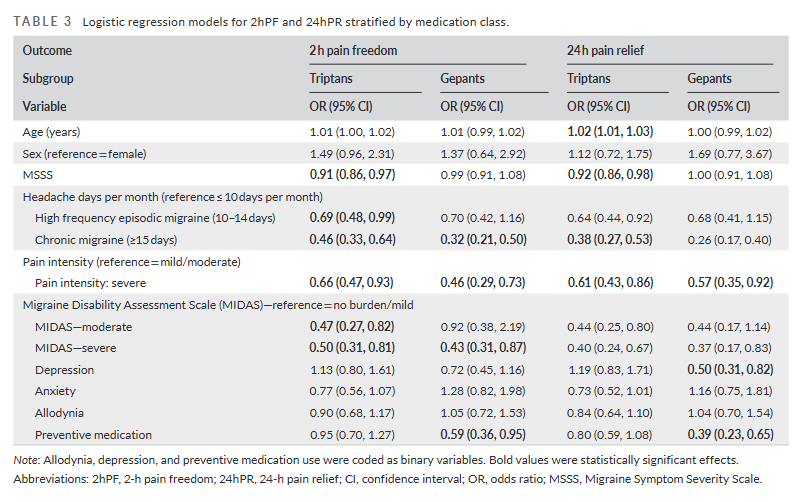
#Triptans or #gepants for #migraine?
Insights from the HeAD–US study:
�� Similar 2-hour relief
⏳ Gepants → better 24-hour relief
🧠 Short-term ≈ similar
📈 Sustained relief may differ
Manuscript link: https://t.co/hp4tCpWrVB
@edgeofepi @FrancoisCadiou @AE_MD et al
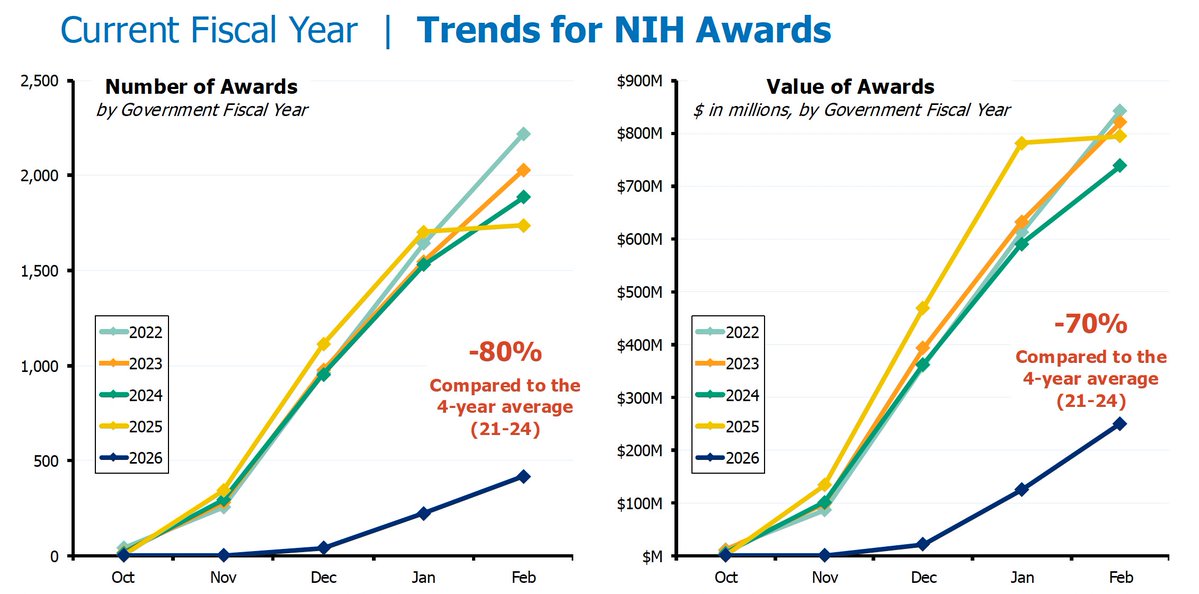
Federal funding for US biomedical research is moribund.
Since October 1 2025, NIH is -80% in new grants and -70% in values (total dollars).
Labs are closing down and researchers are leaving science.
To what end?
Congress rejected massive cuts to US science budgets for 2026, but much of the money still isn’t flowing to researchers.
The culprit? The White House Office of Management and Budget (OMB) is quietly slow-walking the release of funds. 🧵👇
For @Nature:
https://t.co/cvO5Q8HGcl
@aclong111 Accepting the challenge. 2y from submission to funding. 6m backdated.
3y from first submission that was rejected. The research was not considered novel by the time funded.
@mukundiyngr There are so many things wrong with this list. The Ns are inflated. Also total $$ by far is more important than N of grants. 1 impactful project beats 1000 half baked ones.
"The term [provider] should not be used to describe physicians, nor should physicians use it to describe themselves, their team members, or their trainees."
https://t.co/C1hEu3mUr2 @AnnalsofIM@ACPIMPhysicians
The new @NIH SciENcv Biosketch pissed me off so much today (lost 4 hours of my life) that I built a quick NIH Biosketch format converter. It lets you format each section while seeing both the preview and the HTML code at the same time.
It restored my sanity, a little.
Enjoy.
@PTenigma Also, as a scientist for whom English is a second language, I view AI-assisted editing as an advantage, as it helps reduce bias toward more polished writing and allows greater focus on the underlying science.
@PTenigma Honestly I find the requirements not to use AI rediculous. If anything editing texts with Ai has led to much improved writing in papers and grants.
Want to make the new #NIH#biosketch easier to read?
By default, #SciENcv outputs the Bio with essentially no formatting, which can be hard on reviewers.
You can use simple HTML—<b>...</b> for bold and <br> for line breaks—to improve readability in the BioSketch fields.
@PTenigma I tried with GPT Pro and it failed badly. In fact it apologized to me as everyone is annoyed about it! So I just broke it in parts and and asked GPT to respond part by part for me to copy-paste. It took an hour for me. It looks like the ugliest thing I've ever created. 🤦🏻😑
@drugmonkeyblog@inflammgenetics People could manually add those products to pubmed too. And some junior scientists were actually don't it.
Google scholar does all of these the best. Just allowing a link to that would have solved it.









![EricTopol's tweet photo. "The term [provider] should not be used to describe physicians, nor should physicians use it to describe themselves, their team members, or their trainees."
https://t.co/C1hEu3mUr2 @AnnalsofIM @ACPIMPhysicians](https://pbs.twimg.com/media/HAwSjf-aAAApNuv.jpg)


