@Neuschk7@matthew_petti Muhammad himself could not define what a soul was and so when the Jews of Medina asked Muhammad a few questions, one of which about what a soul was, his Qur’an conveniently answered it by saying “Say it is only known to God, and you have been given but little knowledge.”
@Ba5ileu5@ManhattanDA And yes you can criticise the Syrian curriculum, I believe that it should aim for secularist neutrality in the long term, but that still does not mean that Syrian relics do not belong to Syria, no matter the era.
Spain still has marches memorising their “triumph” over the Arabs.
@Ba5ileu5@ManhattanDA Baibars was a Mongol/Crusader era figure in the Levant and Egypt, not much to do with the Greco-Roman heritage of the region.
And Apollodorus is not ignored due to malice, I would rather say due to spread ignorance of that period in general.
@Ba5ileu5@ManhattanDA Spain does not show hostility towards Islamic heritage, but they still cherish their “Reconquista”.
Same thing applies to Syria. They do not have anything against the Roman heritage, matter of fact Syria is for the majority still filled with Byzantine era villages and artefacts.
@Ba5ileu5@ManhattanDA And I as a Syrian really do cherish its Greco-Roman era as much as its later Arab era.
And I know many others like me, and I think such things as Syria reclaiming relics from that era only helps Syria recognise it more.
@Ba5ileu5@ManhattanDA It’s not racism.
It’s a fact that the modern people of Syria are the descendants of its inhabitants during the Greco-Roman time and before.
Just like how Greece and Italy, Christian nations, still can boast about their pre-Christian past even though they were seen as “heathens”.
@Ba5ileu5@ManhattanDA Mad take.
Syrians are the descendants of those who were around when these artefacts came to exist.
Same reason why the pre-Hellenic history and antiquities of Greece (like those in Crete) still belong to Greece of today.
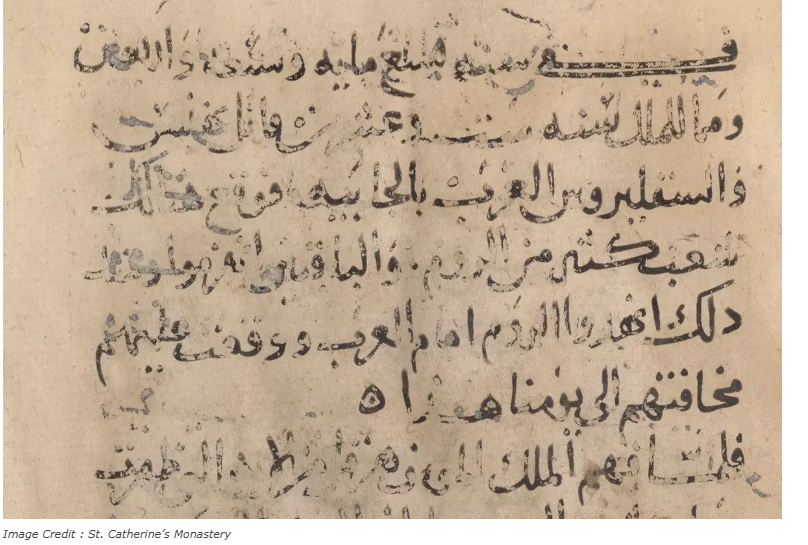
“New Chronicle discovered dating to 712/13 AD”
- Discovery is a year old ~.
- And most likely a 13th century copy of an older translation of the work of
Theophilus of Edessa from the 8th century.
A new Syriac/Arabic Chronicle has been discovered, dating to 712/13 AD. It promises to shed much light on early Islamic history and perhaps other areas too. @AdrianPirtea
@80khMr@Dannyboy1827@theepicmap Personally I would attribute its popularity to the fact that the British and Americans have maintained world hegemony for approximately the past 250 years.