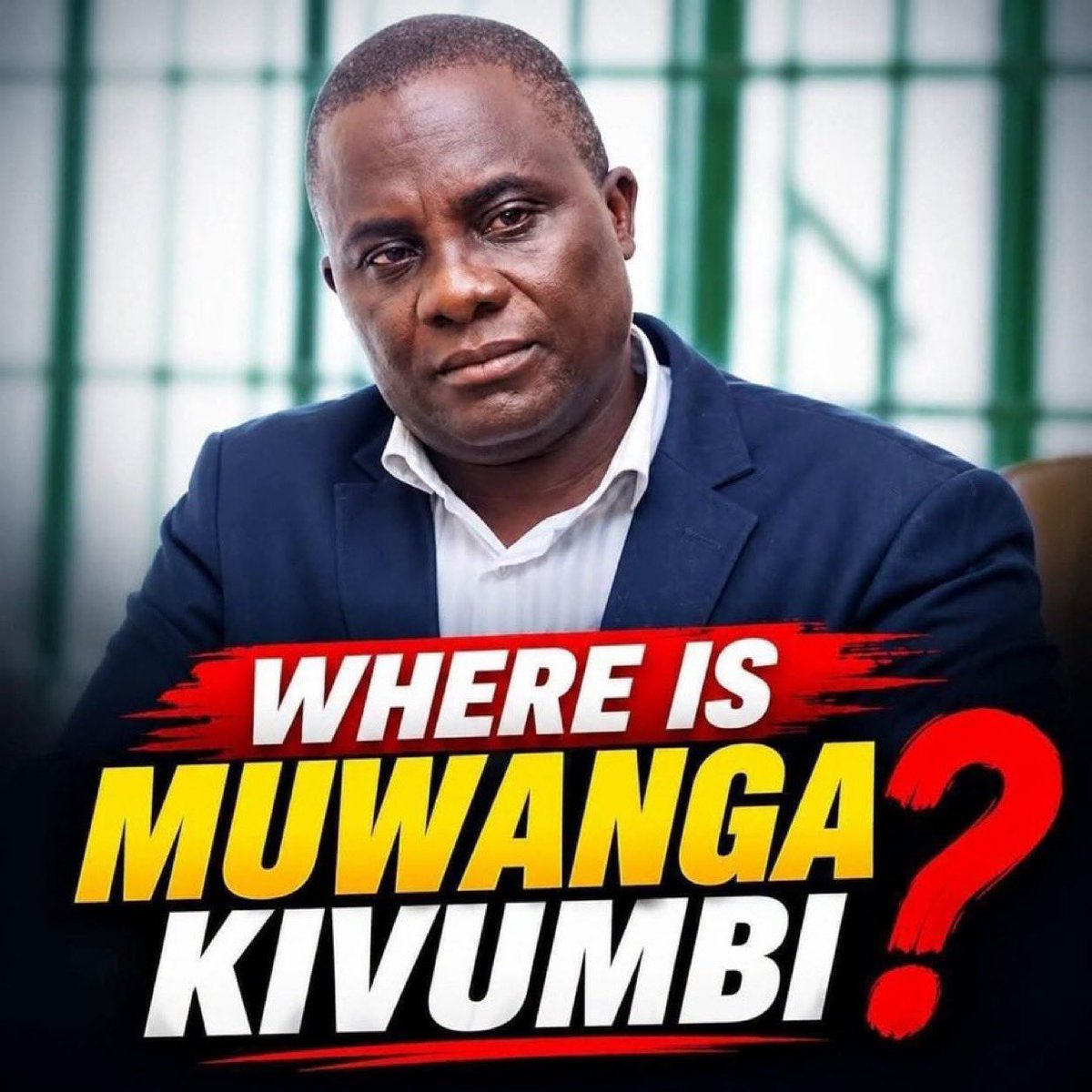
When they start talking about you and your influence, that is when you will realise you have done something to the world.
"Consistency looks like nothing is happening... until everything starts changing."
Changing the narrative that NUP is only in central.
People Power Our Power!
@UNHumanRights Commissioner Volker Türk’s warning is clear: Uganda’s escalating crackdown on dissent demands more than statements. The UN Human Rights Council should urgently convene a Special Session and refer Uganda for robust scrutiny and accountability before the situation deteriorates further.
https://t.co/FfIsqHbIes
#Uganda: UN Human Rights Chief @volker_turk denounces the ongoing crackdown on dissent, erosion of the rule of law, increased military involvement in civilian institutions, and shrinking civic space.
He urges the Government to uphold the separation of powers and the rule of law, including by preventing military interference in civil institutions.
https://t.co/L3IKEnous2
I used to hear stories of how @kizzabesigye1 would carry the wounded leaders from the battlefield and treat them until they are fit to fight another day. Can’t the leadership of @KagutaMuseveni extend the same kindness to him? Demanding a fair trial is different from begging for forgiveness. Let @JudiciaryUG grant him bail to care for his health and instruct lawyers to defend him. A dead man can’t stand trial @JSCUganda #TreatBesigyeFairly
Dear @Thomas_Tayebwa, you recently told @ubctvuganda that some of us fled to the West to solicit sympathy and funding. You contrasted us with what you described as law-abiding Ugandans--like Besigye and Ssegilinya--who remained at home and trusted the courts. That statement would have carried more weight if it had come from someone who had spent the past several years compelling the Executive to obey those same courts. Instead, it came from the D.Speaker of a Parliament that has perfected the art of watching constitutional failure from the comfort of leather seats and opulence.
Your confidence in Uganda's courts is fascinating. You declared that arrest does not deny a citizen his day in court. That proposition is correct in constitutional democracies where court orders are obeyed because they are court orders. Uganda has developed a more imaginative legal tradition where a judicial order is treated as an opening bid in negotiations with the security services. Release orders become optional. Production warrants become decorative documents. Bail decisions are respected only when they coincide with executive preferences. Lawyers spend increasing amounts of time enforcing judgments that should have enforced themselves. The constitutional crisis is not that judges occasionally err. It is that obedience to judges has become discretionary. Parliament has watched this evolution with remarkable composure.
The office you occupy has a constitutional purpose, it is not a commentary booth. Parliament exists to legislate. If there is persistent institutional failure, Parliament is expected to identify it, debate it, and remedy it through legislation. The chair you occupy does not merely confer prestige. It imposes responsibility.
Take Uganda's foreign service. Kenya and South Africa have a Foreign Service Act. Their diplomatic services operate within statutory frameworks that define recruitment, discipline, professional standards, training, and accountability. Uganda has nothing comparable. None. It operates more than thirty diplomatic missions across the world without a modern legal framework governing the institution. Appointments of political rejects and bumlickers remain the norm. Career diplomats remain the exception. Embassies continue to occupy rented premises that should have been purchased decades ago. Ugandan missions periodically appear in international headlines for unpaid rent, gambling, domestic violence, unpaid taxes, financial irregularities, or administrative dysfunction. Abuja became embarrassed by rent disputes. Kinshasa nearly seized Ugandan property over unpaid obligations. Copenhagen generated allegations that public funds had been shared among officials as though diplomatic missions had become investment clubs.
During all these years, where has Parliament been? Where is the Foreign Service Bill? Where is the statutory diplomatic academy? Where is the competitive recruitment system? Where is the legal limitation on political appointments? Where is the performance evaluation system that permits Parliament to question why an ambassador has spent four years attending receptions while attracting neither investment nor meaningful bilateral cooperation? Where is the legislative architecture expected from an institution whose primary business is legislation?
Instead, Parliament consistently demonstrates extraordinary efficiency whenever legislation expands executive power or narrows civic space. Time is always available for politically convenient bills. Urgency appears instantly whenever the Executive whistles. On 8 July your House readily entertained proposals concerning the internal leadership of the Opposition. In May it enacted the Protection of Sovereignty Act, creating sweeping criminal offences carrying penalties of up to twenty years' imprisonment and enormous financial sanctions. Parliament never appears to suffer legislative fatigue when restricting citizens. Exhaustion becomes visible only when institutional reform is required.
You also dismissed Ugandans in exile as people seeking sympathy abroad. That observation reveals an unfortunate misunderstanding of economics. The Ugandan diaspora contributes billions in foreign exchange every year. Families survive because relatives abroad pay school fees, hospital bills, rent, and daily expenses. The Bank of Uganda records these inflows as remittances. Economists regard them as an important source of foreign exchange. Only politicians describe them as begging. It is one of the few instances in which financial data loses an argument to political nincompoopism.
Your remarks also overlook a basic constitutional principle because citizenship does not expire at Entebbe Airport. A Ugandan in Berlin, London, Toronto, Johannesburg, or Washington remains entitled to criticise the government that claims authority over his citizenship. Exile alters geography, does not extinguish constitutional rights. Indeed, many governments have been corrected first by those they forced to leave.
So the issue is not whether exiled Ugandans speak too loudly. The issue is whether Parliament has spoken loudly enough when constitutional violations occurred at home. History rarely remembers those who mocked victims, it remembers those who prevented victimhood in the first place.
The chair you occupy was never intended to function as a broadcasting studio for executive talking points. It exists because the Constitution expected Parliament to legislate, supervise the Executive, and protect the public interest. Those responsibilities remain. They have merely been neglected. Until they are performed, lectures about patriotism from the Speaker's chair sound less like constitutional leadership and more like a building inspector praising a house whose roof has already collapsed.
By the way, how did you sleep after seeing your former Reform Agenda comrade collapse in court, and be admitted to the ICU? Did you put yourself in his shoes?
Rukirabachwezi, the Oracle of Mpororo
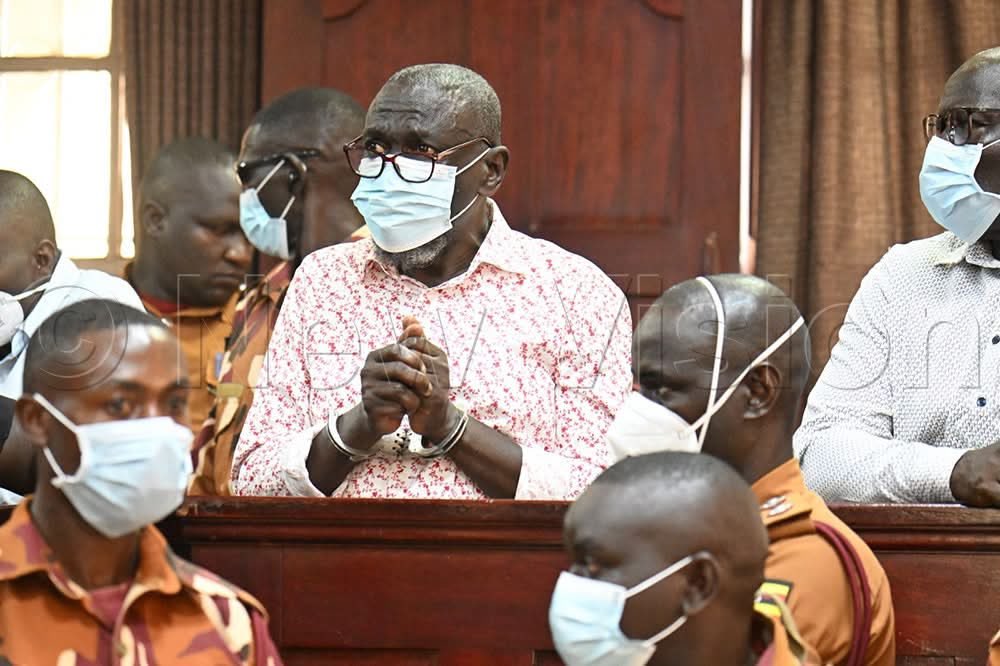
YOUR COLLAPSE COLLAPSED COURT!
“Stop, stop, stop, stop!”
“Stop, stop, stop, stop!”
Your voice boomed loud while you collapsed.
You collapsed shouting “STOP!”
You collapsed onto the hard floor.
You collapsed in the suspects’ dock.
You collapsed at the feet of Obeid and Denis
And the prison wards congesting the dock.
You collapsed and collapsed the kangaroo court.
The naked judge shot up and ran out of court.
He abandoned his farcical kangaroo court.
No “orders from above” prepped him for combat.
The naked state prosecutors slithered out of court.
They abandoned their farcical witness examination.
No rehearsals prepped them for your defiance.
The naked white witness stomped out of court.
He abandoned his false testimony about treason.
No mercenary’s pay prepped him for your truths.
The prison wards carried your unconscious body.
They ferried your defiant body into an ambulance.
Olive, your sister-doctor was denied access to you.
Lulume and Kamara were denied access to you.
Three medical doctors, present in court, looked on.
Your loved ones present in court, looked on.
Your haters who schemed the plot, looked on.
Ugandans, near and far, watched and looked on.
The world watched the news and looked on…
Your collapse collapsed the kangaroo court!
🚨 @ODPPUGANDA must withdraw false label, apologise & charge Orlando, @artfulgypzy.
A capital treason case cannot rest on inflated fiction and knowingly false information.
The Office of the Director of Public Prosecutions has portrayed Andrew Wilson “Orlando” as an arms dealer to strengthen its treason case. Yet the public record tells a different story.
By Orlando’s own police statement and public profile, he is a private investigator, executive-protection consultant, firearms trainer, and—most importantly—a State informant working under military intelligence since 2021.
There is no disclosed firearms dealer’s licence, no evidence of arms sales, and no proof that he ever dealt in SALE of weapons as the ODPP alleges in writing.
Even more troubling, Orlando’s own police statement is riddled with material contradictions and lies on dates, travel, meetings, and the prosecution’s central Kisumu narrative.
Since ordinary citizens can be prosecuted for giving false information to police, why should the State’s star informant be exempt?
The law must apply equally. The ODPP should:
✅ Withdraw the false “arms dealer” label and apologise;
✅ Subject Orlando’s statements to the same forensic scrutiny imposed on the accused; and
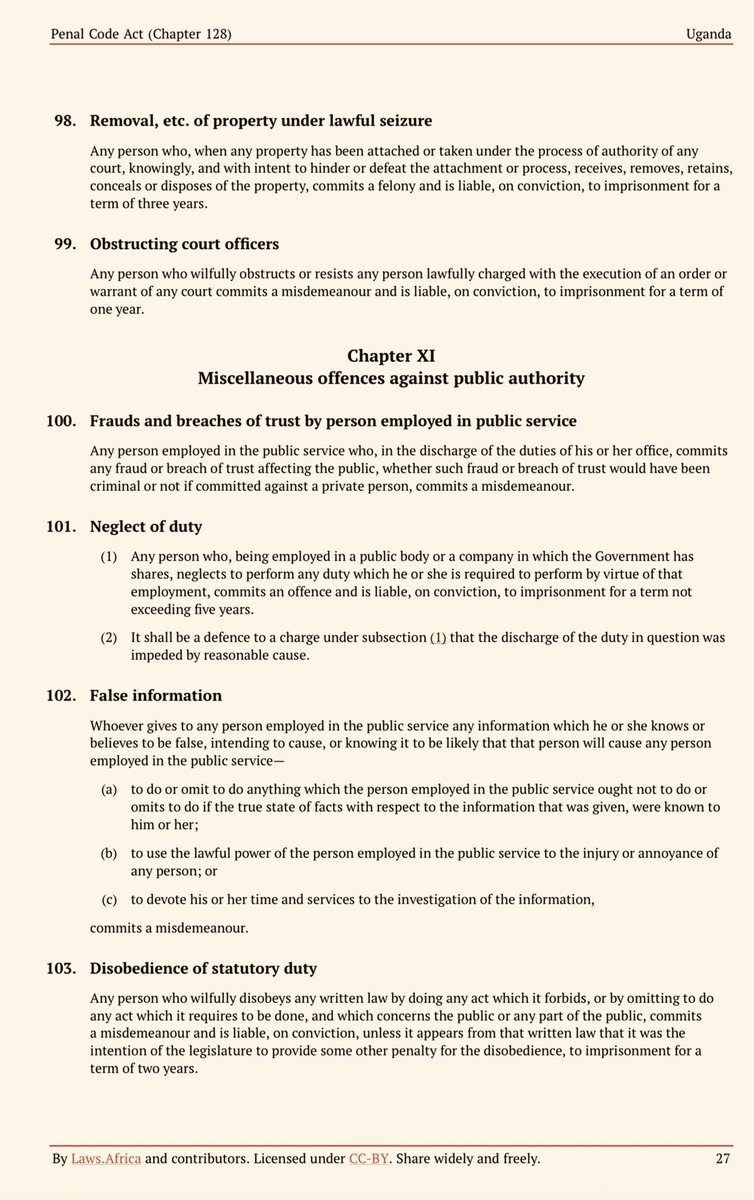
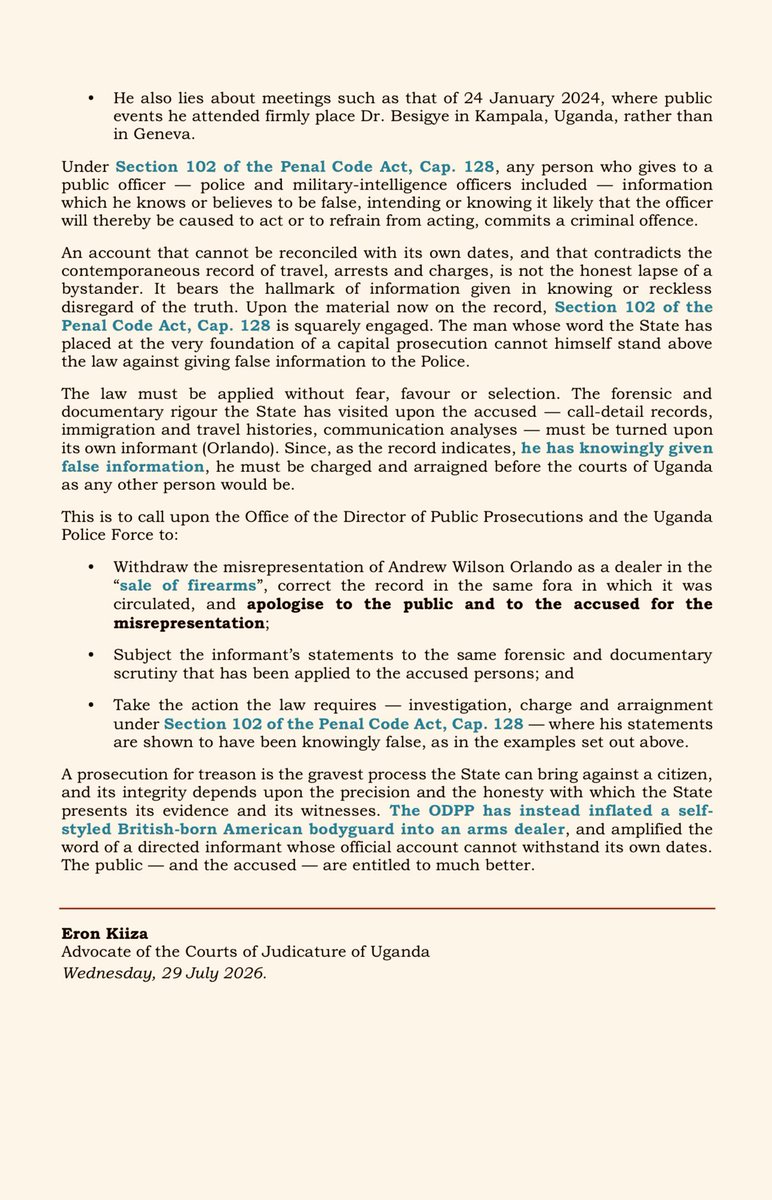
✅ Investigate and, charge @artfulgypzy under Section 102 of the Penal Code Act, Cap. 128 for giving false information to @PoliceUg.
Justice cannot be built on lies and manufactured labels.
Kiiza Eron
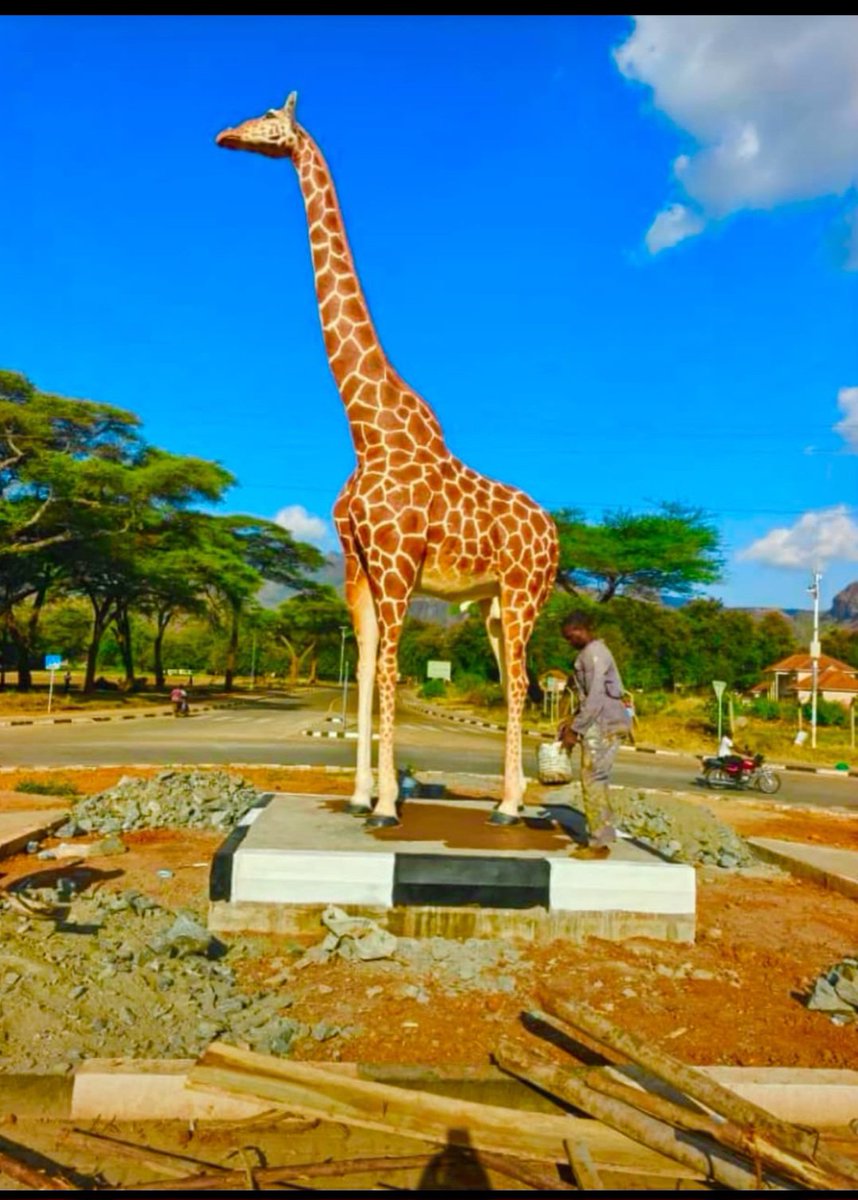
The giraffe, located at roundabout of Moroto Town, is the Totem of the matheniko people and a constitional symbol of Karamoja sub region. It represents the rich cultural heritage, identity, and unity of the people of Karamoja
This was about yesterday Karamoja Regional Youth Parliament.
It was a great moment deliberating about Karamoja about its problems.
Hosted by Restless Development at Moroto District.@IMChallengeug@RestlessDev
@Pombelogwee@GabrielBuule What does UBL have to do with food security???
In the original MOU, UBL wasn't anywhere to be seen.
Wheat growing in Karamoja is also being hidden from the natives yet it is a lucrative government project.
They frustrated Olara Otunnu when he was still young and active at United Nations and pushed their corrupt colleague Sam Kuteesa and later the mizigo diplomat Don Ayabare.
Now they’re pretending to push him the way Ruto pushed Odinga to African Union top position.
Yo bad