Pew's 2023 NPORS benchmarks and data are now live. NPORS is an annual survey that provides benchmark estimates for party affiliation, religious affiliation, internet use, and more. https://t.co/ocAFpI8kK0
If following the polls tends to get you down, try this new one from my colleague @aerbrown (article coauthored with Bagel, pictured here) https://t.co/80FZQOJBOz
Some of the lessons we learned from conducting focus groups of trans and nonbinary adults earlier this year are featured in this month's QUALPOR newsletter!
https://t.co/qUP9QMkLfi
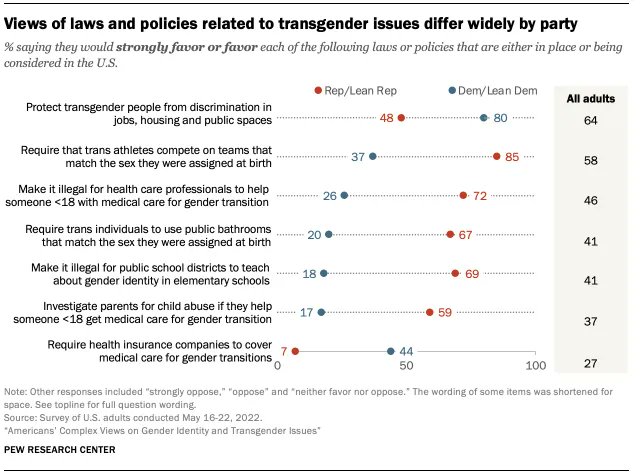
The data on where policies impacting trans folks are concentrated geographically is accompanied by an analysis of public opinion on these issues from our May survey https://t.co/gAKgvuuld5
Check out this impressive research from my colleagues @carrieblazina and Chris Baronavski showing the geographical breakdown of policies that touch on trans people in sports, insurance coverage of gender transitions, and more https://t.co/gAKgvutNnx
@emma_khannn Yes, I'm saying the way we did our analysis, we included the separate categories of Chinese and Vietnamese together under the net category of Asian. So in measuring intermarriage, they would be considered the same race in our analysis.
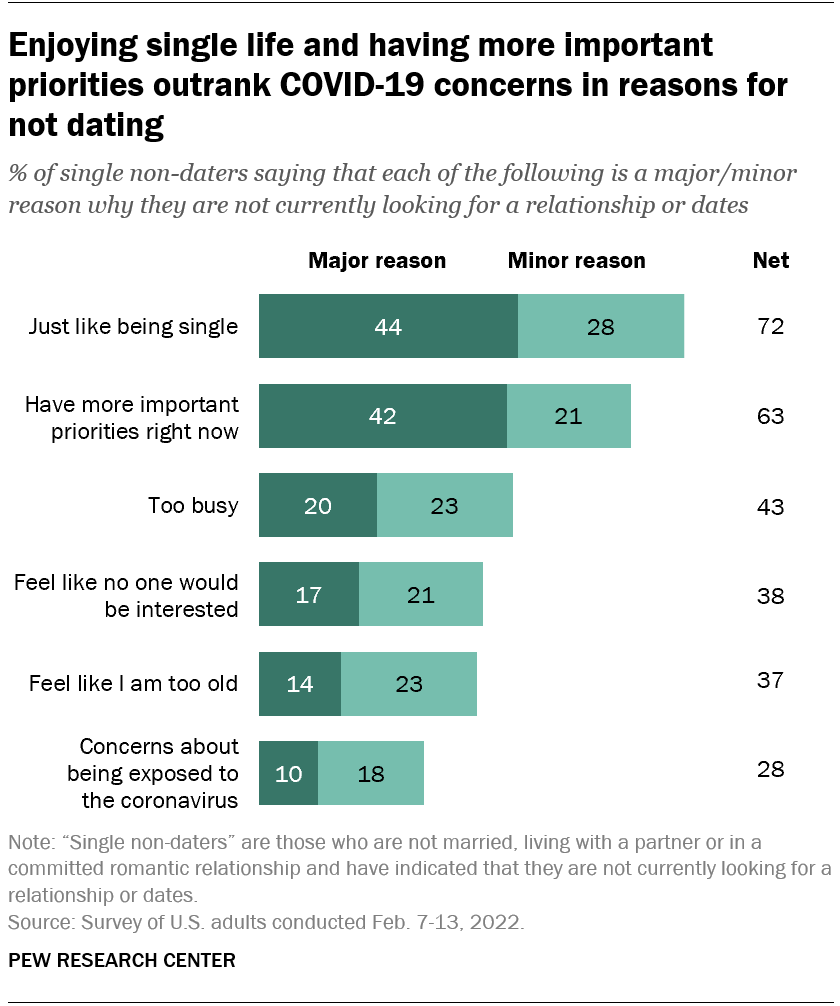
Relatively few single adults cite COVID concerns as a reason for not dating. Many say they just like being single or they have more important priorities, the same as in 2019. https://t.co/owltwQnPv0
@therainbowtimes Are you looking for help reproducing a graphic? Gar Meng on our Communications team can help you out with that - [email protected]. Or if I've misunderstood our question please let me know!
9/9 The survey finds that 1.6% of U.S. adults are trans or nonbinary (i.e. their gender is different from the sex they were assigned at birth). 44% of adults say they know someone who is trans. Additional survey results will be released later this summer. https://t.co/erqYvVIb2g
1/ Our new qualitative essay explores the experiences and views of transgender and nonbinary adults based on a series of focus groups. https://t.co/bOfB72oh0x
8/ This is part of a larger study that includes a survey of the general public on their attitudes about gender identity and issues related to people who are transgender or nonbinary.