(The one addendum I'd put on this is that the degree to which framing matters varies considerably by issue, and the mere presence of that volatility -- and how it manifests -- can itself say a lot about strength of opinion and how people are approaching the issue.)
You probably already know that question wording matters a lot in polling. But this chart from @aedwardslevy/@CNN underscores the point: Public support for mass deportation varies from 62% to 33%, depending on how the question is asked. https://t.co/AOUQNO8sPf
What did the U.S. public hear about Trump and Harris during the campaign, from @aedwardslevy based on the weekly @CNN/@ssrs_research/@verasight_data election surveys: https://t.co/aWDcH6vlyx
Our final pre-election Breakthrough, on what Americans actually say they heard, read and saw about each of the candidates heading into the campaign's close: https://t.co/4fdh237KbZ
@DemFromCT skepticism is always good, but I guess my fundamental position is that our political discourse would not be *better* if e.g. we did not have consistent, well-outside-MoE survey data on the level of opposition to overturning Roe
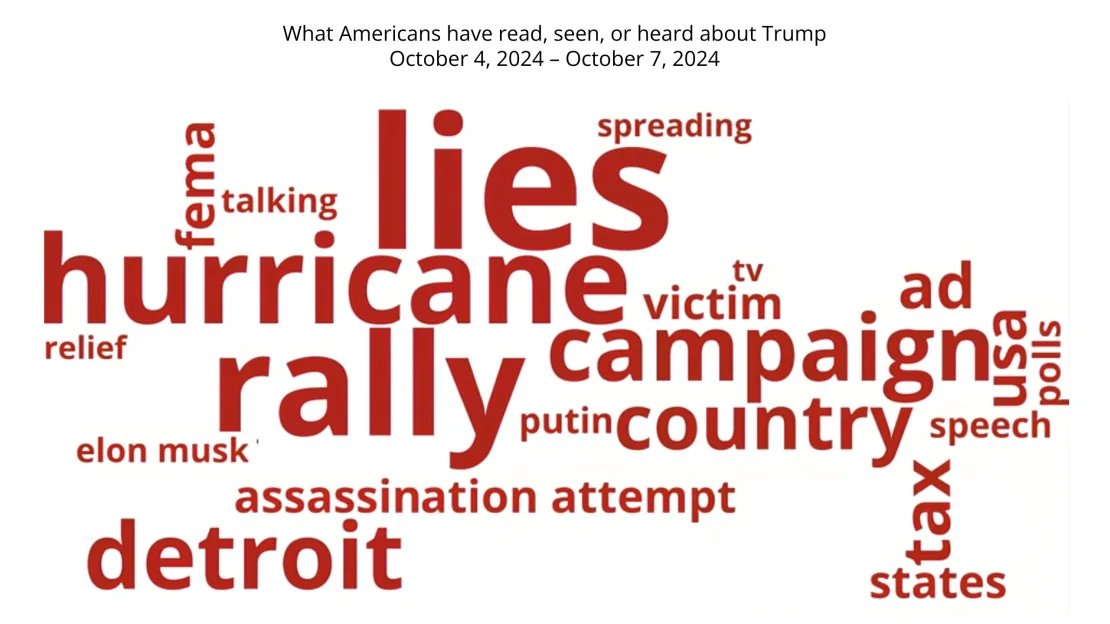
When a research team from CNN, Georgetown and UMich asked Americans what they've read/seen/heard about Trump earlier this month, "lies" was the most common answer. https://t.co/3ixOzQiU4o
I'm really glad to be working on this project, because I see so much speculation about what election news is actually getting through to the public...and we get a chance to just ask them each week!
Latest from the Breakthrough project, tracking what news Americans actually say they're hearing, reading and seeing about the candidates: https://t.co/lJOv44uxdA
not saying I am off to anything less than a fully alert start this morning but I did somehow misread the name "stephen" and briefly wondered if a "step hen" was your spouse's pet chicken
Latest from the Breakthrough project, tracking what news Americans actually say they're hearing, reading and seeing about the candidates: https://t.co/lJOv44uxdA