🚨Scientist replicates a snowflake pattern in quantum systems
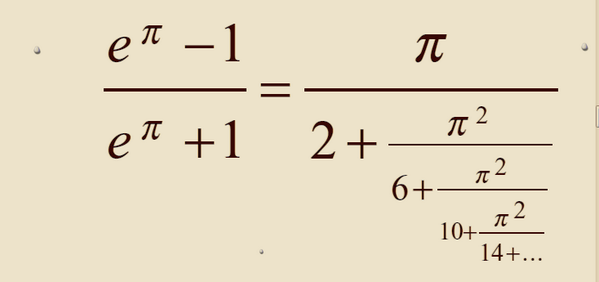
An Indian scientist from Nagaland University studied and replicated the snowflakes and trees into the Quantum world
They successfully replicated fractal patterns in snowflakes, tree branches, and neural networks inside a quantum system.
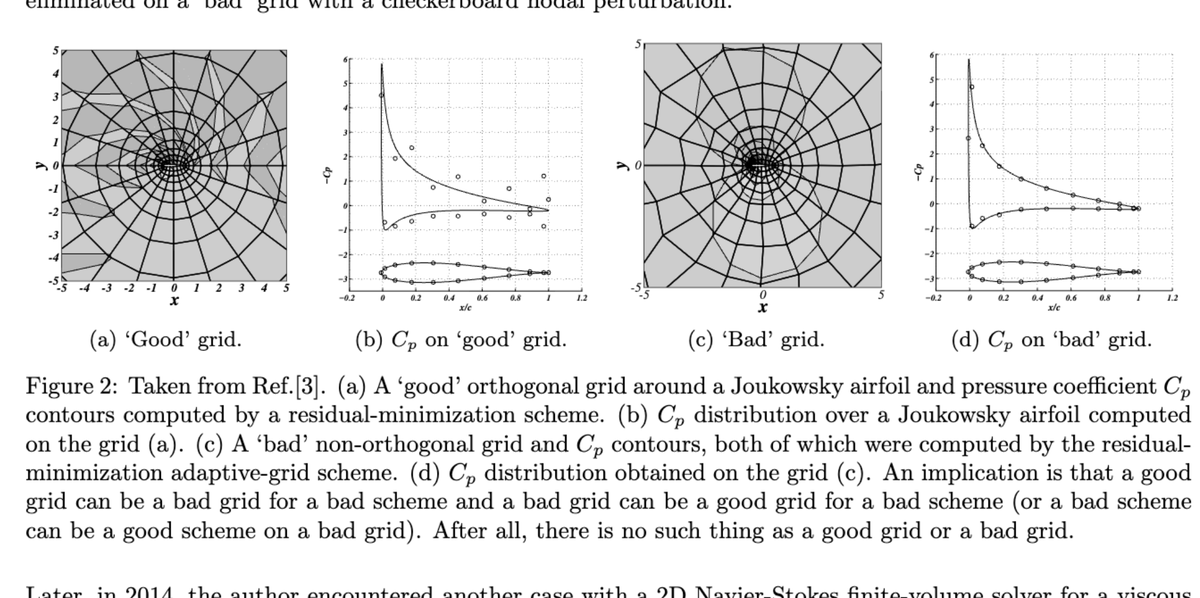
Here's an example of "A good grid is a bad grid for a bad discretization and a bad grid is a good grid for a bad discretization". Grid quality cannot be judged without the discretization method to be used.
Why are so many PhDs from India on simply running CFD simulations?? This is the kind of work that belongs in the industry.
Even after CFD simulations for 4 years, the candidates have no decent knowledge of the basics of numerical methods used. This is ridiculous!
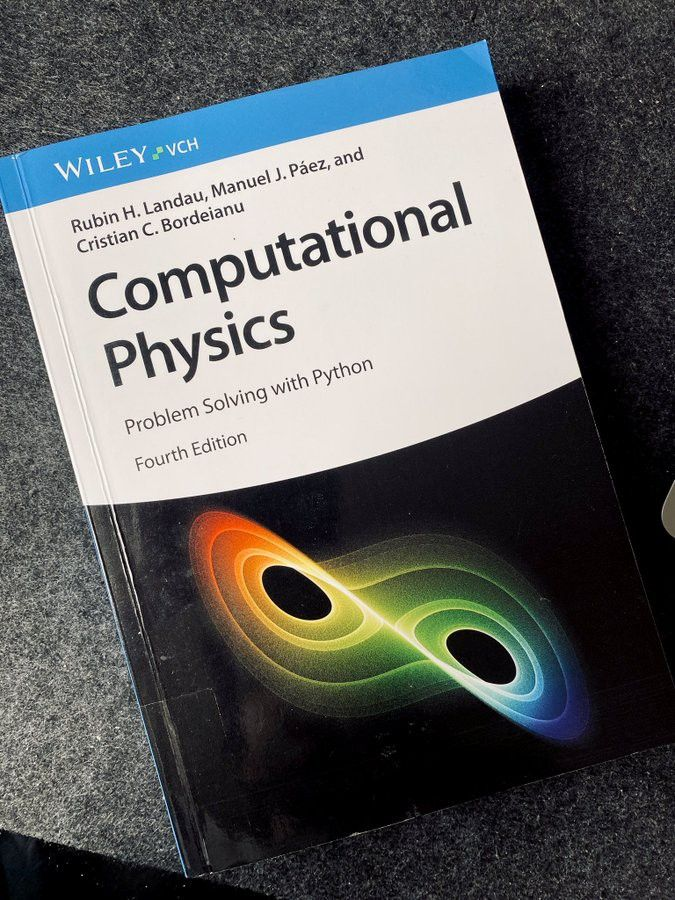
This isn’t just a textbook; it’s a toolkit for turning math into reality.
What it actually shows:
Equations → from abstract symbols to working code
Simulation → model systems too complex for pen and paper
Python → not just for apps, but for exploring the universe
Problem-solving → physics becomes iterative, experimental, alive
Insight → learn more by making the computer “think” the problem through
This book isn’t about learning Python.
It’s about using code as a telescope; to see deeper into physics than equations alone allow.
New Video Series: Statistics & Data Analysis!
https://t.co/YfJTxDeiHn
35 videos, 10 hours:
Random sampling, Central limit theorem, Distribution estimation, Method of moments, Maximum likelihood estimation, Hypothesis testing, Monte Carlo sampling, Bayesian statistics, and more!
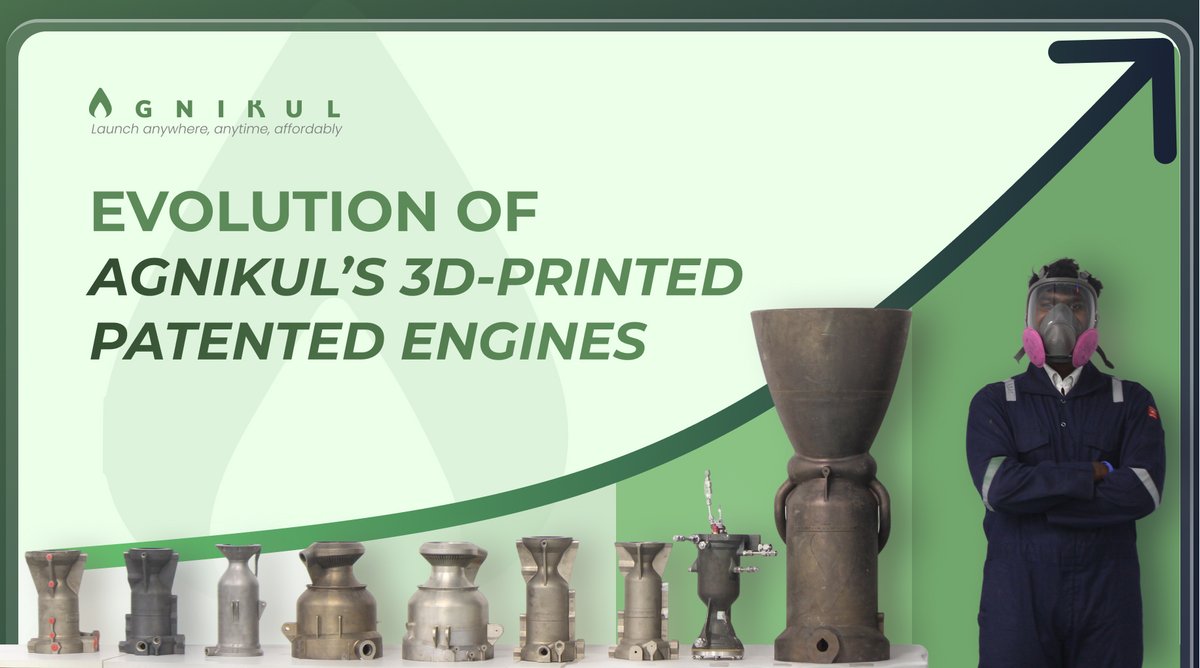
Two updates - A) Humbled to introduce the world’s biggest single-piece 3D-printed inconel engine, a global first in both scale & complexity. It is an meter long engine entirely printed as a single component in one shot. (No welds, no joints, no fasteners from fuel entry to plume exit.) This milestone marks a breakthrough in additive manufacturing at this scale & comes as a major extension of our earlier accomplishment of making & flying the world's first single piece engine. Compared to our earlier upper stage engines, these are longer, more complex and massive.
B) We have been granted a patent in the US for the design & manufacturing of single-piece rocket engines. Means something to have a completely Indian origin design patented in the US - a nation that has built some of the most complex engines in this industry. Thank you to everyone who made this achievement possible including the amazing support from @isro , @INSPACeIND , @tdbgoi & @IndiaDST
(Note: the innovation is in making an entire engine as a single piece of hardware & in automating the making of a rocket engine, not just "3d printing")
#WorldsBiggestSinglePieceInconelEngine #Patent #SinglePieceEngine #AdditiveManufacturing #RocketEngine #3dprinting #SpaceTech #aatmanirbharbharat #Agnikul #AgnikulCosmos #StartupIndia #MakeinIndia #madeinIndiaForTheWorld
Learn #FEM for #CFD through hands-on coding in Octave/MATLAB.
I have uploaded two lessons on solving the diffusion equation and advection-diffusion in 1D using the FEM. Will be adding for 2D advection-diffusion, Stokes and Navier-Stokes soon.
Playlist at
https://t.co/bG1Vzu5nfM
As a part of our training in 2022, we began our MTech with IISc and had to choose research topics. The space bug had already bitten me by then and I wanted to do something exploratory.
While working with Prof Aloke from IISc we decided to explore the concept of MICP(Microbial Induced Calcite Precipitation) - essentially using bacteria to form bricks from loose sand. In our case we wanted to use the Martian Regolith as sand.
Mars has perchlorate on its surface that is a toxin. The work kept getting expanded and we figured out a way to make the bacteria resistant to this toxin by gradually exposing it to increased quantities of perchlorate in controlled conditions thereby making it effective for MICP even with perchlorate.
As a part of this project I learned to use microbiology skills which proved really handy for some of the experiments on ISS.
From cockpit to lab, I have been amazed at how interesting things are- should you be curious.
#space #iss #shux #shubhanshushukla #iisc #science
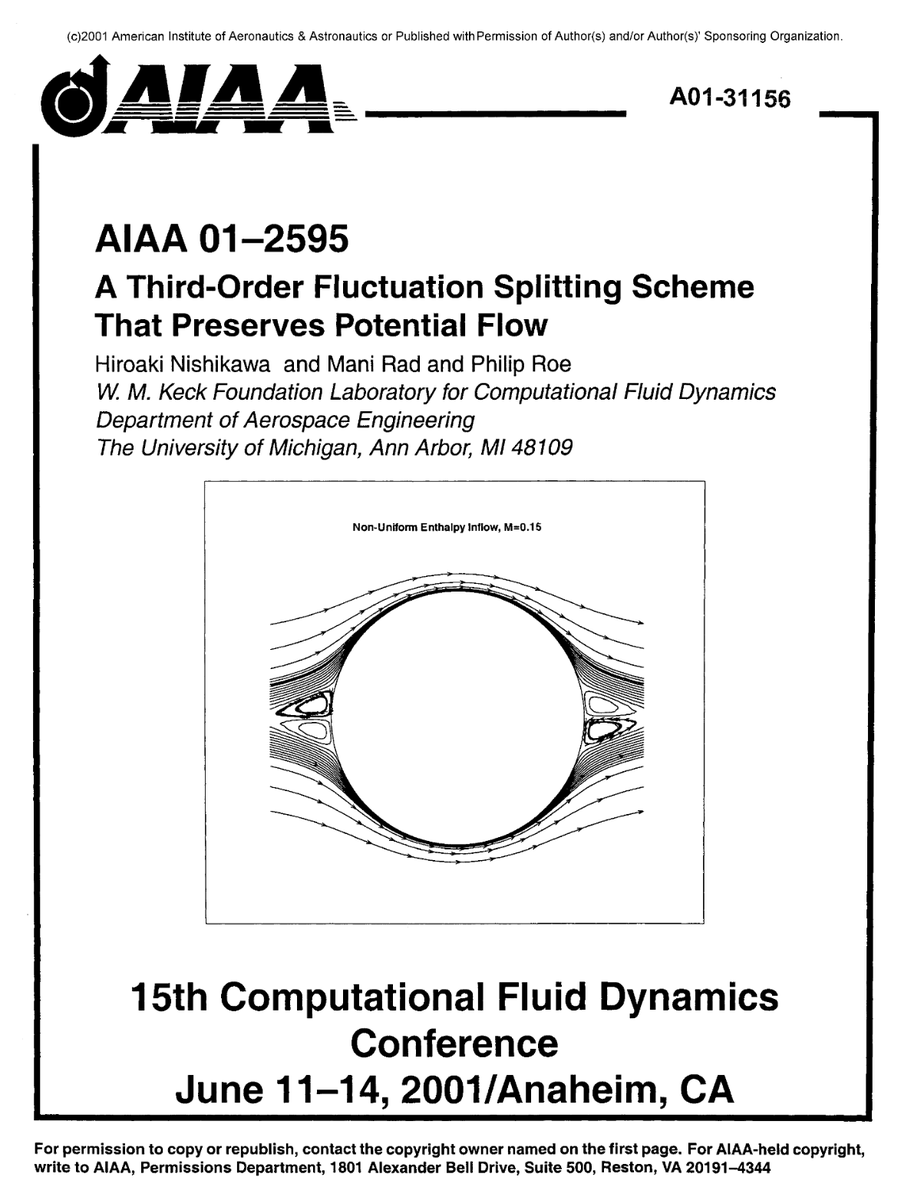
We used to show one figure on the front page of an AIAA conference paper. This figure shows a clean third-order accurate numerical solution of an inviscid flow with a free stream having non-uniform enthalpy; it is usually difficult to capture the vortices behind the cylinder (easily dissipated).
Are you struggling with your CFD & stress analysis simulations and feeling miserable for a few days?
Fret no more! Use AI & run hundreds of such simulations, to make that misery your lifestyle for an extended period so you forget that life could be better.
#SimulationFriday! 😁
25 years ago, the Clay Institute offered $1 million for solutions to 7 of the hardest problems in math. Only one has fallen. Here are the ones that still remain unsolved: