I’ve changed so little. From my 1978 Bachelor’s thesis:
“The adult human mind is very complex, but the question remains open whether the learning processes that constructed it in interaction with the environment are similarly complex. Much evidence and many peoples’ intuitions suggest that the learning processes are in fact simple and that the adult mind’s complexity is due to a long history of adaptive interaction with a complex environment.”
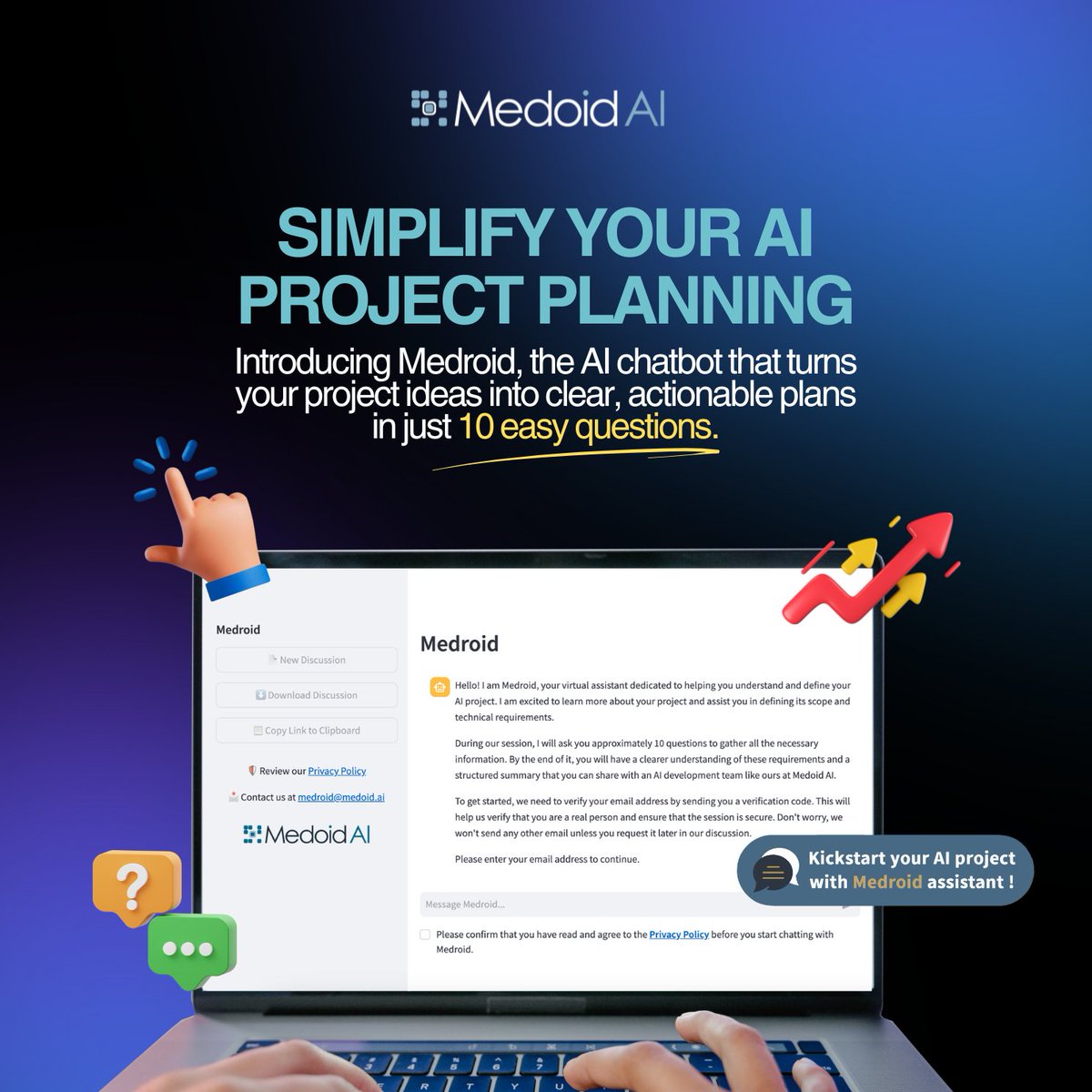
Every successful AI project starts with clear planning.
✅ Save planning time
✅ Clarify your project goals instantly
✅ Easy-to-share AI project summary
Less guessing, more launching. 🚀
https://t.co/juXWsQMzfx
#AIProject#CustomAI#MachineLearning#MedroidAI
And that's a wrap! Medoid AI proudly celebrates our recent win at the AI & Data Awards 2025 for "Best Use of AI/Data for Development and Testing."
A huge thank you to the Reality Engine team at Medoid AI and our partners at K2View for their hard work and creativity. 🚀🏆
Celebrating a major milestone at the 2025 AI & Data Awards! @MedoidAI and @K2View have been awarded GOLD for "Reality Engine, a next-generation synthetic data generation platform," which has set a new standard in leveraging tabular language models to enhance AI capabilities.
I joined because I thought OpenAI would be the best place in the world to do this research.
However, I have been disagreeing with OpenAI leadership about the company's core priorities for quite some time, until we finally reached a breaking point.
Open Coffee Thessaloniki #82 is on tomorrow 26/4 at 17:00 with amazing speakers (@AntoniadesByron, @PanosJee, @HumanWorks, @afachantidis), lots of #startup community updates and 400 RSVPs on LinkedIn 🤯
Looking for co-founders? Open the attendee list 😉
https://t.co/jK9u1slfhV
@GaryMarcus Web search is all you need 😉. A solution like GiveBackGPT could implement data licensing micropayments at the appropriate level. I believe that this level is neither training nor distribution, but rather inference.
Sustainable and fair AI economies should include and credit open-access content creators: the GiveBackGPT experiment. Read the article and try this novel approach implemented as a GPT https://t.co/pJaIBFwHRr
“Web search is all you need” 😀
After the recent lawsuit of the NYT against OpenAI, a solution like GiveBackGPT has become more relevant than ever. It’s not just a matter of abiding by copyright laws; it’s about maintaining balanced content creation and AI ecosystems. There is training, inference (generation) and distribution. Paying for data licenses for training is counterproductive, inhibiting smaller AI teams and most importantly, it doesn’t align with where value is generated. However, implementing micropayments at the inference level does align with use and the actual point of value extraction. Finally, handling this at the later stage of distribution would place the licensing burden on users, making it virtually unmanageable. Inference is the point where costs—both infrastructure and licensing—align with revenues, based on the business model of each major Gen AI vendor.
Sustainable and fair AI economies should include and credit open-access content creators: the GiveBackGPT experiment. Read the article and try this novel approach implemented as a GPT https://t.co/pJaIBFwHRr
“Web search is all you need” 😀
After the recent lawsuit of the NYT against OpenAI, a solution like GiveBackGPT has become more relevant than ever. It’s not just a matter of abiding by copyright laws; it’s about maintaining balanced content creation and AI ecosystems. There is training, inference (generation) and distribution. Paying for data licenses for training is counterproductive, inhibiting smaller AI teams and most importantly, it doesn’t align with where value is generated. However, implementing micropayments at the inference level does align with use and the actual point of value extraction. Finally, handling this at the later stage of distribution would place the licensing burden on users, making it virtually unmanageable. Inference is the point where costs—both infrastructure and licensing—align with revenues, based on the business model of each major Gen AI vendor.
Sustainable and fair AI economies should include and credit open-access content creators: the GiveBackGPT experiment. Read the article and try this novel approach implemented as a GPT https://t.co/pJaIBFwHRr
Sustainable and fair AI economies should include and credit open-access content creators: the GiveBackGPT experiment. Read the article and try this novel approach implemented as a GPT https://t.co/pJaIBFwHRr
Sustainable and fair AI economies should include and credit open-access content creators: the GiveBackGPT experiment. Read the article and try this novel approach implemented as a GPT https://t.co/pJaIBFwHRr
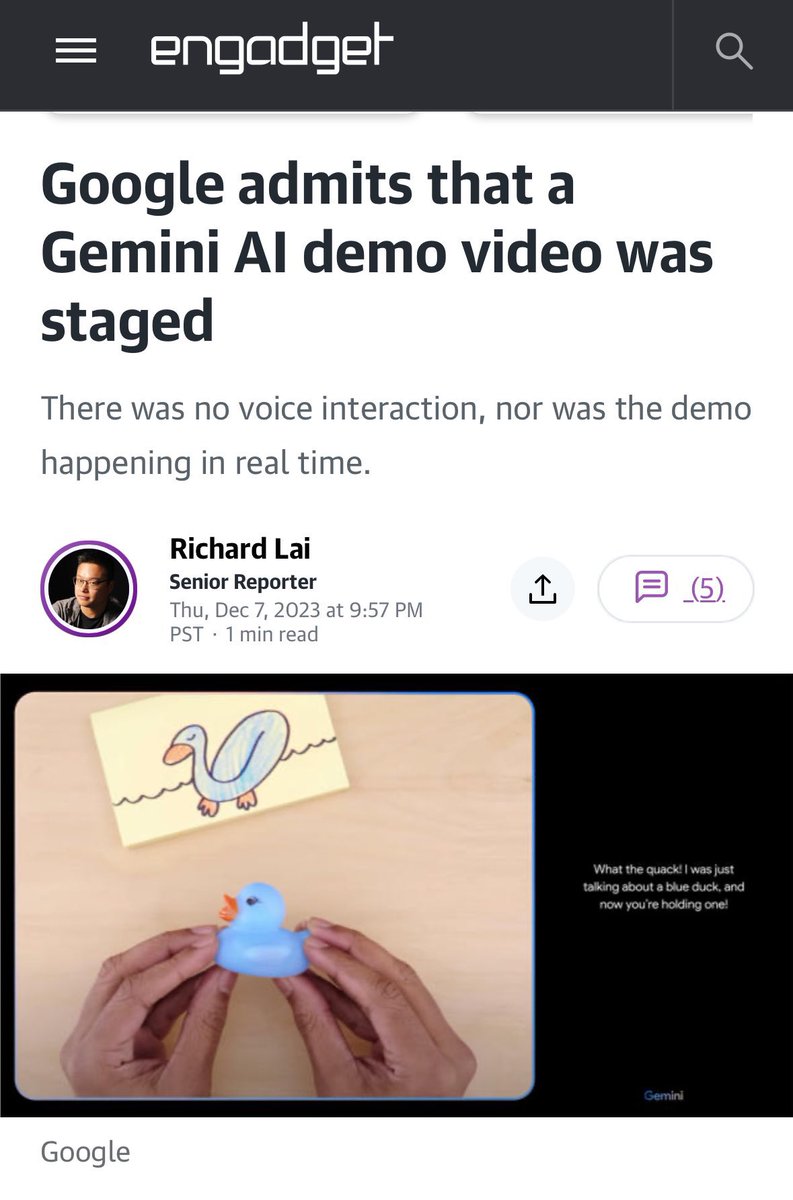
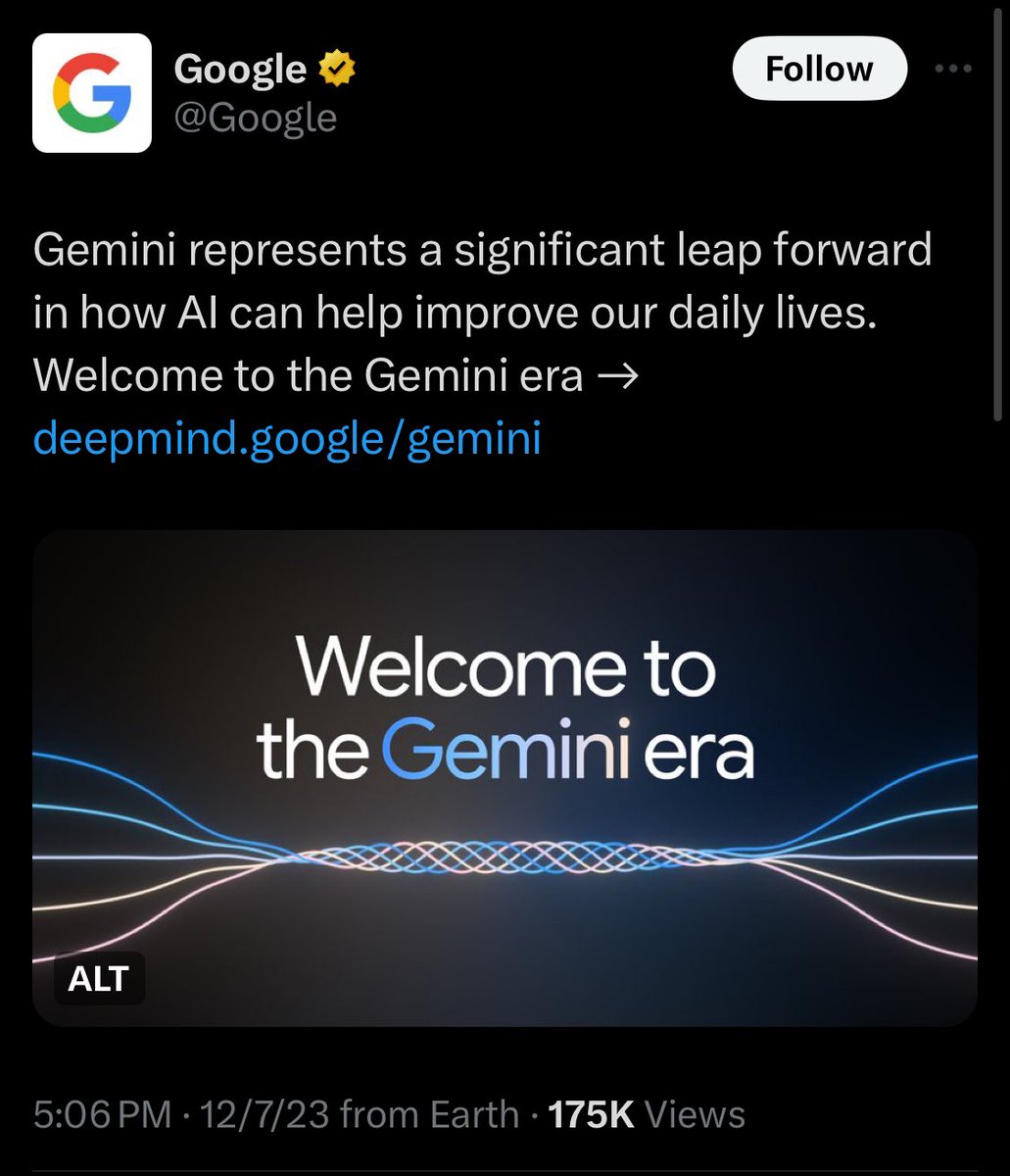
Google vs. Mistral: a tale of two AI launches and a case study in knowing your audience
Google announced their new model two days ago. It was named Gemini, and it wafted in with a blog post, brand guidelines, a press tour, and a polished sizzle reel that later turned out to be staged. In Swiftian fashion, Google welcomed us to “the Gemini era.”
The most powerful model, Gemini Ultra, isn’t actually ready yet and is “coming soon.”
Just unclear how much protein there is, but lots of decorative kale.
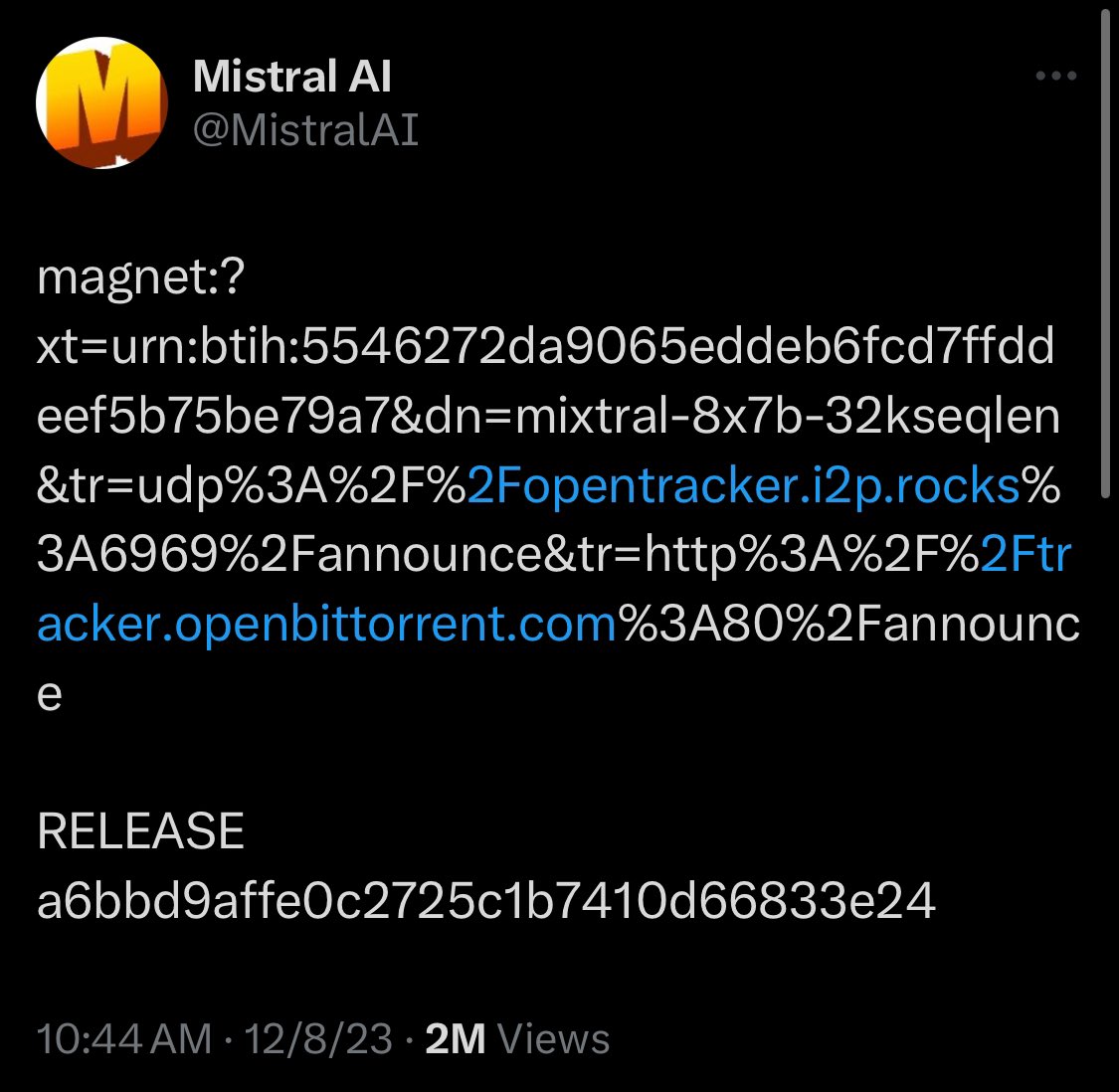
Mistral released their new model the next day. Its name is unpronounceable and longer than most router passwords: Mixtral-8x7B-32kseqlen, Mixtral for short.
It sounds like a child of Elon Musk because it’s just a straightforward description (mixture of experts, 8 models, 7B parameters, 32k context size).
No blog, no sizzle, no description — just a torrent with the model files. A plain cut of steak.
Bottom line: Mistral understands their primary audience to be engineers and knows their cultural erogenous zones.
Compared to Google’s rollout, Mistral’s speed, focus on substance, laconic minimalism, and mic drop without fanfare wins this round.
Since trust, explainability, and predictability of AI systems, particularly Generative AI ones, are not there yet we have to think of AI as a tool, probably the ultimate productivity tool but still a tool requiring human supervision and understanding.
In the ongoing debate about AI replacing jobs, we always have to consider something that cannot be replaced by AI, at least in the foreseeable future: Accountability