New Epigenome Technologies Blog! https://t.co/8WOOCVKAXI
Pronuclear Competition and Volume Regulate Histone Modification Patterning in Mouse Zygotes to Influence Developmental Potential
Based on a Nature study from Hirohisa Kyogoku and Tomoya S. Kitajima
#Epigenetics#Blogs
Epigenetics Update - Molecular mechanisms of the MLL4 complex in H3K4 methylation and p53-dependent transcription activation https://t.co/aZueNvoIWR
#Epigenetics#H3K4me#MLL4
---
https://t.co/WmSYDGWPJD
My lab is recruiting at the undergraduate volunteer and SRA level! Preference for candidates with protein purification experience. Please share, and see below for more details.
Epigenetics Update - Chemical biology tools for studying histone post-translational modifications https://t.co/awrIfq9Y1u
Cameron J. Douglas and Ciaran P. Seath (@scrippsresearch) in @CellChemBiol#Epigenetics#Chromatin#Review
---
https://t.co/WmSYDGWPJD
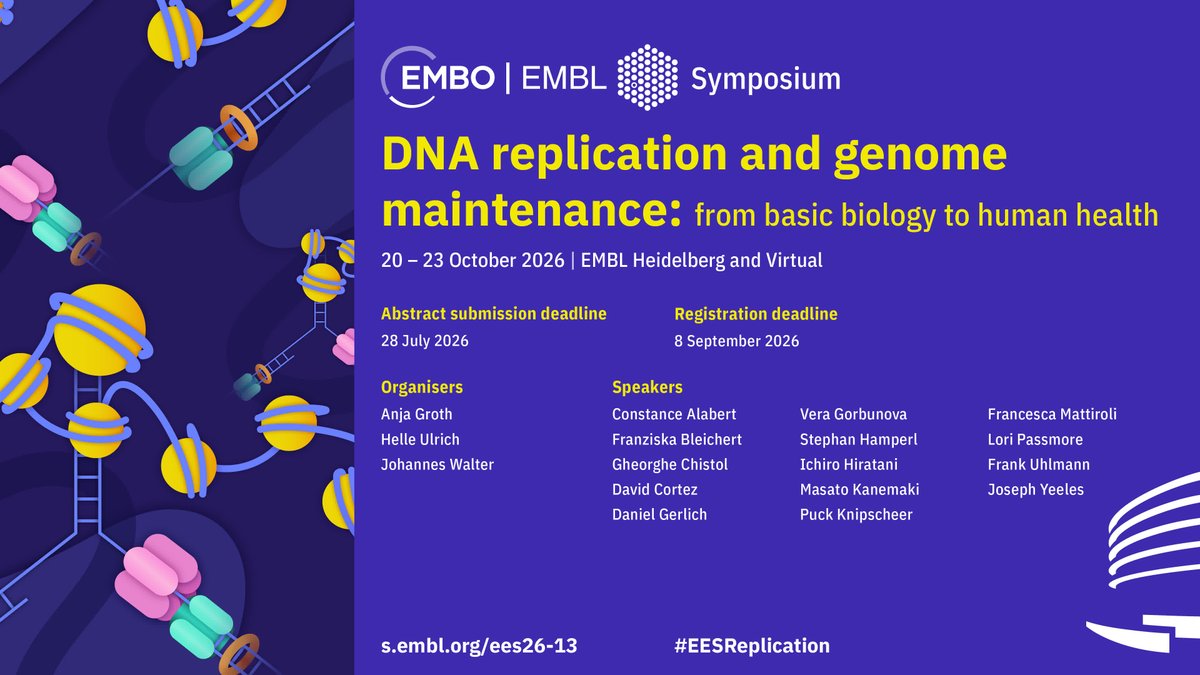
Do you work in DNA replication, genome maintenance, chromosome organisation, chromatin maintenance, or a related field? 🧬🔍
Join us for the EMBO | EMBL Symposium 'DNA replication and genome maintenance: from basic biology to human health', bringing together experts and early-career researchers to drive new ideas and collaborations. Abstract submissions are welcome from researchers at all career stages! #EESReplication
Session topics
• Replisome structure and function
• Replication in time and space
• Chromatin replication and cell fate
• Replication stress and genome stability
• Replication-coupled DNA repair
• Replication in development, aging, and cancer
📍 EMBL Heidelberg and Virtual
📅 20 – 23 October 2026
📩 Submit your abstract by 28 July: https://t.co/upQT35w2Hs
Seeking a PhD candidate with an excellent academic record to apply for competitive fellowships and join our lab at ISABIAL, Alicante.
Field: Peripheral Nerve regeneration & Schwann cell biology.
A 9-month contract may be available while applying.
Send CV to [email protected]
🧬 Inside the cell nucleus, two meters of DNA are folded into shape by cohesin—a protein complex that forms DNA loops. But how is this process controlled?
Our Peters’ lab and collaborators have discovered how cells put the brakes on DNA loop formation: https://t.co/19Hz7T4QQc
🚨FULLY FUNDED PHD POSITION!🚨 If you are interested in addressing the question of "How did climate shape the movements, interactions, and evolution of hominin populations?" Come join my lab at the Human Origins Excellence Cluster in Tübingen🧬🧪. Details: https://t.co/ipYI87I0b8
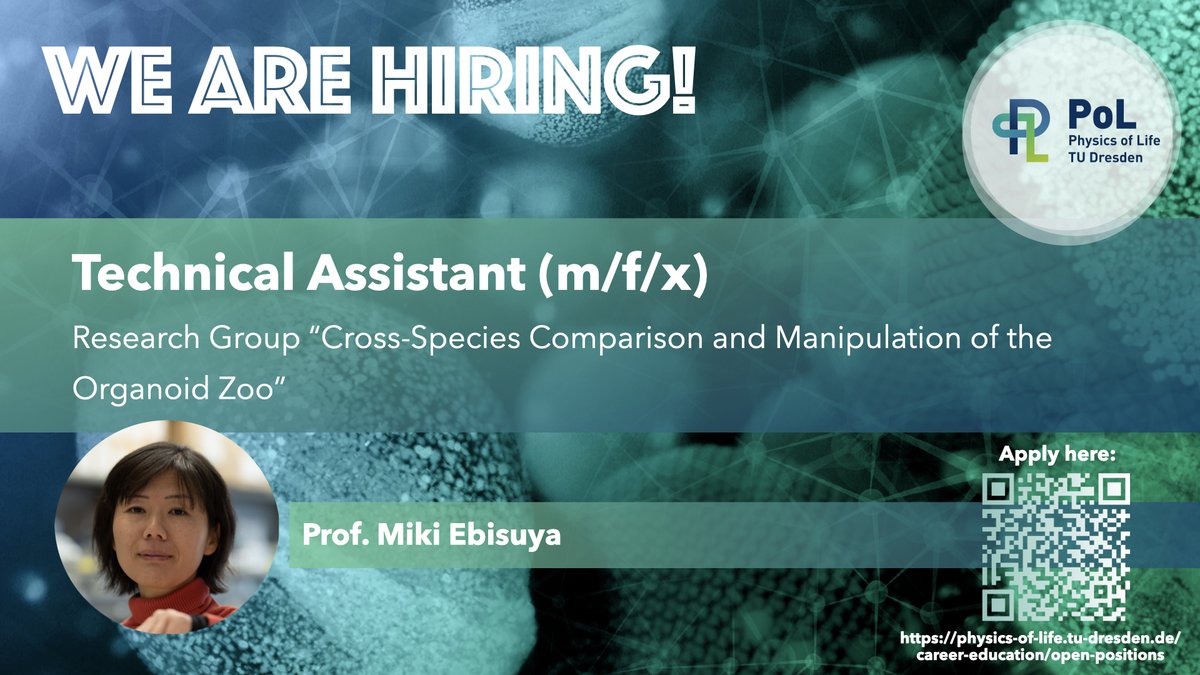
🚨 #JobAlert: Lab Technician. Please share with your colleagues!
👩🔬The Ebisuya Lab @EbisuyaMiki is seeking an experienced technician in molecular & cell biology to join their interdisciplinary team. Apply now!
Learn more👉https://t.co/pC4Kn6vPTs
🗓️Deadline: May 21
Please circulate: I'm hiring a postdoc, ideally with a start date sometime this summer or fall. If you're interested in empirical population genetics, computational methods development, and/or evolutionary modeling via simulation, don't hesitate to reach out. (1/3)
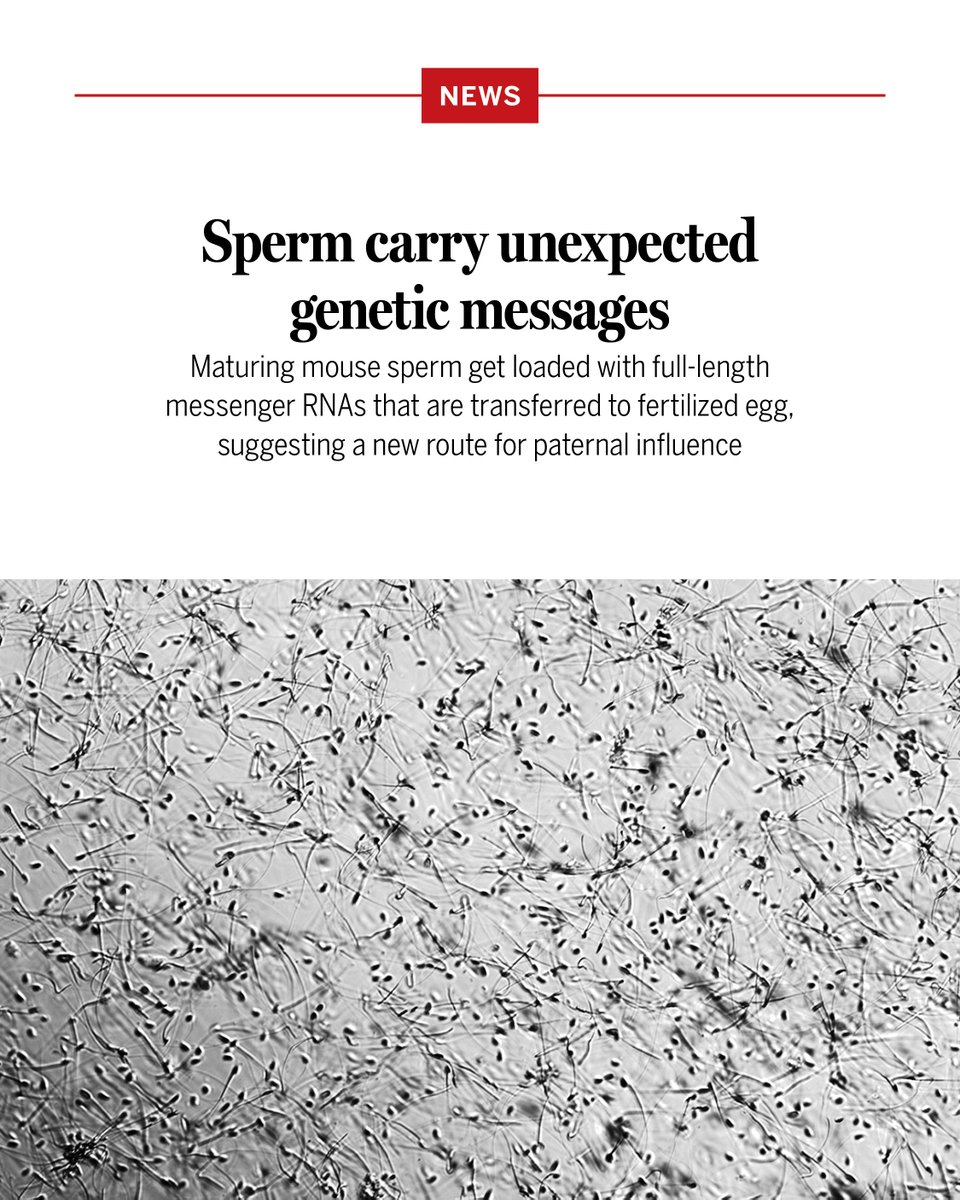
Sperm have long been thought of as streamlined DNA delivery vehicles, carrying little more than a father’s genes to the egg.
But a new study shows that in mice, sperm may transmit the father’s influence in another way.
During their passage through the epididymis, the coiled tube where they mature after leaving the testes, sperm pick up messenger RNAs (mRNAs), RNA transcripts of genes that contain the genetic instructions for making proteins.
These mRNAs seem to be transferred to the fertilized egg, where they may affect the developing embryo.
Learn more: https://t.co/MvmGoEn0dU